No Products in the Cart


If a photo book is the definitive vessel for your family legacy, why do we so often treat the cover as an afterthought? It's natural to feel a sense of hesitation when faced with endless photo book cover design ideas, particularly if you fear the final product might look generic or fail to capture the weight of the memories within. You've curated your story with care, and you deserve a physical object that feels less like a simple album and more like a gallery-worthy piece of art.
We've spent 40 years mastering the nuances of high-end print, and we're here to help you bridge the gap between a digital concept and a premium physical reality. You'll learn how to harmonize sophisticated layouts with the tactile luxury of materials like archival paper and genuine leather. We'll explore how specific construction choices, such as the seamless spread of a layflat photo book or the timeless durability of a sewn binding wedding album, ensure your cover is a sophisticated gateway to the story you've worked so hard to tell.
Think of your photo book cover as more than just a protective layer; it's a psychological threshold. This initial encounter prepares the reader for the emotional weight of the narrative inside, setting a tone of reverence and expectation. When you're exploring photo book cover design ideas, you're really deciding how to frame a lifetime of memories. A thoughtful cover invites the viewer to slow down, signaling that what they're about to see is a curated legacy rather than a casual collection of snapshots.
A well-designed cover immediately elevates the perceived value of the archival memories held within the pages. It's the difference between a book that sits forgotten in a drawer and one that's displayed with pride on a coffee table as a centerpiece of the home. By choosing a design that reflects the importance of the story, you're telling your audience that these moments are precious artifacts deserving of the highest level of care.
Achieving an heirloom aesthetic requires a delicate balance between deep personal sentiment and professional gallery standards. It's about following the fundamental principles of book design to ensure the layout feels intentional and balanced. We rely on 40 years of artisan heritage to ensure the physical product matches the sophistication of your creative vision. True durability isn't just about the strength of the binding; it's about the deliberate marriage of high-level print quality and premium materials that resist the wear of time, a standard that mass-produced automation simply can't replicate.
The narrative of your book doesn't start on page one; it begins the moment someone sees the spine on a library shelf. Spine design is essential for shelf presence and long-term organization, providing a clear marker for your most precious years. A thoughtful spine hints at the narrative arc found inside, using elegant typography or a subtle, cohesive color palette. When selecting a "hero" image for the front cover, look for a shot that encapsulates the entire collection's emotional core. This single image acts as a visual summary, inviting the reader to cross the threshold and immerse themselves in your story.
When you're refining your photo book cover design ideas, remember that minimalist designs often age with much more grace than busy, trend-heavy layouts. By focusing on clean lines and generous white space, you allow your chosen imagery to take center stage without distraction. This connection between high-level print quality and visual impact is what defines our printable cover photo books. We believe that a legacy cover is one that remains aesthetically relevant for decades, transcending fleeting digital styles to remain a beautiful, tactile piece of art for future generations.
While digital platforms often push fleeting trends like faux-distressed filters or cluttered stickers, true sophistication lies in artistic restraint. When you explore photo book cover design ideas, your objective shouldn't be to mimic a social media post, but to emulate the quiet confidence of a high-end publication. An editorial approach utilizes ample white space to let your imagery breathe, ensuring the eye is drawn exactly where you intend. This method treats your photographs with the respect they deserve, transforming a simple collection into a curated gallery.
Selecting the right typography is equally vital. It's more than just choosing a font; it's about matching the character of the occasion. Elegant serifs often provide the grace required for wedding albums, while modern sans-serifs offer the clean, adventurous feel suited for travel journals. Understanding The Art and Science of Book Cover Design involves recognizing that every element, from the kerning of the title to the weight of the font, contributes to the overall narrative.
Sometimes, a single showstopping panoramic shot is enough to carry the entire design. Letting a photograph speak for itself requires confidence in the image's quality and composition. When an image is powerful enough to stand alone, it eliminates the need for complex embellishments, allowing the raw emotion of the moment to resonate without distraction.
For those who prefer a boutique gallery look, a single small photo centered on the cover creates a powerful focal point. This technique relies on the surrounding negative space to emphasize the importance of the chosen image. Balancing this placement with an understated title requires a meticulous eye for proportion. We find that layflat photo books serve as the ideal canvas for these minimalist designs.
A showstopping landscape shot can be breathtaking when it extends from the front cover, across the spine, and onto the back. These wraparound designs create a seamless visual experience that prepares the reader for the immersive spreads inside. Achieving this requires technical precision regarding the "gutter" and the spine width. Our master artisans ensure the image flows perfectly without losing critical details. You may wish to explore our artisan collections for further inspiration.
Mastering the grid or collage layout is about finding harmony in numbers. To avoid visual clutter, maintain consistent margins and align image edges with mathematical precision. This structure allows you to showcase a variety of moments without overwhelming the viewer. It's an excellent way to incorporate diverse photo book cover design ideas for family history projects where a single portrait isn't enough. Every choice you make, from the layout to the archival paper, reinforces the idea that your book is a permanent investment.
A truly exceptional photo book is a multisensory experience. While the visual layout captures the eye, the physical weight and texture of the cover dictate how a reader perceives the importance of the story inside. When you move beyond digital photo book cover design ideas and begin to consider the tactile nature of your project, you're making a commitment to the permanence of your memories. The sensation of a heavy, well-constructed cover suggests a narrative of high value, inviting the reader to handle the book with the same reverence you used to create it.
The choice between leather vs. linen is often the most significant design decision you'll make. This selection should be guided by the theme of your collection. Leather exudes a timeless, formal authority, while linen offers a more organic, intimate feel. Your material choice dictates your design options; for example, intricate foil stamping and deep debossing achieve their most striking results when applied to solid, premium textures that can withstand the pressure of artisan machinery. These elements, supported by the structural integrity of archival paper and sewn binding, ensure your design is as durable as it is beautiful.
Linen covers have long been considered the gold standard for travel journals and family history books. Their natural aesthetic complements outdoor photography and candid moments, providing a sophisticated yet approachable frame for your life's adventures. To create a cohesive look, try matching your cover color to the dominant tones found in your photography. The deliberate weave of a linen cover adds a physical layer of depth to a printed title, creating a subtle interplay of shadow and light that a flat digital screen cannot replicate.
When designing for luxury milestones, such as wedding albums or professional portfolios, leather remains the definitive choice. Its durability and classic appeal make it the perfect backdrop for gold or silver foil accents that catch the light with every turn. These high-end finishes, combined with the traditional technique of debossing, create a permanent mark that feels integrated into the very fabric of the book. For those seeking the pinnacle of longevity, we recommend sewn binding books. This method of construction, perfected over our 40-year history, ensures your leather-bound legacy remains intact for generations, preserving the tension and grace of the original design.
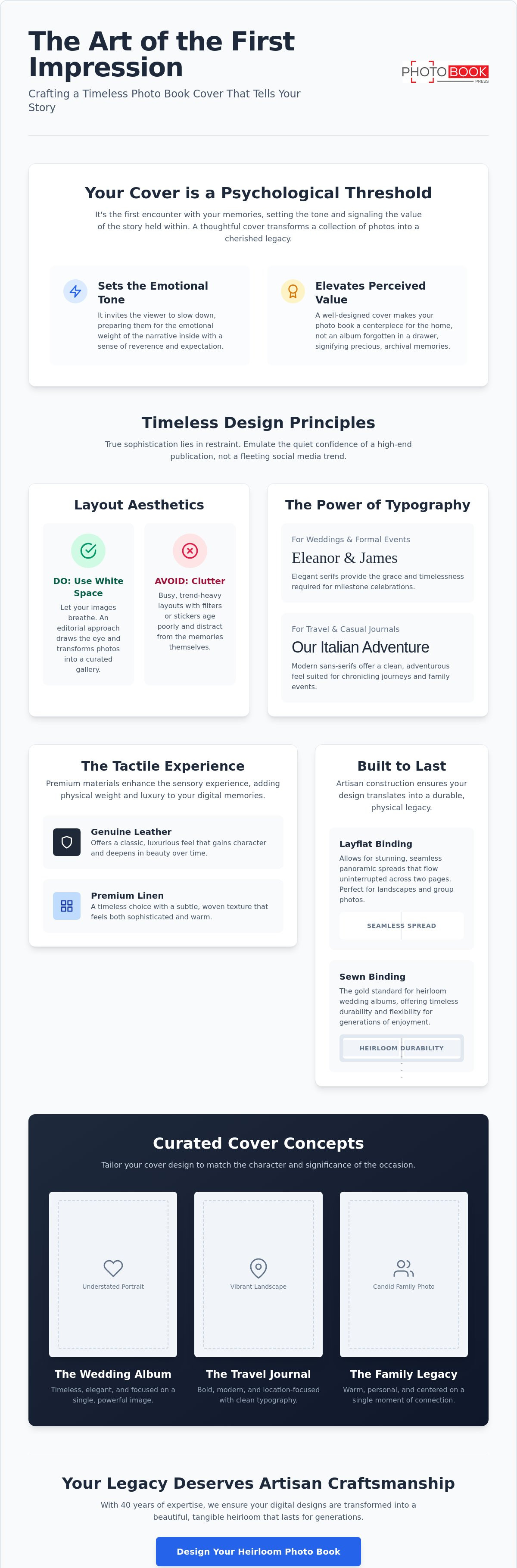
The emotional resonance of a photo book depends heavily on how well the cover aligns with its contents. Selecting the right photo book cover design ideas requires an understanding of the occasion's unique character. A wedding album should feel like a timeless heirloom, while a travel journal can afford to be more adventurous and graphic. By curating your cover concept, you ensure that the book serves as a fitting introduction to the specific chapter of your life it documents.
For wedding albums, focus on intimate, high-resolution portraits that capture the quiet moments between the ceremony's grander events. Understated typography allows the emotion of the image to remain the priority. Travel journals, by contrast, benefit from bold destination titles or even geographical coordinates debossed into the material. If you're creating family yearbooks, consider a consistent "series" look. Using a uniform color palette or a repeating layout style across multiple volumes creates a stunning, cohesive display on your bookshelf.
A printable cover photobook offers the perfect opportunity to showcase a favorite candid moment from your ceremony or engagement session. Rather than a formal posed shot, a spontaneous smile or a shared glance often carries more emotional weight. We recommend integrating dates and venue names with refined, small-scale typography to keep the focus on the artistry of the photography. If you're looking for ways to enhance the presentation of your memories, you can explore more wedding gift ideas that prioritize artisan quality.
When documenting a child's first year or a significant family anniversary, the tactile experience should be as gentle as the memories. Soft-touch finishes and muted pastel palettes work beautifully for baby books, creating a sensory connection to the early days of parenthood. For tribute books celebrating a retirement or a landmark anniversary, a "then and now" collage on the cover can provide a powerful narrative arc before the first page is even turned. Because these books are meant to be handled by multiple generations, we prioritize construction techniques like sewn binding and archival paper to ensure they survive years of love and frequent leafing.
Professional portfolios demand a different approach altogether. Clarity is your most valuable asset here. A minimalist cover with brand-aligned aesthetics demonstrates your attention to detail and professionalism to potential clients. Whether you choose a classic leather finish or a modern wraparound photo design, the goal is to present your work as a premium investment. Ready to transform your vision into a tangible masterpiece? Explore our artisan collections to find the perfect foundation for your legacy.
The most inspired photo book cover design ideas only reach their full potential when they're matched by superior construction. While mass-produced automation might offer speed, it often sacrifices the meticulous attention to detail that a personal narrative deserves. We believe in the "Maryland-Made" difference, where local craftsmanship ensures that every book is treated as a unique piece of art. This artisan approach means your cover isn't just a printed surface; it's a durable, hand-finished gateway to your history. By choosing a partner with 40 years of heritage, you're ensuring that the physical reality of your book matches the sophistication of your digital vision.
Manual binding is the silent hero of longevity. It ensures that the tension of the cover remains perfect for decades, preventing the warping or peeling often seen in budget alternatives. When you invest in professional construction, you're choosing a product that will remain as secure and beautiful on its fiftieth anniversary as it was on its first. It's this commitment to the medium of print that transforms a simple album into a museum-quality artifact.
Translating a digital concept into a physical heirloom requires more than just a printer. It demands rigorous color calibration and high-resolution standards to ensure the vibrant tones you see on your screen are mirrored on the page. For designs that utilize panoramic images, layflat photobook construction is essential. This technical feature allows your cover art to flow across the spine without the interruption of a traditional gutter, maintaining the visual integrity of your showstopping "hero" shot. You deserve a partner who acts as a gallery curator, ensuring every pixel is rendered with precision on archival paper.
We invite you to view your photo book not as a simple purchase, but as an investment in your personal legacy. The time you've spent curating your story is precious, and the final physical object should reflect that effort. Whether you're commemorating a wedding or a family milestone, the right design on the right materials creates a tangible connection to your past. If you're ready to move beyond the cover and refine your interior layouts, read our Ultimate Guide to Photo Books for deeper insights into interior storytelling. It's time to bring your vision to life. Design your custom photo book cover with Photobook Press today and begin the process of preserving your memories for generations to come.
Designing the perfect cover is about more than simple aesthetics; it's about creating a permanent threshold for your most significant life events. Throughout this guide, we've explored how photo book cover design ideas serve to bridge the gap between digital fragments and a physical legacy. By balancing sophisticated editorial layouts with the tactile richness of premium materials, you ensure your book is treated with the reverence it deserves. Whether you choose the organic warmth of custom linen or the timeless authority of leather, the quality of the finish must always match the depth of the narrative inside.
Since 1985, we've handcrafted every project in the USA, utilizing professional-grade archival materials and techniques like sewn binding to guarantee longevity. It's this commitment to excellence that has made us a partner trusted by professional photographers worldwide. Your memories are precious artifacts, and they deserve the permanence that only artisan construction can provide. We invite you to take the final step in your creative journey and turn your personal history into a work of art that will be cherished for generations.
Start Designing Your Heirloom Photo Book
A good cover photo features a strong focal point and high resolution to ensure visual precision when printed. Look for images with balanced negative space that allow for elegant title placement without obscuring vital details. Portraits with emotional resonance or expansive landscapes that capture the core of your journey are ideal for establishing a sophisticated first impression.
Yes, a spine title is a vital element for both organization and aesthetic shelf presence. It allows you to identify your memories quickly when the book is displayed in a library or on a coffee table. Using refined, small-scale typography on the spine ensures your collection remains cohesive and professional as your library of legacy volumes grows over time.
Genuine leather and premium linen are the gold standards for wedding album covers because of their exceptional durability and timeless appeal. Leather provides a classic, luxurious weight that feels substantial in the hand, while linen offers a modern, tactile sophistication. Both materials pair perfectly with sewn binding wedding albums to ensure your memories are preserved for generations.
Select a typeface that reflects the spirit of the occasion, such as a timeless serif for a wedding or a clean sans-serif for travel. Limit your selection to one or two complementary fonts to maintain a curated, gallery-worthy aesthetic. The goal is to find a balance where the typography enhances the imagery without competing for the reader's attention.
You can certainly use multiple images by utilizing a structured grid that maintains consistent margins and precise alignment. This method prevents visual clutter by creating a sense of order and rhythm across the cover. It's a wonderful way to incorporate varied photo book cover design ideas while ensuring the overall presentation remains sophisticated and easy for the eye to navigate.
A dust jacket is a removable wrap, while a printed hard cover integrates the design directly into the book's binding. Many collectors prefer the seamless look of printable cover photo books because they allow for edge-to-edge imagery. This construction is particularly effective for wraparound designs that require a durable, permanent surface to protect the archival paper inside.
Professionalism is achieved through artistic restraint, such as using a single hero image and generous white space. Avoid cluttered layouts and focus on high-level print quality that brings out the nuance in your photography. Incorporating technical details like layflat binding ensures your photo book cover design ideas translate into a physical product that feels like a curated gallery piece.
A matte finish is typically the definitive choice for a sophisticated, glare-free aesthetic that highlights the texture of premium materials. It offers an editorial quality that resists fingerprints and feels more natural to the touch than high-gloss alternatives. While gloss provides high contrast, the subtle elegance of a matte cover better supports the idea of a timeless, archival heirloom.
