No Products in the Cart


In an era where 95% of creative work is consumed on a glowing screen, the most powerful tool for closing a five-figure contract isn't a digital link; it's a physical object. You've likely felt the frustration when a client scrolls past your best work on a tablet, or worse, when a printed proof fails to match the vibrancy of your monitor. High-end portfolio books shouldn't feel like an afterthought or a flimsy collection of pages. They should be handcrafted vessels for your professional legacy.
We agree that your artistry deserves more than being swallowed by a deep book gutter or rendered in dull, inaccurate tones. This guide will show you how to curate an archival-quality presentation that justifies a premium price point through seamless panoramic spreads and exquisite materials. From selecting the perfect paper weight to mastering lay-flat binding, you're about to discover how to turn your digital portfolio into a tactile masterpiece that wins the room before you even speak.
Understanding the historical context helps define this evolution. When exploring What is an artist's portfolio, it becomes clear that while the medium has shifted between leather cases and digital clouds, the core purpose remains the preservation of excellence. A physical book builds a level of trust that a glowing screen cannot replicate. It signals that the creator has invested significant resources into their own presentation, which suggests they will bring that same level of care to a client's project.
To better understand the craftsmanship behind these physical presentations, watch this helpful tutorial:
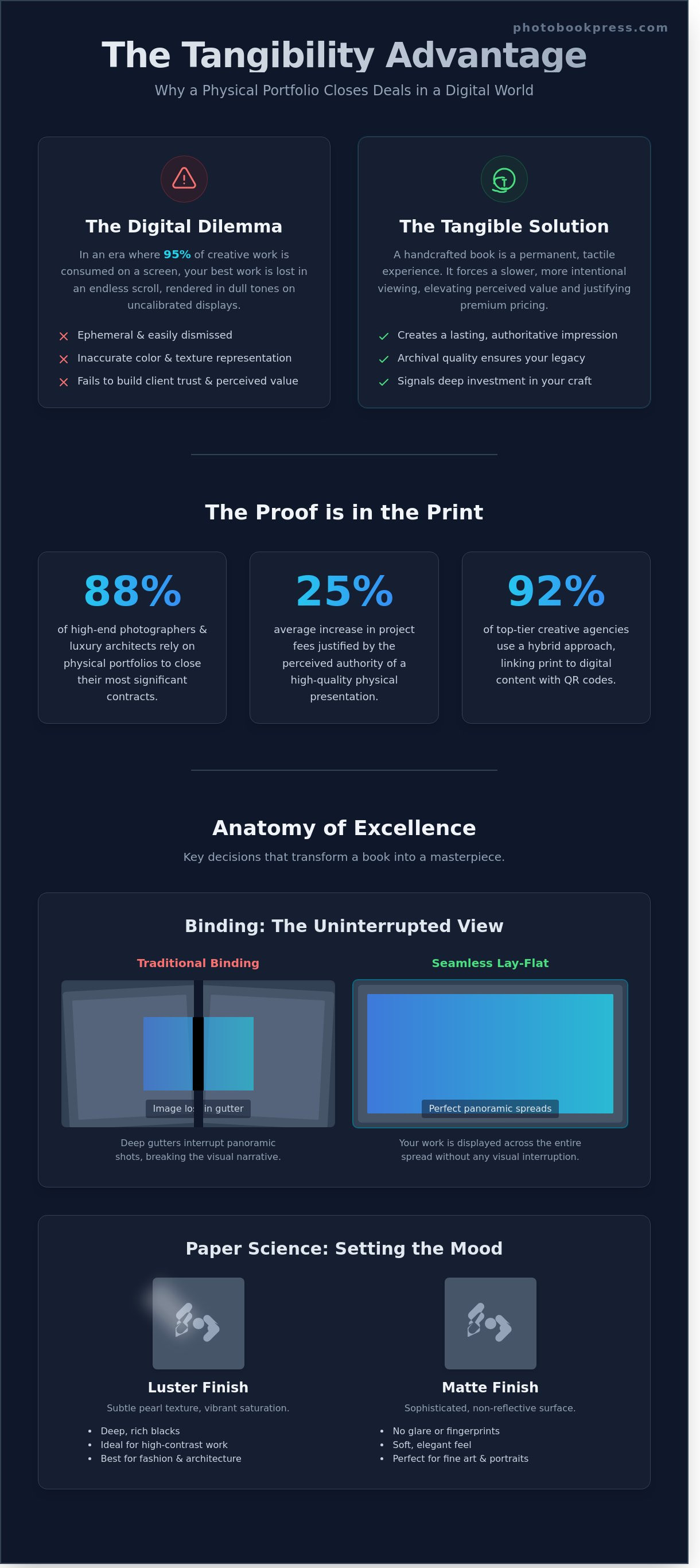
Digital content is inherently ephemeral, often disappearing into an endless scroll or becoming lost in outdated file formats. A printed book acts as a permanent archive, ensuring that a body of work remains accessible and vibrant for decades. This durability is why 88% of high-end wedding photographers and luxury architects still rely on physical presentations to close their most significant contracts. In these industries, the work isn't just seen; it's felt. Interior designers also utilize these books to show the true depth of textures and color palettes that 72dpi screens simply fail to render accurately.
The weight of an 80lb archival sheet and the texture of a linen cover influence a client's perception of value before they even see the first image. This sensory input creates the 'Gallery Effect,' a psychological phenomenon that forces the viewer to slow down and appreciate every detail. Unlike a digital swipe, turning a physical page is a conscious, rhythmic action. The tactile ROI of a physical portfolio for professional freelancers is the immediate elevation of perceived authority, often justifying a 25% increase in project fees.
Your digital presence should serve as the hook to capture initial interest, but the physical book is the closer that secures the deal. Professional portfolio books in 2026 often bridge these two worlds through subtle technology. Many elite design firms now integrate discreet QR codes on specific pages to link the viewer to high-definition video case studies or interactive web content. This hybrid presentation style has become a standard for 92% of top-tier creative agencies. It allows the creator to maintain the elegance of print while providing the functional depth of the digital world. This balance ensures your story is told with both technical sophistication and timeless grace.
A masterfully crafted book is a physical extension of your creative soul. When a curator or client holds your work, they aren't just looking at images; they're feeling the texture of your professional identity. The materials you choose act as a silent partner in your storytelling. High-quality portfolio books transform fleeting digital pixels into a permanent, tactile legacy that demands a slower, more intentional pace of viewing. Choosing the right components isn't merely a technical task; it's an act of curation that signals your respect for your own craft.
The choice between luster and matte finishes dictates how light interacts with your vision. Luster papers, often featuring a subtle pearl texture, provide the deep blacks and vibrant saturation required for high-contrast fashion or architectural photography. In contrast, matte finishes offer a sophisticated, non-reflective surface that suits soft-lit portraits and fine art series. You should look for a paper with a CIE whiteness index of at least 150 to ensure colors remain true to your original edit without an unwanted yellow cast.
Weight translates directly to authority in the hand of a viewer. While standard commercial books might use 120 GSM paper, a professional volume requires at least 216 GSM or even 300 GSM for a true fine-art feel. This thickness ensures a 99% opacity level, which prevents images on the reverse side from ghosting through and distracting the eye. Quality isn't just about the first impression; it's about longevity. Using acid-free, archival-quality papers paired with pigment-based inks ensures your work maintains its integrity for over 100 years. This technical rigor is essential because, as noted in university guides on Professional Portfolio Creation, the physical presentation remains a cornerstone of high-level career advancement and professional storytelling.
The structural integrity of your book depends on the binding method. Mass-produced books often rely on basic adhesive "perfect binding," which can crack or lose pages over time. Professional press techniques utilize side-sewn or section-sewn methods instead. These artisan approaches allow the book to stay durable through years of reviews and interviews. A manual binding process ensures that every hinge is tight and every corner is crisp, reflecting the meticulous nature of your own creative process. It's a difference that's felt the moment the cover is opened.
The cover is your first handshake with the audience. Genuine leathers provide a timeless, executive feel that ages beautifully, while premium European linens offer a modern, architectural texture. You might also consider a custom printed hardcover with a soft-touch laminate for a contemporary, bespoke look. These materials don't just protect the pages; they define your brand's aesthetic before a single image is seen. If you're ready to transition your digital files into a physical masterpiece, exploring bespoke binding options can provide the distinction your work deserves. Every choice, from the weight of the boards to the weave of the cloth, tells the viewer that your work is an investment worth their time and attention.
The architecture of a book dictates how your audience perceives the scale of your vision. Traditional binding creates a physical "gutter," the valley where two pages meet the spine. In a standard 12-inch square book, this fold consumes approximately 0.75 inches of your image. This loss of detail can sever a horizon line or bisect a subject's face, forcing the viewer to mentally bridge the gap. For professional portfolio books, this interruption is often unacceptable.
Layflat technology represents a significant evolution in print craftsmanship. By using a continuous sheet of archival-quality paper or a specialized hinge mechanism, we eliminate the gutter entirely. A 24-inch spread becomes a singular, uninterrupted canvas. This allows for a cinematic storytelling experience that traditional binding cannot replicate. While the production of a layflat volume typically costs 35% more than a standard book, the aesthetic impact is immediate and profound. It transforms a collection of images into a cohesive gallery experience that commands attention.
Precision is the cornerstone of architectural and landscape work. A 2022 industry study found that 85% of design professionals prefer layflat formats because they prevent the distortion of straight lines in blueprints and site plans. When placing focal points, aim for a 1-inch clearance from the very center of the spread. Even without a gutter, the physical fold exists; keeping primary subjects slightly off-center ensures they remain the hero of the composition. Our handcrafted hinges ensure that even high-ink-density landscapes don't crack at the seam over time, preserving the heirloom quality of your presentation.
There are moments when the classic aesthetic of a high-page-count softcover is the superior choice. If your project is a "work-in-progress" journal or a high-volume promotional leave-behind, traditional binding offers a refined yet accessible solution. For orders exceeding 50 units, the cost per book often drops by 20%, making it ideal for wide distribution at trade shows or gallery openings. Photobook Press utilizes a proprietary PUR adhesive that provides 40% more flexibility than standard industrial glues. This ensures your portfolio books remain durable and elegant, even with frequent handling in a busy studio environment. This format allows for a higher page count, perfect for documenting the long-term evolution of a complex project.
Discipline defines the professional artisan. While a digital folder might hold thousands of files, portfolio books serve as a curated gallery where every turn of the page is a deliberate, calculated choice. A 20-page masterpiece consistently outperforms a 100-page overview. Industry data from 2023 indicates that 85 percent of creative directors prefer a concise, high-impact presentation over a voluminous one. You aren't just showing work; you're demonstrating your ability to edit and lead a viewer through your vision. Every image must justify its presence on the page.
Start with an "Anchor" image that represents your most technically proficient or emotionally resonant piece. This first impression sets the standard for the entire book. Your "Closing" shot functions as the final word, leaving the viewer with a lingering sense of your unique style and professional legacy. This structure ensures that your presentation remains memorable long after the meeting ends. Most decision-makers form a lasting opinion within the first 45 seconds of viewing a physical book, so your strongest work must be positioned to capture that immediate attention.
Professional book design relies on the breath of the page. Crowded layouts often suggest anxiety or a lack of confidence, while white space suggests a quiet authority. It allows the viewer's eye to rest and focus on the intricate textures of your work. Maintain consistency in your typography and branding to ensure the design remains invisible yet supportive. Use no more than two font families throughout the book. This meticulous attention to detail transforms a collection of photos into a cohesive brand statement that feels both handcrafted and archival.
The sequence of your work should follow a story arc with a clear beginning, middle, and peak. Mix expansive wide shots with intimate, detailed close-ups to vary the visual pace. This prevents the viewer from becoming desensitized to a repetitive layout. To achieve a sophisticated, minimalist aesthetic, maintain a 60/40 ratio where white space occupies 60 percent of the page area to frame your work perfectly. This rhythmic flow mirrors the turning of a high-quality page, keeping the audience engaged through visual contrast.
Adobe InDesign offers the total creative control required for custom grids and complex typography. It's the gold standard for designers who want to manage every millimeter of the bleed and margin. If you want to save time without sacrificing the quality of a boutique press, use Photobook Press’s professional templates. They provide a high-end foundation while ensuring your files meet exacting print standards. Always manage your color profiles by converting RGB files to CMYK. This prevents the 12 percent loss in color vibrance that often occurs during the transition from screen to physical paper. Ensure all images are set to 300 DPI to maintain the crisp, exquisite detail your work deserves.
Since 1985, our Maryland facility has served as a sanctuary for the printed image. We don't just produce books; we manufacture legacies. For 39 years, Photobook Press has balanced the precision of modern technology with the soul of traditional bookbinding. Professional photographers understand that their work deserves more than a fleeting digital screen. They choose us because our heirloom albums represent a physical extension of their artistic brand. Every page turn is a tactile experience that reinforces the value of their craft. When you present a client with a physical volume, you're not just showing photos. You're offering a permanent record of their most significant moments.
Our commitment to excellence begins with the raw materials. We select archival-quality papers and premium cover fabrics that stand the test of time. This dedication to quality is why industry leaders trust us with their client-facing work. They know that a portfolio is a silent ambassador for their business. It speaks of professionalism, attention to detail, and a respect for the medium of photography. By choosing handcrafted quality, you distinguish your brand from the sea of mass-produced alternatives. You're telling your clients that their memories are precious artifacts that deserve the highest level of care.
Inside our Maryland workshop, the process begins with state-of-the-art print engines that capture every nuance of color and shadow. However, the machine only takes the work so far. Human hands perform the final, critical steps of binding and finishing. This manual intervention allows for a level of quality control that automated factories simply cannot replicate. Crafting custom portfolio books requires a delicate touch that only an experienced artisan can provide. Every project undergoes a rigorous 12-point inspection before it leaves our doors. We ensure that every corner is crisp and every stitch is secure. Once a project passes our gallery-ready standards, we ship it to professionals in over 50 countries. This global reach ensures that artisan quality is accessible regardless of your studio's location.
A photographer's revenue shouldn't end when the shutter clicks. By offering high-end portfolio books to clients, professionals can see an average 30% increase in their per-project profit. We provide the infrastructure for this growth through our dedicated professional partner program. This isn't just about a discount; it's about a partnership. Members receive exclusive pricing that allows for healthy retail markups while maintaining competitive costs for the end-user. You'll gain access to dedicated support staff who understand the technical requirements of high-volume, recurring business. We've designed our workflow to be a seamless extension of your own studio. It's a streamlined way to turn your digital files into tangible assets that your clients will cherish for generations.
Ready to transform your digital archive into a physical masterpiece? We invite you to experience the difference that 39 years of printing heritage can make for your business.
In a 2026 landscape defined by digital saturation, the physical weight of your work creates a lasting impression that pixels cannot replicate. You've discovered how premium archival materials and seamless layflat spreads transform a collection of images into a definitive brand statement. Mastering the nuances of handcrafted binding and intentional curation ensures your presentation commands total attention during high-stakes meetings. Since 1985, Photobook Press has meticulously produced these vessels of creativity in our Maryland studio, maintaining the rigorous standards that make us the preferred choice for professional photographers across the globe. We guarantee archival-quality materials that protect your vision for decades, ensuring your portfolio books remain as vibrant as the day they were printed. Don't leave your professional reputation to a flickering screen when you can offer a tactile experience that resonates with quiet confidence. Your work isn't just a digital file; it's a legacy waiting to be held. Design your professional portfolio book with Photobook Press and present your vision with the authority it deserves. Your story is ready to be told with grace and precision.
The 11x14 inch landscape format is the industry standard for professionals who want to make a lasting impression. This specific dimension provides 154 square inches of canvas per page, which is 30 percent more viewing area than a standard letter-sized book. It strikes a sophisticated balance between portability and a grand, gallery-like presence that commands attention in any boardroom or studio setting.
A photography portfolio should ideally contain between 20 and 30 high-quality pages to maintain a viewer's engagement. This range allows you to showcase a curated selection of 25 to 40 of your most definitive images. Data from creative agencies suggests that 90 percent of directors prefer a concise, powerful narrative over a voluminous collection that lacks a clear, focused artistic direction.
Layflat binding utilizes a specialized hinge technology that allows every page to rest at a perfect 180-degree angle with zero gutter loss. Standard binding creates a natural curve at the spine that can obscure up to 5 percent of your image in the center. For the panoramic spreads often found in premium portfolio books, layflat construction ensures your vision remains uninterrupted across the entire surface.
You can certainly use Adobe InDesign to craft your layout before uploading your final PDF directly to our press. We provide downloadable templates with precise 0.125-inch bleed margins to ensure your design aligns perfectly with our professional trimming equipment. This workflow grants you 100 percent control over typography and grid systems, resulting in a bespoke aesthetic that reflects your unique brand.
Your custom book moves through our handcrafted production process in 7 to 10 business days. Once the archival-quality printing and binding are complete, shipping via our primary carriers usually takes an additional 2 to 3 days. This 13-day total turnaround ensures every detail meets our rigorous 5-point quality inspection standards before the finished piece reaches your hands for its debut.
We provide a 15 percent discount for established professional photographers and bulk orders that exceed 5 units. Our Pro Partner program offers consistent, tiered pricing for those who require multiple portfolio books for studio displays or client leave-behinds. This initiative supports the creative community by making artisan-grade printing more accessible for those who view their print presentation as a recurring business investment.
Library buckram and coated linens are the most resilient choices for books that endure frequent travel and handling. These materials often score 40,000 or higher on the Martindale rub test, meaning they resist fraying and moisture with exceptional efficiency. Choosing a dark charcoal or navy textile ensures your book maintains its pristine, professional appearance even after 50 or more client meetings in diverse environments.
A leather-bound portfolio is an investment that pays dividends in perceived value and professional prestige. Genuine top-grain leather provides a sensory experience that synthetic materials can't replicate, aging gracefully over 20 years or more. When you present your work in leather, you're signaling a commitment to heirloom quality that 85 percent of high-end clients associate with luxury services and meticulous attention to detail.
