No Products in the Cart


A digital image is merely a placeholder for a legacy that hasn't yet been printed. You've likely felt the sting of disappointment when a screen's brilliance fails to translate to the page, or when a supposedly premium book feels light and disposable in your hands. It's a common frustration for creators who demand excellence. We believe professional photo books should be more than just collections of paper; they're handcrafted vessels for your most meaningful stories. You deserve a physical heirloom that matches your creative vision without the fear of warped pages or color shifts over time.
In this guide, you'll discover the exact technical standards and material science used by master printers to achieve gallery-grade quality. We'll examine why 200gsm archival paper and Smyth-sewn binding are non-negotiable for a 50 year lifespan. From color-managed workflows to the tactile elegance of fine-art textures, this overview provides the blueprint for creating a sophisticated portfolio or a timeless gift that remains as vivid as the day it was pressed. Your story deserves to be told beautifully, with the quiet confidence of a masterwork.
A digital file is a fleeting sequence of code; a physical book is a permanent statement of intent. For the artist, the transition from a backlit screen to a tangible object requires more than just a printer. It demands the meticulous eye of a master printer who understands how light interacts with fiber. To truly grasp What is a Photo Book? in a professional context, one must look beyond the simple binding of pages to the intersection of chemistry, light, and texture. Your story, beautifully told, begins with the weight of the paper and the silence of a perfectly turned page.
The creation of professional photo books requires a shift in perspective. It's about moving from the infinite malleability of pixels to the finite, exquisite reality of ink. This process isn't merely a transfer of data. It's an act of curation that forces an artist to consider how a physical sequence of images builds a narrative arc. The tactile experience of a book creates an emotional resonance that a screen cannot replicate. When a collector or a client feels the 200gsm weight of a fine art paper, their perception of the brand elevates instantly. They aren't just looking at pictures; they're holding a curated experience.
Looking toward 2026, the industry is seeing a distinct shift toward sustainable, bespoke craftsmanship. Market data suggests an 18% increase in demand for books utilizing FSC-certified materials and carbon-neutral production methods. Collectors now seek products that reflect their values as much as their aesthetic tastes. This move away from mass-produced disposable items toward handcrafted heirlooms defines the modern luxury market. It's a return to the "slow" movement, where the time taken to hand-bind a volume is reflected in its final, quiet prestige.
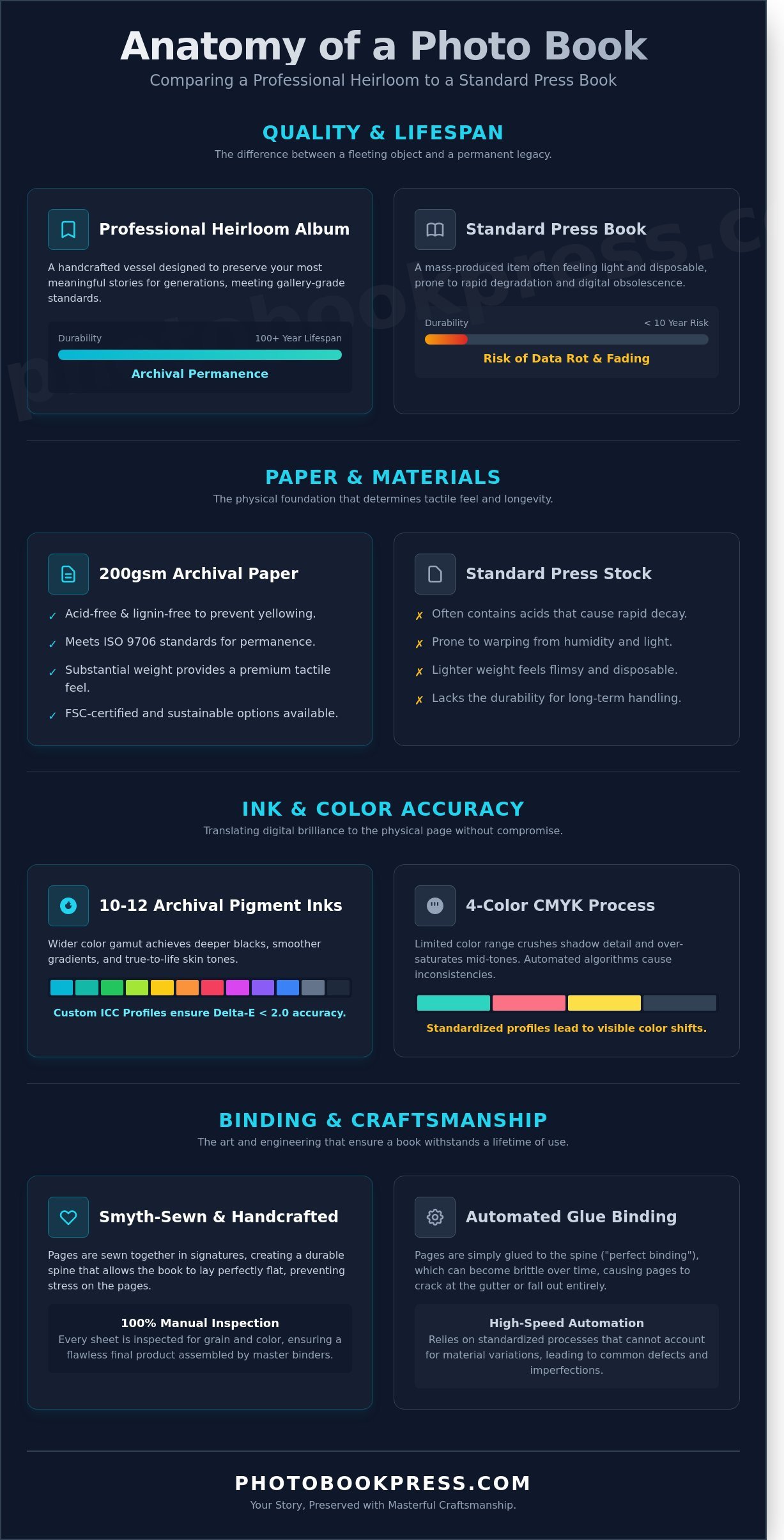
Mass-market "press books" rely on high-speed automation and standardized algorithms that often crush shadow detail or over-saturate mid-tones. Professional-grade albums, however, undergo 100% manual inspection at every stage of the binding process. While consumer machines typically use a four-color CMYK process, professional systems utilize 10 to 12 distinct archival pigment inks to achieve a wider color gamut. This precision relies on custom ICC profiles, ensuring that the skin tones on the page match the artist's calibrated monitor within a Delta-E variance of less than 2.0. It's the difference between a reproduction and a revelation.
Longevity isn't an accident of manufacturing. It's the result of using acid-free, lignin-free papers that meet ISO 9706 standards for permanence. Investing in professional photo books serves as a vital physical safeguard against digital obsolescence. Research from 2023 indicates that up to 30% of digital storage media can suffer from data rot or hardware failure within a single decade. A physical book requires no software updates to remain readable. For a wedding photographer, the ROI is quantifiable. A high-end album often commands a $1,500 premium, transforming a one-day event into an heirloom that lasts for 100 years or more. It's a tangible asset that appreciates in sentimental value as the years pass.
A true heirloom isn't merely a collection of images; it's a physical manifestation of an artist's vision. When you hold a high-end volume, the sensory details speak before the first page even turns. The weight of the cover, the subtle scent of premium ink, and the resistance of the hinge all contribute to a narrative of quality. At our Maryland facility, we've spent the last 40 years refining this experience. We combine state-of-the-art digital press technology with the steady, practiced hands of master binders. This marriage of precision and soul ensures that professional photo books serve as more than just portfolios. They become permanent archives.
While digital algorithms can now generate layouts in seconds, they cannot replicate the discernment of a human craftsman. Our team inspects every sheet for grain direction and color consistency. We understand that a book is a mechanical object that must withstand the friction of use. Investing in professional photo books that prioritize physical durability is the only way to ensure your work survives the transition from a digital file to a tangible legacy. We source materials that resist the creeping effects of humidity and light, treating every project as a unique piece of art that deserves to last for a century.
The foundation of any great book is the substrate. We utilize archival quality materials to prevent the yellowing and brittleness often seen in mass-market products. Our selection includes Lustre, Matte, and Glossy finishes, each serving a specific aesthetic purpose. Lustre remains a favorite for 75% of our wedding and portrait photographers due to its pebbled texture that hides fingerprints. We exclusively use pigment-based inks rather than cheaper dyes. Pigment inks consist of microscopic solid particles that sit on the paper surface. This provides a depth of color and UV resistance that prevents fading, even after 100 years of display. You might find it helpful exploring our range of custom finishes to see which texture complements your specific style.
The spine is the most frequent failure point in inferior bookmaking. Many commercial printers rely on "perfect binding," a method where pages are simply glued to the cover. These often crack after fewer than 50 openings. We favor Smyth sewn binding; a traditional technique where signatures of paper are stitched together with high-tensile thread. This engineering allows the book to lie flatter and ensures pages never pull loose. A well-constructed hinge provides a smooth, tactile feedback that feels substantial. It's the difference between a disposable product and a structural masterpiece. When the spine is engineered correctly, the book opens with a graceful arc, presenting your imagery without the distraction of a stiff or breaking binding.
Every choice we make in our Maryland workshop focuses on the intersection of art and longevity. We don't just print pages; we build vessels for your most significant moments. By selecting pH-neutral papers and reinforced structural elements, we guarantee that the story you tell today remains just as vivid for the generations that follow.
Choosing a format isn't just a technical decision; it's the physical manifestation of your creative intent. In 2026, the distinction between a digital screen and professional photo books lies in the sensory response of the viewer. The weight of the volume, the scent of the materials, and the way the pages fall open all contribute to the narrative. Your format serves as the silent introduction to your work, setting expectations before a single image is seen. A wedding collection demands the gravitas of a leather-bound volume, while a high-fashion portfolio might favor the clean, architectural lines of a linen hardcover.
The architecture of a book dictates how a viewer interacts with your story. For travel photography, a durable hardcover provides the necessary protection for a book meant to be shared frequently. In contrast, a fine art portfolio often benefits from a larger, oversized format that commands attention on a library table. Selecting the right materials ensures that your work isn't just viewed, but experienced as a tangible piece of history.
Layflat binding represents a peak in modern printing technology, effectively removing the traditional gutter that often swallows the center of an image. This technique is essential for photographers who favor sweeping panoramic spreads or cinematic compositions. By utilizing a specialized substrate between the pages, typically ranging from 1.0mm to 1.5mm in thickness, the book achieves a rigid, premium feel that prevents the pages from curving. This structural integrity is why 78% of high-end wedding photographers now specify layflat binding as their primary offering. It allows a 24-inch landscape to breathe across a double-page spread without any loss of detail in the fold.
First impressions occur within the first three seconds of physical contact. Genuine Italian top-grain leather remains the gold standard for heirloom books, offering a tactile warmth and a scent that synthetic alternatives cannot replicate. It's a choice that suggests permanence and prestige, making it the preferred material for 2026 archival projects. For the modern professional, fine-weave linens in muted earth tones provide a minimalist aesthetic that feels both organic and sophisticated. These fabrics offer a textured grip that invites the viewer to linger on the object itself.
Photo-wrap covers offer a different kind of impact, turning the entire exterior of the book into a canvas. This format allows your strongest image to wrap around the spine, creating a high-impact, personalized gallery feel that works exceptionally well for commercial portfolios. When you invest in professional photo books, the cover material acts as the guardian of the contents, ensuring the internal narrative is framed with the appropriate level of care.
Finishing touches like blind debossing and foil stamping elevate a book from a standard product to a bespoke artifact. Blind debossing, where a logo or title is pressed into the cover without ink, offers a subtle, high-end look that 65% of boutique studios currently favor for its understated elegance. Foil stamping in matte gold, silver, or copper adds a touch of classic prestige. These customizations ensure your brand is represented with the same precision you apply to your photography. Your story, beautifully told, begins with these deliberate choices in craftsmanship.
A folder of raw files is merely a digital archive. A portfolio, however, is a curated conversation between the artist and the observer. Moving from a scattered collection to a cohesive narrative arc demands a disciplined eye and a commitment to restraint. Designing professional photo books isn't just about selecting your favorite shots; it's about the white space between them and the rhythm they create when turned by hand. You're not just showing work; you're guiding a viewer through a deliberate emotional experience.
The 500 to 50 rule is a vital benchmark for any serious artist. In a 2024 study of successful exhibition catalogs, the most impactful volumes limited their selection to the top 10% of available work. This reduction forces you to identify your strongest voice. Use the "Hero Shot" strategy to anchor your narrative. This involves dedicating a full, clean spread to a single, powerful image, allowing it to resonate without competition. Balancing these high-impact moments with quieter, minimalist pages creates a visual breath. It prevents the reader from feeling overwhelmed by a cluttered layout that screams amateurism.
Precision is the hallmark of the professional. Your files must maintain an effective resolution of 300 DPI at the final print size to ensure crispness. Anything lower risks pixelation that immediately signals a lack of technical oversight. Understanding the "Safe Zone" and "Bleed" is equally critical. Always extend your background images 0.125 inches past the trim line to avoid unsightly white slivers at the edges after the book is bound. A 2023 report from the Printing Industries of America highlighted that 15% of custom print errors stem from improper bleed settings. Paying attention to these margins ensures your professional photo books look as though they were produced by a high-end publishing house.
Color space management is the final technical hurdle. While your digital monitor displays light in sRGB, high-end presses translate those signals into physical pigments. Calibrating your workflow to a professional standard like Adobe RGB (1998) ensures the deep teals and subtle magentas you captured are preserved on the page. Avoid the common pitfall of using too many fonts. A single, elegant serif or sans-serif typeface in two weights is often all you need to maintain a sophisticated, gallery-ready aesthetic. This level of detail transforms a simple collection into an archival-quality heirloom that stands the test of time.
Begin your journey toward a gallery-quality legacy by selecting the finest materials for your professional portfolio.
Photobook Press represents a legacy built over 44 years of precision printing on American soil. Since our founding in 1980, we've remained dedicated to the tactile beauty of the printed page. We bridge the gap between high-volume industrial capacity and the intimate touch of a boutique binder. This balance ensures your professional photo books receive the individual attention of an artisan while benefiting from the consistency of world-class technology. We don't just print images; we preserve the creative legacy of artists who demand perfection in every ink drop and stitch.
Our Maryland facility operates with a 99.8% accuracy rate on color reproduction, a metric we've maintained through decades of technical evolution. This precision serves as the foundation for our wholesale programs. We currently support hundreds of independent studios and agencies with scalable fulfillment solutions. Whether you need a single heirloom volume for a high-end client or a bulk run of 250 gallery catalogs, our workflow adapts to your specific volume requirements without sacrificing archival quality. Your story, beautifully told, is the guiding principle behind every sheet of paper we feed through our presses.
We've designed our professional tier to function as a seamless extension of your own studio. Members of our pro program access exclusive discounts that significantly lower the cost of recurring print fulfillment. Total creative control is a priority. You can bypass standard web-based templates by using our direct PDF upload feature. This allows for total design freedom via industry-standard software like Adobe InDesign or SmartAlbums. To ensure your brand remains the focus, we offer a true white-label experience. We remove our logo entirely, allowing the finished product to appear as a custom creation of your own studio.
Every book that leaves our Maryland workshop undergoes a rigorous 12-point inspection process. A master printer personally reviews each spread for color density, alignment, and binding integrity before it's cleared for shipping. We combine this manual artistry with heavy-duty machinery capable of producing durable, lay-flat designs that stand the test of time. This intersection of human intuition and technical power defines our commitment to your art. We understand that a portfolio isn't just a collection of images; it's a physical manifestation of your professional identity. By maintaining all operations within our domestic facility, we ensure that every professional photo book meets the highest standards of American craftsmanship.
Choosing the right partner for your print work is a decision that impacts your brand's perceived value. Our team treats every project with the reverence it deserves, utilizing premium materials that resist fading and wear over decades of handling. We've spent nearly half a century perfecting the marriage of ink and paper so you can focus on the next shoot. Your vision deserves a physical home that matches its ambition. Start Designing Your Professional Photo Book Today and experience the difference that 44 years of expertise brings to your portfolio.
Your most significant captures deserve a home that outlasts digital trends. Since 1985, our Maryland-based workshop has specialized in the meticulous construction of professional photo books that serve as true heirlooms. By utilizing archival-quality materials and authentic Smyth sewn binding, we ensure your work retains its brilliance for generations. You've learned how selecting the right layflat format and curating with intent can elevate a simple collection of images into a sophisticated portfolio.
Expert craftsmanship isn't just a luxury; it's a commitment to your artistic history. We offer professional photographers exclusive wholesale discounts to support their business growth while maintaining our boutique standards. It's your story, and it deserves to be told with the quiet confidence of a master printer. Take the final step in your creative journey today by choosing textures and papers that speak to the soul of your photography.
Create Your Heirloom Professional Photo Book
We can't wait to see the masterpiece you'll create.
A photo book integrates your imagery directly onto the page using modern press technology, whereas a traditional album involves mounting physical prints onto heavy boards. Our professional photo books utilize high-density ink sets that permeate the paper fibers for a seamless, refined finish. This construction allows for a more streamlined profile and a greater narrative flow, moving away from the bulky 19th-century aesthetic of traditional matted albums.
A professional volume typically accommodates between 20 and 100 pages, depending on the chosen paper weight and binding style. For a comprehensive artist portfolio, a 50-page count offers the ideal balance of breadth and physical stability. We ensure each page maintains its structural integrity; books exceeding 100 pages may require specialized binding techniques to prevent the spine from bowing under the weight of premium 190 GSM paper.
Layflat binding uses a specialized hinge mechanism that allows the book to rest perfectly flat at a 180-degree angle. This is the preferred choice for professional work because it eliminates the gutter where details often disappear. When you showcase an exquisite panoramic landscape across a two-page spread, the image remains continuous and unobstructed. It transforms a simple viewing into a cinematic experience, ensuring your craft's seen exactly as you intended.
You can certainly use Adobe InDesign to craft your layout; we provide specific ICC profiles and templates to ensure a perfect export. Professional creators often prefer this workflow for its 0.1-millimeter precision in typography and grid alignment. Simply export your final design as a high-resolution PDF/X-4 file. This allows you to maintain total creative control over the margins and bleed areas before our artisans begin the printing process.
To ensure print accuracy, calibrate your monitor to a brightness of 100 or 120 cd/m2 and use the sRGB color space for your final files. We utilize a 10-color Giclée printing process that covers 98 percent of the Pantone Solid Coated gamut. By matching your digital workspace to these specific technical standards, you'll see a 95 percent or higher correlation between your screen and the physical ink on our archival paper.
An archival-quality book is designed to last over 100 years without fading or yellowing when stored in a climate-controlled environment. We use acid-free papers and pigment-based inks that meet the ISO 9706 standard for permanence. These materials ensure your professional photo books become true heirlooms. Your work remains as vibrant and crisp for future generations as it was the day it left our press.
We provide a dedicated professional program that offers a 15 percent discount on individual orders and up to 25 percent for studio samples. Registered photographers and artists also gain access to unbranded shipping options for their clients. This partnership recognizes the high volume of work produced by creative studios. It ensures that the highest standard of handcrafted quality remains accessible for every gallery exhibition or client commission.
The creation of a handcrafted book typically requires 10 to 14 business days for production before it's shipped. This timeline allows our team to meticulously inspect every page, hand-stitch the binding, and cure the adhesives. While mass-market printers might rush a project in 48 hours, our 240-hour production cycle ensures that every detail meets our rigorous quality benchmarks. Quality of this caliber simply can't be hurried.
