No Products in the Cart


What if your most cherished memories are quietly disappearing into a digital void? The average smartphone user now captures more than 2,100 photos every year, yet these images rarely escape the glowing confines of a screen. You likely feel the weight of this digital clutter; it's often overwhelming to identify the few frames that truly define your life's narrative. We understand that your history deserves a more permanent, tactile home than a temporary cloud folder.
You can elevate these archives into sophisticated coffee table photo books that serve as both personal legacies and pieces of fine home decor. By choosing archival-quality materials and professional-grade printing, you'll create a durable heirloom that matches the aesthetic of a high-end gallery. This guide details how to navigate the curation process, from selecting heavy paper weights to choosing handcrafted bindings that ensure your story is told with the grace it deserves.
A coffee table photo book represents the pinnacle of personal publishing. It's a curated, large-format volume designed specifically for display and inspiration. While a standard photo album might live in a drawer, these books command attention on a surface. To understand the history and cultural weight of this medium, one might ask, What is a coffee table book? Historically, these volumes served as windows into high art and distant landscapes. Today, they serve as a permanent element of home decor that invites tactile engagement.
In 2026, physical print remains the definitive medium for preserving high-stakes memories. Digital files are fragile; they're subject to bit rot and platform obsolescence. A professional-grade heirloom volume offers a tangible connection to the past. It functions as a conversation piece that invites guests to linger over a visual narrative. The distinction between a common book and an heirloom lies in the craftsmanship. It's the difference between a fleeting digital flicker and a permanent household monument.
To better understand how these volumes integrate into a sophisticated living space, watch this helpful video on styling curated books:
Scale matters in the world of coffee table photo books. Professional aesthetics typically demand 12x12 or 11x14 inch dimensions. These larger formats allow for generous white space, creating a gallery-like atmosphere on every page. Archival-quality materials are essential for color precision and a 100-year longevity rating. We view layflat binding as the non-negotiable standard. This technique allows pages to rest perfectly flat, ensuring that panoramic images aren't lost in a central gutter.
High-end volumes move away from simple chronological logs. Instead, they embrace thematic storytelling. This approach groups images by emotion, color, or subject matter to create a more impactful visual narrative. A well-paced book uses varying image sizes to control the reader's speed. It's an intentional journey through a specific moment in time. A coffee table book is a sophisticated fusion of personal history and artistic curation.
Creating professional-grade coffee table photo books begins long before the first page is printed. It starts with the discipline of curation. You aren't merely compiling a digital archive; you're directing a gallery exhibition. A singular, focused theme provides your volume with the gravitas of a museum catalog. Whether you're documenting a specific coastal expedition or a decade of family heritage, a tight thematic focus ensures the final product feels like a deliberate work of art rather than a random collection of snapshots.
Adopting a "less is more" philosophy is essential for maintaining high engagement. Research into visual cognition suggests that viewers begin to experience "image fatigue" after 60 high-stimulation visuals in a single sitting. Aim for 50 stunning, curated images rather than 200 mediocre ones. This selective approach allows each photograph to command the attention it deserves. Your goal is to identify anchor images that serve as full-spread focal points, setting the emotional tone for the pages that follow. By prioritizing color harmony and a consistent emotional rhythm, you create a sensory experience that feels both balanced and intentional.
Identify your hero images by their technical merit and emotional weight. These candidates must meet a minimum 300 DPI requirement to ensure clarity when enlarged for panoramic spreads. Pair these grand vistas with "detail shots," such as the texture of a silk scarf or the patterns in a stone wall. These smaller, focused images provide necessary visual breathing room. They prevent the layout from feeling cluttered while adding a layer of sensory depth to your coffee table photo books.
Every heirloom volume needs a beginning, a middle, and a definitive finale. Don't feel tethered to a strict chronological timeline. Instead, group your images by lighting, mood, or color palette to create a sophisticated flow. Using white space is a powerful tool in this process. It acts as a silent frame, allowing your most impactful photos to breathe and resonate. This level of care in layout design reflects the standards found in premium materials for bookbinding, where every detail supports the longevity of the piece. When you're ready to see your vision take shape, our artisan design software provides the perfect canvas for your story, beautifully told.
The first interaction with coffee table photo books happens before a single page is turned. It's the weight in the hands and the texture under the fingertips that signal the value of the contents. Choosing premium materials transforms a digital gallery into a physical legacy. A well-designed volume acts as a bridge between your personal history and your home's aesthetic. If your living space features neutral tones and natural wood, a vibrant, plastic-coated cover will feel discordant. Instead, the exterior should complement your interior palette, serving as a curated piece of decor that invites exploration. A 2022 survey by the Association of Personal Photo Organizers found that 78% of clients value the tactile quality of a physical book significantly more than its digital counterpart.
Experts at the International Center of Photography view the construction of these volumes as a unique art form where the physical medium is as vital as the imagery itself. This tactile experience begins with the weight of the boards and ends with the grain of the paper. Every choice you make should reinforce the story you're telling.
Linen offers a contemporary, organic feel that suits minimalist or coastal interiors. Its weave provides a subtle grip and a non-reflective surface that feels grounded. For those creating a wedding album or a family legacy, leather remains the gold standard. It ages gracefully, developing a unique patina over decades. Adding bespoke details like foil stamping or debossing creates a physical indentation in the material. This handcrafted touch ensures the title is felt as much as it's seen, providing a sense of boutique exclusivity.
Professional archivists at institutions like the Smithsonian recommend acid-free, 100lb+ paper to ensure a lifespan exceeding 100 years. Standard 60lb paper often found in mass-market books lacks the rigidity needed for a premium feel; it's prone to wrinkling and "show-through" where images bleed from the reverse side.
The choice of finish dictates the "vibe" of the entire project. A matte finish feels quiet and archival, while a glossy finish feels energetic and modern. It's about finding the balance that respects your imagery and the legacy you're building.
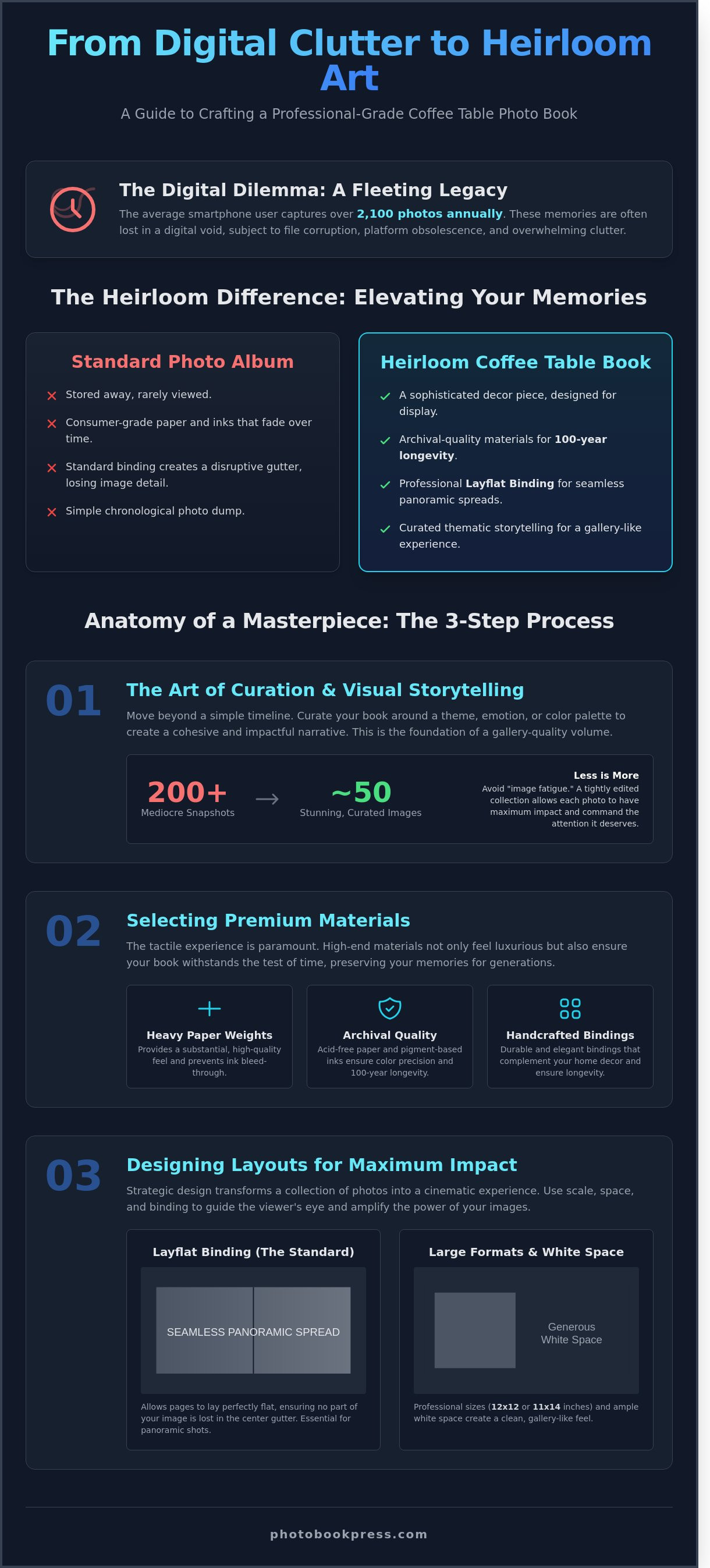
Design transforms a collection of images into a cohesive narrative. It's the silent curator that dictates how a viewer feels as they turn each page. High-end coffee table photo books rely on a delicate balance between density and breathing room. A common mistake is crowding the page, yet professional curators often suggest that 30% of a premium book should consist of white space. This negative space isn't empty; it's a deliberate choice that frames your photography as fine art.
Effective layout design utilizes the Rule of Thirds to guide eye movement across the spread. By placing your primary subject at the intersection of an imaginary 3x3 grid, you create a sense of tension and energy. Contrast this with a centered, single-image statement for moments of quiet reflection. When you alternate between a nine-photo grid of small details and one sweeping landscape, you establish a rhythmic pace that keeps the reader engaged through all 100 pages of the volume.
The panoramic spread is the pinnacle of the artisan printing process. Utilizing layflat binding allows a single image to stretch across two pages with a seamless 180-degree opening. This eliminates the traditional gutter loss where details disappear into the fold. For a 24-inch wide spread, ensure your subject's face or critical details aren't positioned directly in the center seam. Instead, use the gutter as a natural divider between a wide shot and a complementary detail shot to tell a richer story.
Text should serve the image, never compete with it. Select elegant, timeless fonts like a light-weight Helvetica or a classic Garamond to maintain a sophisticated profile. Captions work best when they're limited to under 15 words, providing just enough context to anchor the memory. Many iconic coffee table photo books omit text entirely on photo pages, moving all descriptions to a dedicated index at the back. This keeps the focus on the archival-quality print and the emotional weight of the imagery.
Ready to see your vision in print? Explore our custom layout options to begin crafting your masterpiece.
Photobook Press operates with a heritage rooted deeply in the tradition of the master printer. We believe that the creation of bespoke coffee table photo books is an act of preservation; it's the transformation of fleeting digital signals into a permanent, physical legacy. Our process begins with a commitment to archival-quality materials, utilizing acid-free papers and pigments that carry a 200-year rating against fading. This ensures that the vibrancy of a wedding day or the subtle textures of a landscape remain unchanged for centuries.
Precision defines our technical approach. We utilize state-of-the-art print technology to achieve color accuracy that meets professional gallery standards. This technical rigor is paired with our signature layflat binding. By eliminating the traditional gutter, this professional-grade binding allows your story to be told without interruption. Large-scale imagery flows across the center spread with absolute continuity, creating an immersive experience for every reader.
Quality isn't an automated byproduct; it's a deliberate choice. At our Maryland-based production facility, every volume undergoes a 100% manual inspection process before it leaves our doors. This human touch ensures that every stitch and fold meets our exacting standards. We offer specialized support for professional photographers requiring technical perfection and passionate hobbyists seeking creative guidance. Our customization options, from premium Italian leathers to refined linens, elevate each book into a unique piece of art that reflects your personal aesthetic.
The transition from a digital collection to a tangible heirloom is a seamless journey on our intuitive platform. We prioritize the safety of your investment through durable, multi-layered packaging designed to withstand the rigors of international travel. Whether you're in London or Los Angeles, our worldwide shipping network ensures your history arrives safely. Your memories deserve a home that matches their significance. It's time to move your best work off the hard drive and onto the table.
Begin crafting your custom coffee table book today and give your most meaningful moments the permanence they deserve.
Creating a volume that stands the test of time requires more than just high-resolution images. It's an intentional process of curation and design. Since 1985, Photobook Press has operated as an industry leader in the fine art of print, helping creators transform digital files into physical artifacts. By prioritizing archival-quality materials and premium layflat binding, you ensure your panoramic displays remain seamless and vibrant for generations. These handcrafted volumes serve as a bridge between your personal history and the future.
When you design coffee table photo books, you're investing in a tactile experience that celebrates your unique perspective. Our commitment to color precision and museum-grade paper weights ensures every detail is preserved with absolute clarity. Your vision deserves a format that reflects its significance. Trust in the expertise of a master printer to bring your narrative to life with the sophistication it requires.
Design your bespoke coffee table photo book at Photobook Press and take the first step toward preserving your most cherished stories. Your history is precious; it's time to tell it beautifully.
The 12x12 inch square or the 11x14 inch landscape format are the premier choices for coffee table photo books. These substantial dimensions ensure your volume commands attention on a surface. A 12x12 frame offers 144 square inches of creative space per page. This scale allows for a balanced composition where white space elevates the imagery. It's the standard for those seeking a gallery-like presence in their home.
A refined heirloom volume typically features between 50 and 150 carefully curated images. Limiting your selection ensures each photograph receives the focus it deserves. For a 100-page book, an average of 1.2 images per page maintains a sophisticated, minimalist aesthetic. Overcrowding a layout with 6 or 7 photos per page often diminishes the emotional weight of your most significant moments.
Layflat binding uses a specialized hinge to allow pages to rest perfectly flat, while standard binding creates a traditional curved gutter at the spine. The layflat technique utilizes a single, continuous sheet of 200 GSM paper for every two-page spread. This removes the 0.5-inch loss of detail typically found in the center seam. It's the essential choice for panoramic landscapes that span the full width of the book.
You can use phone photos provided they are captured at a resolution of 300 DPI or higher. Modern devices like the iPhone 15 Pro produce 48-megapixel files, which are more than sufficient for a large 11x14 inch print. We recommend reviewing your images at 200% zoom on a monitor to check for digital noise. If the clarity holds, your mobile memories will translate beautifully to the printed page.
Choose linen for a contemporary, organic texture or leather for a timeless, prestigious finish. Our 100% natural flax linen provides a tactile, understated elegance that fits modern interiors. Genuine Italian leather offers a traditional weight and a scent that signals luxury. Both materials are chosen for their 100-year durability, ensuring your coffee table photo books become permanent fixtures in your family's history.
Matte paper is the preferred choice for professional books because it eliminates distracting light reflections. Our 190 GSM luster or matte finishes provide a sophisticated, non-reflective surface that enhances color depth without the sticky feel of glossy alternatives. Glossy paper often shows fingerprints after just 2 or 3 viewings. A matte finish ensures the focus remains on the artistry of the print rather than the surface shine.
Archival quality is defined by the use of acid-free, pH-neutral paper and pigment-based inks that resist fading. True archival materials must meet the ISO 9706 standard for permanence. This ensures your book won't yellow or degrade for 200 years under normal library conditions. By using these museum-grade components, we transform a simple collection of photos into a durable legacy that survives for multiple generations.
The creation of a handcrafted volume takes between 14 and 21 business days from the moment you submit your design. This window includes 10 days of meticulous printing and hand-binding at our press. We then allow 3 to 5 days for secure transit via premium couriers. We don't rush this process; excellence requires a steady, deliberate pace to ensure every stitch and fold meets our artisanal standards.
