No Products in the Cart


What if the most enduring part of your wedding day wasn't the digital gallery on your phone, but the tactile weight of a book that feels like it has always existed? You likely feel that your most precious memories deserve a vessel that matches their significance. However, it's common to worry that a custom finish might look mass-produced or flake away after just a few years. Authentic foil stamping for photo albums is the antidote to these concerns, offering a level of permanence and elegance that digital alternatives simply cannot replicate.
We understand that you're looking for more than just a book; you're investing in a legacy. In this guide, you'll discover how traditional craftsmanship transforms a standard sewn binding wedding album into a timeless archival heirloom. Drawing on 40 years of expertise, we will clarify the technical differences between true artisan stamping and digital foil printing. You will gain the confidence to select materials, such as premium linens and leathers, that support intricate detailing. From the sensory appeal of a deep deboss to the durability of archival paper and layflat binding, we will preview the essential elements that define a high-end physical product in 2026.
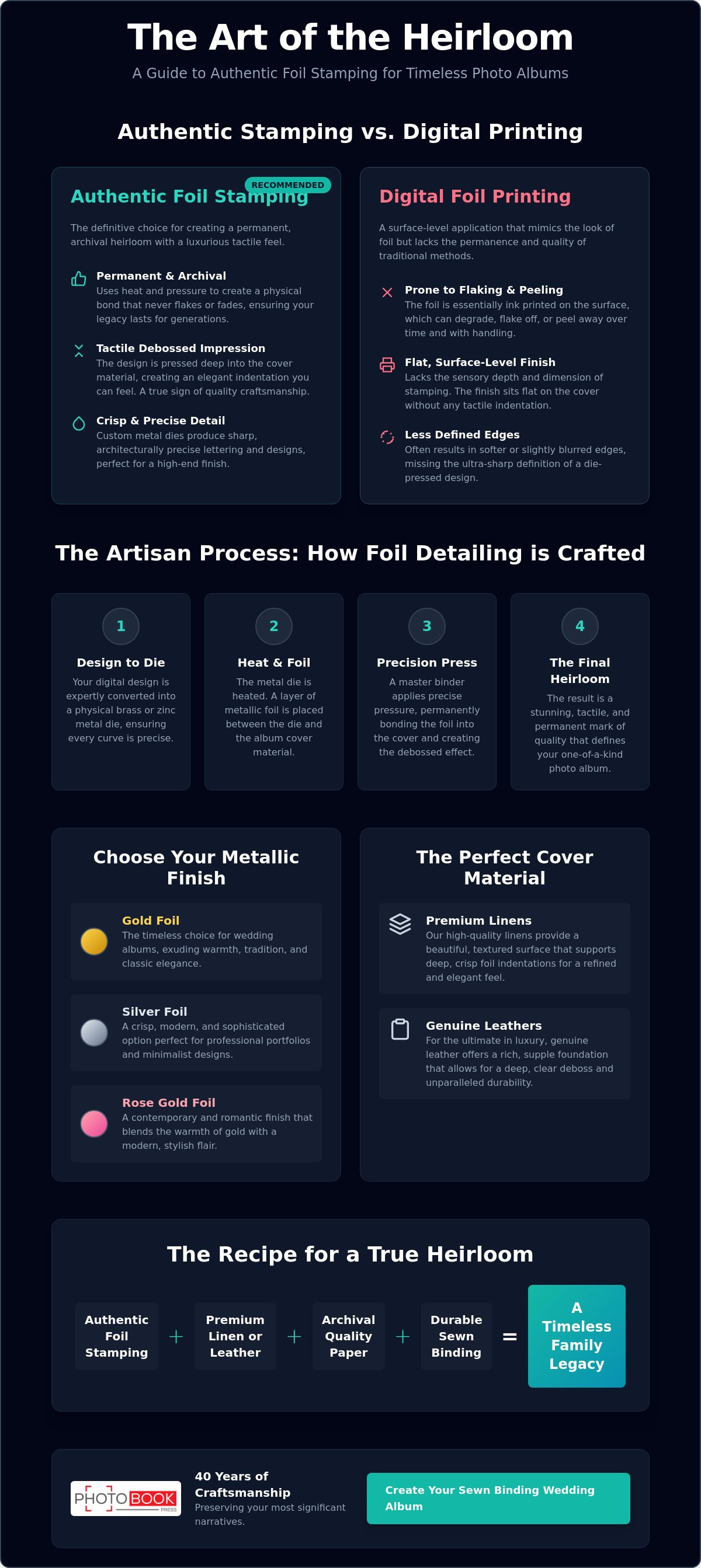
Foil stamping is a heritage technique that utilizes heat, pressure, and metallic foil to create a permanent impression. Unlike digital foil printing, which sits flat on the surface like ink, authentic Hot Stamping Process techniques actually press the design into the material. This creates a physical indentation known as debossing. It's a sensory signal of quality. When you run your fingers over the cover, you feel the depth of the artistry. This isn't just a decorative choice; it's a commitment to creating an heirloom that will be passed down for generations. We view each project as a unique artifact. This traditional method of foil stamping for photo albums requires a level of patience and precision that modern, high-speed digital printers simply cannot offer. It marks the difference between a temporary product and a permanent legacy.
To better understand this concept, watch this helpful video:
A well-designed cover acts as a silent invitation to explore the memories within. Foil stamping for photo albums serves as the focal point, catching the light and drawing the eye with a brilliance that standard pigments cannot match. Typography plays a vital role here. Whether it's a minimalist serif for a modern look or a classic script for Wedding Albums, the precision of the metal die ensures every character is sharp and defined. This level of detail transforms a simple photo book into a curated gallery piece. It elevates the personal narrative to the status of a fine art publication. In 2026, the trend has shifted toward these minimalist accents. A single line of text or a subtle date stamped in foil creates a far more sophisticated impression than cluttered graphics.
Standard ink printing often succumbs to the passage of time, with colors fading or shifting under light exposure. Metallic foils are inherently more stable. They offer a level of resistance to environmental wear that ensures your titles remain as crisp on your fiftieth anniversary as they were on your first. The bond between the foil and the cover material is not merely a surface coating. Foil stamping is a permanent bond created through thermal transfer. This fusion prevents the flaking or peeling often associated with lower-quality digital foil alternatives. When combined with archival paper and sewn binding, these finishes guarantee that your investment in legacy remains intact for decades. Our 40 years of experience have shown that these physical materials are the only true way to protect a story. Physical print remains the most reliable medium for long-term preservation.
The quiet hum of our Maryland facility is where digital memories find their physical form. Since 1985, we've remained dedicated to heritage techniques that modern mass production has largely abandoned. A master binder oversees every stage, ensuring that the foil stamping for photo albums meets our rigorous standards for clarity and depth. It's a deliberate, slow process. It demands a deep understanding of how different materials respond to thermal transfer. This isn't just about applying a finish; it's about the precision of the strike. We treat every cover as a canvas for a personal narrative, requiring both technical expertise and an eye for aesthetic balance.
The journey begins with your chosen title or monogram. We convert this digital design into a physical brass or zinc plate. This custom die is the heart of the operation. Precision at this stage is vital because every line weight and font curve determines the final clarity. A font that is too thin may not hold the foil, while one that is too bold might cause the metallic edges to blur. This stage defines The Artisan Process: How Foil Detailing is Crafted, ensuring a deep, crisp deboss rather than a superficial surface coating. You can feel the difference in the indentation, which creates a play of shadow and light that digital printing cannot replicate.
Calibrating the press requires an artisan's touch. Robust genuine leathers require significant pressure and specific temperatures to achieve a clean indentation. In contrast, delicate linens demand a lighter, more nuanced approach to prevent scorching the fabric weave. Manual binding allows our craftsmen to adjust these variables in real time. This level of oversight prevents "bleeding," where excess foil spills outside the intended lines. It also ensures an even application across the entire surface. If you're ready to see how these techniques elevate your own story, you might explore our sewn binding wedding albums for your next project.
Final quality control is the gatekeeper of the heirloom. We inspect each cover under specific lighting to verify that the foil has bonded perfectly with the material. Any hint of an uneven strike or a dull finish means the cover is rejected. We believe that an archival product should be flawless. This meticulous attention to detail is why our clients trust us with their most significant life events. We don't just print books; we build vessels for history. Every strike of the press is a step toward preserving a legacy that will remain vibrant for decades to come.
Selecting the right metallic accent is a pivotal design decision that defines the mood of your entire collection. You might ask, What is Foil Stamping for Photo Albums? in terms of aesthetic impact. It's the application of a heated die to transfer a thin layer of metallic pigment, but the color you choose speaks volumes about the story within. Gold foil remains the quintessential choice for traditional wedding albums. Its warmth mirrors the glow of candlelight and sunset ceremonies, offering a timeless prestige that doesn't age. We've seen gold remain the gold standard for heritage projects over our 40 years of craftsmanship because it feels inherently celebratory.
For those seeking a more modern, crisp aesthetic, silver foil provides a sharp contrast, especially against darker cover materials like charcoal or navy. It's become the favored choice for professional portfolios and cinematic travel logs. The cool undertones of silver highlight the precision of the binding and the clarity of the typography. It's a sophisticated, understated option that feels both current and archival. When paired with high-level print quality, silver accents create a look that is polished and gallery-ready.
Rose gold and specialty finishes introduce a contemporary, soft warmth to the cover. These are increasingly popular for baby books and sentimental Gifts for Her. If you prefer a completely minimalist look, blind debossing is a sophisticated alternative. This "no-foil" method relies entirely on the depth of the indentation to create an architectural, understated title. It's a favorite for those who value texture and form over shimmer, allowing the quality of the cover material to take center stage. This deliberate selection process ensures that foil stamping for photo albums acts as a bridge between the imagery and the physical object.
Your choice of foil should harmonize with your photography's color palette to create a cohesive experience. Warm-toned wedding imagery, rich with ochre and cream, pairs beautifully with gold accents. Conversely, black and white professional portfolios are often elevated by the starkness of silver or the subtle texture of blind debossing. Rose gold serves as a bridge, offering a unique radiance that complements soft, pastel-heavy photography styles. We recommend considering the dominant tones in your images before finalizing your cover design. This ensures the physical product feels like a natural extension of the art it contains.
Foil isn't static; it interacts dynamically with ambient light, changing in intensity as you move the book. Brilliant foils offer a high-gloss reflection that commands attention, while matte foils provide a subdued, velvety sheen that feels modern and refined. This interaction is particularly noticeable on the bookshelf. Subtle light reflection adds a three-dimensional quality to the album spine, ensuring the title remains legible and elegant from every angle. This play of light, combined with the tactile depth of the deboss, distinguishes a premium product from a standard printed book. It's a sensory detail that invites you to reach for the album again and again.
The relationship between a metallic accent and its substrate is a fundamental element of bookbinding. While foil stamping for photo albums adds a layer of brilliance, the texture of the cover material determines how that light is captured and reflected. Not all surfaces respond to heat and pressure in the same way. Some materials welcome the heated die with ease, while others require a more calculated, nuanced approach from the binder. We believe that understanding these physical properties is essential for anyone seeking to create a truly archival piece. It's not just about the color of the foil; it's about how the material yields to the pressure of the press to create a permanent bond.
Premium linen offers a rustic, organic charm that many find appealing for family chronicles or travel logs. The weave of the fabric creates a unique tactile experience, but it also presents specific challenges for the stamping process. Coarse weaves can sometimes "break" the fine lines of a delicate, thin font. To ensure legibility and a crisp finish, we often recommend bolder typography for these textured surfaces. The contrast between a matte linen background and a metallic foil stamp creates a sophisticated, multi-dimensional effect. Choosing a foil color that provides high contrast, such as silver on charcoal or gold on navy, ensures your title remains a sharp, legible focal point for decades.
Genuine leather remains the definitive choice for those seeking the deepest, most permanent debossing. Its natural elasticity allows the metal die to sink further into the surface, creating a crisp indentation that catches the light with architectural precision. This is where the classic "library look" is achieved, particularly when utilizing gold-stamped spines. The durability of these leather-bound Heirloom Books is unmatched. The foil becomes almost inseparable from the hide itself, resisting the wear that often affects surface-level printing. As the leather develops a unique patina over time, the foil stamping remains a vibrant testament to the original moment of creation.
For our Layflat Photo Books, we carefully select materials that support both the structural integrity of the specialized binding and the aesthetic demands of the foil. Hardcover options provide a smooth, rigid surface that allows for a library-grade finish. This stability is crucial for maintaining the precision of the stamp across the entire cover. If you're ready to begin selecting the materials for your next legacy project, you can browse our full collection of premium covers to find the perfect match for your vision. Our experience in the premium print industry ensures that every material we offer is selected for its ability to preserve your memories with grace and durability.
Our Maryland production facility is more than just a workspace; it's a sanctuary for traditional bookbinding. Since 1985, we've dedicated ourselves to the art of the physical print, building a 40-year heritage that informs every decision we make. Professional photographers trust our team because we understand that their work is not just a collection of files, but a narrative that deserves the highest level of care. We treat every project with the reverence of a gallery curator. We ensure that the materials we select, from archival paper to genuine leather, meet the most rigorous standards for long-term preservation. This commitment to quality is why our foil stamping for photo albums remains the definitive choice for those who value substance over fleeting digital trends.
A true heirloom requires a structural integrity that matches its aesthetic beauty. By combining traditional sewn binding with artisan foil stamping, we create books that are built to be opened and shared for decades. Digital storage is notoriously fragile, subject to changing file formats and hardware failure. A physical album, however, is a permanent investment in your family's history. We utilize archival-quality materials from cover to core, ensuring that the high-level print quality you see today remains vibrant for future generations. This focus on durability is a cornerstone of our professional-grade standards. It provides a level of security that digital alternatives simply cannot offer.
Creating your custom album should be as rewarding as the event it commemorates. Our sophisticated design tools allow you to add foil detailing with ease, giving you full control over the typography and placement of your titles. When choosing a title, we suggest selecting words that stand the test of time, such as names, dates, or significant locations. These simple, elegant choices ensure your cover remains sophisticated as styles evolve. Whether you are creating a gift for a graduate or a tribute for a grandparent, the addition of foil stamping for photo albums transforms a simple book into a cherished artifact. You can design your custom foil-stamped album today and begin the journey of preserving your legacy with the care it deserves.
Investing in a physical album is a profound act of stewardship for your family’s history. You’ve seen how the traditional method of foil stamping for photo albums creates a sensory connection that digital screens simply can't match. By choosing between the timeless warmth of gold or the modern clarity of silver and pairing those finishes with premium leather or linen, you ensure your memories are housed in a vessel of architectural beauty.
At Photobook Press, we’ve been crafting premium albums since 1985. Every book that leaves our Maryland-based professional production facility is a testament to our heritage of excellence. We use only archival-grade materials, and each piece undergoes a rigorous hand-inspection to guarantee it meets our standards for quality. This isn’t just a product; it’s a legacy-grade investment in your most significant life events.
Are you ready to transform your digital gallery into a tangible masterpiece? You can Create Your Custom Foil-Stamped Heirloom today. We look forward to helping you preserve your story with the grace and durability it deserves.
Foil stamping is most effective on natural materials like genuine leather and premium linen. These surfaces possess the necessary yield to accept a deep, permanent indentation. While we offer a variety of cover options, traditional foil stamping for photo albums is generally not applied to photo-wrapped or laminated covers. The high heat required for the thermal bond can compromise the integrity of photographic laminates, so we reserve this artisan finish for our textile and hide-bound collections.
Debossing refers to the physical indentation created when a heated metal die presses into the cover material. Foil stamping is the process of using that same heat and pressure to transfer a metallic or matte pigment into the depression. When you choose a gold or silver finish, you're receiving both a deboss and a foil application. If you prefer the texture without the color, blind debossing provides a subtle, architectural look that relies solely on shadow and depth.
Authentic foil detailing won't flake or peel when applied through professional thermal transfer. Unlike digital foil "printing" which sits on the surface, our artisan process creates a permanent bond between the metallic pigment and the cover fibers. This technique has been a cornerstone of our Maryland production facility since 1985. It ensures that your heirloom remains as vibrant and intact on its fiftieth anniversary as it was on the day it was hand-inspected by our master binders.
Bolder typography and medium-weight fonts are the definitive choice for linen textures. Because the weave of the fabric is naturally coarse, very fine serif lines can sometimes disappear into the grain of the material. Selecting a slightly heavier font weight ensures that the foil stamping for photo albums remains crisp and legible. This creates a beautiful, sophisticated contrast between the organic matte fabric and the precise, shimmering metallic edges of your title.
Yes, we provide the option to personalize both the front face and the spine of your album. Stamping the spine is a classic hallmark of library-grade books, allowing your narrative to be easily identified when resting on a shelf. This dual-placement approach is particularly popular for our sewn binding wedding albums. It creates a cohesive, professional appearance that signals the book is a significant investment in your personal history rather than a temporary keepsake.
Foil stamping is considered a premium upgrade that reflects the artisan labor and custom tooling involved. The cost covers the creation of your unique metal die and the manual calibration of heat and pressure by a master binder. While prices vary based on the complexity and number of lines, it's best viewed as an investment in a legacy product. This finish elevates a standard book into an archival heirloom that maintains its aesthetic value for generations.
Custom logos and unique monograms can certainly be converted into physical brass or zinc dies for stamping. This requires a high-resolution vector file to ensure the metal plate is engraved with absolute precision. Using a custom die allows for a level of personalization that is truly unique to your story. Whether it's a family crest or a bespoke wedding monogram, this detail adds a layer of boutique exclusivity to your finished album cover.
Foil stamping is a specialized cover treatment that doesn't interfere with the internal mechanics of the book. Your album will still utilize its premium layflat binding or sewn binding to ensure pages rest perfectly open for viewing. The stamping process occurs before the cover is married to the internal block of archival paper. This workflow ensures the structural integrity of the spine and the high-level print quality of your images remain completely uncompromised by the exterior detailing.
