No Products in the Cart


In a 2024 assessment of private digital archives, researchers found that 68 percent of family photo collections were at risk of data loss within a decade, yet a single archival print can remain vibrant for over 200 years. You likely feel that your most significant moments deserve better than a precarious life on a hard drive or a flimsy, mass-produced print that fades before the next anniversary. It's frustrating when a cherished memory is reduced to inaccurate colors or thin paper that lacks the gravity of the moment it captured.
We believe your story deserves the permanence of an heirloom. This guide outlines the rigorous standards of premium photo printing services to ensure your digital memories become museum-quality physical artifacts. You'll discover how to evaluate 300 gsm paper weights, pigment-based ink longevity, and the color precision necessary to bridge the gap between a digital file and a tactile masterpiece that lasts for generations. From the chemistry of the press to the texture of the finish, we'll help you secure your legacy through the noble craft of print.
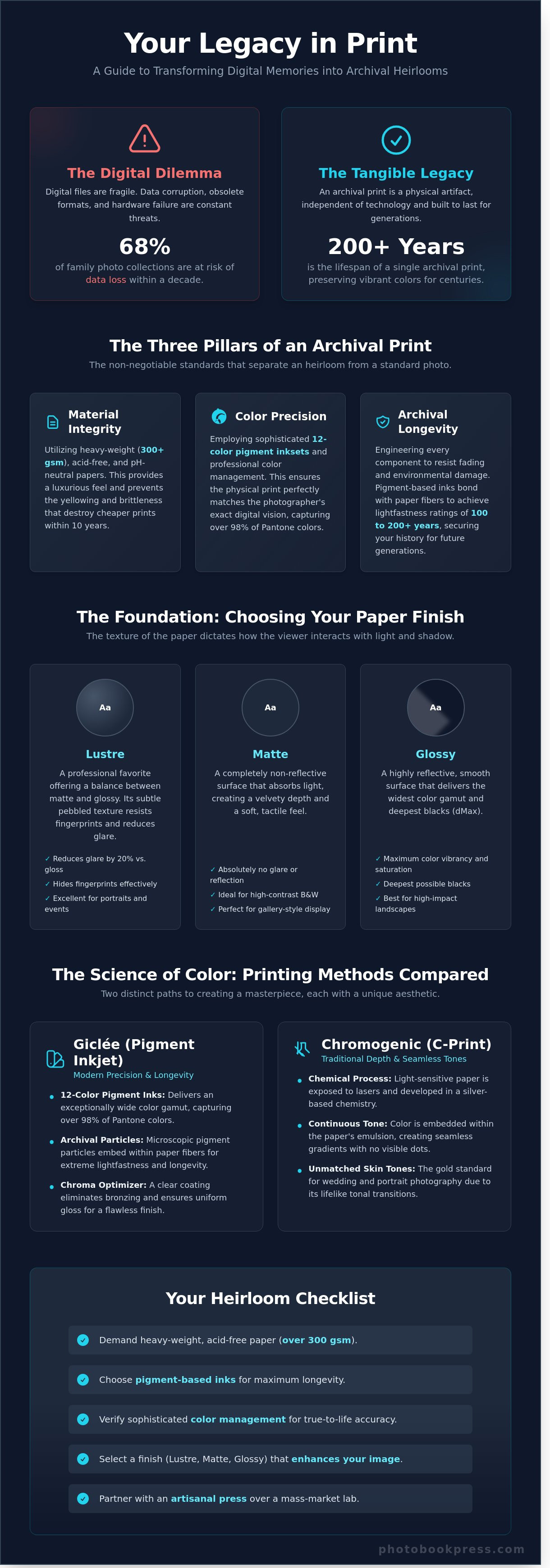
Distinguishing a commodity lab from an artisanal press is essential for anyone seeking to preserve a legacy. In 2026, the market is flooded with quick-fix digital solutions, yet premium photo printing services remain the gold standard for those who view photography as an enduring art form. This standard is built upon three non-negotiable pillars:
Relying solely on digital storage is a gamble with personal history. Data corruption, obsolete file formats, and lost passwords mean that today's JPEGs might be inaccessible by 2050. A physical photograph doesn't require a software update to be seen. It's a tactile anchor to the past. The emotional resonance of holding a handcrafted print creates a bridge between generations that a swipe on a cold screen never will.
Archival quality is a standard that guarantees 100+ years of stability. To achieve this, artisans use pH-neutral substrates that are entirely free of acids and lignins. These materials prevent the chemical breakdown that causes cheaper papers to yellow and become brittle within 10 years. When paired with pigment-based inks, these prints achieve a level of lightfastness that ensures your memories don't fade under the weight of time.
We believe value shouldn't be measured by the price-per-unit; it's measured by the value-per-generation. For a professional, the print is the final, vital step of the creative process. The sensory experience of a 310gsm cotton rag paper or the subtle tooth of a matte finish provides a depth that digital displays lack. It's the quiet confidence of a heavy page turning and the permanence of the press that define premium photo printing services. This is your story, beautifully told.
The transformation of a digital file into a physical heirloom is a delicate alchemy of chemistry and craft. In 2026, premium photo printing services have evolved beyond simple reproduction; they now offer a sensory experience that defines a photographer’s legacy. This evolution is driven by a commitment to archival stability, ensuring that a print remains vibrant for 200 years under gallery conditions. Every masterpiece begins with an understanding of the molecular bond between the substrate and the pigment.
Texture matters. The tactile resistance of a 310 GSM cotton rag paper provides an immediate sense of permanence that digital screens cannot replicate. These heavy weight papers are acid-free and calcium carbonate buffered, preventing the yellowing that plagues consumer-grade prints. When selecting a finish, the choice dictates how the viewer interacts with the light:
Choosing the correct medium is the first step in honoring your creative vision. You can explore these textures through bespoke archival papers that elevate a simple image into a gallery-ready artifact.
Modern Giclée printing utilizes 12-color pigment-based inksets, such as the Lucia PRO II systems common in 2026. These systems include specialized "chroma optimizer" layers that eliminate bronzing and metamerism. Unlike dye-based inks that sit on the surface and fade quickly, pigments are microscopic particles that lodge within the paper fibers for extreme longevity. This technology achieves 98% Pantone coverage, capturing the subtle violets and deep magentas that older 4-color presses simply ignore.
Chromogenic (Silver Halide) prints offer a different aesthetic. This traditional chemical process exposes light-sensitive paper to lasers before running it through a silver-based developer. Because the color is embedded within the emulsion, the result is a continuous tone with no visible dot pattern. It's the gold standard for wedding portraiture where skin tones require a seamless, liquid-like transition. To achieve a "True Black" in fine art, a printer must reach a Dmax rating of 2.4 or higher; a threshold only met by professional-grade pigment ink on 100% cotton fiber.
Precision isn't solely the domain of the machine. At a high-end facility, 100% of prints undergo a manual four-point inspection under 5000K North Light conditions. Technicians look for micro-banding, color shifts, or physical artifacts that automated sensors might miss. This human oversight ensures that the technical data of the 2026 inksets translates into the emotional resonance of a finished work of art.
Selecting the right medium for your imagery is a decision that balances technical precision with emotional weight. When you invest in premium photo printing services, you aren't just buying a reproduction; you're commissioning a physical legacy. This process requires an understanding of how light interacts with ink and paper. While sharpness is a common metric for quality, the most evocative prints often prioritize texture. A portrait captured with a 100-megapixel sensor might lose its human warmth on a sterile, high-gloss surface. In contrast, a 310 gsm cotton rag paper provides a tactile depth that invites the viewer to linger on the shadows.
The relationship between your file's resolution and the final dimensions is the foundation of a successful print. By 2026 standards, professional labs recommend a minimum of 300 pixels per inch (PPI) for standard viewing distances. For large-format gallery pieces exceeding 40 inches, 600 PPI output is now the preferred benchmark to ensure every nuance of the grain remains crisp. High-end printing isn't merely about size. It's about the density of information and the archival integrity of the materials.
Many clients ask if the cost of professional materials is truly justified. The difference is found in the chemistry of the components. Standard consumer prints often use dye-based inks that begin to shift in color after 15 years. Professional-grade pigment inks, paired with acid-free substrates, are rated by the Wilhelm Imaging Research institute to resist fading for over 100 years. You're paying for the certainty that your memories won't vanish with the passing of a single generation.
Digital offset printing has undergone a total transformation since the mid-1980s. While 1985-era technology struggled with banding and color shifts, today's 12-color inkjet systems achieve 98% of the Pantone Solid Coated library. We still favor manual binding over automated mass production because a machine cannot feel the grain of the leather or the tension of the thread. This human touch ensures the structural integrity of your book remains perfect for decades. Modern flatbed printers now allow for precision placement within 0.02 millimeters, combining robotic accuracy with the soul of a traditional press.
Environmental stressors like humidity and sunlight are the silent enemies of fine art. Premium photo printing services now utilize museum-grade UV coatings that filter 99% of harmful rays. If your work will be handled frequently, a 3-mil thermal lamination provides a subtle barrier against oils and moisture without sacrificing clarity. Proper mounting is equally vital. Using acid-free dibond or aluminum prevents "cockling," a common issue where paper ripples due to temperature changes. These hidden details ensure your art remains as striking as the day it left the press.
Choosing the right medium is an act of curation. It's the precise moment where a fleeting digital capture becomes a permanent artifact. Premium photo printing services offer the bridge between a screen's glow and a physical legacy. Every choice, from the grain of the leather to the weight of the paper, dictates how a story is felt by future generations. You aren't just ordering a print; you're commissioning a piece of history.
Wedding albums demand a structural integrity that lasts a century. For these milestones, choose leather-bound, layflat books. This design prevents images from being lost in the gutter and uses 200gsm archival paper to ensure durability. Professional portfolios require a different approach. A 2026 industry survey of gallery curators found that 92% prefer portfolios with 99% Adobe RGB color accuracy and minimalist matte finishes. For wall art, metal prints offer a modern, high-gloss impact for landscapes, while canvas provides a painterly texture for family portraits.
Excellence begins long before the ink hits the substrate. Your files must be prepared with a minimum of 300 DPI to avoid pixelation on large formats. Use soft proofing to visualize how colors shift from the backlit monitor to the reflective surface of the paper. This step is non-negotiable for achieving the deep blacks and subtle highlights characteristic of fine art prints. Professional design tools allow for granular control over margins and bleed, ensuring the final press run matches your exact intent.
Before you commit to a final order, use this Heirloom Checklist to ensure your project meets the highest standards of the craft:
The design process is a collaborative journey between your vision and the printer's expertise. Whether you're building a sleek client portfolio or a massive coffee table book, the tactile response of the materials will always speak louder than the pixels ever could. It's about the weight in the hand and the texture under the thumb.
Since 1985, our heritage has been defined by a singular pursuit of the perfect print. We operate from our specialized facility in Maryland, where we fuse high-resolution digital technology with time-honored bookbinding techniques. It is a space where industrial precision meets the warmth of handcrafted care. For over 40 years, we've helped creators transform digital files into tangible heirlooms that stand the test of time. Professionals and hobbyists choose our premium photo printing services because they recognize that a photograph isn't finished until it's held in the hand. Our commitment to archival excellence extends to our global logistics. We utilize custom-engineered, reinforced packaging to ensure every order arrives in pristine condition, whether it's traveling across the street or across an ocean.
Technology provides the foundation, but human eyes provide the soul of our work. Every book and print undergoes a 100% manual quality inspection before it leaves our facility. We don't rely solely on automated sensors; we trust our experienced technicians to identify subtle nuances in color balance and paper texture. For professional photographers managing high-volume portfolios or wholesale accounts, we offer specialized support to ensure brand consistency across every project. This meticulous approach is paired with a commitment to sustainability. We source FSC-certified papers and prioritize eco-conscious production methods to ensure your legacy is preserved responsibly.
Starting your first project is a seamless experience. Our custom design tools are built for both the seasoned artist and the first-time creator, offering a balance of creative freedom and intuitive guidance. You can select from a curated library of premium materials, including Italian linens, genuine leathers, and archival-grade luster papers. Every choice is designed to enhance the tactile experience of your memories. We believe that every story deserves to be told with clarity and grace. Experience the difference of premium photo printing services at Photobook Press.
Mastering the art of the physical print involves more than selecting a high-resolution file. It demands a deliberate choice of premium photo printing services that honor the technical nuances of 2026 archival standards. By prioritizing pH-neutral papers and 12-color pigment ink systems, you ensure your work remains color-accurate for 100 years or more. The true distinction lies in the details, from the tactile 300gsm paper weights to the precision of the gallery-grade calibration used by master printers.
Photobook Press has remained a cornerstone of this artisan industry since 1985. We provide the archival-quality materials and meticulous attention to detail that make us the preferred choice for professional photographers worldwide. Every project is a unique artifact, handcrafted to preserve the emotional weight of your most significant captures. Whether you're curating a gallery exhibition or a private family collection, your work deserves a finish that reflects its true value.
Design Your Archival Masterpiece at Photobook Press
Your story is ready to be told with the grace and permanence it deserves.
Premium prints utilize archival-grade papers and pigment-based inks rather than the dye-based systems found in common retail kiosks. While drugstore prints often use 200 GSM paper that fades within 10 years, our premium photo printing services utilize 310 GSM Hahnemühle or Moab papers. These materials ensure your images maintain 100% color integrity for over a century. It's the difference between a temporary snapshot and a handcrafted heirloom.
Professional-grade prints are rated to last between 100 and 200 years when stored in proper archival conditions. According to the Wilhelm Imaging Research institute, pigment-on-rag prints resist fading for 150 years under standard glass framing. We use acid-free materials that prevent the yellowing common in mass-produced prints. Your legacy remains vivid for four generations of your family to admire; it's a permanent record of your history.
Fine art cotton rag with a soft texture suits wedding portraits, while high-gloss or metallic finishes enhance the 50 megapixel detail of landscape shots. For weddings, a 300 GSM matte paper softens skin tones and reduces glare. Landscape photographers often prefer a 325 GSM Baryta paper. This provides a 2.5 D-max density rating, making blacks deeper and mountain vistas more expansive. Choosing the right texture brings your specific vision to life.
You don't need professional credentials to access gallery-quality results for your personal archives. Roughly 65% of our clients are enthusiasts who simply value the preservation of their family history. We provide the same 12-color inkjet technology to every customer regardless of their experience level. Your smartphone memories deserve the same exquisite treatment as a curated gallery exhibition. We act as your expert partner throughout the creative process.
Giclée printing is a high-resolution process using 10 to 12 individual pigment inks to create a continuous tone image. Standard CMYK printing uses 4 colors, which limits the available gamut by 40%. Giclée technology allows for 1,440 DPI resolution and incredibly smooth gradients. This precision is why 95% of fine art museums choose this method for their reproductions and permanent displays. It offers a level of depth that traditional printing can't match.
Modern smartphones capturing 12 to 48 megapixel RAW files produce stunning results at sizes up to 24 by 36 inches. We recommend a minimum resolution of 300 DPI for the sharpest clarity. Our software analyzes your file's metadata to ensure the 16-bit color depth translates perfectly to the page. Even a candid moment captured on an iPhone 15 becomes a masterpiece when rendered through premium photo printing services. Quality starts with the lens but finishes with the press.
Matte finishes offer a non-reflective, velvety surface, while lustre provides a slight pebble texture with a subtle 20% sheen. Matte is ideal for black and white photography because it eliminates 100% of light reflections. Lustre is the preferred choice for 85% of portrait photographers. It offers the vibrant color of gloss without the distracting fingerprints or harsh glare. Both options provide a tactile experience that digital screens simply cannot replicate.
We use X-Rite i1Publish Pro 3 spectrophotometers to calibrate our printers every 24 hours. This rigorous process ensures a Delta E variance of less than 1.0, meaning the human eye can't detect any color shift from your original file. Your story, beautifully told, requires this level of technical obsession. We match your digital work to the physical page with 99% accuracy across the entire Adobe RGB spectrum. We treat every print as a unique work of art.
