No Products in the Cart


What if the most vibrant moment of your life didn't have to exist solely in the fleeting glow of a smartphone screen? You likely believe that your most precious memories deserve a place of honor on your walls, yet you might hesitate because standard framing often feels fragile or prone to fading. It's a common concern; data from Wilhelm Imaging Research suggests that poorly protected prints can begin to lose their luster in as little as 15 years. You deserve a medium like acrylic prints that honors your history with the permanence it requires.
In this guide, you'll discover how to transform digital files into luminous, archival-quality masterpieces that define your home’s aesthetic. We'll show you how to distinguish premium polymers from standard glass and select the ideal 1/4 inch thickness for your space. We'll also provide clear guidance on secure mounting hardware to ensure your art remains a breathtaking focal point for decades. This journey from digital file to gallery-grade art combines technical precision with the emotional resonance your stories deserve.
An acrylic print isn't a mere photograph; it's a structural fusion of light and archival chemistry. At PhotoBook Press, we view this medium as the pinnacle of the "press" heritage. It combines professional-grade photo paper with a sheet of optically clear acrylic glass. This creates a piece of art that feels substantial, permanent, and inherently premium. Your story, beautifully told, deserves a format that protects the image while enhancing its natural vibrancy through scientific precision.
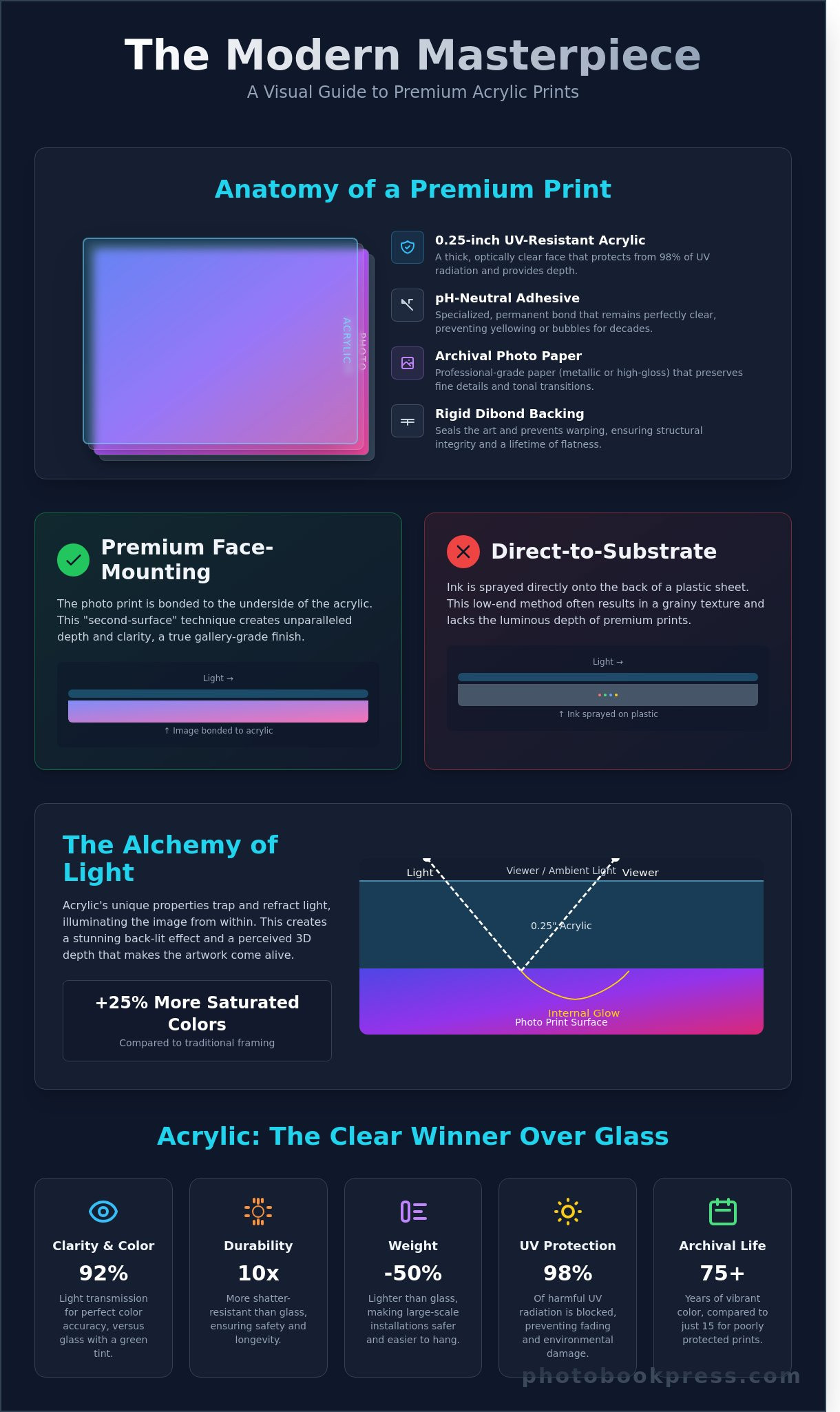
The secret to this clarity lies in the second-surface mounting technique. Unlike low-end direct-to-substrate methods that spray ink directly onto the back of a plastic sheet, premium acrylic prints utilize a sophisticated face-mounting process. This method, pioneered by the Diasec process in 1969, involves bonding the printed image directly to the underside of the acrylic. Direct-to-substrate prints often suffer from a grainy texture and lack the depth associated with high-end gallery work. By using a professional-grade photo paper first, we preserve the fine details and tonal transitions that only a traditional press can achieve.
To visualize the meticulous craftsmanship behind these displays, watch this helpful video:
This construction produces what curators call "luminous depth." When light enters the 0.25-inch thick acrylic, it reflects off the metallic or high-gloss paper beneath. This internal reflection makes colors appear 25 percent more saturated than traditional framing methods. The result is a 3D effect that transforms a flat image into a window. It's a sophisticated choice for those who value the intersection of technical precision and emotional resonance, ensuring every highlight and shadow is rendered with absolute fidelity.
A premium build consists of three primary layers. First, a 0.25-inch sheet of UV-resistant acrylic provides the protective face. Behind this, we mount archival-quality photo paper using a specialized, pH-neutral adhesive layer. This adhesive is critical. It must remain perfectly clear for decades without yellowing or bubbling. Finally, a rigid dibond or PVC backing seals the sandwich to prevent warping. We polish the edges to a crystal-clear finish using diamond-tipped tools. This creates an "infinity" look where the image seems to bleed off the sides, making the piece feel like a solid block of light.
Acrylic offers distinct advantages over traditional glass for the discerning collector. It's 50 percent lighter, making it safer for large-scale installations in residential or commercial spaces. While standard glass has a 4 percent iron content that creates a distracting green tint, high-grade acrylic provides 92 percent light transmission for perfect color accuracy. It's also 10 times more shatter-resistant than glass. Most importantly, modern acrylic resins block 98 percent of UV radiation. This ensures your acrylic prints remain vibrant for over 75 years without the risk of fading or environmental degradation.
The transformation begins the moment light enters the crystalline surface of a fine art display. Unlike traditional paper prints that reflect light purely from the surface, acrylic prints utilize the physical properties of refraction to create an internal glow. When light travels through the dense polymer, it bounces off the ink layer and reflects back through the clear medium. This internal reflection traps light within the sheet, illuminating the image from within. It’s a masterclass in light physics that results in a perceived three-dimensional depth, making the photograph appear as if it’s back-lit by a hidden source.
Professional-grade inks play a vital role in this optical dance. At our Maryland facility, we use pigments designed to bond perfectly with the substrate, ensuring that every drop of color retains its intended saturation. The absence of an air gap between the image and the protective layer allows for a dramatic expansion of the dynamic range. Blacks become inkier and more profound; whites achieve a brilliant, crisp luminosity. This high-contrast performance is particularly striking in landscape photography, where the subtle gradients of a sunset or the sharp textures of a mountain range require absolute precision to feel authentic.
The visual impact is immediate and visceral. By focusing on the interplay between the ink and the light-trapping properties of the medium, we turn a static image into a living window. The vibrancy isn't just a surface treatment. It's an inherent characteristic of the material itself, providing a level of clarity that paper simply cannot replicate. For those seeking to preserve a legacy, exploring the handcrafted options at photobookpress.com offers a glimpse into this meticulous craft.
Clarity is the silent engine of a gallery-grade display. We utilize materials that boast a 92% light transmission rate, which is the gold standard for high-end art preservation. This level of transparency ensures that no "haze" or yellowing obscures the fine details of high-resolution captures. The archival properties of acrylic have been documented by the Canadian Conservation Institute since its technical bulletins began guiding museum standards in the 1970s. This ensures your memories remain as vivid in twenty years as they are today.
The aesthetic appeal of a modern gallery often relies on the absence of distraction. When an image is presented without a traditional frame, the focus remains entirely on the story within the frame. Light hits the polished, diamond-cut edges of the acrylic, causing the light to bleed out slightly at the perimeter. This creates a self-illuminating halo that makes the piece appear to float off the wall. It’s a minimalist approach that fits seamlessly into contemporary interior spaces, drawing the viewer’s eye deep into the composition. This borderless design removes the barrier between the viewer and the moment, turning a simple wall hanging into an immersive heirloom.
Selecting the right medium for your photography is an act of curation that defines the atmosphere of a room. It's a choice between a whisper and a statement. While canvas offers a classic, textured warmth, acrylic prints provide a sophisticated clarity that transforms a simple wall into a gallery-grade focal point. The decision rests on the specific "mood" you wish to evoke. A sun-drenched landscape might feel at home on the soft weave of a canvas, but a vibrant, high-contrast nightscape demands the precision of acrylic to truly breathe.
The most frequent question regarding this premium format involves the investment. High-quality acrylic prints typically cost 40% to 60% more than standard canvas options. This price reflects the intricate craftsmanship involved in face-mounting a fine-art print to a polished sheet of acrylic. You aren't just paying for a display; you're investing in a 100-year heirloom. While canvas can lose tension or show signs of fading within 15 to 20 years, archival acrylic is engineered for longevity. It protects the ink from UV degradation and moisture, ensuring the colors remain as vivid as the day they were printed for over a century.
Canvas provides a painterly, tactile experience that softens an image, making it a favorite for traditional home décor and impressionistic photography. However, this texture can obscure the fine details of a high-resolution shot. Acrylic removes this barrier. The smooth, glass-like surface preserves every pixel, making it the superior choice for contemporary spaces where sharp lines and high-definition details are paramount. If your goal is to showcase the intricate textures of a bride's lace veil or the sharp edges of a mountain range, acrylic is the essential medium.
Metal prints, often created via dye-sublimation on aluminum, offer a raw and industrial aesthetic. They're lightweight and durable, yet they often struggle with harsh, direct light reflections. Acrylic prints handle light differently. By utilizing the optical transparency of acrylic, the medium allows light to pass through the surface and reflect off the print itself. This creates a perceived three-dimensional depth, often described as a "glow," that metal simply cannot replicate. While metal is 25% lighter, acrylic offers a more elegant, substantial presence on the wall.
To help you decide, consider this quick-reference guide for matching subjects to their ideal medium:
Ultimately, the choice is about the legacy you wish to leave. A canvas is a beautiful addition to a home, but an acrylic print is a permanent fixture of your personal history. It speaks to a commitment to quality and a deep respect for the art of the photograph. When you choose acrylic, you're choosing a medium that honors the technical precision of your camera and the emotional weight of your memories.
Selecting a medium as luminous as acrylic requires a curator's eye for detail. It isn't just about the image; it's about how that image interacts with the physical architecture of your room. Professional galleries often leave at least 12 to 18 inches of "white space" around a piece to prevent visual clutter. This breathing room ensures the viewer's focus remains fixed on the artwork rather than the surrounding furniture. When you give a piece room to breathe, you elevate it from a simple decoration to a focal point of the home.
Dynamic range, the span between the deepest shadows and the most brilliant highlights, serves as the fundamental catalyst for a successful acrylic print. Water, sunsets, architecture, and high-fashion portraits excel in this format because they utilize the natural light-bending properties of the polymer. Avoid low-resolution mobile shots; images below 300 DPI often suffer from visible pixelation when scaled to a 24x36 inch format. For a truly professional finish, ensure your file contains at least 3,000 pixels on its shortest side to maintain crisp, sharp edges.
Acrylic prints demand presence. While a small 8x10 inch print works for a desk, the medium truly shines at 30x40 inches or larger. The 1/4-inch thickness of the acrylic creates a three-dimensional effect that smaller dimensions simply cannot capture. Larger formats allow the internal reflections to reach their full potential, turning a static image into a living window. When you choose a larger scale, you're investing in the depth and clarity that makes this medium unique.
Strategic lighting is the final step in the curation process. Avoid placing your print directly opposite a large window; the high-gloss surface can produce distracting reflections. Instead, position it where ambient light can "charge" the edges of the acrylic. For height, follow the 57-inch rule used by professional curators. Measuring 57 to 60 inches from the floor to the center of the print ensures the artwork sits at a comfortable eye level for most viewers. If you're working with smaller pieces, group them in a 2x2 grid with exactly 2 inches of spacing to create a modern gallery wall effect.
Secure installation is paramount for these premium pieces. A French Cleat system is the gold standard, distributing weight evenly across a horizontal bracket that can support up to 75 lbs. This ensures the print remains perfectly level over time. Alternatively, a Float Mount system uses a hidden recessed frame to hold the print 1 inch away from the wall. This creates a weightless, "floating" appearance that emphasizes the clean lines of the acrylic without visible hardware. Both systems provide the stability required for long-term display in high-traffic areas.
Since 1985, PhotoBook Press has refined the art of the permanent record. We treat our acrylic prints with the exactitude of a master printer handling a first-edition manuscript. Our Maryland facility serves as a hub where traditional craftsmanship meets modern clarity. Every piece of wall art undergoes a transition from a digital file to a physical heirloom, overseen by technicians who've spent decades perfecting color science. We don't believe in mass production. We believe in the "Press" identity, where every print is a singular event, executed with the precision of a boutique bookmaker. This heritage ensures that your most significant moments aren't just displayed; they're preserved with a level of care that respects the gravity of your memories.
The tactile experience of a fine book is mirrored in the depth and weight of our wall art. We view the acrylic medium as a natural extension of the high-end publishing world. Just as a limited-edition book requires a steady hand and an eye for detail, our wall pieces demand a rigorous finishing process. This dedication to the craft has defined our brand for 39 years. We've spent that time learning exactly how light interacts with ink and substrate. The result is a luminous, gallery-ready display that serves as the final, breathtaking chapter in your story, beautifully told.
Excellence isn't accidental; it's a series of deliberate choices. At our Maryland facility, every piece undergoes a 100% manual inspection before it's cleared for shipping. We don't rely solely on automated sensors to detect flaws. Our artisans examine every edge and every hue under specialized lighting to ensure perfection. We use archival-quality materials designed to resist yellowing for over 75 years, ensuring your investment remains as vivid as the day it arrived. Our bespoke approach caters to both the weekend enthusiast and the professional gallery owner, providing a level of scrutiny that automated factories simply cannot replicate. This commitment to quality means your acrylic prints will maintain their structural integrity and color depth for decades to come.
A single image on a wall often represents the pinnacle of a much larger narrative. We encourage our clients to pair their focal pieces with Layflat Photobooks to provide the full context of their journey. This creates a cohesive aesthetic across your entire home or studio. For example, a wedding portrait on acrylic gains even more emotional weight when the rest of the ceremony is preserved in a matching, hand-bound volume. Professional photographers can access exclusive discounts to help build their brand's physical portfolio, allowing them to offer clients a complete heirloom experience. We provide the tools to build a consistent legacy, ensuring that the story behind the wall art is never lost. Whether you're documenting a corporate milestone or a family vacation, the transition from the page to the wall should be seamless and sophisticated. By maintaining a unified standard of quality across all formats, we help you turn fleeting digital files into a permanent, tangible history.
Choosing the right medium marks the distinction between a simple photograph and a lasting legacy. Acrylic prints offer a unique alchemy of light and depth that transforms a digital file into a luminous masterpiece. By selecting archival-quality materials, you ensure your art remains vibrant for a lifetime of beauty. Since 1985, PhotoBook Press has practiced this noble craft from our workshop in Maryland. We've earned the trust of professional photographers worldwide by treating every image as a precious artifact. Our process focuses on the intersection of technical precision and personal history. It's about more than just decor; it's about preserving the moments that define you. Whether you're curating a home gallery or a professional studio, the result is always a sophisticated, gallery-grade display. Transform your favorite memory into an exquisite Acrylic Print today. Your story, beautifully told, deserves nothing less than perfection.
You should use a 100% lint-free microfiber cloth and a specialized acrylic cleaner or a solution of 2 drops of mild dish soap in a pint of warm water. Never apply ammonia-based sprays or rough paper towels, as these cause micro-scratches that dull the surface over time. By using gentle, circular motions, you maintain the pristine clarity of your acrylic prints for decades. This meticulous care ensures your heirloom remains a focal point.
Professional acrylic prints are designed to resist fading for over 100 years when kept indoors. We utilize archival-grade inks and 99.9% UV-resistant acrylic sheets that shield your imagery from the damaging effects of solar radiation. This technical standard means your vibrant colors stay true even in well-lit galleries. While direct 24-hour sunlight isn't recommended for any fine art, these materials provide 2x the protection of standard glass.
A standard 24x36 inch acrylic print weighs approximately 12 pounds, making it heavier than canvas but lighter than traditional framed glass. You'll need a secure mounting system like a French cleat or 4 stainless steel standoffs to distribute this weight safely. These professional-grade mounts ensure your artwork remains perfectly level. For larger installations exceeding 40 inches, we recommend using 75-pound rated wall anchors to guarantee absolute stability and peace of mind.
Fine art paper acrylics involve bonding a high-resolution 1,440 DPI print to the back of the panel, whereas direct printing applies ink directly onto the material. The face-mounting method offers a 25% increase in color depth and perceived sharpness. This technique transforms your photograph into a museum-quality artifact with a three-dimensional effect. While direct printing is efficient, the paper-mount method is the definitive choice for those seeking the highest level of artistic precision.
You can safely display these pieces in high-humidity environments like bathrooms because acrylic has a water absorption rate of less than 0.1%. Unlike traditional paper prints that ripple or mold in damp air, these moisture-resistant panels remain perfectly flat. The non-porous surface protects the ink from steam and temperature fluctuations. This durability allows you to bring a touch of sophisticated art to spaces that are typically off-limits for delicate photography.
Your image file should ideally maintain a resolution of 300 DPI at the final print dimensions to ensure crisp details. For a 24x36 inch display, this requires a file size of approximately 7200 x 10800 pixels. If your resolution drops below 150 DPI, you'll notice visible pixelation or soft edges upon close inspection. We meticulously review every file to ensure the resulting print meets our stringent standards for gallery-quality reproduction and visual clarity.
Every piece arrives ready to hang with a pre-installed aluminum subframe or a set of 4 precision-engineered standoffs. This integrated system creates a 3/4 inch float effect, allowing the art to hover elegantly off the wall surface. You won't need to visit a frame shop or purchase additional hardware. We include all necessary 1-inch screws and wall anchors to ensure your installation process is as seamless as the printing itself.
Archival acrylic prints are rated to last over 100 years, significantly outperforming traditional framed photos that lack UV-protective glazing. The airtight seal created during the mounting process prevents oxidation and environmental degradation. Standard prints often show yellowing or silver mirroring within 15 years; however, our premium materials maintain their original brilliance. Investing in this medium ensures your story is beautifully told for multiple generations without losing its visual impact or structural integrity.
