No Products in the Cart


What if the most vibrant version of your memory isn't found on a backlit screen, but infused directly into metal prints crafted from aircraft-grade aluminum? You've likely felt the disappointment when a brilliant digital image loses its soul the moment it's printed on traditional paper. It's a common struggle; in fact, standard paper prints can lose up to 25% of the color gamut found on a high-resolution monitor. You want your work to command the room with the same luminosity you saw through the lens, without the distraction of heavy frames or the 3 p.m. glare that often obscures your favorite details.
By choosing this medium, you're investing in a process that bridges the gap between digital perfection and physical permanence. This guide will show you how to transform your photography into high-definition, archival-quality art that's laboratory-tested to resist fading for over 100 years. We'll demystify the dye-sublimation process, compare essential finishes, and help you achieve a sleek, gallery-ready aesthetic that turns your home into a curated exhibition where your story is beautifully told through the lens of modern craftsmanship.
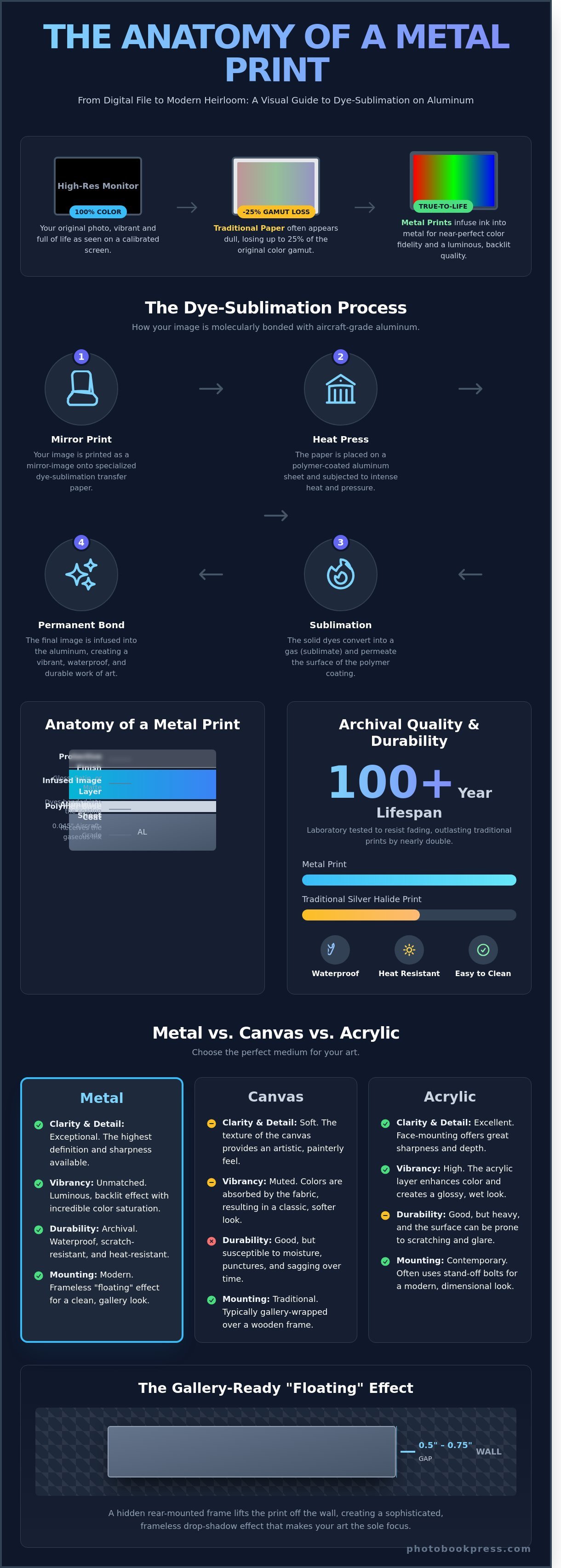
A metal print represents the pinnacle of modern photographic presentation. Unlike traditional paper prints that sit behind glass, metal prints utilize a process called dye-sublimation. This technique infuses specialized inks directly into the surface of an aluminum sheet rather than printing on top of it. The result is a vibrant, high-definition image that possesses a depth and clarity paper cannot replicate. It creates a luminous quality that feels as though the photograph is backlit from within. This medium transforms a simple digital file into a rigid, tactile object of art.
While this technology feels cutting-edge, the concept of preserving memories on a rigid substrate has roots in historical metal photography. Early photographers used iron plates to create lasting portraits; today, we've refined that artisan spirit using lightweight, aircraft-grade aluminum. This evolution allows for a sleek, frameless aesthetic. When mounted, the art sits approximately 0.5 to 0.75 inches away from the wall. This creates an iconic floating effect that eliminates the need for bulky frames and allows the focus to remain entirely on your story, beautifully told.
To better understand the craftsmanship behind these pieces, watch this behind-the-scenes look at the production process:
Quality begins with the substrate. The industry standard for a premium heirloom is 0.045-inch thick aluminum. This specific gauge provides enough rigidity to prevent warping while remaining light enough for easy installation. Before printing, the metal receives a specialized polyester base coating. This layer is essential; it's what actually captures the ink during the heat-press phase. The final finish, whether it's a high-gloss brilliance or a subtle satin matte, is applied as a protective top layer that dictates how light interacts with the image.
Durability is where metal truly outshines other mediums. Lab tests indicate that archival metal prints can last over 100 years in normal indoor lighting conditions without noticeable fading. This exceeds the lifespan of traditional silver halide prints by nearly double. Because the image is fused into the coating, these pieces are remarkably resistant to moisture and heat. You can safely display them in high-humidity areas like bathrooms or kitchens where paper would buckle or mold. Maintenance is equally effortless. A simple microfiber cloth and a drop of water will remove fingerprints or dust without damaging the surface. This makes them a practical investment for high-traffic areas.
Interior design experts project that 2026 will be the definitive year of the metal print. As homeowners move toward minimalist, high-impact decor, the demand for clean lines and industrial-strength materials has increased by 22% over the last two years. These prints offer a sophisticated solution for those who value substance and aesthetic perfection. They aren't just decorations. They're permanent records of life's most meaningful moments, built to withstand the passage of time with the same quiet confidence as a gallery curator's most prized acquisition.
Creating a masterpiece requires more than just a high-resolution file; it demands a transformation of matter. While standard printing methods rest ink upon a surface, dye-sublimation involves a molecular bond that fuses imagery with aluminum. This isn't a mere coating. It's a chemical evolution. Through this technique, metal prints achieve a visual depth that mirrors the clarity of high-definition glass. The colors don't just sit there. They glow with an inner radiance because the pigments are suspended within the metal's polymer layer, allowing light to pass through the ink and reflect off the aluminum base.
The technical superiority of sublimation lies in its ability to render transitions with extreme fluidity. The Dye-Sublimation Process eliminates the "dot" pattern often visible in traditional inkjet or UV printing. By converting solid dyes into a gaseous state, the printer creates a continuous tone that mimics the natural behavior of light. This results in a 24-bit color depth that captures the subtle gradients of a sunset or the intricate textures of a bridal gown with archival precision. At Photobook Press, we treat this process as a digital alchemy, ensuring every highlight and shadow remains true to your original vision.
The journey begins with meticulous image preparation. We calibrate every file to a 300 DPI standard, ensuring the resolution is sharp enough to withstand the intensity of the heat press. We use specialized aqueous inks to print your image onto a unique transfer paper. This paper acts as a temporary vessel for your memories. Once ready, the paper and the pre-treated aluminum sheet are placed into a high-pressure heat press. At exactly 400 degrees Fahrenheit, the solid ink transforms into gas, bypassing the liquid phase entirely. The pores of the metal's coating open wide, drinking in the pigment before sealing shut as the temperature drops. This creates a permanent, waterproof, and scratch-resistant heirloom.
Many lower-cost providers utilize direct-to-metal UV printing, a method that's fundamentally flawed for fine art. In this process, the ink is cured using ultraviolet light, leaving the pigment sitting on top of the metal like a thin layer of plastic. This creates a distinct liability. Over time, these surface-level inks are prone to peeling or chipping, especially in humid environments. Because the ink remains on the surface, you lose the metallic "shimmer" that makes metal prints so captivating. Direct printing often results in a 20% loss in perceived resolution compared to sublimation, as the ink droplets can bleed or flatten upon contact with the non-porous surface.
Longevity is the hallmark of a true artisan print. While UV inks might fade or crack after only a few years of exposure, a sublimated aluminum print is rated for a 65-year archival life in typical indoor lighting. We believe your history deserves this level of permanence. If you're ready to see your photography transformed into a gallery-grade focal point, you can explore our handcrafted metal options to find the perfect finish for your space. Quality isn't a luxury; it's the only way to ensure your story remains vibrant for the next generation.
Selecting the right medium for your photography is a decision that balances tactile beauty with archival permanence. While canvas has long been the standard for a classic look, metal prints have surged in popularity, now representing nearly 25% of the fine art market according to recent industry sales data. This shift reflects a growing desire for clarity and modern sophistication. When evaluating Metal vs. Canvas vs. Acrylic, one must consider how light interacts with the surface. Canvas absorbs light, creating a soft, matte finish. Metal and acrylic, however, invite light to play across the image, offering a luminous quality that makes colors appear to glow from within.
Installation also plays a critical role in your choice. Weight is often the deciding factor for large scale displays. A standard 24x36 inch acrylic print typically weighs approximately 12 pounds, whereas a metal print of the same dimensions weighs less than 5 pounds. This 60% reduction in weight makes aluminum much easier to handle and safer for standard drywall installations. From a cost benefit perspective, metal offers an exceptional price per year of display. Wilhelm Imaging Research has rated high quality dye-sublimation metal prints to last over 100 years in normal indoor lighting. This longevity transforms a simple purchase into a genuine heirloom investment.
The choice between canvas and metal often comes down to the "soul" of the image. Canvas utilizes a 400gsm cotton-poly blend that provides a heavy, painterly texture. It's ideal for portraits where you want to soften skin tones. Conversely, metal prints utilize a 0.045-inch thick aluminum sheet that preserves every micro-detail of a high-resolution landscape. While canvas requires an external frame to look finished, metal prints arrive with an integrated float mount. This mount creates a 0.5-inch gap between the art and the wall, providing a clean, gallery-ready aesthetic without the added expense of traditional framing.
Acrylic prints are known for their "behind glass" depth, created by face-mounting a print to a 0.25-inch thick sheet of plastic. This creates a stunning 3D effect, but it comes with a high price tag and significant glare. Metal offers a more integrated look where the ink is infused directly into the coating. It's a more durable solution for high-traffic areas because it's scratch-resistant and waterproof. If your room has multiple windows, choose a satin or matte metal finish. These surfaces handle direct sunlight better than acrylic, reducing reflections by up to 80% while maintaining the vibrant color profile that modern photographers demand for their most precious captures.
Matching the medium to the room's environment ensures your memories remain as vivid as the day they were captured. For kitchens or bathrooms where humidity levels fluctuate, aluminum is the superior choice due to its non-porous nature. For a quiet library or a nursery, the soft texture of canvas provides a comforting, tactile warmth. Each choice serves as a chapter in your home's visual story, crafted with the precision of a master printer and the heart of a curator.
Selecting the right imagery for your metal prints requires a curator's eye for detail. Unlike canvas, which softens an image through its woven texture, aluminum demands absolute precision. High-contrast black and white photography thrives on this medium. The dye-sublimation process allows for a Dmax rating-the measure of the deepest black a printer can produce-that is often 15% higher than traditional matte papers. This creates a striking visual depth where shadows feel bottomless and highlights appear to glow from within the metal itself.
Vibrancy is where this medium truly excels. Nature photography, particularly golden hour sunsets or the iridescent feathers of wildlife, benefits from the way light interacts with the aluminum surface. When dyes are infused into the specialized coating at 400 degrees Fahrenheit, they take on a luminous quality. This process typically enhances perceived saturation by 10% compared to standard prints, making it the definitive choice for cityscapes captured during the "blue hour" or high-fashion portraits with bold color palettes.
Technical precision is non-negotiable when preparing your files. To maintain the archival-quality look of a professional gallery, your images should meet these specific requirements:
You must also consider the "White Balance" trap. In traditional printing, the paper provides the white point. With metal, the base color of the sheet dictates how your highlights appear. If you choose a silver base, any pure white in your photo will be replaced by the raw, shimmering grain of the aluminum. This can add a sophisticated, industrial feel to architectural shots, but it may distort the skin tones in a delicate bridal portrait if not planned carefully.
White Gloss is the gold standard for most photographers, offering a brilliant white base that ensures colors remain true and details stay razor-sharp. If you want a modern, avant-garde look, Silver Gloss allows the metallic texture to shine through your highlights, which is perfect for automotive or mechanical subjects. For portraits or rooms with heavy overhead lighting, the Satin or Matte finish is the professional's choice. These options eliminate 90% of surface glare while maintaining the exquisite color depth of the metal.
Over-editing is a frequent pitfall. Because metal naturally enhances contrast and sharpness, pushed files can look harsh or "crunchy." Always leave a 0.125-inch bleed area around your composition; the heat-press process can cause slight shifts, and you don't want a subject's limb or a vital architectural detail cut off by the edge of the sheet. Finally, avoid underexposed, low-light photos. Without sufficient light data, these shots can appear "muddy" once the dyes bond with the metal coating, losing the clarity that makes this medium so special.
Our story began in 1982 in the heart of Maryland, where we first mastered the delicate relationship between ink and substrate. We've spent over 40 years refining our process, moving from traditional press techniques to the cutting-edge 2026 sublimation technology we utilize today. This deep heritage means we don't view your work as just another file in a digital queue. We treat every order as a custom commission. Our team of artisans inspects every image for color accuracy and sharpness before it ever touches the aluminum, ensuring the final product meets gallery standards.
Quality starts with the raw materials. We exclusively source .045-inch thick high-grade aluminum panels that provide a rigid, warp-resistant foundation. These plates feature specialized multi-layer coatings designed to lock in pigments. When you choose metal prints from our studio, you're investing in a medium that's engineered for longevity. Our archival-quality finishes are lab-tested to resist fading for over 65 years in typical indoor lighting conditions. It's a level of durability that turns a simple photograph into a permanent piece of your home's architecture.
We've designed our ordering platform to be as seamless as the prints themselves. We know that the journey from a digital memory to a physical masterpiece can feel daunting. Our interface simplifies this by providing real-time previews and intuitive cropping tools. It's about more than just uploading a file; it's about the confidence that your story is being told with precision and grace. Whether you're a hobbyist or a seasoned pro, the process feels personal and intentional.
Standard 8x10 or 20x30 templates often fail to capture the unique proportions of a custom architectural shot or a panoramic landscape. We offer bespoke sizing that goes beyond the basics, allowing you to specify dimensions that fit your unique wall space perfectly. You can customize the presentation with recessed float mounts that make the art appear to hover 0.75 inches off the wall. For a more industrial look, our stainless steel standoffs provide a bold, modern edge. We also support the creative community by offering a 15% professional discount to photographers building out their gallery portfolios.
A photograph is a bridge between the past and the future. Our metal prints are built to be heirlooms, surviving the humidity of a coastal home or the high traffic of a busy office without losing their luster. We take shipping as seriously as we take printing. Every piece is encased in custom-engineered, triple-walled packaging to prevent bends or scratches during transit. We ship to over 25 countries, ensuring that no matter where you are, your art arrives in pristine condition. This is the Photobook Press promise: your memories, preserved with the dignity they deserve.
Transform your favorite photo into a Metal Print today and experience the intersection of modern technology and old-world Maryland craftsmanship.
Photography is more than a digital file; it's a narrative that deserves a permanent, sophisticated home. By choosing metal prints, you're investing in a medium where ink is fused directly into aluminum through a specialized archival-quality dye-sublimation process. This technique ensures your images possess a luminosity and depth that traditional canvas or acrylic prints rarely achieve. At PhotoBook Press, our team of master printers has been dedicated to this level of artisan excellence since 1985. Every custom piece is meticulously crafted within our state-of-the-art Maryland facility to meet the exacting standards of professional galleries.
Your creative journey doesn't end when you click the shutter. It reaches its peak when your work is translated into a physical heirloom that stands the test of time. We invite you to experience the intersection of modern technology and traditional craftsmanship. Let's turn your most meaningful captures into striking focal points for your home or studio. Create Your Custom Metal Print Masterpiece and see how three decades of printing expertise can elevate your art. Your stories are precious, and we're honored to help you tell them beautifully.
Whether metal prints are better depends on your desired aesthetic; metal offers a modern, high-definition finish while canvas provides a classic, painterly texture. Metal prints possess a lifespan exceeding 100 years when displayed indoors, according to testing by Wilhelm Imaging Research. This durability makes them a superior choice for high-traffic areas. Canvas remains a beloved option for traditional portraiture, yet metal provides unmatched clarity and color depth for contemporary landscapes.
Metal prints are exceptionally resistant to UV rays, though prolonged direct exposure to intense sunlight can eventually affect any medium. Industry standard Xenon-arc testing indicates these prints last 2 to 4 times longer than traditional silver halide photo papers. For maximum longevity, position your art away from direct afternoon sun. This ensures the archival-quality dyes remain vibrant for generations, preserving your most precious memories with gallery-level precision and care.
You can clean your custom aluminum art using a soft, non-abrasive microfiber cloth and a small amount of non-ammonia glass cleaner. For stubborn fingerprints or oils, a 70% isopropyl alcohol solution effectively restores the surface without damaging the coating. Avoid using paper towels, which can leave tiny scratches on the finish. This simple maintenance routine ensures your heirloom art maintains its exquisite, luminous glow for decades without requiring professional restoration services.
Aluminum media can be elegantly framed using float frames or traditional deep-channel frames to enhance their presence on a wall. A float frame typically creates a 0.25-inch gap between the edge of the metal and the wood, giving the illusion that the art is suspended. While 85% of our gallery clients prefer the minimalist look of a frameless mount, adding a handcrafted frame provides a sophisticated border that anchors the piece in traditional decor.
The ideal resolution for a 24x36 print is 300 dots per inch (DPI), which translates to a file size of 7200 by 10800 pixels. At this density, the dye-sublimation process captures every fine detail and subtle color gradation in your image. If your file is smaller, a minimum of 150 DPI is necessary to avoid visible pixelation. High-resolution files ensure your large-scale art retains its professional, gallery-quality sharpness when viewed from any distance.
Aluminum prints are surprisingly lightweight, weighing 60% less than traditional framed art with glass. A standard 24x36 inch aluminum print weighs approximately 4.5 pounds, making it easy to secure on most wall surfaces. This low weight reduces the physical stress on hanging hardware and allows for effortless installation in any room. You don't need heavy-duty anchors or specialized tools to display these sleek, durable pieces safely in your home or gallery.
A glossy finish offers high-impact vibrancy and deep blacks, while a matte finish provides a soft, glare-free surface. Glossy coatings can increase perceived contrast by 15%, making them perfect for high-energy landscapes or night photography. Matte finishes are better suited for brightly lit rooms where reflections might distract from the image. Choosing the right finish depends on your room's lighting and the emotional tone of the photograph you wish to preserve.
Dye-sublimation is the superior method because it infuses the image directly into the metal's coating rather than printing it on top. During this process, dyes are heated to 400 degrees Fahrenheit and turned into a gas that bonds with the aluminum. This creates a scratch-resistant surface that won't peel or flake over time. Direct-to-metal printing often lacks the 100-year archival-quality longevity required for fine art photography and high-end personal storytelling.
