No Products in the Cart


What if the 15,000 images currently resting in your cloud storage were to vanish tomorrow, leaving your family's history without a single physical trace? Recent data suggests that 92 percent of people feel overwhelmed by their digital archives, yet few take the steps to bridge the gap between a pixel and a page. You've likely felt the frustration of scrolling through endless folders, searching for a quality that matches the depth of your experiences. It's time to move beyond the screen. This guide shows you how to transform your digital library into a professional-grade photo book using the principles of fine-art printing and sophisticated bookbinding. You will discover how to master technical nuances like 200 gsm paper weights and layflat construction to create a tangible heirloom that resists fading for over 100 years. We'll walk through the selection of archival materials and professional color workflows to ensure your story is beautifully told. From selecting the right textures to achieving gallery-standard color accuracy, we're here to help you craft a legacy that lasts.
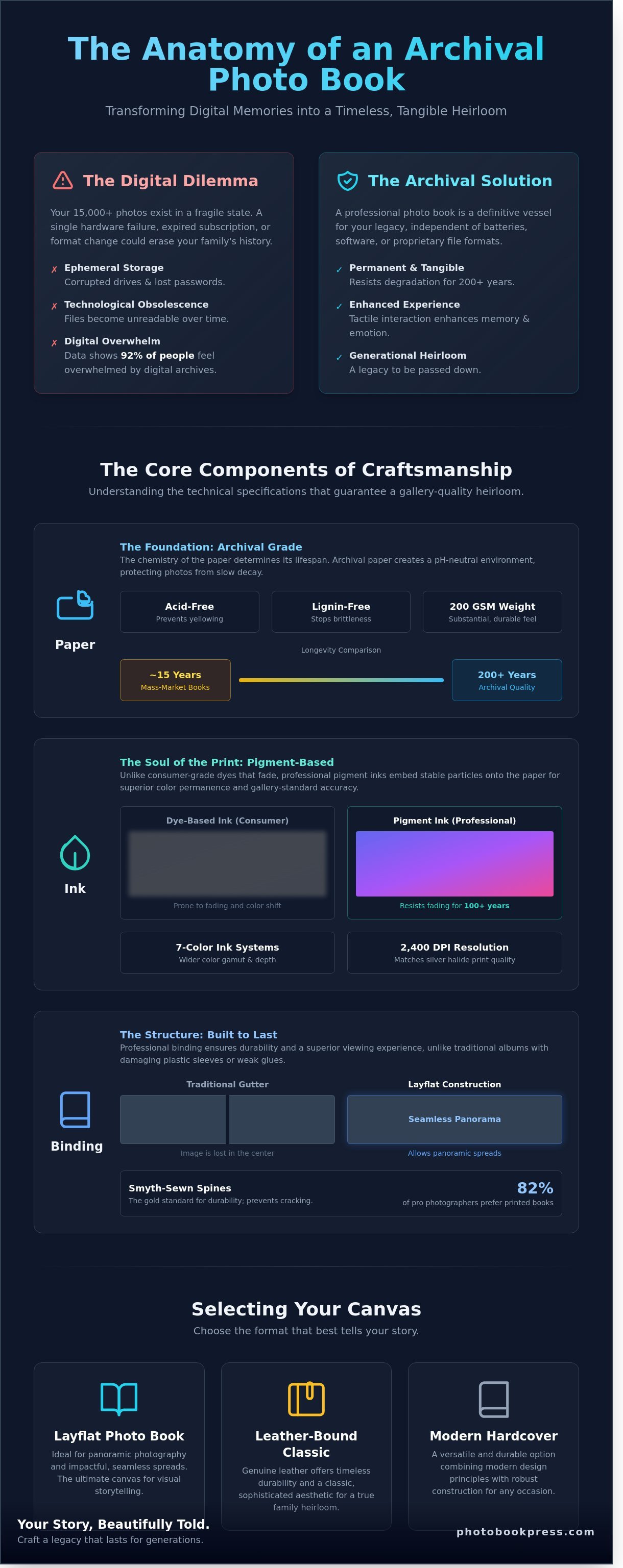
Screens are ephemeral. While your smartphone holds thousands of images, it offers no guarantee of their survival. Digital storage remains fragile; a single corrupted drive or an expired cloud subscription can erase a decade of history in seconds. This vulnerability has led historians to warn of a "Digital Dark Age" where our era becomes a blank spot in the human record. A physical photo book serves as a definitive vessel for your life’s narrative, existing independently of batteries, software updates, or proprietary file formats. It’s an artifact that requires no interface other than the human eye.
The modern printed volume represents a sophisticated fusion of 21st-century digital precision and centuries-old bookmaking traditions. When you hold a well-crafted book, you engage in a tactile experience that digital displays cannot replicate. Research in cognitive psychology suggests that physical interaction with pages enhances memory recall and emotional resonance. The weight of the paper, the texture of the cover, and the rhythmic act of turning pages anchor your memories in the physical world. It transforms a fleeting glance at a screen into a deliberate act of reflection.
Choosing archival quality is a decision of stewardship rather than mere consumption. An investment in premium materials ensures that your 2026 memories remain vibrant in 2076. Cheap, mass-market options often utilize acidic glues and thin papers that yellow or brittle within 15 years. Professional-grade books utilize acid-free, pH-neutral papers designed to resist degradation for over 200 years. This longevity turns a simple collection of images into a permanent heirloom that can be passed down through generations without the fear of technology becoming obsolete.
Printing technology has undergone a radical transformation since the mid-1980s. In 1985, high-quality color reproduction was largely restricted to expensive offset lithography used for commercial art books. By the early 2000s, digital presses began to bridge the gap, but it wasn't until the last 36 months that "on-demand" printing truly reached gallery standards. Today, high-definition digital presses utilize 7-color ink systems and 2,400 DPI resolution to achieve a depth of color that matches traditional silver halide prints. This evolution allows you to explore the history of the photo book while benefiting from modern precision. We’ve moved from flimsy, mass-produced albums to bespoke volumes that rival the quality of museum monographs.
Distinguishing between a "slip-in" album and a fully integrated photo book is essential for quality control. Traditional albums often rely on plastic sleeves or adhesive corners, which can trap moisture and damage the physical print over time. In contrast, a professional book features images printed directly onto the page, often using lay-flat binding that allows a single image to span two pages without a distracting center gutter. Data from industry surveys indicates that 82% of professional wedding photographers now prefer printed books over traditional albums for their durability and aesthetic continuity. Price isn't always a direct indicator of longevity; instead, look for specific technical markers like Smyth-sewn bindings and aqueous coatings. These features ensure the spine won't crack and the ink won't lift, even after decades of frequent handling.
Creating a professional photo book requires more than just a keen eye for layout; it demands a foundation built on archival quality and craftsmanship. This standard ensures your imagery remains as vivid in fifty years as it is today. We focus on the chemical composition of every component. Acid-free and lignin-free papers are essential for longevity. Lignin is a natural polymer found in wood pulp that causes paper to turn yellow and become brittle over time. By removing these elements, we guarantee a pH-neutral environment that protects your photographs from the slow decay typical of mass-produced albums.
Ink selection defines the soul of the print. While many consumer-grade services use dye-based inks, professional-grade pigment inks offer superior color permanence. Pigment particles sit on the surface of the paper fibers rather than soaking in, providing resistance to UV light and atmospheric gases for over 100 years. The tactile experience begins with the weight of the page, measured in Grams per Square Meter (GSM). A standard book might use 120 GSM; however, a luxury photo book demands 216 GSM or higher to provide a substantial, high-end feel that resists tearing and ink bleed-through.
Our US-based facility in Maryland operates under strict quality controls known as the "Maryland Standard." This protocol combines 21st-century digital precision with traditional bookbinding techniques. Every volume undergoes a 12-point inspection before it leaves our hands. This meticulous process ensures that the intersection of technology and art results in a product that feels like a gallery piece rather than a commercial commodity.
Lustre remains the professional’s preferred choice for its color vibrancy and fingerprint resistance. It offers the saturation of glossy finishes with a subtle, pebbled texture that diffuses light. Matte finishes provide a sophisticated, non-reflective aesthetic perfect for art gallery portfolios where the focus is on deep blacks and soft highlights. For those seeking a unique sensory experience, silk and specialty textures offer a refined, fabric-like touch. These premium finishes elevate a simple collection of images into an exquisite heirloom.
The binding is the most common point of failure in cheap books. If the adhesive is brittle, the spine will crack after only a few dozen views. Smyth sewn binding involves sewing folded groups of pages together with high-tensile thread, offering maximum durability and a flat opening experience. Polyurethane Reactive (PUR) adhesive is another high-performance option, providing 50% more pull strength than standard glues used in budget printing. Side-stitched methods are reserved for specific thin-profile designs where a minimalist look is desired. Archival-quality binding is the intersection of flexibility and chemical stability.
The physical structure of a photo book acts as the silent curator of your work. It dictates how a reader holds the object and how the eye travels across the page. Choosing between a structured hardcover or a flexible softcover isn't just a matter of price; it's an aesthetic decision that impacts the legacy of the images. For instance, professional portfolios often require 100lb archival paper to prevent ink bleed, ensuring that architectural lines remain sharp for decades. Whether you're documenting a single gallery opening or a lifetime of family milestones, the format you choose serves as the foundation for the visual narrative.
Layflat binding represents the pinnacle of print engineering for those who refuse to compromise on image integrity. By using a specialized hinge or a continuous sheet of heavy-weight paper folded at the center, these books open to a full 180 degrees. This construction eliminates the "gutter," the traditional dip where pages meet the spine. When you're Designing a Photo Book That Tells a Lasting Story, this seamless spread allows a single image to breathe across 24 inches of horizontal space. It's the preferred choice for 85% of wedding photographers who need to showcase wide-angle group shots or expansive landscapes without losing a single pixel to the binding.
The cover is the handshake of your book. Genuine leather offers a weight and scent that evokes the atmosphere of a private library. It's a material built for 100 years of handling, developing a unique patina over time. Linen, conversely, provides a tactile, organic texture that feels modern and approachable. Both options support bespoke customizations like foil stamping or debossing, which add a physical dimension to the title. A 2022 survey of print collectors showed that books with tactile, premium covers were 40% more likely to be displayed on coffee tables rather than stored away on shelves. These materials don't just protect the pages; they signal the value of the contents within.
Hardcover formats provide a sense of prestige and permanence, making them the standard for significant life events. They protect the internal block from warping, especially in climates with high humidity. Softcover books, while less formal, offer a portability that suits high-volume projects like monthly family yearbooks or "day in the life" series. They're lightweight and accessible, encouraging frequent browsing.
For professional artists and architects, the photo book serves as a portable gallery. Portfolio books require specific technical standards, such as luster-finish papers that reduce glare under studio lights and high-definition ink sets that capture a wide color gamut. In these cases, the choice of a layflat hardcover is often non-negotiable, as it allows technical drawings and wide-scale renders to be viewed exactly as the creator intended, with no distortion from the page's curve. This level of craftsmanship ensures that the physical object matches the professional caliber of the work it contains.
Designing a high-end photo book requires a shift in perspective. You aren't merely an uploader of images; you're a curator of a legacy. This stage of the process is where raw data transforms into a narrative arc. Professional bookmakers focus on the rhythm of the pages, ensuring that the viewer is guided through a sequence that feels both intentional and effortless. By applying a meticulous eye to your collection, you ensure every spread serves a specific purpose in the overarching story.
Every narrative requires a beginning, a middle, and a crescendo. Start with an "Establishing Shot," perhaps a wide landscape or an architectural detail that sets the physical scene. From there, move toward the "Emotional Core," which focuses on intimate portraits or candid interactions. This progression creates a sense of movement. It prevents the book from feeling static. A successful volume balances these moments of high energy with quiet, minimalist pages that allow the reader to breathe and reflect.
The culling process is the most disciplined part of design. Professional curators use a "Three-Pass" rule to refine 1,200 raw captures into 50 essential images. The first pass is technical, where you remove any frame with missed focus or poor exposure. The second pass is emotional, selecting shots that evoke a visceral reaction. The final pass is narrative, where you keep only the images that advance the story. This discipline prevents the "scrapbook" look, ensuring your photo book feels like a curated gallery rather than a digital dump.
Visual rhythm depends on the sophisticated use of white space. A single-image spread, surrounded by a 20% margin of negative space, provides 40% more visual impact than a crowded grid. For multi-volume collections, such as a three-part travel series, maintain consistent typography and cover styles to create a cohesive library. Always calibrate your monitor to ISO 12647-7 standards. This ensures the deep blacks and subtle highlights you see on your screen translate perfectly to the physical page, preserving the artistry of your original vision.
Typography should act as a supportive element, never a distraction. When adding dates, locations, or quotes, choose a single serif or sans-serif typeface and stick to it. Use a font size between 9pt and 11pt for body text to maintain a sophisticated, editorial feel. Place your text in the same quadrant on each page to create a "grid anchor" that provides a sense of stability. This meticulous attention to detail is what separates a standard album from a handcrafted heirloom.
Layouts should also respect the physical nature of the book. When placing focal points, remember the "Rule of Thirds" in relation to the fold. Avoid placing faces or essential details in the center gutter, even with lay-flat binding. Instead, offset your main subjects to the outer thirds of the page. This technique creates a dynamic tension that draws the eye across the spread, making the act of turning the page a sensory experience.
Photobook Press isn't a newcomer to the high-end printing industry. We've spent the last 40 years refining the art of the printed page. Our journey began in 1986, and today, our Maryland-based production facility remains the cornerstone of our commitment to quality. By keeping our manufacturing domestic, we maintain total control over the environment where your memories are preserved. Every piece of paper and every drop of ink is monitored by experts who understand that a photo book is more than just a product; it's a legacy. This localized approach allows us to implement a 12-point quality inspection on every single order before it leaves our doors.
Supporting the creative community requires more than just high-quality paper. We've built a reputation as a trusted partner for professionals who demand perfection. Our wholesale support program currently assists over 1,500 professional photographers worldwide, providing the technical precision required for high-end client deliveries. Whether you're a local studio or an international agency, our global reach ensures your work arrives safely in any of the 65 countries we serve. We handle the complex logistics of international shipping so you can focus on the art of storytelling. Our reliability is why 92% of our professional clients return for their annual portfolio updates.
While many competitors rely on high-speed automated lines that can miss subtle alignment issues, we prioritize the human eye. Our artisans perform manual binding inspections on every project to ensure structural integrity and archival longevity. We pair this old-world care with the latest high-definition print heads, capable of rendering 2400 dpi resolution for breathtaking color depth. Professionals deserve tools that match their vision. You can learn more about our professional photographer discounts to see how we support your business growth through superior craftsmanship and sustainable margins.
The 2026 update to our online designer tool offers a streamlined interface that reduces layout time by 40% compared to previous versions. It's designed to be intuitive for both the hobbyist and the seasoned pro. Once you finalize your photo book design, our team begins the precision printing process immediately. Expect your order to arrive within 7 to 10 business days, depending on your chosen finish and location. We've optimized our workflow to ensure speed never compromises the artisanal quality we're known for. It's time to transform your digital archives into a physical masterpiece that lasts for generations. Begin your custom photo book journey with Photobook Press today.
In an era where digital files often vanish into the ether, the physical volume remains the ultimate vessel for your history. Choosing archival-grade materials isn't just a design preference; it's a commitment to longevity that ensures your memories endure for decades. Since 1985, our Maryland-based artisans have refined the craft of bookmaking, blending traditional techniques with modern precision. We understand that a truly exceptional photo book is a symphony of tactile textures and visual clarity. It's the reason professional photographers have trusted us with their most prestigious wedding albums for over 41 years. Every page we print reflects a dedication to the master printer's heritage. You've curated the moments; now it's time to give them the permanence they deserve. Our team stands ready to transform your vision into an exquisite heirloom that feels as significant as the stories it holds. Your legacy is waiting to be bound in leather and archival ink.
Craft your heirloom photo book with Photobook Press
We look forward to helping you preserve your most cherished chapters with the grace they require.
Our signature handcrafted volumes typically accommodate between 20 and 100 pages. For larger collections, our library-bound editions hold up to 400 pages of 100lb archival paper. We ensure every spine remains structurally sound even at maximum capacity. This allows you to curate a comprehensive narrative without compromising the book's physical integrity. It's the perfect way to document a full year or a significant life event in a single volume.
A layflat photo book uses specialized hinge binding that allows pages to rest completely level when opened. Standard hardcovers utilize a traditional glue binding where pages curve into a central gutter; this results in a loss of approximately 0.5 inches of visibility. Layflat designs are essential for panoramic spreads because they ensure no detail is lost in the fold. It's the preferred choice for professional portfolios and wedding albums featuring wide, cinematic imagery.
You can use social media images, but they often lack the 300 DPI density required for a sharp, professional print. Most Instagram exports arrive at 72 DPI; this appears pixelated when enlarged beyond a 4x4 inch square. We recommend using original high-resolution files to maintain the exquisite clarity your memories deserve. If you must use social media shots, keep them small to preserve visual quality and avoid grainy textures on the page.
Calibrate your monitor to the sRGB color space to achieve a 95% match between your screen and our press. Most uncalibrated screens are 20% brighter than the final printed page, which can lead to unexpectedly dark images. We utilize the G7 Master Qualification standards to ensure color precision across every handcrafted page. This technical rigor guarantees that the hues you see during design are the exact hues we deliver in your finished volume.
We recommend a 12x12 inch square or a 11x14 inch landscape format for wedding volumes to provide the necessary scale for grand compositions. Travel albums often find their best expression in a 10x10 inch or 8x11 inch format; these fit comfortably on a standard 12 inch deep bookshelf. These dimensions balance the need for impactful imagery with the practicalities of home display. Your choice should reflect the scope and emotional weight of your story.
Professional photographers receive a 20% discount on orders of five or more identical volumes. For larger studio runs exceeding 25 copies, we provide custom quotes that reflect our commitment to your business growth. We've supported over 1,500 creative professionals since our founding in 2005, offering the reliability and prestige your clients expect. This partnership ensures your art is presented on the highest quality materials available, helping you maintain a premium brand image.
Archival-quality paper is essential because it's acid-free and designed to resist yellowing for over 200 years according to Wilhelm Imaging Research standards. Standard papers can begin to degrade or shift in color after just 15 years of light exposure. When you're creating a family heirloom, these materials ensure your photo book remains a vibrant record for future generations. It's a small investment in the permanence of your legacy that pays dividends for decades.
Store your volume flat in a climate-controlled environment where the temperature stays between 65 and 70 degrees Fahrenheit. Maintaining a relative humidity of 35% to 50% prevents the paper fibers from warping or becoming brittle over time. Avoid direct sunlight, as UV rays can fade ink by 30% over a decade of continuous exposure. Proper storage transforms a simple book into a timeless artifact that survives the passage of time with grace and beauty.
