No Products in the Cart


A photograph captures a fleeting moment in light, but the vessel that holds it determines whether that memory survives as a legacy or fades into a fragment. You've likely felt the quiet disappointment of opening a standard book only to find thin pages curling at the edges or precious wedding portraits lost in the deep fold of a spine. It's a common frustration when the physical quality of an album doesn't match the emotional weight of the milestone it contains.
This is exactly why the thick page photo album has become the gold standard for those seeking to preserve their history with the reverence it deserves. Beyond mere aesthetics, these rigid pages provide the structural foundation required for true layflat panoramic storytelling. In this guide, you'll discover why page thickness is the hallmark of professional grade albums and how to select the perfect archival materials for your legacy. We'll examine the technical standards that prevent deterioration and ensure your most significant life events remain as vivid as the day they were captured.
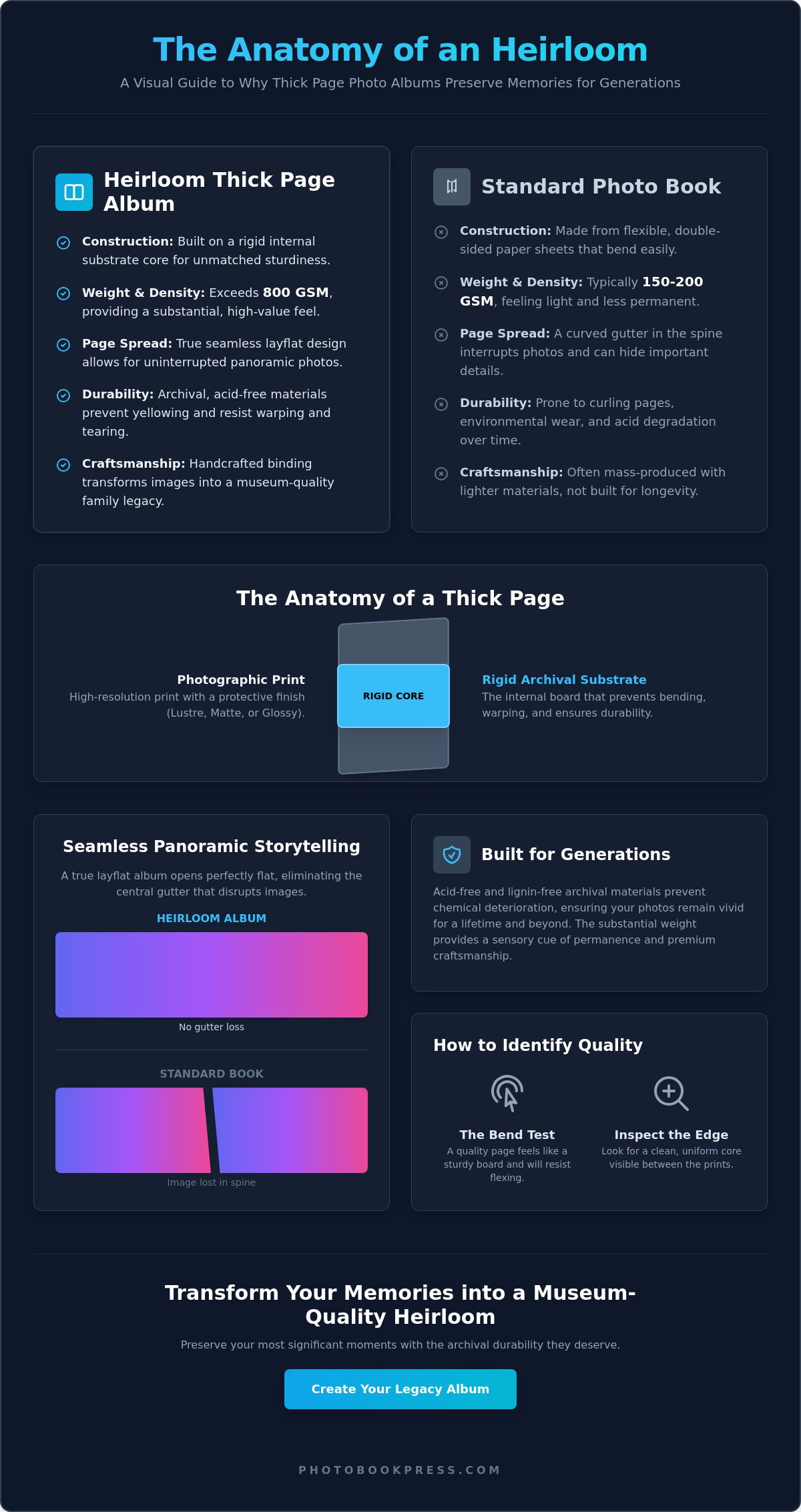
To understand the essence of a thick page photo album, one must first appreciate the architecture of its construction. Unlike standard photobooks that utilize flexible, paper-thin sheets, a true premium album is built upon rigid substrates. These internal cores are typically two to three times the thickness of standard paper, creating a page that doesn't bend or flop under its own weight. This rigidity is the defining characteristic of a flush-mount design, where the photograph is mounted directly onto a solid board rather than being printed on a double-sided sheet.
Weight acts as a silent communicator of value. When you lift a substantial album, your senses immediately register the physical heft as a sign of permanence and prestige. This sensory response is why many people perceive heavier objects as higher quality; it suggests a level of craftsmanship that lighter, mass-produced alternatives lack. A weighted album doesn't just hold images; it anchors your family history in a physical form that feels significant in the hands.
To better understand the tactile presence and visual impact of these heirloom pieces, watch this detailed unboxing:
The thickness of the page serves as the vital foundation for a true layflat experience. Because each page is a rigid board, the album can open perfectly flat without the curved gutter that often swallows the center of a photograph. This structural integrity allows for expansive, panoramic storytelling where a single image can span two pages without interruption. While a standard press-printed book relies on the flexibility of thin paper, the thick page photo album relies on the precision of the hinge and the strength of the substrate to maintain its form over decades of use.
Modern memory-keeping has moved far beyond the fragile scrapbooks of previous generations. Early albums relied on corner-mount stickers and thin paper that yellowed as acids leached into the prints. Today, sophisticated bookbinding techniques have replaced these temporary solutions with seamless, archival substrates. By using acid-free and lignin-free materials, these albums prevent the chemical deterioration that ruins photographs over time. It's why professional photographers insist on thick, rigid pages for their clients; they know that a wedding or a milestone deserves a vessel that won't warp or degrade as the years pass.
Spotting a genuine thick page album requires a discerning eye. You can perform a simple bend test by gently attempting to flex a page between your fingers; a premium archival page will resist bending, feeling more like a sturdy board than cardstock. Look closely at the spine and the edges of the pages. In high-quality construction, you'll see a clean, uniform core between the two photographic prints, often visible as a subtle white or black line at the edge. These visual cues distinguish a handcrafted masterpiece from a book that simply uses heavy paper. True quality is found in the density of the board and the seamlessness of the mount.
The distinction of a premium thick page photo album lies within its invisible architecture. While standard books are measured by simple paper weight, high-end albums are defined by their composite density. This is often discussed in terms of GSM, or grams per square meter. A standard photobook might use 150 to 200 GSM paper, but an artisanal album utilizes a sandwich construction that can exceed 800 GSM. This weight isn't just for luxury; it provides the physical mass required to keep the pages perfectly flat and resistant to environmental warping.
At the center of this construction sits the core. This is a rigid, archival-grade board that is bonded between two photographic prints. The core acts as a stabilizer, ensuring that the page remains stiff and durable even after decades of handling. When you choose a finish, whether it's the non-reflective depth of Matte, the vibrant clarity of Glossy, or the fingerprint-resistant texture of Lustre, the underlying core amplifies the tactile experience. These surfaces feel more like museum plaques than traditional book pages, turning every turn of the leaf into a deliberate, sensory event.
Adhesives are the silent heroes of this process. Professional binding requires pH-neutral, archival glues that won't become brittle or yellow over time. These specialized bonding agents are designed to withstand shifts in temperature and humidity, preventing the layers from delaminating. For those ready to translate their digital archives into physical form, selecting a bespoke wedding album built with these rigorous standards ensures the memories remain as pristine as the day they were captured.
A thick page photo album achieves its signature 180-degree opening through precise scoring and folding. Unlike traditional books that are stitched into a tight spine, these rigid pages are mounted back-to-back. This creates a gutter-free viewing experience, which is essential for large-scale landscape photography. Without a deep fold to swallow the center of the image, your panoramic shots can flow seamlessly across the entire spread. The thickness of the substrate provides the necessary leverage to keep the spine's structural integrity intact, allowing the book to rest open without assistance.
True preservation requires materials that meet strict archival preservation standards, specifically focusing on acid-free and lignin-free components. Lignin is a natural polymer found in wood pulp that causes paper to turn yellow and brittle when exposed to light and air. By removing these impurities, manufacturers ensure the paper stays white and the colors remain true. Whether you prefer the modern precision of inkjet or the traditional chemistry of silver halide printing, the substrate must be pure. An archival substrate serves as the primary defense against photo degradation over time.
A standard book often lives its life on a shelf, visible only by its spine. In contrast, a thick page photo album is designed to be a centerpiece. The physical volume of these albums is significant. Because each page is a rigid board, a 50-page album possesses the same impressive profile as a 300-page standard book. This physical presence transforms the album from a simple collection of photos into a sculptural object that commands attention on a coffee table or a dedicated display stand.
Durability remains the most compelling reason to choose a heavier format. Thin paper is susceptible to the oils on our skin, accidental tears, and the inevitable dog-earing that comes with frequent sharing. Thick pages are virtually immune to these common ailments. They provide a sturdy surface that resists bending and remains crisp even after hundreds of viewings. To ensure your memories survive for generations, it's helpful to follow the Library of Congress photo preservation guidelines, which emphasize using materials that won't chemically react with your prints. A thick, archival board is the ideal candidate for this level of protection.
The cost of these premium albums reflects a move from automation to artistry. While standard books are often produced on high-speed, machine-fed lines, a thick page album requires a significant amount of manual labor. Artisans must carefully align each photographic print with its rigid core, ensuring the edges are perfectly flush and the hinge is precisely seated. You aren't just paying for more material; you're investing in the human touch that guarantees a level of precision machines can't yet replicate.
Some moments are too heavy for thin paper. Wedding Albums are the primary example, as they represent a once-in-a-lifetime event that deserves a museum-quality presentation. Similarly, professionals use Portfolio Books with thick pages to create a tactile impression of excellence that justifies higher service rates. Even baby books benefit from this format, as these pages can withstand the enthusiastic, albeit uncoordinated, handling of little hands as they discover their own history.
There are times when a lighter touch is more appropriate. If you've spent a year documenting every weekend outing, a Hardcover Photobook with standard pages allows you to include 200 or more images without the book becoming unwieldy. Travel journals also favor standard pages for their portability, making them easier to tuck into a carry-on. For casual gifts or "just because" projects, Softcover Photobooks offer a beautiful, budget-friendly way to share memories without the permanence of an heirloom substrate.
The design phase is where the structural strength of a thick page photo album meets your personal narrative. Because these albums utilize a true layflat binding, you're no longer restricted by a traditional book's gutter. This structural freedom allows you to embrace the panoramic spread, letting a single breathtaking landscape or a wide-angle wedding scene occupy the full width of the book. The absence of a fold in the center means every detail remains visible, turning the act of turning a page into a grand reveal.
A minimalist approach often yields the most sophisticated results. Thick pages possess a physical presence that naturally complements breathing room or white space. By resisting the urge to clutter each page with multiple small images, you allow the viewer's eye to rest and appreciate the artistry of a single composition. When you pair these internal spreads with Leather Photobooks or linen covers, the entire piece feels like a curated gallery collection rather than a mere photo collection.
Precision is key when preparing your layout. Because thick pages are mounted to a rigid core, the trim process is incredibly exact. You must pay close attention to safe zones and bleeds to ensure no vital part of your image is lost during the final binding. If you're looking for more layout inspiration, you can explore our guide on designing a custom photo book to help frame your story effectively.
Success in curation often depends on how you group your images. Try organizing spreads by color palette or emotional tone rather than just chronological order. A single, powerful hero image on one side of a spread can anchor the narrative, while the facing page remains blank or holds a small, complementary detail. This rhythm creates a sense of pacing that honors the artisan quality of the medium. It invites the reader to linger on each moment rather than rushing through the volume.
The clarity of your files must match the premium nature of the substrate. Aim for a minimum of 300 DPI for all images to avoid pixelation on these large, rigid surfaces. Color profiling is equally vital; ensuring your monitor is calibrated helps the final physical print match your creative vision. Thick pages require higher resolution files to match the clarity of the physical substrate. For those ready to begin their project, you can start your custom album design today and see your memories transformed into a lasting heirloom.
Since 1985, Photobook Press has operated at the intersection of traditional bookbinding and modern photographic excellence. While technology has evolved, our commitment to the manual binding process remains unchanged. We believe that a thick page photo album isn't just a product; it's a physical legacy that deserves the highest level of care. This dedication to the artisan craft ensures that every piece leaving our shop possesses the structural integrity required to last for generations. We combine the reach of a national service with the meticulous soul of a boutique print shop, treating every customer's narrative as a unique work of art.
Our long-standing heritage in the print industry provides a level of assurance that mass-market printers simply can't match. We select our archival substrates with an eye for long-term preservation, ensuring your memories are anchored in materials that resist the passage of time. You can further personalize this experience through a range of premium customization options. Whether you choose the timeless texture of genuine leather, the understated elegance of linen, or the tactile precision of custom debossing, every detail is handled by master printers who treat your work as a precious artifact.
The result is a finished product that feels substantial and looks professional. By focusing on the intersection of technical standards and aesthetic beauty, we ensure that your investment in quality is reflected in every page turn. Our commitment to excellence means we don't cut corners on materials or rush the delicate process of manual assembly.
We understand that creating a high-end album is a significant creative undertaking. Our team provides expert guidance to professional photographers and hobbyists alike, ensuring your vision translates perfectly to the printed page. There's a profound security in knowing your most precious memories are being handled by individuals who have spent decades perfecting the medium of print. For those seeking a deeper look at what's possible in the high-end market, our guide to professional wedding albums offers extensive inspiration for preserving your unique legacy.
Transforming your digital archive into a physical masterpiece is a seamless process with our intuitive online design tool. It's specifically calibrated to handle the unique requirements of a thick page photo album, from panoramic spreads to precise edge bleeds. Once your design is finalized, our fulfillment process takes over with the same level of care. We ensure your heirloom is packaged securely and shipped to arrive in pristine condition, ready to be displayed and shared immediately. Begin your custom thick page photo album journey today and experience the difference that forty years of craftsmanship makes.
Choosing the right vessel for your memories is a decision that echoes through time. You've seen how the structural integrity of a thick page photo album transforms a simple collection of images into a museum-quality centerpiece. By utilizing rigid substrates and professional-grade layflat binding, these albums ensure your most significant moments are never lost in a deep fold or compromised by fragile paper. The combination of acid-free materials and artisanal craftsmanship creates a foundation that resists the environmental wear that often plagues standard books.
Since 1985, Photobook Press has remained dedicated to the noble craft of manual production. We use only archival-grade materials to guarantee that your photographs remain as vivid and true as the day they were first captured. It's time to move your digital archives from the temporary glow of a screen to a physical heirloom that commands presence. Design Your Artisan Thick Page Photo Album today and experience the quiet confidence that comes with investing in true quality. Your story is a work of art; let us help you give it the permanent home it deserves.
A layflat photo book is defined by its binding technique, while a thick page photo album is characterized by its substantial internal construction. While many books open flat, only a thick page version utilizes rigid, board-mounted substrates that prevent the pages from bending. This results in a much more durable and tactile experience that feels like a collection of museum plaques rather than traditional paper sheets.
Most thick page albums are designed to hold between 20 and 100 pages. Because each leaf is a rigid board, exceeding this count would make the spine unwieldy and excessively heavy. This limitation encourages a curated approach to storytelling, where you select only the most impactful images to represent your milestone. If you have hundreds of photos, a standard hardcover book may be a better fit for the volume.
Yes, thick page albums are the preferred choice for wedding photography because they mirror the significance of the event. The substantial weight and rigid pages provide a sense of permanence that standard books can't replicate. They're built to withstand decades of handling, ensuring your wedding memories remain pristine as they're passed down through your family as a cherished heirloom.
You can certainly use panoramic photos across a full spread. The flush-mount binding ensures there's no gutter to swallow the center of your image. This allows a single photograph to flow seamlessly from the left edge to the right edge. It's the most effective way to showcase expansive landscapes or wide-angle group shots without any visual interruption in the composition.
Maintaining your album requires minimal but deliberate care. Use a clean, dry microfiber cloth to gently remove fingerprints or dust from the page surfaces. It's best to store the album flat in a cool, dry environment away from direct sunlight. This prevents the spine from straining under the weight of the rigid pages and protects the archival inks from fading over long periods.
Genuine leather and high-grade linen are the premier choices for heirloom-quality albums. These materials are chosen for their natural durability and timeless aesthetic. Leather offers a classic, prestigious feel that develops character over time, while linen provides a modern, sophisticated texture. Both materials complement the internal rigidity of the pages, creating a cohesive and luxurious physical object.
A thick page photo album is perfectly suited for display on a coffee table. While it's heavier than a standard book, this weight is a hallmark of its quality and structural integrity. The heft actually helps the book stay open on a flat surface, allowing guests to admire your panoramic spreads with ease. It functions as a conversational centerpiece rather than just a storage item.
The higher cost reflects the intensive manual labor and premium materials required for construction. Unlike mass-produced books, these albums involve a complex layering process where prints are bonded to rigid cores. This artisan approach requires precise alignment and specialized binding techniques that machines can't replicate. You're investing in a handcrafted piece of art designed for long-term preservation and aesthetic perfection.
