No Products in the Cart


A photograph captures a fleeting fragment of time, yet many retail prints begin to lose their luster in fewer than fifteen years. You likely appreciate the accessibility of a walgreens photo book for a last-minute project or a casual collection of snapshots. It's a practical choice when speed is the only metric that matters. But for those moments that define a lifetime, the frustration of limited design software and the fear of pages loosening over time are risks you shouldn't have to take.
You want more than a temporary folder of images; you seek a vessel for your legacy. This guide explores the essential distinctions between mass-market retail options and the meticulous world of professional press printing. You'll discover how archival-quality materials and artisan binding techniques ensure your story doesn't just sit on a shelf, but lives on as an exquisite heirloom. We will compare color precision, paper durability, and the seamless design experience that results in a true work of art.
The retail photo book occupies a specific niche in the current world of memory preservation. It's a solution crafted for moments when the clock dictates the creative process. A walgreens photo book offers a practical answer for the 42% of consumers who wait until the final week before a holiday to secure a gift. It's a product of immediate gratification, born from the necessity of speed and the ubiquity of high-street retail. This ecosystem isn't built for the gallery wall; it's built for the kitchen table and the last-minute birthday celebration.
The underlying production relies on digital printing technology, which allows for rapid turnover without the artisanal calibration required for fine-art press runs. Retail kiosks are designed for high-volume output. They prioritize a "good enough" standard that satisfies a casual glance but may fall short of the archival expectations held by serious collectors. For many, the accessibility of a local storefront outweighs the desire for 200-year lightfastness or hand-stitched bindings. It's a trade-off where convenience serves as the primary currency.
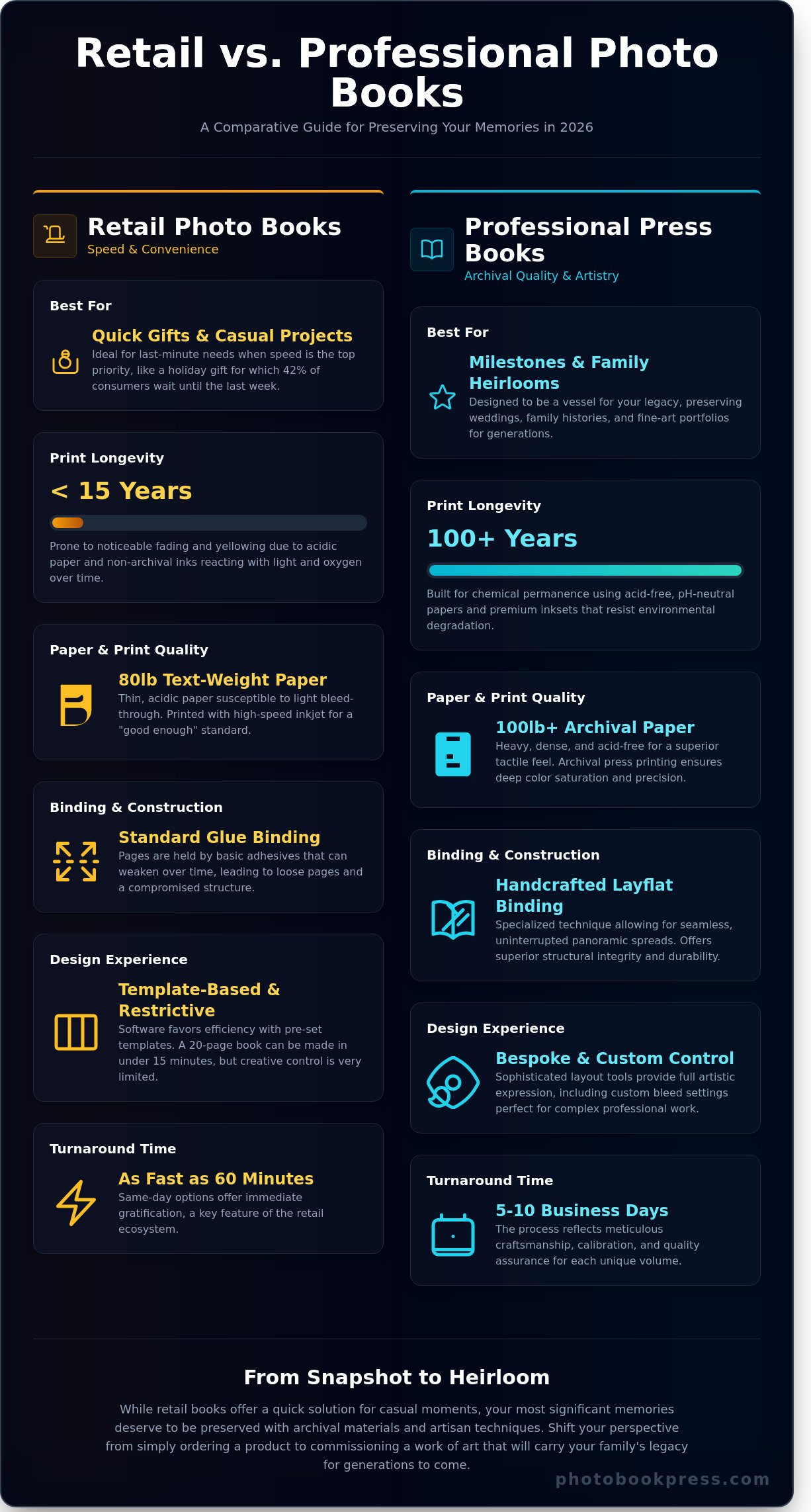
Store-level printing often utilizes thinner paper to accommodate the smaller, integrated binding machines found in retail locations. These machines typically handle 80-pound text-weight paper, which feels significantly lighter than the premium cardstocks used in boutique publishing. In contrast, ship-to-home options leverage centralized fulfillment centers where heavier materials and more durable adhesives are standard. Choosing the same-day walgreens photo book means accepting a simpler construction in exchange for a 60-minute turnaround. Shipping timelines for higher-quality builds usually range from 5 to 10 business days, reflecting the extra care required for structural integrity.
The software favors efficiency through pre-set templates. For the average user, this removes the "blank page" anxiety, allowing a 20-page book to be completed in under 15 minutes. However, these constraints limit the nuance of visual storytelling. Professional photographers often find the lack of custom bleed settings and rigid grid systems restrictive. The interface serves as a tool for assembly rather than bespoke artistic expression. While it's excellent for a casual weekend recap, it lacks the sophisticated layout tools needed for complex, panoramic photography or high-end portfolio work. The focus remains on accessibility, ensuring that anyone can produce a finished product regardless of their design background.
Retail solutions like the walgreens photo book serve a specific purpose: immediate accessibility. These products typically utilize high-speed inkjet technology, which excels at rapid production but often lacks the saturation depth found in electrostatic press printing. While a standard retail book might use 80lb paper stock, professional grade photo printing services opt for 100lb or heavier archival stocks. This difference is felt the moment you touch the page. The heavier weight provides a tactile density that prevents light from shining through the paper, which is a common issue with thinner, consumer-grade materials.
The science of print longevity relies on the chemistry of the paper itself. Acidic compounds in standard wood-pulp paper eventually react with light and oxygen. This reaction leads to the brittle, yellowed edges often seen in vintage newspapers from the mid-20th century. By utilizing acid-free, pH-neutral materials, a master printer ensures that the substrate remains stable for over 100 years. Professional presses prioritize color accuracy over the sheer volume of output, treating each page as a singular work of art rather than a commodity.
Preserving family history requires more than just a printed image; it demands a commitment to chemical permanence. Archival quality represents the gold standard for preservation, ensuring that every detail remains untouched by time. This meticulous approach aligns with archival digitization standards, which dictate how digital assets should be captured to maintain their historical integrity. When these standards are applied to physical books, the result is an heirloom that resists the degradation typically seen in mass-market retail options. It's about ensuring that the story you tell today remains legible for the generations that follow.
Automated systems often struggle with the nuances of a wedding album, where skin tones and delicate highlights are paramount. While a walgreens photo book uses algorithms to quickly adjust brightness, a professional press operator manually oversees the balance of ink and light. This human touch is essential for rendering deep shadows in black-and-white photography without losing subtle gradients. It's the difference between a simple copy and a true reproduction of your most cherished moments. If you're ready to see your memories in a new light, consider how bespoke craftsmanship can elevate your personal collection.
Choosing a walgreens photo book offers a specific kind of convenience, often delivering a finished product in a matter of hours. This retail model relies on high-speed, glue-based binding machines designed for mass production. While efficient, these adhesive methods lack the longevity found in artisanal construction. Professional photobooks utilize library-grade materials that resist the yellowing and brittle cracking common in budget-friendly alternatives. This distinction transforms the book from a simple print project into a permanent record of your most cherished moments.
Standard retail binding often suffers from significant gutter loss. This occurs when the inner margins of your images disappear into the tight, glued spine, obscuring the center of panoramic shots or family portraits. Professional handcrafted binding solves this through precision engineering. It creates a fluid, rhythmic movement as you move through the volume, allowing the pages to rest with grace. High-quality hinge strength is essential for preventing cover detachment over time. Without this structural integrity, the weight of the pages can pull the block away from the spine after only a few years of frequent handling.
The aesthetic difference between retail and professional options is immediate. Most retail outlets limit users to standard window covers or basic glossy hardcovers. In contrast, a professional photo book provides access to premium materials like genuine Italian leather and fine linens. These textures offer a tactile dimension that a standard digital print cannot replicate. Customization options include:
These choices allow you to create a cohesive family aesthetic that feels like a curated gallery piece rather than a disposable commodity.
Viewing your memories through the lens of digital preservation frameworks highlights why craftsmanship matters. While a walgreens photo book serves a temporary or casual purpose, archival-quality printing is an investment in your personal legacy. The price per page in a retail book often hides the cost of future replacement. If a book falls apart within a decade, the initial savings vanish. True value lies in the intersection of art and history. Your story, beautifully told, deserves a vessel that remains as vibrant in fifty years as it is today.
A walgreens photo book serves a specific purpose for casual, spontaneous captures. However, certain life events demand a caliber of craftsmanship that transcends the capabilities of a drugstore printer. These milestones require an heirloom approach. When you choose layflat photo books, you're investing in a sophisticated binding method that allows every page to rest perfectly level. This technical precision is vital for panoramic wedding photography, where a central gutter would otherwise bisect the couple or the landscape. By removing that physical barrier, the narrative of the day remains uninterrupted and immersive.
Durability is another factor that separates casual projects from professional-grade volumes. Consider the first year of a child's life. Baby books are often the most frequently handled documents in a family's collection. They endure decades of page-turning, sharing, and tactile exploration. Standard glue-based bindings often fail under this consistent stress after five or ten years. Professional archival construction ensures that the physical structure of the book remains as vibrant as the memories themselves, even when passed between generations.
Your wedding day represents a shift in your personal history. It's a day that deserves more than a same-day print solution. A heavy, substantial book carries an emotional weight that matches the gravity of the occasion. It feels significant in your hands. These books are designed to last fifty years or more, ensuring your grandchildren can see the clarity of your expressions without the fading common in lower-quality inks. True archival quality is about the long-term preservation of your most precious artifacts.
For creative professionals, the medium is the message. Presenting your work in a high-end portfolio book creates an immediate psychological impact. It signals a level of attention to detail that digital screens simply cannot replicate. High-grade materials and weightier paper stocks suggest that your work is valuable and permanent. This physical presentation is a silent advocate for your technical skill during high-stakes meetings.
While the convenience of a walgreens photo book is helpful for a quick weekend recap, your legacy deserves a more meticulous touch. Choosing the right format is the first step in ensuring your story is told with the grace it deserves.
Selecting a preservation method often starts with a search for a walgreens photo book. It's a choice driven by speed and immediate accessibility. However, a profound shift occurs when you move from the convenience of a quick transaction to the intentionality of commissioning a craft. At Photobook Press, we specialize in bridging the gap between fleeting digital files and enduring physical art. We believe your memories deserve more than a standard print run; they require a vessel that reflects their true value.
Our Maryland-based facility has served as a sanctuary for the printing arts since 1985. For nearly four decades, we've refined the delicate balance between time-honored bookbinding heritage and the sharp clarity of modern printing technology. We don't just process orders. We curate legacies. When you choose an heirloom press book, you're investing in a piece of history that utilizes superior materials designed to withstand the passage of time. This transition from a simple product to a commissioned work of art changes how you view your own photography.
The distinction lies in the details of the assembly. While a walgreens photo book serves a functional purpose for casual snapshots, our process focuses on meticulous manual binding and individual quality inspections. Every volume is handled by an artisan who ensures the structural integrity of the spine and the precision of the trim. Our commitment to excellence includes:
Professional photographers frequently trust our press for their most critical client work. They understand that the tactile experience of a book, the weight of the paper, and the richness of the blacks are essential components of the story they're telling. This level of craftsmanship transforms a collection of images into a sophisticated gallery experience you can hold in your hands.
The journey from a digital capture on your screen to a physical legacy on your library shelf is a significant one. It's an act of curation that honors your life's most meaningful moments. Whether you're documenting a wedding, a milestone anniversary, or a family chronicle, the quality of the presentation should match the depth of the emotion involved. You're not just making a book; you're building a bridge to the future. We invite you to explore our collection of photo books to find the perfect canvas for your next project. Choose the path of quality for the moments that matter most.
Choosing the right medium for your memories depends on whether you prioritize a one-hour turnaround or a lifetime of durability. A walgreens photo book serves the immediate need for a casual gift or a quick physical copy of digital snapshots. However, the shift toward archival press printing represents a commitment to quality that retail inkjet simply cannot match. Since 1985, Photobook Press has bridged the gap between professional artistry and personal storytelling. By utilizing materials guaranteed to last for generations, we ensure that your milestones don't fade with the passing of a decade. Professional photographers worldwide rely on these technical standards to preserve their work, recognizing that a true heirloom requires a master's touch. Your most significant chapters deserve more than a convenience store finish; they deserve a permanent place in your family's history. It's time to elevate your collection from a temporary folder of images to a meticulously bound volume.
Design your archival-quality heirloom at Photobook Press today and experience the difference of a book handcrafted in the USA for nearly 40 years. Your story is ready to be beautifully told.
You cannot pick up a Photobook Press order on the same day because each volume undergoes a meticulous hand-finishing process that requires 5 to 7 business days for production. While a walgreens photo book offers the convenience of 1-hour or same-day service, those products are limited to standard retail materials. Our artisanal approach ensures every page is cured and inspected by a master printer before it leaves the workshop.
The primary difference lies in the use of archival-quality, acid-free paper versus the standard 80lb text weight used in retail environments. Professional presses utilize stocks that are 40 percent thicker to prevent ink bleed and ensure tactile elegance. This high-density paper preserves color accuracy for decades, while retail options often succumb to yellowing or edge curling within 3 to 5 years of frequent handling.
Images get cut off in the middle of a walgreens photo book because of the standard perfect-binding method which pulls 0.25 to 0.5 inches of the image into the gutter. This traditional binding creates a deep curve that obscures the center of panoramic shots. Professional books utilize specialized binding techniques that account for the fold, ensuring your visual narrative remains fully visible from one edge to the other.
Professional photobooks are a superior investment for family vacations because they transform digital files into archival heirlooms designed to last for generations. While a retail book serves as a temporary memento, a handcrafted volume uses reinforced spines and premium finishes that withstand 100 or more viewings without structural failure. Choosing a high-end press ensures your 14-day travel itinerary is preserved with the dignity it deserves.
Layflat binding means the book stays open at a 180-degree angle without any tension or curvature in the spine. Walgreens offers a layflat option that typically utilizes a plastic hinge or a score line to mimic the effect. True professional layflat construction uses a continuous sheet of paper for each spread, creating a seamless visual experience that allows a single image to span two pages without any physical break.
The software for professional books is designed to be as intuitive as a retail app while offering 100 percent creative control over every design element. You don't need a degree in graphic design to use our platform; it provides sophisticated templates that guide your storytelling. Unlike the limited layouts found in mass-market apps, our tools allow for precision cropping and custom typography that reflect a boutique aesthetic.
A professional-grade photo book will last 100 years or more when stored in standard home conditions, whereas retail books often show signs of degradation within a decade. We use pigment-based inks and pH-neutral materials that meet Library of Congress standards for permanence. This commitment to archival quality prevents the fading and adhesive failure that frequently occurs in mass-produced books after 7 to 12 years of shelf life.
You can absolutely use your phone photos for a high-end project since most modern smartphones capture images at 12 megapixels or higher. This resolution is more than sufficient for a stunning 8x10 or 11x14 inch layout. Our pre-flight software checks every image to ensure it meets our 300 DPI standard, guaranteeing that your mobile memories translate into crisp, gallery-quality prints that rival professional photography.
