No Products in the Cart


A digital image is a fleeting flicker on a screen, but a debossed photo book cover represents a permanent, physical indentation in your family's history. We understand the hesitation that comes with creating a custom volume; nobody wants their most precious memories to arrive looking mass-produced or feeling "cheap." You seek a finish that feels like a gallery-quality artifact, something that carries the weight of your story through its texture and depth. According to a 2026 Bain & Company report, 72% of luxury buyers now prioritize gifts with rich stories and meaning, a standard that only true craftsmanship can meet.
This guide explores how traditional craftsmanship and archival materials transform a simple collection of images into a sophisticated legacy. You'll learn the crucial distinctions between debossing, embossing, and foil stamping, ensuring you choose the right technique for your sewn binding wedding albums or family chronicles. We'll examine which premium linens and leathers provide the most striking impressions, giving you the confidence to design a tactile experience that remains as vivid in fifty years as it is today. Discover how our team's 41 years of production heritage ensures every impression is a testament to quality.
A debossed photo book cover represents a physical commitment to the preservation of your most significant narratives. While modern photography often lives and dies on a digital screen, the art of debossing offers a sensory anchor that connects us to the weight of our history. At its core, debossing is a technique where a custom metal die is pressed into the cover material under immense pressure, creating a permanent depression that mirrors your chosen design or title. This process doesn't merely sit on the surface; it alters the very structure of the material to create a subtle play of light and shadow.
Historically, this method finds its roots in the noble traditions of letterpress and fine bookbinding. In those eras, the physical impression of type into paper was a hallmark of quality and intention. Today, we apply those same artisanal standards to sewn binding wedding albums and family chronicles. When you run your fingers over a debossed title, you aren't just touching a book. You're interacting with a gallery-quality artifact that signals "heirloom" status from the very first touch. It's a sophisticated alternative to flat printing, offering a level of tactile elegance that mass-produced volumes simply cannot replicate.
Many creators find themselves asking, what is debossing exactly, and how does it differ from its counterpart, embossing? The distinction is simple yet profound for the longevity of your book. While embossing creates a raised relief that stands out from the surface, debossing creates a sunken impression that recedes into the cover. For professional portfolios and wedding albums, debossing is often the preferred choice because the design is naturally protected from the surface friction and wear that occurs when sliding books onto a shelf. This structural advantage ensures that your title remains crisp and legible for generations.
Achieving a flawless debossed photo book cover requires a meticulous balance of heat, pressure, and material knowledge. Our craftsmen use state-of-the-art technology to calibrate the exact force needed for different textiles, whether you've chosen a heavy linen or a supple leather. The metal die is the heart of this process, acting as a master mold that ensures every edge is sharp and every curve is precise. Debossing is a permanent structural change to the book's cover material. By using archival-quality materials, we ensure that the fibers of the cover hold this impression without cracking or fading over time, maintaining the integrity of your legacy with every touch.
The success of a debossed photo book cover begins long before the metal die meets the surface. It starts with the selection of a material that possesses the necessary density to hold a permanent, crisp impression. High-end bookbinding is as much about physics as it is about aesthetics; the material must be supple enough to yield under pressure but resilient enough to maintain its structural integrity. At Photobook Press, our 41 years of experience has taught us that not all canvases are created equal. We prioritize archival-grade materials that won't become brittle or lose their memory over time, ensuring your legacy remains intact for decades.
When we speak of archival quality, we're referring to materials free from acid and lignin that can cause yellowing or deterioration. This commitment to longevity is a hallmark of the craft, a tradition preserved by institutions like the American Bookbinders Museum. Choosing an organic material over a synthetic alternative provides a superior tactile experience. While synthetics might mimic the look of leather, they often lack the depth and warmth of natural fibers. Genuine materials react to the debossing process by creating a rich, shadowed effect that feels integrated into the book itself rather than stamped upon it.
Genuine leather remains the pinnacle for those seeking a classic, prestigious feel. The natural grain of the hide interacts with the debossed die to create a unique texture in every volume, making it the ideal choice for sewn binding wedding albums. Conversely, linen offers a minimalist, contemporary aesthetic. Its tight weave allows for exceptionally sharp, deep impressions that catch the light beautifully. Both materials provide the durability required for a product meant to be handled and shared across generations.
Structural support is non-negotiable for a successful impression. This is why hardcover photo books are the primary vehicle for debossing. The rigid internal board acts as an anvil, providing the necessary resistance for the die to create a deep, permanent depression without warping the surrounding area. Softcover options simply lack the density to support this level of detail. By pairing a sturdy hardcover with archival textiles, you ensure a volume that won't crack or lose its shape, even after years of being pulled from a shelf. If you're ready to select the perfect canvas for your memories, browse our premium engagement collections to see these materials in practice.
Choosing between debossing and foil stamping is a decision between two distinct philosophies of luxury. While both techniques elevate a volume beyond the standard printed cover, they offer different visual and emotional rewards. Foil stamping is defined by its metallic brilliance and high-contrast reflection. It draws the eye immediately with a jewelry-like shimmer. In contrast, a debossed photo book cover relies on the subtle interplay of light and shadow created by physical depth. It doesn't shout for attention; instead, it invites the viewer to linger on the texture and form of the impression itself.
Longevity is a critical factor when investing in archival-quality keepsakes. Because debossing creates a permanent structural change in the material, the design remains readable for generations, even if environmental factors eventually cause surface pigments to fade. Foil stamping, while durable, is a surface application of metallic or pigmented film. By opting for a debossed finish, you're ensuring that the narrative of your book is literally pressed into its foundation. This physical permanence is why many collectors view debossing as the superior choice for a legacy artifact that will be handled frequently over many decades.
Professionals often gravitate toward "blind debossing," a technique where the metal die is pressed into the cover without any ink or foil. This creates a monochromatic, sculptural effect that is ideal for minimalist portfolios and modern wedding albums. The beauty of a blind deboss lies in its reliance on ambient lighting. As the angle of light changes, the shadows within the depression shift, revealing the title with a sophisticated grace. For those designing with large, bold typography, blind debossing provides a striking impact without overwhelming the organic texture of the premium linen or leather below.
For those who desire both tactile depth and visual contrast, combining these techniques offers the ultimate luxury. Applying foil within a debossed area creates a "stamped" look where the metallic color sits safely below the surface of the cover material. This protects the foil from scratches while adding a layer of brilliance to the structural impression. It's a popular choice for anniversary photo books, where gold, silver, or rose gold accents can highlight significant dates or names. Foil stamping within a deboss provides both tactile depth and visual contrast. Whether you're commemorating a milestone or creating a bespoke gift, this fusion of color and texture ensures your book feels like a truly exclusive commission.
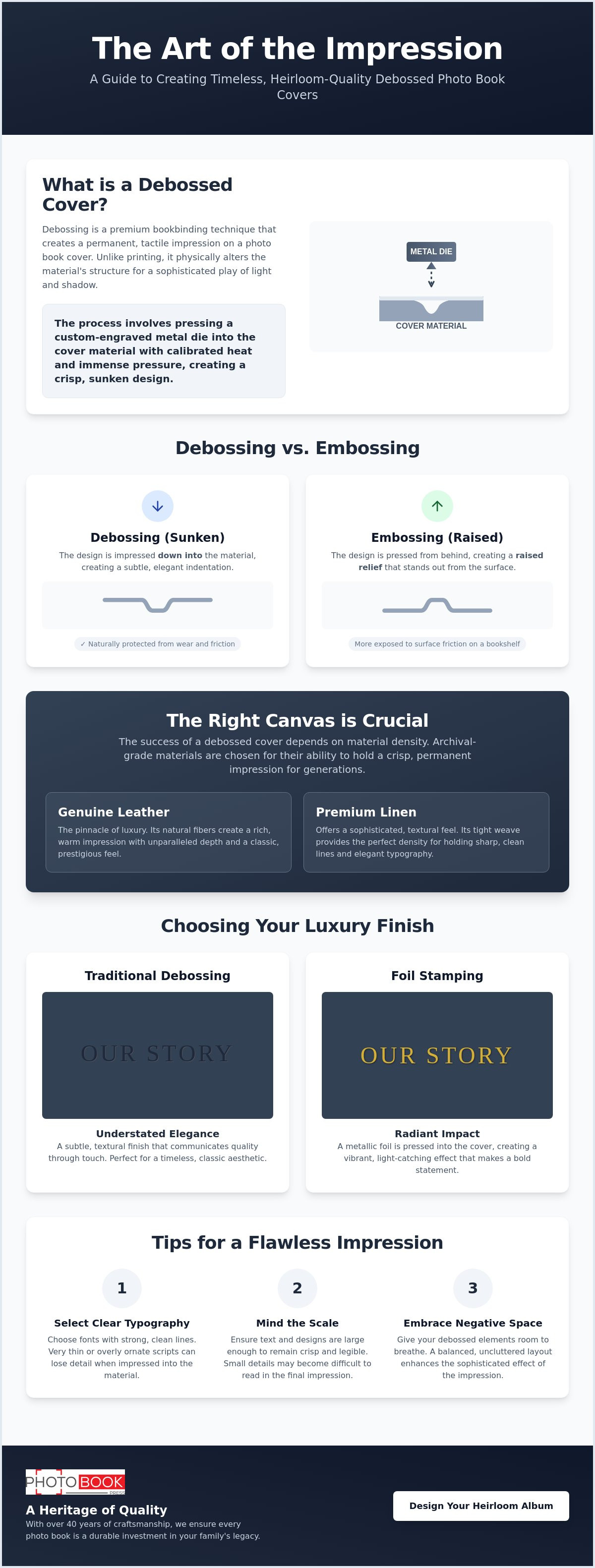
Designing a debossed photo book cover requires a shift in perspective from purely visual aesthetics to spatial and tactile planning. You aren't just placing text on a page; you're defining how a physical metal die will permanently reshape the fibers of your chosen material. Achieving a professional-grade result depends on your ability to balance the weight of your typography with the overall dimensions of the volume. A title that is too small gets lost in the expanse of a premium leather cover, while one that is too large can compromise the structural tension of the material. Precision is the hallmark of the artisan.
Maintaining a "safe zone" is a technical necessity that ensures your design feels intentional and balanced. We recommend centering your debossed elements with a generous margin from the edges and the spine. This placement isn't merely a stylistic choice. It protects the integrity of the binding and allows the impression to sit in the flattest, most stable area of the cover. By respecting these physical boundaries, you ensure that the light catches the depth of the debossed photo book cover with maximum clarity and elegance.
Typography selection is where many creators find their personal voice. Serif fonts often translate beautifully to debossing because their varied line weights and delicate "feet" create a sophisticated topographical map in the material. However, you must consider minimum line weights. If a font is too spindly, the die may struggle to create a clean impression without tearing the textile. Proper kerning, or letter spacing, is also vital. Letters placed too closely may "bleed" together under the pressure of the press. Choosing layflat photo books provides the stable, rigid base necessary to support these intricate typographic details during the manufacturing process.
A debossed photo window offers a unique opportunity to combine a physical impression with a high-resolution focal point. This inset design serves a dual purpose: it creates a stunning visual "pop" and physically protects the cover image from surface scratches and environmental wear. When selecting an image for this window, choose a high-contrast photograph with a clear central subject. The deep depression of the window acts as a natural frame, drawing the viewer's eye into the narrative. Remember that the longevity of this feature depends on archival quality printing to ensure the colors remain vibrant for generations. If you're ready to begin your design, explore our curated collections to find the perfect template for your legacy.
Our journey in the custom printing industry began in 1985. For over four decades, our team has refined the delicate balance between ink, paper, and pressure. While the Photobook Press brand was established in 2006, the 41 years of experience held by our craftsmen informs every debossed photo book cover we produce today. We operate from our facility in Maryland, a space where state-of-the-art machinery exists alongside the steady hands of master binders. This fusion of technology and tradition allows us to treat every project as a unique work of art rather than a mass-produced commodity.
This deep-rooted expertise is why professional photographers across the country rely on our wholesale fulfillment services. They understand that their clients deserve more than a temporary digital file; they deserve a physical artifact that carries the weight of their most significant life events. We don't just print pages. We construct legacies. By maintaining control over every step of the manufacturing process in our local facility, we ensure that the quality of our work meets the high standards of the gallery world.
Quality control at Photobook Press isn't an automated checklist. It's a manual, sensory process. Every volume undergoes a rigorous inspection where our binders examine the depth of the debossed impression and the alignment of the grain. We use professional-grade materials that far exceed standard consumer expectations, ensuring that your investment doesn't just look beautiful today but remains structurally sound for fifty years. The durability of our sewn binding books is a testament to this commitment, providing a level of archival security that glue-based alternatives can't match.
In a world saturated with fleeting digital imagery, a physical book is the only way to truly "own" your memories. There's a profound psychological value in holding a tactile, debossed object; it grounds your personal narrative in the physical world. A debossed photo book cover serves as a permanent invitation to revisit your history, offering a sensory experience that no screen can replicate. It's a bridge between generations, a quiet vessel for stories that deserve to be told and retold. We invite you to design your custom debossed photo book today and begin the process of preserving your own legacy.
A debossed photo book cover is more than a design choice; it's a physical commitment to the stories that define your family's history. By selecting the right archival materials and mastering the balance of typography, you create a tactile artifact that speaks with quiet confidence. Our team has been crafting premium photo products since 1985, ensuring that every volume we produce meets the highest standards of the medium. Every book is hand-inspected at our Maryland facility to guarantee that the impression is as precise and enduring as the memory it protects.
Investing in archival-quality materials ensures your legacy survives the digital age, providing a multi-generational durability that screens simply can't offer. Whether you're commemorating a wedding or a family history, the depth of a deboss adds a layer of sophistication that transforms a book into a gallery-quality heirloom. It's time to give your most precious moments the home they deserve. We invite you to Design Your Custom Debossed Photo Book and experience the intersection of art and personal history. Your story is ready to be told with the permanence it deserves.
Debossing creates a structural depression in the material, while foil stamping applies a metallic or pigmented layer to the surface. For a debossed photo book cover, the art lies in the shadow and texture of the indentation itself. Foil stamping can be combined with debossing to seat the color within the depression, protecting it from scratches and providing a radiant, jewelry-like finish.
Yes, you can combine a debossed photo window with debossed typography for a multi-dimensional aesthetic. This combination is particularly effective for sewn binding wedding albums, where a central image provides a focal point while the text adds narrative context. Each element requires a separate metal die to ensure the pressure is perfectly calibrated for both the inset image and the fine lines of the title.
Debossing enhances durability by recessing the title or design below the cover's surface. This placement shields the most delicate parts of your cover from friction and environmental wear that occurs when sliding the book onto a shelf. Because the impression is a permanent structural change to the material, it won't peel or fade like standard surface printing, ensuring your heirloom remains legible for generations.
Natural linen and genuine leather are the premier choices for debossing due to their density and fiber memory. Linen offers a crisp, modern finish with sharp edges, while leather provides a classic, organic look that highlights the natural grain. These high-end textiles hold the impression securely, whereas synthetic or thin materials often lack the structural integrity to support a deep, permanent indentation.
No, debossing is strictly reserved for hardcover volumes. The process requires a rigid internal board to act as an anvil, providing the resistance necessary for the metal die to press into the material. Softcover books lack this internal support, which would result in a shallow, inconsistent impression that could warp the entire cover.
The depth of a standard impression is determined by the thickness of the cover material and the calibration of the press. While the physical measurement is subtle, the visual impact is significant because of the natural shadows created within the depression. Our craftsmen adjust the pressure to ensure the die creates a distinct, tactile "well" without compromising the strength of the underlying fibers.
Yes, you can select from a variety of sophisticated fonts, though we recommend choosing styles with consistent line weights. Very thin or overly intricate scripts can be difficult for the metal die to translate into certain fabrics without losing detail. Our design guidelines help you select typography that ensures your debossed photo book cover remains sharp, legible, and elegant.
Professional debossing requires specialized machinery and decades of experience to master the variables of heat, time, and pressure. A master artisan understands how different materials react to the die, preventing issues like scorched fibers or shallow, uneven impressions. Choosing a service with a 41-year production heritage ensures that your memories are treated with the technical precision and emotional care they deserve.
