No Products in the Cart


What if the most significant day of your life is currently trapped behind a glass screen, destined to be lost in an endless scroll of 2,000 unorganized digital files? It's a common modern burden; you possess a wealth of imagery but lack a tangible way to experience it. You likely feel that a fleeting digital folder cannot hold the gravity of your vows, yet the prospect of choosing between complex technical terms like flush mount or layflat binding feels daunting. Selecting the wrong materials is a valid concern, as a legacy should never be printed on paper that yellows or loses its vibrancy within a decade. Creating a wedding photo album should be an act of curation, not a source of stress.
This guide will show you how to transform those scattered moments into an archival-quality heirloom crafted with the meticulous precision of a gallery piece. You'll discover how to navigate the artisan world of premium leathers and refined linens with absolute confidence. We'll demystify the technical landscape and provide a streamlined process for curation. By the end, you'll have a clear roadmap to creating a physical masterpiece that ensures your story is beautifully told for generations to come.
Of course, a museum-quality album begins with exceptional imagery. To ensure your wedding is captured with the artistry required for a professional heirloom, you may want to consult with the award-winning One Vision Photography | South Wales Wedding Photographer.
A wedding photo album serves as a sanctuary for your most cherished memories. To ensure these moments remain vibrant for generations, we must look at the science of preservation. True archival quality requires materials that resist chemical decomposition. This begins with acid-free, pH-neutral paper that prevents the brittle yellowing common in mass-produced books. Professional printing relies on pigment-based inks, which offer a longevity rating of over 100 years; this stands in stark contrast to the dye-based inks found in standard consumer products that may begin to shift in color after only 15 or 20 years. Understanding the nuances of archival materials and professional binding is essential for anyone seeking to create a lasting family heirloom that withstands the test of time.
The tactile experience of turning a page is just as important as the image itself. For a premium wedding photo album, 250 to 300 GSM (grams per square meter) is the professional standard for page thickness. This weight provides a necessary rigidity that prevents tearing and creates a sense of permanence. Luster finishes offer a gentle sheen that enhances color contrast and sharpness, while fine art papers provide a velvet-like texture that softens light. This texture influences the mood significantly; a matte finish often evokes a timeless, painterly feel that complements film photography or moody, atmospheric shots.
The structural integrity of a book relies entirely on its spine. While machine-glued spines are common in retail shops, professional boutique albums utilize sophisticated hand-bound techniques. Layflat photo books are particularly sought after because they allow images to flow across two pages without being lost in a center gutter. This seamless construction is vital for expansive venue shots or panoramic group portraits where every detail matters. Unlike traditional bindings that pull at the center, a layflat design ensures the book stays open on a table, inviting guests to linger over the artistry of your story. You can discover these structural details in our collection of handcrafted heirloom albums, where every stitch is a commitment to durability.
Choosing the exterior of your wedding photo album is the first step in curating a physical legacy. This choice dictates how the story feels in your hands before a single page is turned. It's a sensory decision that balances visual grace with the practicalities of preservation. The cover is the guardian of your memories; it must be as resilient as it is beautiful.
Leather remains the definitive choice for formal celebrations. It offers a weight and scent that signals a high-end heirloom. A 2023 industry report noted that genuine leather covers are selected by 62 percent of couples who prioritize long-term durability. The material ages with a unique patina, growing more characterful over decades of handling. For those seeking a different path, linen provides a modern, breathable alternative. It suits destination or garden weddings perfectly. You can explore the nuances of a leather album photo versus its linen counterpart to see which grain matches your vision. Linen is often preferred for its organic texture and its ability to hold soft, pastel dyes that reflect a naturalistic aesthetic.
Personalization transforms a beautiful book into a bespoke artifact. Foil stamping in gold, silver, or rose gold adds a metallic luster that catches the light. This traditional press technique uses heat to bond the foil into the material. It ensures your names and dates remain crisp for generations. A cameo window offers a visual portal. It features a single, impactful image recessed into the cover. This creates an immediate emotional connection. Beyond the exterior, endpapers serve as a bridge. Selecting a color that matches your wedding palette creates a cohesive transition from the cover to the inner pages.
Deciding between a Signature album and a Guest Book format depends on the book's purpose. Consider these factors:
Your wedding photo album is more than a collection of images; it's a curated experience. Whether you choose the rugged elegance of leather or the soft touch of linen, the goal remains the same. You're building a bridge between your most cherished day and the generations who will eventually hold this book. Every stitch and foil-stamped letter serves that singular purpose. By selecting materials that meet ISO 18902 standards for archival quality, you ensure that the tactile beauty you feel today remains unchanged fifty years from now.
A truly memorable wedding is built on these small, perfectly executed details, both in the album and at the venue. For event professionals looking to ensure their service matches the quality of the occasion, you can learn more about Shift4 POS UK.
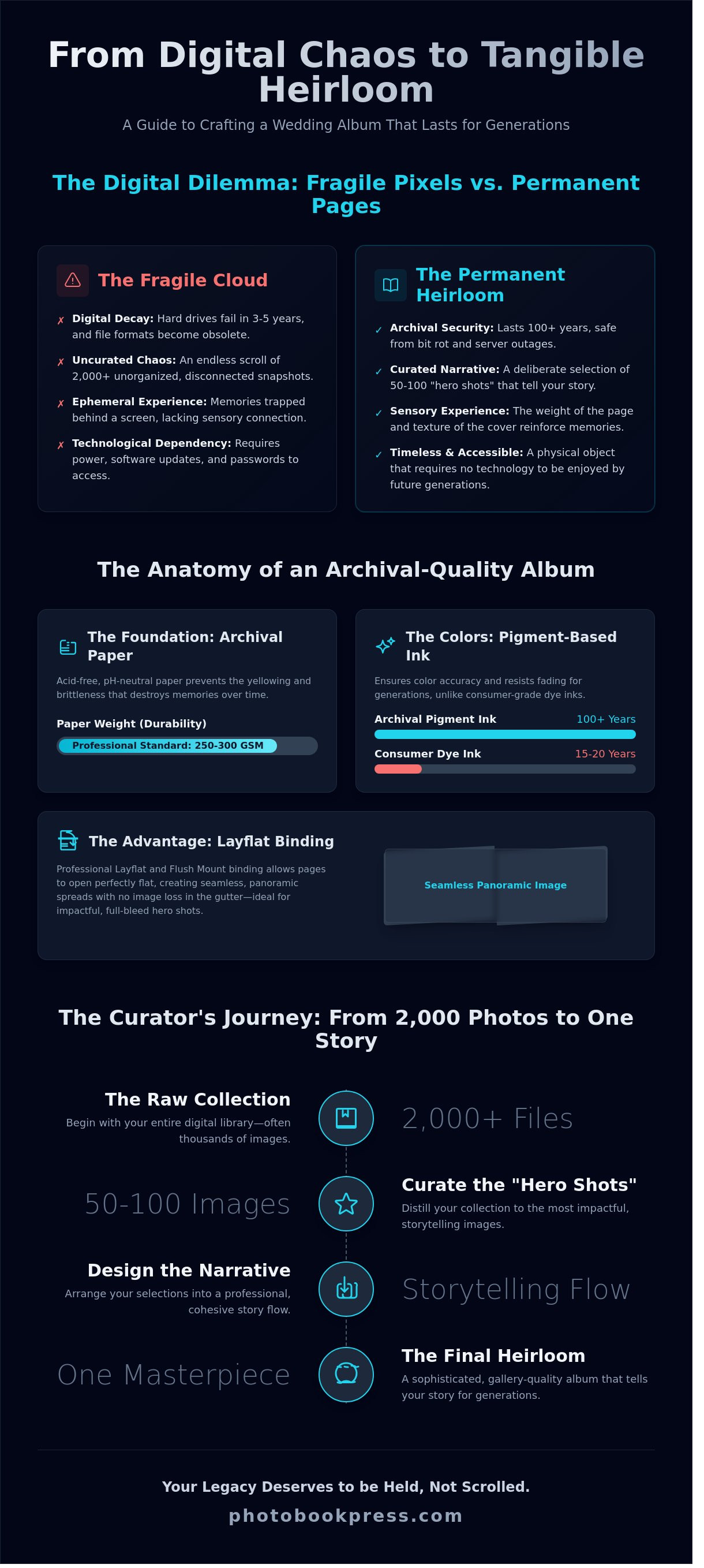
Creating a legacy begins with the discipline of selection. Most modern photographers deliver between 400 and 800 high-resolution files, yet a truly sophisticated wedding photo album finds its strength in restraint. The first edit is often the most difficult, as you must filter 1,000 or more images down to an "essential 100" that represent the soul of the day. This process transforms a digital archive into a focused narrative, ensuring every page turn feels intentional rather than repetitive.
Once you have identified your core collection, you must designate your "Hero Shots." These are the breathtaking, high-impact images that deserve a full-page spread or a panoramic presentation. By identifying these anchors early, you establish the visual peaks of your book. From there, you can build a chronological flow that uses emotional punctuation marks, such as the quiet anticipation of the morning or the shared triumph of the recessional, to guide the reader. A masterfully designed album balances these peaks with quiet moments, utilizing white space to let high-impact images breathe. In professional book design, leaving 20% to 30% of a page as negative space often increases the perceived value and emotional weight of the photographs themselves.
Effective curation requires looking beyond the technical perfection of a frame. You should prioritize wedding photos that capture raw emotion over mere documentation. To achieve a balanced spread, employ the "Detail-Portrait-Action" trio: pair a close-up of the lace or florals with a formal portrait and a candid movement. Don't overlook the "in-between" moments. A blurred shot of a laugh or a quiet hand on a shoulder adds the necessary soul that polished portraits alone cannot provide.
Modern elegance relies on the "less is more" rule to avoid visual clutter. Limit your layouts to one to four images per page to maintain focus. Visual harmony is achieved by grouping photos by lighting and color story; a bright, outdoor ceremony spread should not be interrupted by high-contrast, moody reception shots. Use the sophisticated wedding album maker tools to ensure professional-grade alignment and consistent margins. These technical details separate a simple book from a gallery-quality heirloom.
Ready to transform your digital gallery into a tangible masterpiece? Start building your custom heirloom with PhotoBook Press today.
Our story began in 1985 in the heart of Maryland. Since then, we've remained dedicated to the noble craft of the press, even as we've integrated 2026 printing technology to ensure unparalleled clarity. We don't believe in mass production; we believe in the quiet precision of the artisan. This commitment is why professional photographers treat our workshop as their best-kept secret. By offering wholesale-grade quality to everyone, we ensure your wedding photo album possesses the same structural integrity as a gallery-bound volume.
Every page, cover, and bind undergoes a 10-point hand-inspection protocol before it leaves our facility. We check for color consistency, structural tension, and material purity. Our sustainability practices reflect this same level of care. We utilize FSC-certified papers and eco-conscious adhesives, ensuring that the preservation of your past doesn't come at the expense of the future. It's a meticulous process that transforms ink and paper into a tangible legacy.
At PhotoBook Press, "hand-finished" is a standard, not a marketing term. Our binders meticulously tuck every corner and set every spine to ensure archival-grade longevity of 200 years or more. We maintain G7 Master status for color precision, ensuring that the blush of a bouquet or the gold of a sunset is replicated exactly as you remember it. Whether you're a professional studio managing a complex workflow or a DIY couple creating your first wedding photo album, our team provides the technical expertise to make your vision permanent.
Memories are too precious to remain trapped behind a glass screen. They deserve the weight, texture, and presence of a physical book that can be passed down through generations. We've streamlined our design interface to respect the schedule of busy newlyweds; you can move from digital files to a curated layout in a single afternoon. It's time to give your story the home it deserves. Begin crafting your custom wedding album today and hold your legacy in your hands.
Your wedding day is a collection of fleeting moments that deserve a permanent, tangible home. Moving beyond the digital screen ensures these memories don't fade into the background of a forgotten hard drive. A premium wedding photo album serves as a physical bridge between your past and the generations to come. By selecting archival-quality materials and layflat binding, you're investing in a vessel that preserves color precision and structural integrity for decades.
Since 1985, our Maryland-based press has dedicated itself to the fine art of bookmaking. We use the same museum-grade materials trusted by professional photographers to create high-end heirlooms that stand the test of time. With worldwide shipping available, our craftsmanship reaches doorsteps across the globe, ensuring every couple has access to boutique quality. It's a journey from digital pixels to a handcrafted artifact that feels as significant as the day itself. Your story is a masterpiece of personal history, and we're honored to help you tell it with the quiet confidence of a master printer.
Design Your Custom Wedding Heirloom
Take the first step toward preserving your most precious moments today.
A wedding album features thick, rigid pages with photographic prints mounted on a substrate, whereas a photo book uses thinner, flexible paper. High-end albums often utilize 1.5mm to 2.5mm page thickness to ensure durability over several decades. This structural integrity transforms a simple collection of images into a substantial wedding photo album that resists warping. The tactile weight of an album creates a gallery-like experience that standard press-printed books cannot replicate.
A standard wedding photo album typically contains between 20 and 40 spreads, which equates to 40 to 80 individual pages. This range allows for approximately 80 to 120 curated images without overcrowding the layout. Industry standards suggest that 30 spreads provide the ideal balance for a full wedding narrative, from the initial preparations to the final departure. By limiting the page count, you maintain a focused, high-impact visual story that captures the day's essence.
Layflat binding is essential for a professional wedding album because it allows images to flow seamlessly across two pages without a gutter or fold. This binding technique ensures that 100 percent of your panoramic shots remain visible and undistorted. It's a design that prevents the physical tension that causes traditional books to spring shut, allowing the album to rest open on a table. For large-scale landscape portraits, this construction is the only way to preserve the original composition's integrity.
Genuine top-grain leather remains the premier choice for an heirloom-quality cover due to its natural durability and timeless aesthetic. High-quality leathers can last over 100 years when kept in controlled environments. Many couples also select archival-grade linens or Japanese silks, which offer a modern, tactile alternative with a 50-year lifespan under normal handling. These materials protect the internal pages while providing a sophisticated exterior that ages gracefully as part of your family's history.
You're able to use professional wedding photos in your custom album as long as you have a high-resolution digital gallery and a print release from your photographer. Most modern photography contracts include a personal use license that grants permission for physical printing. It's essential to ensure your files are at least 300 dots per inch (DPI) to maintain the sharp detail and color accuracy of the original capture. This ensures your printed legacy matches the artistic vision of your photographer.
Store your leather album in a climate-controlled room where the temperature stays between 65 and 72 degrees Fahrenheit. Keep the volume flat rather than upright to prevent the heavy pages from pulling on the binding over time. Avoid direct sunlight, which can cause UV damage and fading within 12 months of exposure. Handling the pages with clean, dry hands prevents natural skin oils from marking the archival paper, preserving the pristine finish for future generations.
The production of a handcrafted wedding album generally requires 15 to 21 business days for printing and assembly. This timeframe accounts for the meticulous color calibration and manual binding processes that define artisan quality. Once the workshop completes the final inspection, shipping typically takes 3 to 5 additional days depending on your location. This deliberate pace ensures every detail meets the rigorous standards of a master printer, ensuring your story is beautifully told.
