No Products in the Cart


The $3.72 billion global photobook market proves one thing in 2026: we're no longer satisfied with digital images that vanish into the cloud. You likely feel the weight of thousands of unorganized files, yet you hesitate to print them because you fear a standard hardcover photo book will yellow or lose its pages within a decade. It's a valid concern when many consumer-grade options prioritize speed over the 200-year longevity that true archival materials provide.
Your memories deserve the quiet confidence of a handcrafted heirloom rather than a fleeting digital display. This guide explores how to transform your library into a museum-grade treasure through professional binding and exquisite material selection. You'll learn why acid-free and lignin-free papers are essential for ensuring your story remains vibrant for generations. We'll examine the noble craft of the press, focusing on paper weights, color precision, and the architectural storytelling that defines a professional-grade volume. This clarity helps you invest in a legacy where your story is beautifully told.
A hardcover photo book represents more than a collection of images; it's a sophisticated fusion of archival-quality printing and professional-grade binding. In an era where digital files often feel ephemeral, these volumes serve as permanent anchors for your personal history. Each book is a meticulously crafted artifact designed to withstand the passage of time, ensuring that the vibrancy of your most cherished moments remains untarnished for decades. This isn't merely a product. It's a vessel for your legacy.
By 2026, the global photobook market has reached an estimated $3.72 billion, reflecting a profound shift in how we value our visual narratives. We've moved beyond the era of digital saturation toward a renewed appreciation for functional art pieces. A premium book doesn't just sit on a shelf; it commands attention as a coffee table centerpiece. It invites guests to engage with your story through a tactile, sensory experience that a smartphone screen cannot replicate. This return to the physical allows your memories to occupy a rightful, permanent space in your home.
To better understand the meticulous steps involved in creating these physical treasures, watch this detailed tutorial:
There is a distinct psychological weight to holding a physical book. Research into digital fatigue suggests that our brains process tangible media with greater emotional resonance than fleeting pixels. When you turn a high-quality page, you aren't just looking at a photo. You're participating in a tradition of family storytelling. These books become the primary documents of your genealogy, transforming a cluttered digital library into a curated legacy that can be passed down through generations. Your story, beautifully told, deserves the permanence of ink and paper.
While softcover options serve well for casual travel logs or everyday snapshots, the hardcover photo book is the definitive choice for milestones that demand durability. The craft of bookbinding provides the structural integrity necessary for frequent handling, protecting the inner block from warping or edge wear. For significant occasions like weddings, professional portfolios, or milestone anniversaries, the added shelf presence of a rigid spine and premium cover materials offers a sense of prestige. A hardcover volume remains upright and elegant on a library shelf, signaling that the contents within are of exceptional importance. It's a deliberate investment in a physical heirloom that won't succumb to the fragility of lesser materials.
A premium hardcover photo book is a structural masterpiece that transcends the capabilities of standard consumer printing. Its excellence lies in the "press" heritage, where the assembly of a volume is viewed as a noble craft rather than a mechanical process. The architecture begins with the core board, a high-density, acid-free foundation that provides the necessary rigidity to prevent warping over decades. This skeleton is then enveloped in a wrap, the outer skin that protects the interior. Finally, the inner block, which contains your curated narrative, is integrated with a precision that ensures every page turn is smooth and deliberate.
The method of securing these pages is a critical technical distinction. While mass-market options often rely on standard glues that become brittle and crack, professional bookmaking utilizes PUR (Polyurethane Reactive) adhesive. This advanced bonding agent retains its flexibility and strength regardless of temperature shifts or frequent handling. For the most discerning collectors, traditional sewn binding remains a prestigious choice, offering a rhythmic flow that allows the book to rest naturally. This meticulous attention to the mechanics of bookmaking ensures your memories aren't just stored, but are safely anchored within a durable artifact.
Archival-quality paper is the foundation of longevity, utilizing acid-free and lignin-free fibers to prevent the yellowing and deterioration that can destroy memories over time. When selecting a finish, Lustre offers a sophisticated balance of vibrant color and fingerprint resistance, while Matte provides a non-reflective, gallery-like elegance. The "heft" of a page is determined by its GSM (grams per square meter). Choosing a stock of 148 to 200 GSM provides a tactile weight that feels substantial and premium in the hand. If you're ready to begin your own project, explore the textures of our handcrafted hardcover photo books to find the perfect match for your narrative.
The sensory experience begins the moment you touch the cover. High-end European linens offer a refined, textural appeal that feels both modern and timeless. For those seeking the ultimate in prestige, genuine leather binding provides a scent and durability that only improves with age. These materials serve as a canvas for further customization, such as deep-etched debossing or exquisite foil stamping. Such details elevate the book from a simple container of images to a bespoke piece of art that commands presence on any library shelf.
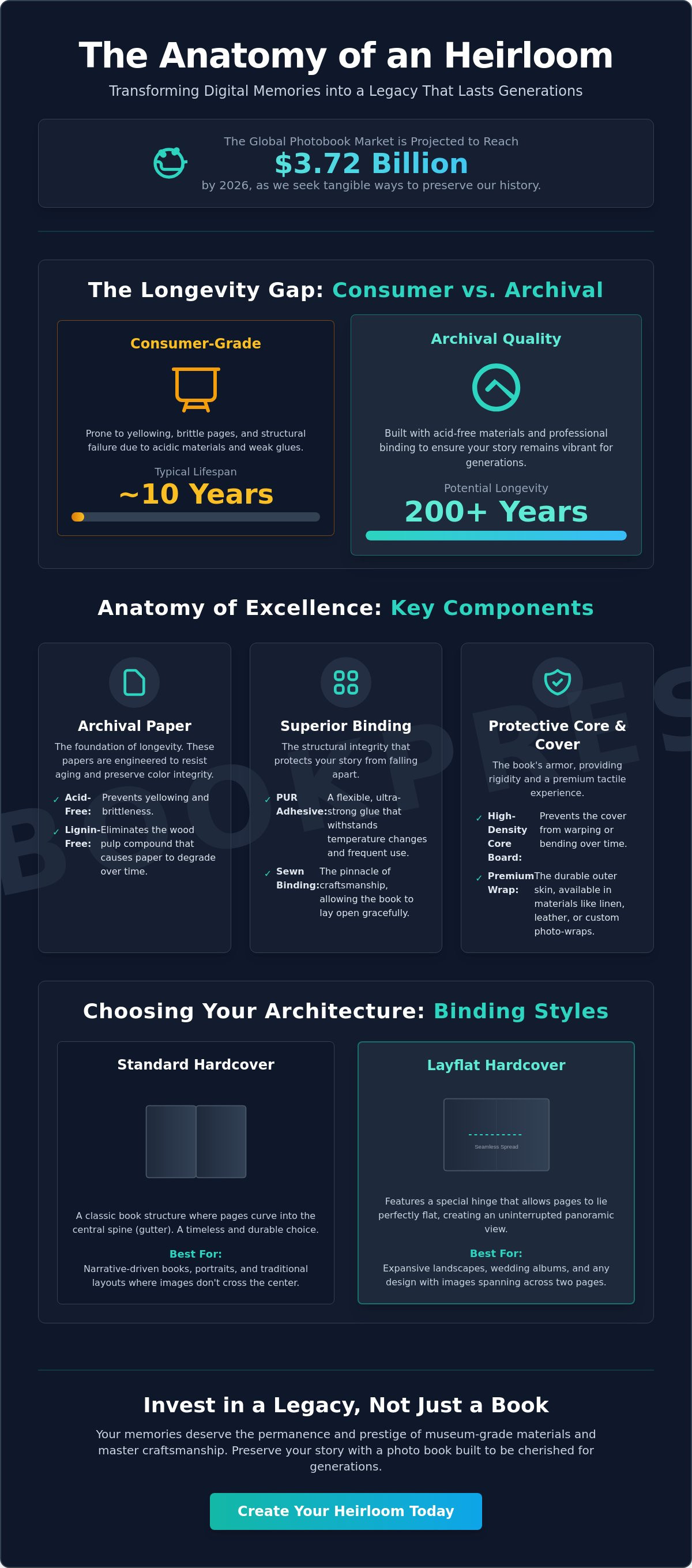
Choosing the correct architecture for your hardcover photo book is a pivotal decision that dictates the rhythm of your visual storytelling. The structural choice between standard and layflat binding isn't merely a matter of preference; it's about how you intend for the viewer to interact with your imagery. Standard hardcover binding follows the traditional press heritage, where pages are secured into a central spine. This creates a "gutter," a natural curve where the paper enters the binding. While this provides a classic, familiar feel, it requires careful layout planning to ensure vital subjects aren't lost in the center fold.
For those who demand a seamless visual flow, the layflat architecture utilizes a specialized hinge that allows the book to rest completely flat on a surface. This removes the gutter entirely, providing a continuous canvas for your most expansive shots. To understand the specific craftsmanship behind this style, you may wish to consult our guide on the art of the layflat photo book. Each architectural style serves a unique purpose in the preservation of your history, and selecting the right one depends on the scale of your narrative.
The standard hardcover photo book is the premier choice for high-volume projects. If you're documenting a "Year in Review" or a comprehensive family archive that exceeds 100 pages, standard binding offers the necessary capacity. Because the pages aren't bonded back-to-back, the book remains manageable and elegant even at higher page counts. It's a cost-effective way to preserve large-scale narratives while maintaining a traditional, prestigious spine that looks magnificent in a home library. This style is perfect for stories told through a multitude of small moments rather than a few large ones.
When impact is the priority, layflat binding is the undisputed gold standard. This technique is essential for wedding albums and professional portfolios where landscape photography takes center stage. By bonding pages back-to-back, we create a rigid, durable sheet that supports edge-to-edge printing without any image loss. This architecture allows for breathtaking panoramic spreads that capture the full scale of a moment. It transforms the act of viewing into a gallery-like experience, ensuring that your most important portraits are presented with the professional-grade clarity they deserve. It's a tactile, premium choice that turns every page turn into a significant event.
The design of a hardcover photo book is an exercise in curation, requiring a discerning eye to transform a collection of images into a cohesive narrative. The process begins at the threshold: the cover. Selecting a "hero image" is paramount; this single frame must encapsulate the emotional core of your story and set the narrative tone for what lies within. Whether you choose a quiet, intimate portrait or an expansive landscape, this image serves as the definitive introduction to your history. It's the first tactile interaction a reader has with your legacy, making it the most critical design choice in the entire volume.
Adopting a "less is more" philosophy elevates your book from a standard album to a gallery-grade artifact. In 2026, high-end publishing trends favor minimalism, using generous white space to let individual photos breathe. This breathing room prevents visual clutter and allows the viewer to linger on the details of a single moment. When sequencing your pages, consider whether a chronological or thematic approach best serves your story. While a timeline offers a logical progression, a thematic arrangement can highlight emotional arcs and recurring motifs, creating a more resonant experience. For a deeper exploration of how these design choices fit into the broader context of the photo book as a medium, archival craftsmanship remains the essential foundation for any legacy project.
Technical precision is the silent partner of artistic curation. To ensure your images appear crisp on large-format pages, aim for a resolution of at least 300 DPI (dots per inch). Lower resolutions can result in visible pixelation, which detracts from the premium feel of a handcrafted book. Consistency is equally vital; utilizing sRGB color profiles ensures that the vibrant hues you see on a calibrated monitor translate accurately to the physical press. If your narrative includes low-resolution "candid" shots from older devices, integrate them into multi-image grids or smaller layouts rather than full-page bleeds. This strategic placement maintains the professional integrity of the overall project while still honoring those spontaneous, imperfect memories.
Creating a visual rhythm is what guides a reader through your hardcover photo book with grace. Mix high-impact, full-page bleeds with structured multi-image grids to vary the pace of the story. Use text and captions with a light touch; a well-placed date or a short, evocative sentence should enhance the imagery rather than compete with it. This deliberate pacing mirrors the experience of walking through a curated exhibition, where each turn of the page reveals a new, carefully considered perspective. If you are ready to transform your digital library into a physical masterpiece, you can design your bespoke hardcover photo book today and begin the journey of preserving your most meaningful moments.
Since 1985, Photobook Press has operated with the conviction that a photograph is a beginning, not an end. Our dedicated facility houses master printers who treat every hardcover photo book as a singular work of art. This isn't a mass-produced item from a faceless factory; it's a curated artifact born from decades of technical expertise. While many digital services prioritize software automation, we focus on the noble craft of the press. We utilize professional-grade technology to achieve a level of color precision that meets the exacting standards of gallery curators. This commitment ensures that the subtle gradients of a sunset or the delicate skin tones of a portrait are rendered with absolute fidelity.
The manual binding process remains the heartbeat of our operation. Each volume undergoes a rigorous journey where human hands oversee the alignment, the adhesive application, and the final casing. This artisan touch ensures that your book possesses a structural integrity that machine-only processes simply cannot replicate. We don't just print pages; we build legacies. By blending high-end technology with traditional bookmaking techniques, we provide a home for the moments that define your life. It's the definitive choice for those who believe in our signature promise: Your story, beautifully told.
Quality control isn't a final step at our domestic facility; it's a continuous practice. Our master printers uphold a national standard for archival excellence that oversees every stage of production. This domestic focus offers several distinct advantages for our clients:
Our facility serves a diverse community, from professional photographers requiring portfolio-grade precision to families documenting their most precious milestones. We understand that whether you're a seasoned artist or a high-end hobbyist, the standard for quality remains the same.
Choosing a premium hardcover photo book is an investment in a permanent narrative. In an era where digital formats become obsolete and cloud storage feels impersonal, a physical heirloom offers a sense of peace of mind. You aren't just buying a book; you're securing a piece of history that your grandchildren will hold. The archival-quality materials we use are selected specifically for their ability to resist the elements and the wear of time. This tactile experience creates a bridge between generations, allowing your family's history to remain vibrant and accessible. When you're ready to move beyond the screen and create something that lasts, Design your custom hardcover photo book and experience the difference of true press heritage.
You've explored the intricate architecture of the modern book, from the structural integrity of PUR adhesives to the expansive beauty of layflat panoramic spreads. Selecting a hardcover photo book is a deliberate act of curation that ensures your digital library becomes a tactile family artifact. It's the difference between a file that may be lost to time and a physical volume that commands presence on a library shelf. The transition from digital clutter to an archival heirloom requires a partner who understands the intersection of art and history.
Since 1985, our Maryland-based master printers have dedicated themselves to the noble craft of the press. Every volume we produce features archival-quality materials and a hand-bound professional finish designed to resist the wear of decades. This meticulous attention to detail transforms your curated images into an exquisite investment in your family's narrative. It's time to bring your most meaningful moments to life with the permanence and grace they deserve.
Create Your Heirloom Hardcover Photo Book
Your story is unique; let's ensure it's beautifully told for those who will follow in your footsteps.
An archival-quality hardcover photo book is designed to last between 70 and 200 years when stored in a stable environment. This exceptional longevity is achieved by using acid-free and lignin-free materials that prevent the chemical yellowing common in standard retail books. By utilizing professional-grade inks and high-density core boards, these volumes become permanent family heirlooms that maintain their structural integrity and color vibrancy for multiple generations.
The primary difference lies in the binding architecture and how the book displays your imagery. Standard books feature a traditional spine that creates a natural gutter, where the pages curve into the center. In contrast, layflat binding uses a specialized hinge and back-to-back page bonding that allows the book to rest completely flat. It's the superior choice for panoramic spreads, ensuring no part of your landscape photography is lost in the fold.
Yes, adding text to the spine is a hallmark of professional bookmaking and is essential for organizing a library collection. This customization allows you to include titles, dates, or family names that remain visible when the book is shelved among other volumes. Using elegant typography on the spine enhances the book's prestige and ensures your narrative is easily identifiable, turning a simple product into a sophisticated press artifact.
Lustre is widely considered the gold standard for wedding albums because it offers a sophisticated balance of color saturation and fingerprint resistance. It provides a soft sheen that adds depth to bridal portraits without the harsh glare found in high-gloss finishes. If you prefer a more contemporary, gallery-like aesthetic, a deep matte finish offers a non-reflective surface that emphasizes the fine textures and details of your most meaningful day.
While a standard hardcover photo book can accommodate over 100 pages, we recommend a curated selection of two to four photos per page to maintain visual elegance. Industry data from 2026 suggests that the most impactful books focus on quality over sheer volume. For a 50-page book, selecting 150 high-impact images allows each moment the necessary space to breathe, ensuring the layout feels intentional rather than cluttered.
Hardcover volumes are superior for travel albums because they provide the structural protection required for frequent handling and long-term shelf display. The rigid core board prevents the corners from fraying and shields the inner block from environmental shifts during storage. While softcover books are suitable for casual, everyday logs, a hardcover volume transforms your journey into a durable heirloom that safely preserves your global adventures for decades.
To preserve the archival quality of your book, store it flat in a cool, dry environment away from direct sunlight. Exposure to UV rays can cause even professional-grade inks to fade over several decades. Maintaining a stable temperature and avoiding humid areas like basements ensures the natural fibers in the paper and binding remain pristine, protecting your investment in your family's history for the next 200 years.
For a crisp, professional-grade finish, your images should have a resolution of at least 300 DPI (dots per inch) at the final print size. High-resolution files ensure that fine details remain sharp when scaled for large-format pages. If you're using smartphone photography, it's vital to export the files at their original size to avoid the pixelation and digital noise that occurs with lower-quality compression or smaller file transfers.
