No Products in the Cart


What if your most precious life events were treated not as digital data, but as a curated gallery you could hold in your hands? Most people feel overwhelmed by the thousands of photos sitting on their devices, yet they hesitate to print them because they fear the result might look cluttered or unpolished. Finding the right ideas for a memory book requires moving beyond the standard album and embracing the mindset of a master artisan. You deserve a physical legacy that reflects the true weight of your experiences, rather than a disorganized collection that feels fleeting or common.
It's natural to want your family history to feel like a work of art rather than a simple craft project. We'll help you discover sophisticated themes and professional design techniques to transform your photographs into a museum-quality heirloom that evokes a deep emotional response. This guide explores how to build a clear narrative structure, write meaningful captions, and select premium materials to ensure your story remains a timeless centerpiece for generations.
A memory book represents far more than a simple compilation of images. It's a deliberate, physical narrative designed to encapsulate a specific era, a cherished relationship, or a singular life journey. While the history of scrapbooking often emphasizes a "smash book" aesthetic filled with ticket stubs and chaotic embellishments, the modern approach favors a refined, archival legacy. When you begin exploring various ideas for a memory book, it's helpful to move away from the cluttered, temporary nature of digital galleries and toward a permanent object of art. This distinction is vital. A digital file can be lost to a corrupted drive or an expired cloud subscription, but a professionally crafted book remains a constant presence on a library shelf.
When you explore photo books, you aren't just purchasing a product; you're investing in generational storytelling. These volumes act as the foundation for a family’s heritage, ensuring that the nuances of a story aren't lost to time. Archival quality is the silent partner in this process. It involves using materials that resist yellowing and degradation, allowing your most significant moments to retain their vibrancy for decades. Without this focus on durability, a memory book is merely a temporary record. With it, it becomes an heirloom.
There's an undeniable weight to history when it's held in your hands. The sensory experience of turning a page, feeling the subtle texture of high-quality paper, and observing the depth of ink creates a dedicated space for reflection that a screen cannot replicate. This physical interaction slows the viewer down. It encourages a deeper connection with the subject matter. Reviewing positive life milestones can improve mood and foster a sense of belonging. By creating a physical book, you provide your family with a sanctuary of memory, a quiet place to return to when they need to remember who they are and where they came from.
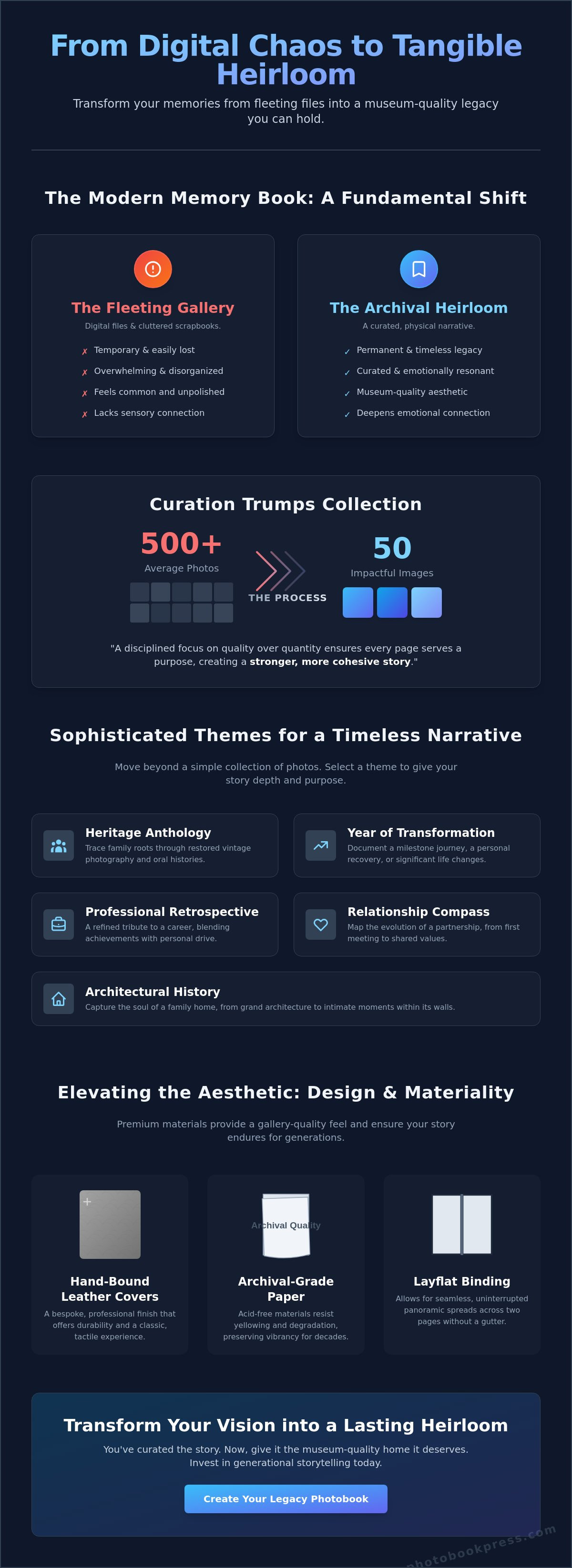
The most effective ideas for a memory book often start with a "less is more" philosophy. It's tempting to include every photo from a vacation or a wedding, but a professional aesthetic requires discipline. Selecting the fifty most impactful images tells a much stronger, more cohesive story than including five hundred average ones. This process of curation allows the narrative to breathe. Before you begin the design, set a clear objective. Ask yourself what feeling you want the book to evoke. A disciplined focus on quality over quantity ensures that every page serves a purpose, preventing the book from feeling cluttered or overwhelming.
Selecting a theme is the first step in moving from a simple collection of photos to a high-end archival legacy. When curating sophisticated ideas for a memory book, consider the "Heritage Anthology." This approach involves tracing family roots through restored vintage photography and oral histories. To properly preserve family archives, you must look beyond simple storage and toward an artistic presentation that honors your ancestors. This theme transforms faded snapshots into a definitive historical record, treating every image as a precious artifact.
For those marking a personal journey, the "Year of Transformation" offers a powerful narrative arc. It's ideal for documenting milestone birthdays or the quiet strength found in recovery. Similarly, a "Professional Retrospective" serves as a refined tribute to a career or a lifelong passion project. This format functions like a high-end portfolio book, blending professional achievements with the personal drive that fueled them. By exploring these diverse ideas for a memory book, you ensure the final product reflects a life lived with purpose and artistry.
The "Relationship Compass" and "Architectural History" themes offer more intimate perspectives. A relationship compass documents a partnership from the first meeting to the present, focusing on the evolution of shared values. An architectural history, meanwhile, documents the life lived within a specific family home. It captures the soul of a space, from the light hitting a favorite reading nook to the grand architecture that sheltered your family for years. Choosing a bespoke leather photobook ensures these creative narratives are housed in a vessel worthy of their content.
Retirement and anniversary books require a delicate balance of professional pride and personal warmth. When crafting a wedding album, consider focusing on the quiet, "unseen" moments that define the day rather than just the traditional portraits. Anniversary books can highlight how a couple's shared values have matured over time, creating a testament to enduring commitment. These tributes become more than gifts; they are investments in the emotional history of a family.
Creative storytelling can take many forms, such as the "Letter to My Younger Self" format, where photos serve as prompts for reflective writing. Travel journals can shift focus from landmarks to cultural immersion, documenting the textures and colors of a journey. For a long-term project, a "Day in the Life" series captured on the same date across a decade provides a fascinating study of growth and change. These niche narratives allow for a highly personalized expression of history that feels both modern and timeless.
The architecture of a volume dictates the emotional journey of the viewer. While many people default to a simple date-based order, professional results often come from more nuanced structures that prioritize narrative flow. A chronological arc builds momentum, leading the reader through a journey of growth or discovery from the first page to the last. Alternatively, thematic grouping allows you to organize content by shared values or specific moods, such as quiet reflections or grand celebrations. This editorial approach transforms the project into a cohesive work of art. These sophisticated ideas for a memory book help turn a digital archive into a meaningful physical presence that rewards repeated viewing.
Central to this narrative is the concept of the "Anchor Image." These are large, often full-bleed spreads that signal the beginning of a new chapter or a shift in the story’s tone. By using these visual anchors, you provide the reader with a clear map of the journey. Effective storytelling with a memory book also requires a disciplined approach to text. Instead of long paragraphs that distract from the visuals, use short, impactful captions. These brief declarations act as a guide, allowing the imagery to remain the primary focus while ensuring the underlying story is understood by future generations.
A successful layout begins with a clear storyboard. The opening and closing spreads are the most critical for emotional resonance; they set the tone and provide a sense of resolution. To prevent visual fatigue, incorporate "breather pages." These minimalist layouts use significant negative space to allow the viewer to absorb the impact of the preceding images. It's also vital to balance formal portraits with candid shots. This mix provides a complete, authentic narrative that captures both the grandeur and the intimate, unscripted moments of the era.
When adding text, write with the future in mind. Captions should be descriptive enough to make sense fifty years from now, even to someone who wasn't present at the event. Include details like specific locations, exact dates, and the names of peripheral figures who might otherwise be forgotten. You might also use a single poignant quote or a line from a song to enhance the mood of a specific spread. This layer of detail ensures the book remains a functional historical record while maintaining its status as a beautiful, curated object of art.
The physical vessel that holds your memories is as significant as the stories themselves. When you're considering various ideas for a memory book, the choice of materials determines whether the final product feels like a temporary album or a lifelong heirloom. It's not just about the images; it's about the weight of the book in your hands and the texture of the pages. A primary element in this elevation is the use of layflat photo books. Unlike traditional binding that pinches the pages at the spine, layflat construction allows for panoramic storytelling. This enables a single image to sweep across two pages without losing detail in the center gutter. It creates a seamless, immersive experience that mirrors the way we actually perceive grand landscapes or intimate family gatherings.
Beyond the binding, the tactile quality of the cover and interior pages speaks to the book's permanence. Choosing between genuine leather, fine linen, or a custom photo cover allows you to match the exterior aesthetic to the theme of your narrative. Leather offers a classic, museum-quality feel, while linen provides a modern, understated elegance. Inside, the paper quality is non-negotiable. High GSM (grams per square meter) ensures that pages feel substantial and resist tearing. More importantly, using acid-free paper prevents the yellowing and degradation that often plague cheaper alternatives. This commitment to superior materials ensures your investment remains pristine for decades. To begin your own journey into premium print, you can explore our collection of artisan photobooks and find the perfect finish for your legacy.
Typography acts as the final layer of personality. A serif font can lend a sense of tradition and heritage to a family anthology, while a clean sans-serif typeface feels contemporary and minimalist. The key is consistency. By limiting your selection to one or two complementary fonts, you maintain a polished look that avoids the cluttered aesthetic of common scrapbooks. This disciplined approach to design is what separates a professional retrospective from a casual collection. Every choice, from the font weight to the margin width, should serve the story you've chosen to tell.
Designing for a layflat book requires a different mindset than traditional layout. Because the pages stay perfectly flat, you can place the most important subjects directly across the center of the spread. This architecture allows for maximum emotional weight, especially when using full-bleed images that extend to the very edge of the paper. It removes the "trapped" feeling of traditional bound books, providing your photos with the air and space they deserve. This layout style is particularly effective for high-impact ideas for a memory book, such as wedding albums or landscape-heavy travel journals.
A refined aesthetic relies on visual harmony. Maintaining a consistent color palette across your spreads helps to unify disparate photos from different times or locations. Use white space intentionally. Treat white space as a structural element that draws the eye toward your subject rather than a void to be filled. Whether you choose a rigid grid-based layout for a professional feel or an organic style for a more personal story, consistency in your design choices will ensure a sophisticated, high-end result that stands the test of time.
Bringing sophisticated ideas for a memory book to life requires a partner who understands the intersection of art and personal history. Our Maryland-based team approaches every project with the quiet confidence of a master artisan. We don't just print pages; we hand-bind every book to ensure it meets the highest standards of durability and aesthetic excellence. This commitment to traditional craftsmanship ensures that your narrative is housed in a vessel that reflects the significance of the moments it contains. By treating your memories as precious artifacts, we help you transition from a digital collection to a physical legacy.
The professional photo books we produce are distinguished by state-of-the-art printing technology and a meticulous selection of premium materials. This technical precision allows for a truly personalized legacy, where every detail from the cover texture to the page finish is a reflection of your unique vision. Our design tools are engineered to provide professional-grade results without the need for a design degree. This allows you to focus on the storytelling while we handle the technical complexities of production, ensuring the final product feels like a curated gallery piece.
Mass-market options often prioritize speed over substance, resulting in books that feel light or fragile. In contrast, our binding methods are designed for physical durability, ensuring the spine remains strong through years of handling and reflection. Color accuracy is another pillar of our process. We ensure the integrity of your original photos is preserved, with vibrant hues and deep blacks that bring your memories to life with startling clarity. You'll notice the difference the moment you hold the book. The substantial weight of our covers and the smooth, tactile feel of our premium paper create a sensory experience that reinforces the idea of an investment in your family's future.
Beginning your project is a straightforward process of curation and selection. Once you've gathered your most impactful images, our platform allows you to upload and organize them with ease, providing a clear path to execution for your ideas for a memory book. Choosing the right format is essential for your specific narrative. Whether you select a classic leather photobook for a heritage anthology or a sleek hardcover for a modern travel journal, the result will be a museum-quality heirloom. We offer worldwide shipping, making it possible to send a physical legacy to loved ones across the globe, ensuring your story is shared and preserved for generations to come.
A memory book is more than a creative project; it's a definitive statement of legacy. By prioritizing a disciplined narrative and museum-quality materials, you ensure your family’s most significant moments are preserved with the dignity they deserve. We've explored how a curated approach and sophisticated ideas for a memory book can transform a digital archive into a tangible work of art. The transition from a cluttered collection to a refined heirloom requires both a clear vision and the touch of a master artisan.
Since 1985, our Maryland-based team has hand-bound volumes with a commitment to aesthetic perfection and long-term durability. We utilize state-of-the-art layflat technology to provide seamless panoramic spreads, allowing your story to breathe across every page. When you choose to invest in professional craftsmanship, you're choosing a vessel that will stand the test of time. Design your archival memory book with Photobook Press today. Your history is a masterpiece; it's time to give it a home that reflects its true value.
Aim for 50 to 100 high-impact images to maintain a sense of gallery-quality curation. Including too many photos often leads to a cluttered layout that diminishes the emotional weight of individual moments. By selecting only the most evocative shots, you ensure your book feels like a deliberate work of art rather than a simple collection of data.
A "Heritage Anthology" is often the most resonant choice for a grandparent. This theme focuses on tracing family lineage and capturing the wisdom accumulated over many decades. You might organize the book by life stages or specific legacies, such as family traditions or career achievements. It's one of the most meaningful ideas for a memory book because it serves as a bridge between generations.
Organize your book by theme or emotion if a strict timeline isn't possible. You can group photos by core values, such as "Adventure," "Home," or "Celebration." This approach allows you to weave a narrative based on the soul of the memories rather than the calendar. Use consistent design elements, like typography and margins, to unify these disparate time periods into a cohesive story.
The difference lies in the level of craftsmanship and archival longevity. Scrapbooks often use temporary adhesives and acidic papers that degrade and yellow over time. A professional photo book utilizes acid-free materials, state-of-the-art printing, and hand-bound construction. This ensures your memories are preserved as a permanent artifact rather than a fragile craft project.
You can absolutely include high-resolution scans of letters, drawings, or even vintage maps. These elements add a rich, tactile layer of "voice" to your narrative. By treating a handwritten note as a full-page spread, you capture the unique personality of the author in a way that typed text cannot replicate. It's a sophisticated way to add depth and texture to your project.
Acid-free, heavy-weight paper is the gold standard for long-term preservation. Look for paper with a substantial GSM to ensure the pages feel premium and resist tearing. Archival-quality paper prevents the yellowing and brittleness that affect lower-grade stocks. This choice ensures that the color vibrancy and clarity of your images remain intact for several decades.
Select a cover material that aligns with the book's intended atmosphere. Genuine leather offers a timeless, museum-quality feel that's perfect for heritage projects or wedding albums. Linen provides a refined, contemporary texture that works well for travel or everyday life narratives. The cover is the first tactile interaction with your legacy, so it should reflect the importance of the content.
Consider a "Then and Now" retrospective that pairs vintage wedding photos with contemporary portraits. Another unique option among ideas for a memory book is a "Legacy of Love" theme, where each family member contributes a short note alongside a favorite photo of the couple. These approaches focus on the evolution of a partnership and the enduring strength of shared values over fifty years.
