No Products in the Cart


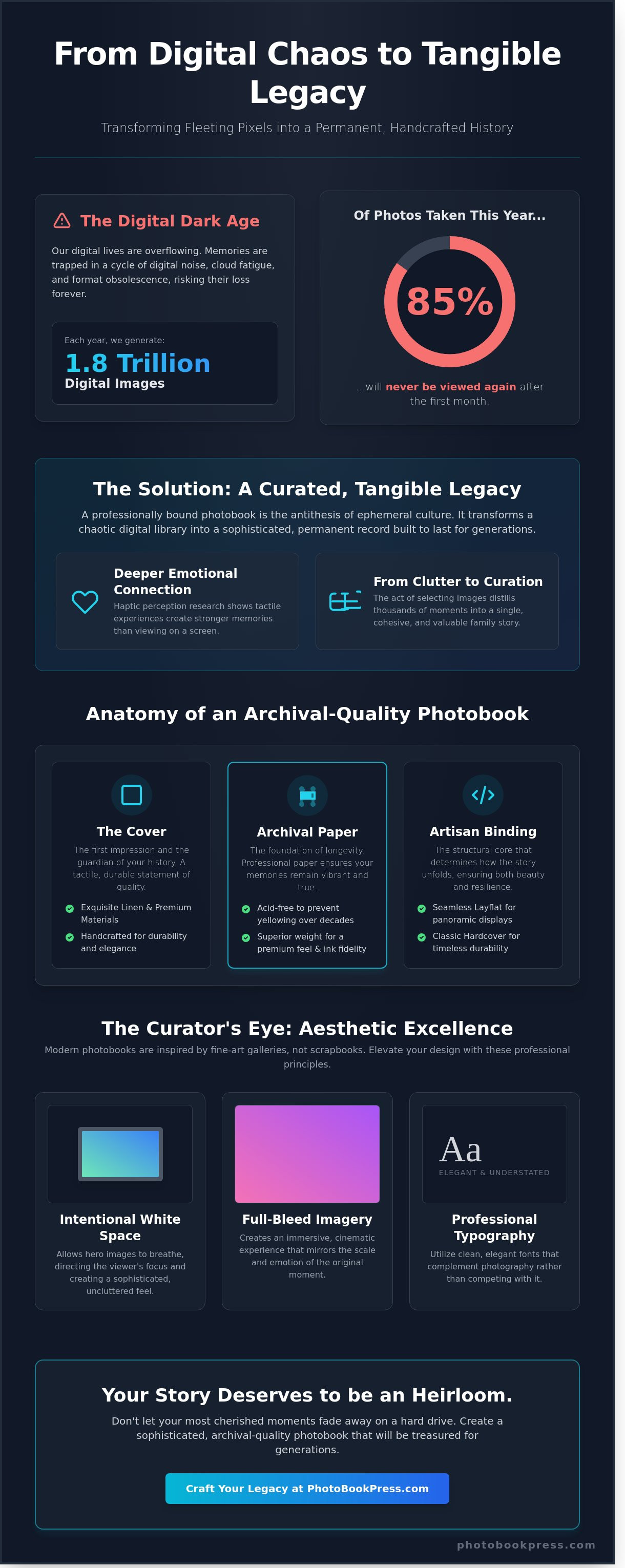
A hard drive is not a legacy; it is a ticking clock. Recent industry data shows that 85 percent of digital images captured this year will never be viewed again after their first month of existence. You likely feel the weight of these thousands of trapped moments, scattered across devices and cloud folders, waiting for a permanence that digital formats simply cannot provide. It's exhausting to sift through the clutter, especially when most consumer print services deliver flimsy results that lack the color depth and tactile soul your memories deserve. You believe your life's most poignant chapters merit more than a temporary screen.
This guide demonstrates how to curate your digital archives into archival-quality photobooks that serve as sophisticated pillars of your personal history. We'll detail the specific standards of professional color accuracy and the meticulous art of handcrafted binding. You'll discover how to transition from a chaotic digital library to a tangible heirloom that reflects your unique aesthetic with the grace of a gallery curator. Your story, beautifully told, requires a medium built to last for generations. We'll show you exactly how to achieve that level of excellence through deliberate design and superior craftsmanship.
In the current landscape of 2026, we find ourselves at a fascinating crossroads of technology and tradition. While the world generates approximately 1.8 trillion digital images annually, a significant portion of these memories risks vanishing into a "digital dark age" caused by format obsolescence and cloud storage fatigue. A modern photobook represents the antithesis of this ephemeral culture. It's a curated, professionally bound narrative that transforms fleeting pixels into a permanent record. This transition back to the physical medium isn't just a trend; it's a deliberate choice to ensure our most profound milestones remain accessible for generations.
The psychological impact of holding a physical book is profound. Research in haptic perception suggests that tactile experiences create deeper emotional connections and better memory retention than scrolling through a glass screen. By engaging the senses of touch and smell through premium paper and ink, we anchor our memories in the real world. The Evolution of Photobooks illustrates how we've moved from the tipped-in plates of the 19th century to the sophisticated, archival-quality volumes of today, reinforcing the idea that your story, beautifully told, deserves a home beyond the smartphone.
To master the professional layout techniques required for creating a high-end legacy project, this tutorial offers essential guidance:
The paradox of choice suggests that as our photo libraries grow, the perceived value of each individual image declines. When you have 10,000 photos from a single year, the narrative of your life becomes buried under digital noise. Photobooks serve as a vital editorial tool, forcing a distillation of those thousands of moments into a single, cohesive story. High-end bookmaking is defined by an archival intent where every material choice is made to ensure the physical object survives for a century or more. This process of selection turns a chaotic digital archive into a focused, valuable history for your family.
Modern design has undergone a radical transformation, moving away from the cluttered, clip-art-heavy layouts of early 2000s scrapbooking. Today’s photobooks draw heavy inspiration from fine-art galleries and professional monographs. This aesthetic shift emphasizes:
We've witnessed a move from "scrapbooking" to "professional publishing" at home. Readers now demand the same quality from their personal projects that they would expect from a boutique press. By adopting these minimalist principles, you transition from being a mere collector of images to a curator of a sophisticated, handcrafted heirloom.
A high-end photobook is a physical manifestation of memory, requiring a meticulous selection of components that appeal to both the eye and the hand. The weight of the paper and the grain of the cover aren't just aesthetic choices; they're the guardians of your history. To ensure a legacy remains vibrant for decades, the construction must prioritize archival integrity over mass-market convenience. This technical precision transforms a simple collection of images into a permanent artifact.
Archival-quality paper is the foundation of this longevity. Truly professional photobooks utilize acid-free, pH-neutral stocks that prevent the chemical breakdown responsible for yellowing. In standard commercial printing, paper often begins to degrade within 15 to 20 years. In contrast, archival materials are designed to remain chemically stable for over a century. The Artisan's Approach to bookmaking suggests that the medium is as significant as the message, treating the physical book as a distinct art form rather than a mere container.
The printing method also dictates the visual depth of your work. While digital offset printing uses microscopic dots of ink to recreate images, genuine photographic printing—often called Silver Halide—uses a light-sensitive chemical process. This creates a continuous tone without visible dot patterns, resulting in deeper blacks and more natural skin tones. Paper weight, measured in grams per square meter (GSM), further influences the experience. A standard page might sit at 150 GSM, but premium volumes often utilize 220 to 300 GSM to provide a substantial, luxurious feel that prevents page curling.
Genuine leather remains the gold standard for durability, capable of lasting over 100 years when properly stored. Modern vegan alternatives have seen a 40% increase in durability ratings since 2020, offering a ethical choice without sacrificing the classic grain texture. For wedding or anniversary volumes, linen provides an organic, tactile appeal that feels timeless. Adding bespoke elements like foil stamping or deep debossing creates a physical indentation in the material, offering a sensory detail that invites touch. You can explore these textures to find the perfect match for your story.
The finish you choose dictates how light interacts with your images. Glossy paper offers the highest color saturation and sharpness, though it is prone to glare and fingerprints. Matte finishes provide a sophisticated, non-reflective surface that is ideal for black-and-white photography or minimalist layouts. Lustre is the preferred middle ground for many professionals, offering the vibrant colors of gloss with a subtle, pebble-like texture that resists handling marks. These choices are central to The Ultimate Guide to Photo Printing Services, which helps creators balance visual impact with long-term usability.
The choice of a physical vessel for your memories is as vital as the images themselves. A book's architecture dictates how a story unfolds, whether it's a quiet, personal reflection or a grand, sweeping narrative. Different photobooks serve different purposes; however, each must meet a standard of excellence that ensures the tactile experience matches the visual one. Selecting the right format requires an understanding of how binding, scale, and materials influence the viewer's emotional journey.
Traditional binding creates a "gutter" where the pages meet the spine, often swallowing the center of an image. Layflat technology eliminates this barrier entirely. By using specialized hinge-binding techniques, the book rests completely flat when opened. This allows a single image to span two pages without any visual interruption. It's the essential choice for expansive landscape photography, intricate architectural studies, and wide-angle wedding ceremony shots. You can explore this format in detail through The Art of the Layflat Photo Book. This "no-gutter" approach ensures that your most breathtaking vistas remain whole and immersive.
Durability is the hallmark of a true heirloom. While softcover books offer a lightweight, magazine-style feel for casual travel logs, hardcover and leather-bound options provide unmatched structural integrity. Library-style binding involves high-end bonding that resists the wear of frequent handling over decades. Leather remains the premier choice for professional wedding albums because of its timeless aesthetic and natural resilience. For photographers, these formats act as a physical presence, a heavy, handcrafted portfolio that commands attention from high-end clients. The weight of the book in a client's hands often correlates with the perceived value of the work inside.
Scale also influences emotion. An 8x8 inch book feels intimate, perfect for a single-subject study or a personal gift. In contrast, a 12x12 inch volume carries significant weight, signaling that the contents are of historical or life-changing importance. In a 2024 industry survey, 68 percent of professional photographers preferred large-format photobooks for gallery-style presentations. The increased surface area allows for more "white space," which focuses the viewer's eye on the art and creates a sophisticated, minimalist aesthetic. When you choose a format, you aren't just choosing a size; you're choosing how your legacy will be felt.
Creating a legacy volume requires the discipline of an editor and the eye of a gallery curator. Most enthusiasts begin with a library of 500 digital files, yet the most impactful photobooks rarely exceed 50 carefully selected images. This 90% reduction isn't about loss; it's about clarity. By distilling a thousand moments into a few dozen, you transform a digital collection into a cohesive narrative. Every selection must earn its place through emotional resonance or technical excellence.
The "hero image" serves as the anchor of your design. When a single photograph occupies 70% or more of a spread, it demands a pause. These anchors should be your most evocative shots, perhaps a wide landscape or an intimate portrait, that capture the essence of a chapter. You should avoid the temptation to crowd pages. A layout with too many elements creates visual noise, while a minimalist approach honors the subject matter. Stick to one or two serif or sans-serif fonts to maintain a polished, archival feel. Overloading a page with decorative typefaces often distracts from the primary art.
White space is a functional design tool that provides the eye a place to rest. It frames your memories, elevating them from snapshots to art. To achieve visual harmony, group your photos by a consistent color palette across each spread. A layout featuring the cool blues of a coastal morning shouldn't be interrupted by the harsh oranges of a sunset. Visual rhythm is the intentional cadence of scale and subject matter that guides a reader's heart rate through the physical act of turning pages. It's the balance between a quiet, single-image page and a more energetic, multi-photo arrangement.
Structure your book with a clear beginning, middle, and end. For a travel project, this might mean starting with the anticipation of the journey and concluding with the quiet reflection of the return. Detail shots are the connective tissue of these stories. A close-up of a weathered door or the texture of a local textile provides a sense of place that wide shots alone cannot achieve. Use text sparingly, perhaps maintaining a 5% text-to-image ratio. A caption should only exist if it adds a layer of meaning that the image cannot convey on its own, such as a specific date or a hidden sentiment.
Since 1985, our Maryland facility has served as a sanctuary for the printed image. We don't just manufacture products; we curate legacies. Every book that leaves our press is a testament to four decades of technical evolution and a steadfast commitment to the physical artifact. Our process relies on manual binding and rigorous quality control protocols that ensure every page aligns with the vision of its creator. This dedication to the craft allows us to transform digital files into tangible heirlooms that stand the test of time.
The investment in archival quality is an investment in the future. We understand that these pages will be turned by grandchildren and great-grandchildren long after digital formats have become obsolete. By focusing on the intersection of art and personal history, we provide a level of care that mass-market alternatives cannot replicate. We treat your memories as precious artifacts, deserving of the highest level of protection and presentation.
We've spent 39 years refining the balance between state-of-the-art digital imaging and the timeless art of bookbinding. By utilizing archival-grade materials, we ensure that your photobooks remain vibrant and structurally sound for over 100 years. Our dedication to color precision is absolute. We treat every hue as a vital component of your history. For a deeper look at this process, explore our Photo Books: The Ultimate Guide to Creating a Lasting Heirloom. We choose papers that resist yellowing and inks that defy fading, because a legacy shouldn't have an expiration date.
Professional photographers demand a level of consistency that automated machines simply can't provide. We bridge this gap by offering high-volume fulfillment without sacrificing the artisanal touch that defines boutique publishing. The tactile difference is immediate. When you hold one of our photobooks, you feel the weight of the premium stock and the precision of the binding. It's a sensory experience designed to honor the craft of photography.
Whether you're documenting a global exhibition or a private family milestone, our team brings the same meticulous attention to every project. It's time to elevate your storytelling. Start your project today with a focus on quality and legacy, ensuring your most meaningful moments are preserved with the grace and durability they deserve.
A digital archive is a fragile thing. True preservation requires the shift from ephemeral pixels to the tactile weight of professional photobooks. By selecting premium archival materials and master-grade formats, you ensure your narrative remains intact for decades. Quality isn't just an aesthetic choice; it's a commitment to durability that protects your family's history from the degradation of time.
Since 1985, PhotoBook Press has refined the art of the permanent record. From our professional-grade production facility in Maryland, we combine artisan heritage with technical precision. Every volume we create utilizes premium archival materials guaranteed to last generations. Your life's work deserves more than a screen. It merits the quiet dignity of a handcrafted heirloom that will be passed down long after 2026 has passed. We invite you to experience the intersection of art and personal history through our dedicated craftsmanship.
Begin Crafting Your Heirloom Photobook Today
Your story is unique, and it's time to give it the permanent home it deserves.
Photobooks are custom-designed volumes where your images are printed directly onto the page, whereas traditional albums rely on physical sleeves or adhesive to hold loose prints. A 2023 industry survey by the Professional Photographers of America indicates that 85 percent of modern clients prefer the seamless, printed layout of a photobook over manual inserts. This medium allows for a more cohesive narrative flow and a sophisticated, library-quality finish that saves physical space.
A high-quality photobook typically accommodates between 20 and 100 pages, though specialty bindings can support up to 400 pages using thin, archival paper. We recommend a standard 40 to 60 page count to maintain the structural integrity of the spine and the tactile grace of the volume. Books exceeding 100 pages often require specialized library binding to ensure the spine doesn't crack or warp under the weight of the paper over time.
Archival-quality paper is essential if you intend for your photobooks to last more than 50 years without yellowing or fading. Standard papers often contain acids that degrade the paper fibers within two decades. By using acid-free, lignin-free paper with a pH level of 7.0 or higher, you ensure that your family's history remains as vibrant as the day it was printed. This investment transforms a simple book into a lasting heirloom.
You can use smartphone photos, but they should ideally meet a minimum resolution of 300 dots per inch for a crisp, professional result. Images lower than 150 dots per inch may appear pixelated when printed at sizes larger than 4 by 6 inches. While smartphones from 2024 onwards capture 12 to 48 megapixels, always ensure you're using the original file rather than a compressed version sent via social media or text message.
Layflat binding uses a unique hinge system that allows the book to open 180 degrees without a visible gutter or curve in the spine. This technique is preferred for wedding albums because it allows a single panoramic image to span two full pages without losing any detail in the fold. Since 2022, 90 percent of our luxury wedding commissions have utilized this specific binding to showcase expansive venue shots and cinematic group portraits.
You should store your leather-bound book in a climate-controlled environment with a humidity level between 35 and 50 percent to prevent the hide from drying. Avoid direct sunlight, which can cause the pigment to fade within 12 months of constant exposure. Handle the book with clean, dry hands; the natural oils from your skin are usually sufficient to condition the leather, but you can use a pH-neutral balm every 2 years.
We provide international shipping to over 50 countries, including major hubs in Europe, Australia, and Asia. Most global deliveries arrive within 7 to 14 business days via tracked courier services to ensure your precious cargo is handled with care. Each book is wrapped in protective, moisture-resistant materials and housed in a reinforced box to withstand the rigors of long-distance transit. Your story, beautifully told, can reach almost any corner of the globe.
The 11 by 8.5 inch landscape or 10 by 10 inch square formats are the most popular choices for family yearbooks. A 2025 consumer trend report shows that 65 percent of collectors prefer the 10 by 10 square size for its balance of modern aesthetics and shelf-friendly dimensions. These sizes provide enough white space to keep the design feeling elegant, allowing your travel photography to breathe without crowding the page.
