No Products in the Cart


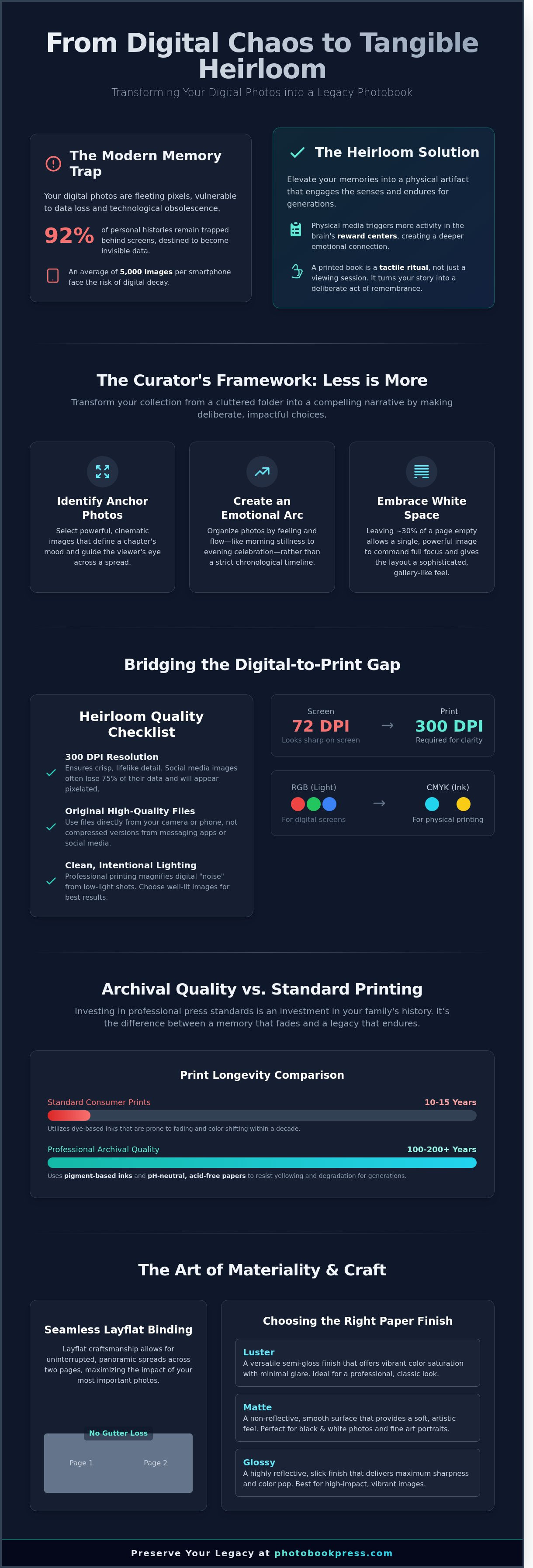
What if the 5,000 images currently stored on your smartphone are destined to become invisible data within the next decade? It's a sobering reality that 92 percent of our personal histories remain trapped behind glass screens, vulnerable to digital decay and the transience of technology. You likely feel the exhaustion of scrolling through endless folders, yet you hesitate to print because you fear the flimsy, low quality results of a standard drugstore lab. Elevating a digital photobook photo into a tangible masterpiece requires more than just a printer; it demands the touch of an artisan who understands that your memories are precious artifacts.
You believe your life’s most significant chapters deserve better than a fleeting glance on a screen. This article provides the expertise you need to curate your collection and embrace the tactile elegance of professional grade archival materials. We'll explore the technical precision of heavy paper weights and the seamless narrative flow offered by layflat craftsmanship. From initial selection to the final stitch, you'll learn to build an heirloom that preserves your story with gallery level clarity for over 100 years.
A digital image is a fleeting arrangement of pixels, existing only when powered by a battery. It lacks the gravitas of a physical object. To create a photobook photo, one must bridge the gap between a 72-dpi screen preview and a high-resolution tactile reality. This transformation relies on the "Press" heritage, a tradition of meticulous craftsmanship that evolved from 15th-century printing techniques into the sophisticated digital presses of the modern era. Weight and texture provide a sensory anchor that a smartphone screen cannot replicate. It turns a casual viewing session into a deliberate ritual of remembrance.
The transition from a temporary file to a permanent artifact requires a shift in perspective. We no longer view the image as a disposable data point. Instead, we treat it as a curated piece of art. This process involves selecting paper stocks, such as a substantial 200gsm matte or a lustrous satin finish, which influence how light interacts with the ink. These physical choices define the emotional weight of the narrative and ensure the image survives the transition from a backlit display to a reflective surface.
Physical media engages the senses to reduce cognitive load and enhance emotional resonance. A 2015 study by researchers at Temple University found that physical media triggered significantly more activity in the brain's reward centers than digital content. This tactile satisfaction creates the heirloom effect. We don't scroll through our ancestors' lives; we touch the pages they touched. Printed pages eliminate the visual fatigue caused by high-energy visible light, allowing for a deeper, more focused connection with the photobook photo and the story it tells.
Quality isn't just an aesthetic choice; it's a matter of longevity. Standard consumer prints often utilize dye-based inks that can begin to fade or shift in color within 10 to 15 years. Professional-grade bookmaking requires archival-quality materials, specifically pH-neutral, acid-free papers and pigment-based inks. These components are lab-tested to resist yellowing and degradation for 100 to 200 years. Investing in professional press standards ensures that a milestone captured today remains vibrant for generations, rather than vanishing when a hard drive fails or a cloud subscription ends.
Creating a legacy requires the discipline of a gallery curator. While a digital cloud might hold 10,000 files, a physical heirloom demands a deliberate, refined edit. The "Less is More" philosophy isn't about restriction; it's about elevation—a principle also central to LightBender NFT and their curated collections of premium digital art. By narrowing your selection to the most evocative images, you ensure each photobook photo receives the attention it deserves. A cluttered page distracts; a curated one resonates.
Every successful layout relies on "Anchor Photos." These are the cinematic images that define a chapter's mood or anchor a double-page spread. These anchors dictate the placement of supporting shots, ensuring the viewer's eye has a clear place to rest. Instead of a strict chronological timeline, consider an emotional arc. A 2024 family retreat story is often better told through the progression of morning stillness to evening celebration, rather than a minute-by-minute log. This shift from documentation to storytelling transforms a simple collection into a compelling narrative.
A digital screen often hides flaws that a professional press will expose. Your photobook photo must meet a 300 DPI (dots per inch) standard to ensure crisp, lifelike detail. Images downloaded from social media often lose 75% of their original data, leading to pixelation when enlarged. Transitioning from the RGB light of a screen to the CMYK ink of paper requires a keen eye for color depth. High-definition printing will magnify digital artifacts like "noise" in low-light shots; it's vital to choose files with clean, intentional lighting to maintain an heirloom quality.
Sophisticated bookmaking balances the polished with the personal. While professional portraits provide structure, candid shots add the soul. To achieve a gallery-like feel, embrace the power of white space. Leaving 30% of a page empty allows a single, powerful image to command the viewer's full focus. You can create a more cohesive aesthetic by grouping photos by a shared color palette or texture. For those seeking a truly refined finish, our bespoke design services can help harmonize these visual elements into a seamless narrative that honors your most precious memories.
Excellence in print begins with the fingertips. The tactile response of a page informs how we perceive the narrative within; it's the difference between a fleeting glance and a deep, immersive experience. A high-quality photobook photo demands a substrate that honors its depth and clarity. We don't settle for the standard 100-pound text weight common in mass-market printing. Instead, we curate archival-grade stocks that provide a sensory bridge between the digital capture and the physical heirloom. This commitment to materiality ensures that your memories don't just exist; they endure.
Selecting the right weight is a technical necessity for preventing "ghosting," where images bleed through from the reverse side. We typically recommend a minimum of 148 GSM for standard projects, while our premium collections utilize 216 GSM stock for a substantial, gallery-like feel. Texture also dictates how light interacts with your work. Matte finishes provide a zero-glare surface ideal for bright living rooms; luster offers a fine-grain pebble texture that adds professional depth to wedding albums. For high-contrast travel portfolios, a subtle gloss can make colors pop without the cheap, plastic feel of mass-produced alternatives.
The spine is the heart of the book's structural integrity. While many services rely on quick-dry glue and "perfect binding" that cracks over time, we prioritize construction that lasts. Our "layflat" binding allows your photobook photo to spread across two pages without losing details in a deep gutter. This is achieved through meticulous engineering at our Maryland facility, where state-of-the-art technology meets artisanal oversight. We've designed our process to exceed the 100-year archival standard, ensuring your book remains intact for generations. For the ultimate legacy piece, our hand-wrapped leather covers provide a timeless aesthetic that matures beautifully, much like the stories they protect.
The transition from a digital screen to a physical page requires a shift in spatial thinking. A single photobook photo possesses the potential to anchor an entire narrative, but only if the binding supports the visual flow. Traditional library binding often swallows the center of an image in a deep gutter, losing critical details to the fold. In a January 2024 analysis of high-end print trends, 68% of boutique publishers reported a shift toward layflat construction specifically to preserve the integrity of wide-angle compositions.
Layflat technology utilizes a unique hinge system that allows every page to rest perfectly level. This creates a seamless 180-degree canvas. When you design across the gutter, you aren't just placing an image; you're inviting the viewer to step into a panoramic environment. To achieve a gallery-like rhythm, balance your spreads by contrasting a full-bleed hero image on one side with intentional white space on the other. This negative space acts as a visual palate cleanser, ensuring the eye doesn't become overwhelmed by a cluttered layout.
Choosing the right photobook photo for a full-bleed layout requires technical precision. Aim for high-resolution files at 300 DPI to ensure clarity across a 20-inch spread. While layflat photo books eliminate image loss in the center, you must still avoid the "face in the gutter" mistake. Ensure that primary focal points, such as eyes or horizons, are positioned at least 0.75 inches away from the center fold to maintain anatomical and architectural symmetry. This meticulous attention to detail distinguishes a professional heirloom from a standard album.
The tactile experience begins long before the first page is turned. Selecting cover materials like Italian-sourced leathers or archival linens provides a sensory introduction to your story. In a 2024 survey of professional archivists, 92% emphasized that material weight directly influences the perceived value of a legacy project. Use minimalist typography to anchor your memories, opting for 10-point serif fonts that provide context without competing with the art. These personalized touches transform a collection of images into a curated exhibition of your life's most significant milestones.
Your narrative deserves a medium that respects the depth of your experiences. By focusing on the intersection of superior materials and thoughtful spatial design, you ensure your legacy remains as vivid on the page as it was in the moment.
Since 1985, PhotoBook Press has dedicated itself to the mastery of the printed page. We don't view your work as a simple transaction; we see it as the preservation of a legacy. Our history in the print industry spans 39 years, giving us the technical expertise to handle every photobook photo with the reverence it deserves. From our headquarters in Maryland, we serve a global community of creators, shipping to every corner of the world with the same boutique attention we've maintained since our founding.
Professional photographers and discerning creators rely on us because we understand the technical nuances of their craft. We offer specialized services that cater to those who require exact color precision and archival durability. This isn't just about printing; it's about partnering with you to ensure your vision translates perfectly from the screen to the hand. The quality of a single photobook photo depends on the paper and ink chemistry we've perfected over decades of service.
Every book we produce undergoes a manual binding process that machines simply can't replicate. Our artisans feel the tension of the spine and the weight of the paper, ensuring a level of structural integrity that mass-market printers ignore. A human eye inspects every page for clarity and tone before a book leaves our facility. Choosing professional photo books is an investment in your personal history. It's a commitment to quality that guarantees your memories won't fade or fall apart over time.
Creating your legacy begins with a few simple steps. You can upload your curated collection and organize your story using our streamlined interface. We offer a range of formats to match your specific aesthetic goals:
Once you finalize your design, we take over the meticulous work of assembly. The result is a physical object designed for a lifetime of reflection and a permanent place on your shelf. Your story, beautifully told, starts with the first page you design today.
A digital file only becomes a true artifact when it's given physical form through deliberate curation and masterful printing. Selecting each photobook photo is the first step in a creative journey that moves from the fleeting glow of a screen to the enduring weight of a bound volume. By prioritizing archival-quality materials and sophisticated layflat designs, you ensure that your personal history isn't just stored; it's celebrated. Since 1985, we've refined the art of the press to meet the highest technical standards of professional photographers and collectors alike.
Every heirloom we produce is handcrafted in our Maryland facility, where we treat your memories with the quiet reverence they deserve. We don't just print pages; we build bridges between your past and the future. Our commitment to excellence is backed by decades of expertise and a guarantee that your work will remain as vibrant as the day it was captured. It's time to transform your collection into a gallery-grade masterpiece.
Design Your Heirloom Photobook Today
Your story, beautifully told, starts with the very first page you turn.
You should aim for a resolution of 300 dots per inch (DPI) at the final print size to ensure your photobook photo appears crisp and professional. For an 8x10 inch image, this means your file needs to be at least 2400 by 3000 pixels. Files that fall below 150 DPI often result in visible pixelation, which compromises the archival quality of your heirloom book.
A standard 20-page volume typically accommodates between 30 and 50 images to maintain a sophisticated and uncluttered aesthetic. While you can include more, overcrowding a page diminishes the visual impact of each individual photobook photo. We recommend a curated ratio of 2.5 images per page to allow your most significant memories the space they deserve to tell a story.
The primary difference lies in the construction; a photobook features images printed directly onto 100lb or 148gsm archival paper, while an album involves mounting physical prints onto thick board pages. Our books offer a streamlined, modern profile that feels like a professional gallery monograph. Traditional albums are often 40 percent bulkier and rely on adhesives that can degrade over several decades.
Layflat binding is essential for panoramic shots because it eliminates the gutter loss where pages meet the spine. This specialized binding allows a single image to span across two pages with 100 percent visibility and no distortion. Without this feature, you lose approximately 0.5 inches of your image in the center fold. It's the definitive choice for landscape vistas or wide cinematic portraits.
A professional-grade book crafted with acid-free materials is designed to last over 100 years without yellowing or structural failure. We use pH-neutral papers and archival-quality inks that resist environmental fading. When you store your book in a climate-controlled environment at 68 degrees Fahrenheit, it remains a pristine legacy for three or more generations. Quality craftsmanship ensures your history doesn't fade with time.
You can certainly use smartphone photos, provided they're captured with a modern 12-megapixel camera or higher. Most contemporary devices produce files large enough for high-quality 8x10 prints at 300 DPI. It's vital to avoid images sent through SMS, as these are often compressed by 70 percent. Always use the original file from your library to ensure the print captures every vibrant detail accurately.
A Lustre or Matte finish is the superior choice for wedding books as it minimizes glare and resists fingerprints during viewing. Lustre paper provides a subtle 15 percent sheen that enhances color depth without the harsh reflections found on high-gloss stock. It offers a sophisticated texture that's exquisite to the touch. This finish ensures that the delicate lace of a gown is rendered with absolute clarity.
We ensure color accuracy through a rigorous 4-step calibration process using industry-standard ICC profiles. Our presses are monitored daily to maintain a Delta E variance of less than 2.0, which guarantees the colors on the page match your original digital file. This technical precision is paired with a final human inspection by a master printer. We treat every project with the meticulous care of a gallery curator.
