No Products in the Cart


What if the images of your most significant life events were never meant to live behind a glass screen? You likely feel a growing sense of unease watching your digital archives expand while your physical shelves remain empty. Perhaps you've been disappointed by mass-market printers that deliver flimsy, yellowing pages that fail to capture the weight of the moment. It's exhausting to decode technical jargon like GSM or lustre when you simply want a product that feels as substantial as the memories it holds. Investing in high-end photo albums is about more than just printing; it's about commissioning a vessel for your family's history.
In this guide, you'll discover the meticulous craftsmanship, archival materials, and artisan techniques that transform fleeting pixels into timeless physical heirlooms. We'll demystify the world of premium print, from the structural integrity of flush mount designs to the ISO 18902:2013 standards that ensure your legacy remains vibrant for decades. We'll show you how to distinguish between a temporary book and a lasting artifact, ensuring your 2026 collection is built to endure through superior artistry and archival precision.
In 2026, we're witnessing a profound cultural pivot. As our digital lives become increasingly saturated with fleeting data, there is a renewed reverence for the "physical tactile." High-end photo albums have emerged as the definitive response to this digital fatigue. They aren't merely printed products; they're bespoke, per-unit artifacts that bridge the gap between contemporary technology and the deep-rooted history of the photo album. This shift marks a departure from the "good enough" mentality of mass-market production toward a standard where every volume is treated as a unique work of art.
To understand what elevates a product to this category, you have to look past the surface. While a standard photo book might use automated machinery to churn out thousands of copies daily, a high-end alternative relies on archival-grade materials and the watchful eye of a master artisan. Every stitch, fold, and adhesive application is scrutinized to ensure structural perfection. This level of oversight ensures that your most precious memories aren't just stored, but are preserved with the dignity they deserve. It's a meticulous process that respects both the medium and the subject matter.
To better understand the artistry behind these physical heirlooms, watch this helpful video:
The difference between a machine-glued volume and a hand-bound one is something you feel the moment you touch the cover. Heritage print houses maintain standards that digital-first companies simply can't match. They prioritize the structural integrity of the spine and the precise alignment of the pages. When you hold a hand-bound album, it carries an emotional weight. It feels substantial and permanent. It's the difference between a disposable magazine and a gallery-grade portfolio. This craftsmanship ensures the book doesn't just look beautiful today but remains intact as it's passed through your family's hands for decades.
Cheap albums often come with hidden costs that don't appear until years later. Acidic papers cause yellowing, while poor ink choices lead to migration and cracking. These are the hallmarks of disposable media. In contrast, choosing high-end photo albums is a one-time investment in your family's legacy. By utilizing acid-free and lignin-free materials, these albums act as a centerpiece for your home library curation. They're designed to outlive the digital formats they originated from, ensuring that your story remains as vivid for your grandchildren as it is for you today.
The structural integrity of a physical legacy depends entirely on the molecular composition of its parts. High-end photo albums aren't just bound collections of images; they're engineered environments designed to halt the natural decay of paper and ink. To achieve this level of permanence, artisans look toward archival preservation standards that prioritize chemical stability over mass-production speed. When every element is selected for its longevity, the result is a volume that resists the passage of time with grace.
Longevity requires a deliberate shift from standard dye-based printing to pigment-based inks. Unlike dyes that soak into the fibers and remain susceptible to light-induced fading, pigment particles sit on the surface of the paper, offering superior UV resistance and color permanence. This chemical stability is essential for maintaining the visual precision of your memories. These stable pigments are supported by reinforced spines and meticulous binding mechanics. A premium book block is constructed to resist environmental shifts, ensuring the spine never cracks and the pages never warp, even as they're shared across generations.
While weight, or GSM, indicates the physical thickness of a page, it doesn't guarantee archival quality. The "tooth" or texture of the paper determines how light interacts with the image, providing a visual depth that standard gloss finishes simply can't replicate. Archival paper is a material that maintains pH neutrality over 100 years. By removing lignin, a natural component of wood pulp that causes paper to become brittle and yellow, these pages remain crisp and vibrant. Choosing between a deep matte or a subtle lustre finish allows you to control the sensory experience, where matte offers a velvet-like softness and lustre provides a gentle, non-reflective sheen.
The exterior of a volume sets the tone for the journey inside. Genuine top-grain leather remains the gold standard for Wedding Albums, offering a tactile experience that evolves as it develops a unique patina over time. For a more minimalist or contemporary aesthetic, European linens are a sophisticated choice, favored for their tight weave and refined color palettes. Whether you select a classic hide or a modern fabric, customization elements like hand-pressed foil stamping or debossed cameo windows transform the cover into a personal signature. These high-end photo albums are finished with a level of detail that signals the importance of the history contained within.
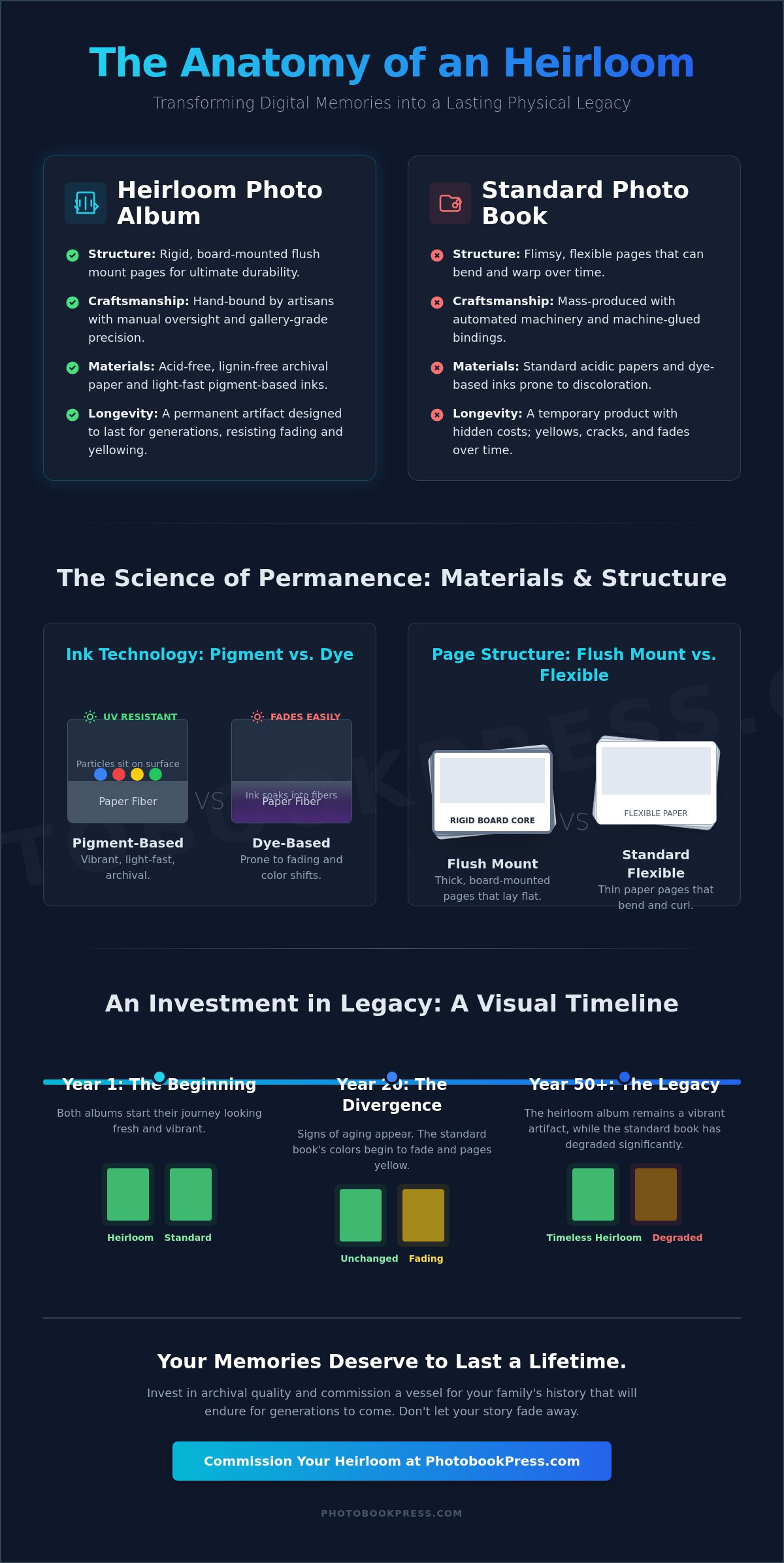
Choosing the right vessel for your memories is a decision of both aesthetics and utility. While many people use the terms "album" and "book" interchangeably, the distinction is significant in the world of premium print. It's about the physical weight of the page and the narrative rhythm of your story. High-end photo albums are defined by their rigid, non-bending pages, providing a sense of gravity that suits life’s most profound milestones. In contrast, photo books offer a flexible, editorial feel that mirrors the experience of a high-end art gallery publication. Understanding the evolution of photo albums helps us appreciate how these formats have branched to serve different archival purposes.
The choice often depends on the nature of the event you're preserving. A wedding, for instance, demands the structural presence of a Wedding Album, where every spread feels like a standalone piece of art. For a family year-in-review or a detailed travel narrative, the higher page capacity of a photo book might be more appropriate. For those who prioritize panoramic landscape photography, layflat photo books are the ideal compromise. They allow a single image to span across two pages without being interrupted by a traditional gutter, ensuring your vistas remain seamless and immersive.
Flush mount binding is the hallmark of high-end photo albums. This technique involves mounting photographic prints onto heavy-weight internal board cores, resulting in thick, rigid pages that lay perfectly flat. This construction allows for edge-to-edge imagery without any loss of detail in the center fold. Professional photographers frequently choose this format for high-stakes portfolio presentations because it communicates a level of permanence and value that flexible pages don't match. The structural integrity of a flush mount volume ensures it won't warp or bend, even after decades of being shared among family and friends.
When your narrative requires dozens or even hundreds of images, the editorial photo book becomes the superior choice. These volumes utilize high-capacity, flexible pages that allow for a journalistic storytelling approach. They're perfect for art collections or extensive travel narratives where the goal is to create a comprehensive record of an experience. By choosing archival materials, professional photo books bridge the gap between casual mementos and permanent heirlooms. They offer the same pigment-based ink quality as their rigid counterparts but with a lighter, more approachable physical profile that encourages frequent viewing.
Transforming a collection of images into a cohesive narrative requires a shift in perspective. You aren't just filling pages; you're curating a gallery. In the design of high-end photo albums, the "less is more" philosophy is a fundamental principle. White space is not empty or wasted area. It's a deliberate luxury element that provides the eye with a place to rest, ensuring that a single, powerful image isn't crowded by secondary snapshots. This minimalist approach allows the viewer to absorb the emotional weight of each moment without distraction.
Sequencing your story shouldn't always follow a strict timeline. While chronological order is traditional, emotional storytelling often creates a more resonant experience. You might group images by color palette or lighting conditions to create visual harmony across a spread. This prevents the cluttered, chaotic look that often plagues mass-market books. Before you begin the layout, prioritize image resolution and color grading. Large-format printing on archival paper magnifies every detail, so ensuring your files are professionally prepared is essential for a gallery-grade result. Consider how these elements work together:
A layflat design offers a seamless center, which is the perfect stage for cinematic impact. This is where your "hero" images belong. These are the singular captures that define the entire event. When utilizing a full two-page spread, choose images with a clear focal point away from the center. Even with the most advanced binding, it's a technical best practice to ensure critical details, like a subject's eyes or a horizon line, aren't positioned directly in the fold. This preserves the integrity of the composition.
Selecting a font is a long-term commitment. Aim for timeless serif or clean sans-serif options that won't feel dated in twenty years. Captions should be used sparingly; they provide context without distracting from the art. These personalized touches, including custom endpapers and hand-stamped titles, add layers of luxury that distinguish a bespoke volume. If you're ready to transform your curated gallery into a physical reality, explore our range of Leather Photobooks to find the perfect canvas for your story.
Photobook Press has been refining the art of the physical print since 1985. This heritage, spanning four decades, isn't just a measure of time; it's a testament to our evolution alongside the medium of photography itself. In our Maryland facility, we've cultivated a unique production environment where state-of-the-art printing technology meets traditional manual binding oversight. We believe that while machines provide precision, only the human eye can verify the soul of a finished product. This meticulous approach ensures that high-end photo albums leaving our workshop are prepared to serve as permanent anchors for your family's history.
Professional photographers across the globe trust us with their most critical wedding album projects because they understand the stakes of preservation. They know that a client’s legacy is a direct reflection of their own artistry. We honor this responsibility by maintaining rigorous standards for every volume, regardless of its destination. Our commitment to excellence includes a robust worldwide shipping infrastructure. We utilize specialized protective packaging designed to withstand the rigors of international transit, ensuring your heirloom arrives in the same pristine condition it was in when it left our hands.
Our workshop serves a diverse community of creators, from the high-volume professional to the discerning hobbyist. We act as a trusted partner in the preservation of family history, providing the same gallery-grade materials to everyone. For our professional partners, we offer wholesale accounts that streamline recurring print fulfillment. This allows photographers to focus on their craft while we handle the technical complexities of archival production. Whether you're building a single family treasure or a dozen professional portfolios, the quality remains uncompromising.
The transition from a digital archive to a physical masterpiece is designed to be seamless and intuitive. Once your images are uploaded, our team begins a production cycle rooted in quality assurance. Every book undergoes a multi-point inspection, where we examine everything from color consistency to the structural integrity of the binding. This final check is our promise that your investment is secure. We invite you to explore our extensive range of leather-bound and layflat options. Each format offers a unique way to touch, hold, and share the stories that define your life.
The transition from a digital archive to a physical heirloom is more than a creative project; it's a commitment to your family's future. You've learned that the longevity of your memories depends on the chemical stability of archival materials and the structural precision of artisan binding. By prioritizing pH neutrality and pigment-based inks, you ensure your history remains as vivid as the day it was captured. Choosing between the rigid presence of a flush mount volume or the editorial flow of a layflat book allows you to tailor the tactile experience to the weight of your story.
At Photobook Press, we've dedicated ourselves to printing excellence since 1985. Our Maryland-based artisan production team combines decades of heritage with professional-grade archival materials to create high-end photo albums that stand the test of time. Every volume we craft is a testament to the belief that your life's most significant events deserve a permanent, beautiful home. It's time to move your most precious moments off the screen and into a format that truly honors them. Begin Crafting Your High-End Legacy Album today and entrust your story to the hands of master artisans who value your history as much as you do.
High-end photo albums utilize flush mount binding with rigid, board-mounted pages, while standard photo books feature flexible, thinner pages. This structural difference makes albums feel more substantial and permanent. Albums are designed to be lasting heirlooms with edge-to-edge imagery, whereas books offer a more editorial and lightweight experience for frequent, casual viewing.
A high-end photo album crafted with archival-grade materials can last over 100 years without significant fading. We utilize pigment-based inks and acid-free papers that meet rigorous ISO standards for chemical stability. These specifications ensure your images remain vibrant and the pages stay crisp, resisting the yellowing and ink migration common in mass-produced alternatives.
We don't recommend using low-resolution images because the precision of professional-grade printing magnifies pixelation and blurriness. Large-format spreads require high-quality files to maintain visual clarity. For the best results, aim for a resolution of 300 DPI at the final print size. This ensures every detail of your narrative remains sharp on the archival paper.
Layflat binding is the gold standard because it allows for a seamless, panoramic viewing experience across a two-page spread without a traditional gutter. This construction is essential for luxury volumes featuring cinematic landscapes or wide group portraits. It ensures no part of your image is lost in the center fold, maintaining the absolute visual integrity of your most important captures.
Genuine top-grain leather and high-density European linens are the most durable choices for a family heirloom. Leather is prized for its longevity and its unique ability to develop a beautiful patina over time. Linen provides a sophisticated, modern aesthetic with a tight weave that resists wear, making both materials excellent for volumes meant to be shared across generations.
Store your leather photo album in a cool, dry environment away from direct sunlight and extreme temperature shifts. Always handle the pages with clean, dry hands to avoid transferring oils or moisture to the archival paper. Avoid using chemical cleaners or conditioners on the leather; these can interfere with the natural aging process and the structural integrity of the artisan binding.
Yes, we provide dedicated wholesale accounts for professional photographers who require recurring print fulfillment for their clients. This program offers professional-grade pricing and a streamlined ordering process. It allows professionals to maintain a consistent standard of excellence while trusting their most critical projects to our Maryland-based artisan production team.
The turnaround time for a custom-bound album reflects the meticulous artisan oversight and multi-point inspection every volume undergoes. Since we prioritize precision and manual binding in our Maryland facility, the process requires more time than automated mass-market printing. This deliberate pace ensures that your high-end photo albums are finished to a gallery-grade standard before being shipped in protective packaging.
