No Products in the Cart


Most of your most cherished family moments are currently trapped behind a glass screen, waiting for a single software update or hardware failure to vanish forever. It’s a quiet anxiety many share; the fear that our digital lives are far more fragile than the memories they represent. You want a physical vessel for your history that feels as substantial as the events themselves, yet you’re often met with "leather-like" marketing jargon that masks inferior materials. A genuine leather photo book offers the permanence you seek, providing a tactile, museum-quality home for your legacy that won't peel or crack like synthetic alternatives.
You already know that some milestones are too significant for a standard hardcover or a temporary digital gallery. This guide will show you why choosing authentic materials is a sensory investment in your family's future. We'll examine the technical standards of archival preservation, including acid-free components and the durability of real hides, which often last thirty years compared to the mere five-year lifespan of faux options. You'll learn how to navigate material grades and why artisan craftsmanship is the only way to ensure your most precious stories remain vibrant for generations to come.
A genuine leather photo book represents a seamless intersection between centuries-old craftsmanship and the precision of modern high-definition printing. It isn't just a container for images; it's a deliberate choice to ground your digital memories in the physical world. The "hand" of the material, that subtle, supple texture felt when your fingertips brush against the grain, tells a story of quality before you even open the first page. There is a physical weight to authentic leather that commands respect, turning the simple act of browsing through photos into a ceremonial experience. By selecting such a substantial medium, you're creating a living artifact designed to protect your narrative for a century.
To appreciate the meticulous process that goes into every cover, watch this helpful video on artisan binding:
Beyond the visual impact, the emotional resonance of real leather is deeply tied to its olfactory and tactile profile. The faint, earthy scent of a premium hide evokes a sense of permanence and luxury that triggers an immediate connection to the past. It feels significant in your hands. This sensory profile ensures that the book is not just seen, but experienced. It transforms your wedding, travel, or family milestones from fleeting digital files into a prestigious physical legacy that demands to be held and shared.
Throughout the history of bookbinding, leather has been the preferred medium for preserving the world's most vital records, from royal registries to sacred library archives. This preference isn't merely aesthetic. While paper and plastic-based covers eventually succumb to environmental stressors, leather remains resilient. It offers a level of protection that synthetic materials simply can't replicate, surviving in conditions where lesser materials fail. Choosing a leather photobook signals that the contents within are of immense value, deserving of an exterior that reflects the gravity of the history it holds.
Unlike mass-produced alternatives that begin to fail the moment they leave the factory, a genuine leather photo book possesses the unique ability to age with grace. As it's handled over the years, the leather absorbs natural oils and reacts to light, developing a rich, unique character known as a patina. This process adds "soul" to your family legacy, making the book more beautiful with every passing decade. Where synthetic covers might peel, crack, or shed microplastics, authentic leather only deepens in complexity. It transforms into a physical record of the time spent revisiting those memories, becoming a cherished heirloom that feels more personal the longer you own it.
Understanding the materials behind a genuine leather photo book requires looking past the surface level marketing. In the artisan world, "Genuine" is actually a specific technical grade, often referring to the split layer of the hide. While it remains a natural product, it sits below top-grain and full-grain in the hierarchy of structural integrity. At Photobook Press, we meticulously select hides that prioritize both suppleness and grain consistency. This ensures that the cover doesn't just look premium but feels balanced against the internal paper weight. A heavy, artisanal cover requires substantial, archival-grade paper to maintain the book's physical equilibrium and prevent the binding from feeling flimsy or overmatched.
True archival quality goes beyond simple durability. It involves ensuring that the leather treatment process doesn't off-gas chemicals that could eventually yellow or degrade your prints. We look to the archival qualities of modern leather to guide our selection, ensuring every component is chemically stable. This attention to detail is what separates a temporary album from a museum-quality vessel for your history.
Many consumers are misled by "bonded leather," which is essentially the fast-fashion equivalent of bookbinding. Bonded leather is made from shredded scraps and fibers glued together with polyurethane. It lacks the natural fiber structure of a solid hide and eventually disintegrates or peels, often within just two to five years. In contrast, full-grain leather utilizes the hide's natural surface, providing immense structural strength that resists wear for decades. Archival-grade leather is ph-neutral and vegetable-tanned to prevent chemical interactions with photographic emulsions. This distinction is why a high-quality investment can last thirty years while bonded alternatives fail shortly after they're purchased.
A premium leather cover finds its perfect partner in layflat photo books. The inherent weight of a genuine leather photo book provides the necessary counter-balance for panoramic spreads, allowing the pages to rest open without tension. This construction ensures the spine remains flexible and resilient. It won't crack or warp even after years of frequent use. The marriage of a heavy hide and a sophisticated hinge mechanism allows your images to breathe across the center fold without being obscured. If you're ready to secure your family's most important milestones, you can explore our collection of leather photobooks to find the perfect weight and texture for your memories.
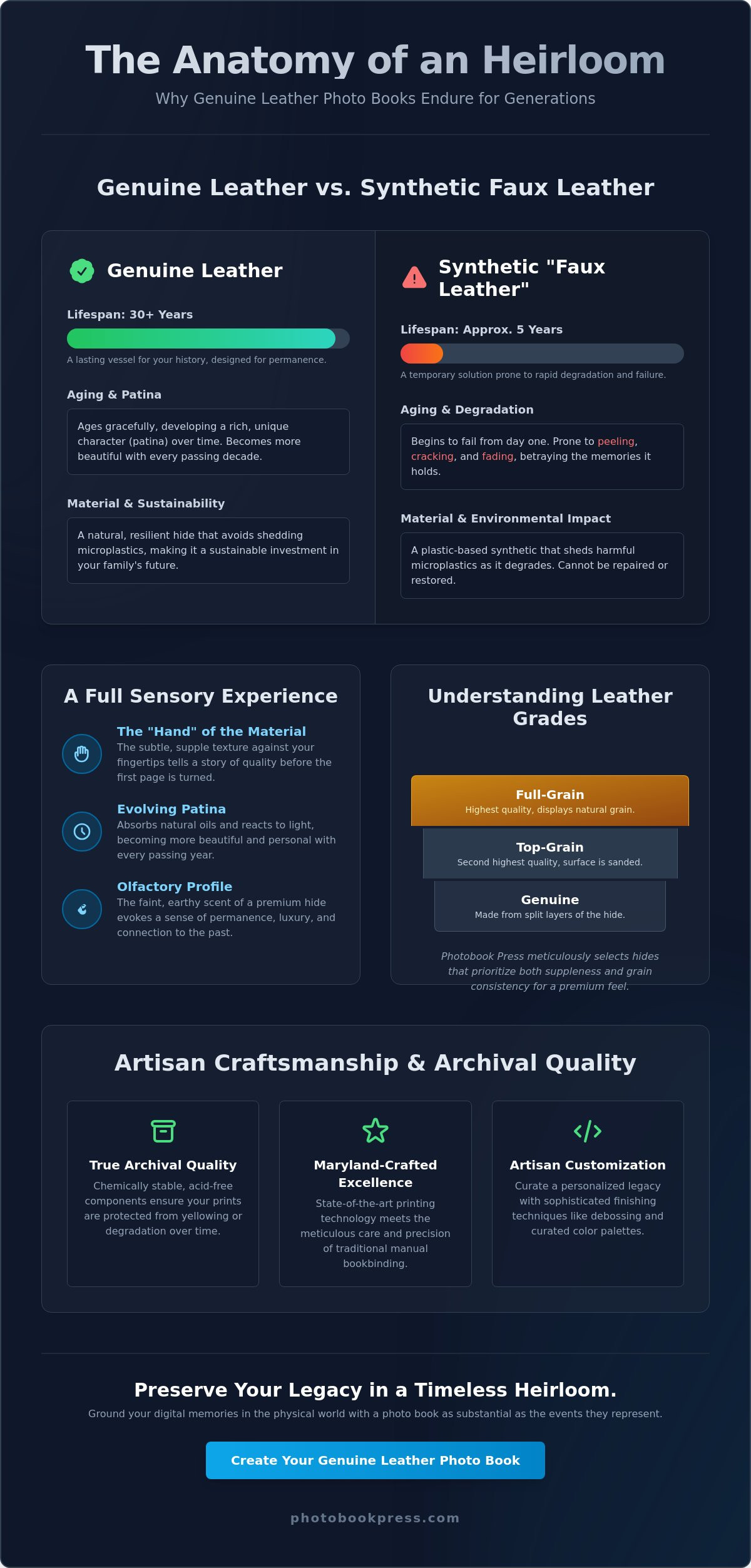
Choosing a cover material is often the final decision in the creative process, yet it's the one that dictates the longevity of the entire project. The photobook industry has seen a rise in "fast fashion" alternatives, where synthetic materials mimic the look of luxury without the structural integrity. These "leatherette" or PU options are a false economy. While they appear pristine on the day of delivery, they lack the organic fibers required to withstand the friction of being pulled from a shelf or the repeated opening of the spine. Beyond durability, the environmental cost is stark. Synthetics are essentially plastic products that shed microplastics throughout their short lifecycles. A genuine leather photo book, by contrast, is a natural material that eventually biodegrades, leaving a legacy of memories rather than a legacy of waste.
Some creators worry that leather is too traditional for modern, minimalist photography. This is a common misconception. The quiet confidence of a high-end hide complements contemporary aesthetics by providing a neutral, sophisticated texture that doesn't compete with the imagery. In a digital-first world where photos are often ephemeral, the psychological weight of a heavy book is invaluable. It forces the viewer to slow down. It turns a quick scroll into an intentional study of art. This physical presence anchors your digital life in a way that a screen never can.
Genuine leather is remarkably resilient against the realities of daily life. It naturally resists fingerprints and handles minor spills with far more grace than linen or silk, which can permanently stain. The most critical failure point for any book is the hinge. This is where the "Peel Test" reveals the truth of the material. Synthetic covers are often just a thin layer of plastic bonded to a fabric backing. Under the stress of use, that plastic layer inevitably delaminates and cracks. While synthetic covers may last five years, a genuine leather photo book is engineered for a century. It's a product designed to be handled, shared, and passed down without fear of disintegration.
There is a reason why professional wedding albums almost exclusively feature leather covers. For a photographer, the material choice is a direct reflection of their brand's perceived value. Delivering a portfolio in a premium hide justifies the investment the client has made in professional services. It signals that the work inside isn't just a set of files, but a curated gallery. By choosing leather, you're providing a finished product that matches the emotional gravity of the event it documents. It's the definitive choice for those who view print as the ultimate expression of their craft.
Designing a genuine leather photo book is an exercise in intentionality. You aren't just selecting a cover; you're choosing the architectural frame for your life's most significant chapters. The process begins with a palette that mirrors the tone of your narrative. While classic charcoal and deep espresso offer a timeless, library-bound aesthetic, modern pastels can soften the presentation for a newborn’s first year or a spring wedding. This choice sets the stage for the tactile details that follow, such as a cameo window. By integrating a focal image directly into the leather cover, you provide a visual anchor that invites the viewer into the story before they even turn a page. If you're ready to begin your design, you can start building your custom leather photobook today.
The interior must match the exterior's gravity. It's a missed opportunity to pair a premium hide with thin, standard pages. We recommend ultra-thick archival paper to ensure the book feels balanced and substantial in the hand. As the leather ages and develops its natural patina, these customization choices, from the color to the texture, become more integrated into the book's character. The physical act of creation is a partnership between your creative vision and our artisan standards.
A blind deboss offers a quiet sophistication, pressing your title deep into the grain without the use of color. It relies on shadows and texture to communicate elegance. For those seeking a touch of metallic luxury, foil stamping in gold, silver, or rose gold adds a luminous contrast against the matte leather. Your choice of typography also plays a role in the book's "era" feel. A classic serif font can evoke a sense of heritage and history, while a clean sans-serif keeps the volume feeling contemporary and fresh. These indented titles become even more defined as the leather matures, catching the light in unique ways over the decades.
When curating a premium volume, the mantra of "less is more" is essential. A leather-bound book shouldn't feel cluttered or rushed. By utilizing generous white space, you allow each photograph to breathe, mimicking the atmosphere of a fine art gallery. The goal is a harmonious connection between the cover's texture and the content's vibe. A rugged, pebbled grain might suit a landscape travel portfolio, while a smooth, refined finish perfectly complements the delicate details of a formal wedding day. This synergy ensures the book feels like a single, cohesive work of art rather than a mere collection of prints.
Since 1985, Photobook Press has operated at the intersection of traditional bookbinding and cutting-edge print technology. Our Maryland facility serves as the heart of our production heritage, a place where state-of-the-art machinery facilitates precision while manual artisan binding ensures a soul in every volume. We don't view our work as mass production. Instead, we treat every genuine leather photo book as a unique commission, a bespoke artifact that requires a master's touch. This boutique approach allows us to maintain a standard of excellence that honors the weight of the memories you entrust to us.
Our commitment extends to providing professional photo books that serve both the seasoned photography professional and the dedicated hobbyist. We believe that everyone deserves a museum-quality vessel for their history. By maintaining our roots in Maryland and refusing to outsource the delicate act of assembly, we preserve a level of quality control that is increasingly rare. It's this dedication to the craft that has defined our legacy for over four decades, ensuring that every book we produce is as durable as it is beautiful.
The journey of a premium volume begins with a rigorous multi-step inspection of every leather hide. We look for consistency in texture and the absence of structural flaws that could compromise the book's longevity. Our artisans carefully match the grain of the leather across the entire cover, ensuring that the spine and the front panels flow together as a single, seamless piece of art. This level of detail requires manual oversight in the final binding stages. No automated process can replicate the intuition of a binder who knows exactly how much tension a specific hide requires to wrap perfectly around the archival boards.
As we move through 2026, there is a visible shift back to physical media. In an era where digital files are often lost to technology shifts or forgotten in cloud storage, the need for a permanent anchor has never been greater. Digital isn't enough for the moments that define a life. A leather book becomes a family's most prized physical possession, a tactile bridge between generations. It's an investment in a history that can be felt, smelled, and touched. If you're ready to transform your digital archive into an enduring masterpiece, you can Design your genuine leather photo book at Photobook Press today.
The transition from a digital file to a physical heirloom is the final, essential step in preserving your history. We’ve examined how the tactile superiority of authentic materials and the technical rigor of archival construction create a museum-quality experience. Choosing a genuine leather photo book ensures your most significant milestones are celebrated in a vessel that respects their emotional weight. From the resilience of full-grain hides to the sophisticated elegance of a custom deboss, every detail protects your legacy against the fragility of digital formats. It’s a choice that favors substance over fleeting trends.
Since 1985, our Maryland-based team has refined the art of professional production, blending state-of-the-art technology with manual binding expertise. By utilizing Smyth-sewn techniques and layflat archival options, we create volumes designed to be handled and shared for generations. Your history is a work of art, and it deserves a home that will only grow more distinguished with time. Design Your Artisan Leather Photo Book and begin crafting a physical legacy today.
Genuine leather is a natural material sourced from the split layers of a hide, maintaining an organic fiber structure that breathes and matures. Bonded leather is a composite created from shredded leather scraps held together by polyurethane binders. Because bonded leather lacks a continuous natural grain, it's prone to peeling and cracking within a few years. A solid hide remains resilient, developing a rich character over time rather than disintegrating.
Store your volume in a climate-controlled environment away from direct sunlight and extreme humidity. Handle the pages with clean, dry hands to prevent natural oils from marking the archival paper. You don't need harsh chemicals for maintenance; a light dusting with a soft, lint-free cloth is sufficient. Proper storage ensures the leather doesn't dry out and the binding remains flexible for your descendants to enjoy.
You can personalize your heirloom using artisan techniques like blind debossing or metallic foil stamping. These processes create a permanent, tactile indentation in the leather's surface that won't fade or wear away. Whether you choose a classic serif font for a heritage feel or a modern sans-serif for a contemporary look, the typography becomes an integrated part of the book's physical architecture.
Genuine leather is often the preferred choice for wedding albums because of its superior durability and resistance to environmental wear. While linen offers a beautiful, organic aesthetic, it can fray at the corners and absorb stains more easily than a treated hide. A genuine leather photo book provides a prestigious, substantial weight that matches the emotional significance of a wedding, ensuring the vessel is as resilient as the memories it holds.
Ultra-thick archival paper, typically around 200gsm or higher, is the ideal companion for a substantial leather cover. This weight provides the necessary structural integrity to balance the heavy hide, ensuring the book feels harmonious in your hands. Using professional-grade, acid-free paper prevents the pages from curling under the weight of the binding and ensures your images remain vibrant for a century.
The creation of a handcrafted volume is a deliberate process that requires time for manual assembly and rigorous quality inspections. Every hide must be checked for grain consistency, and the binding needs to set properly to ensure long-term durability. Because we treat every book as a unique commission in our Maryland facility, you should check our current production schedule to see the estimated timeline for your specific project.
We provide premium synthetic leather options for those who prefer an animal-friendly alternative without sacrificing a sophisticated aesthetic. These materials are engineered to mimic the tactile "hand" of real leather and offer excellent color consistency across the entire cover. While they don't develop a patina like natural hides, they provide a durable and elegant finish that serves as a beautiful home for your personal narratives.
A layflat design is the definitive choice for a genuine leather photo book because it allows your images to flow seamlessly across a panoramic spread without being lost in a center gutter. The inherent weight of the leather cover acts as a natural counterbalance, allowing the book to rest open gracefully on a table. This construction reduces stress on the spine, which is essential for preserving the binding over decades of frequent use.
