No Products in the Cart


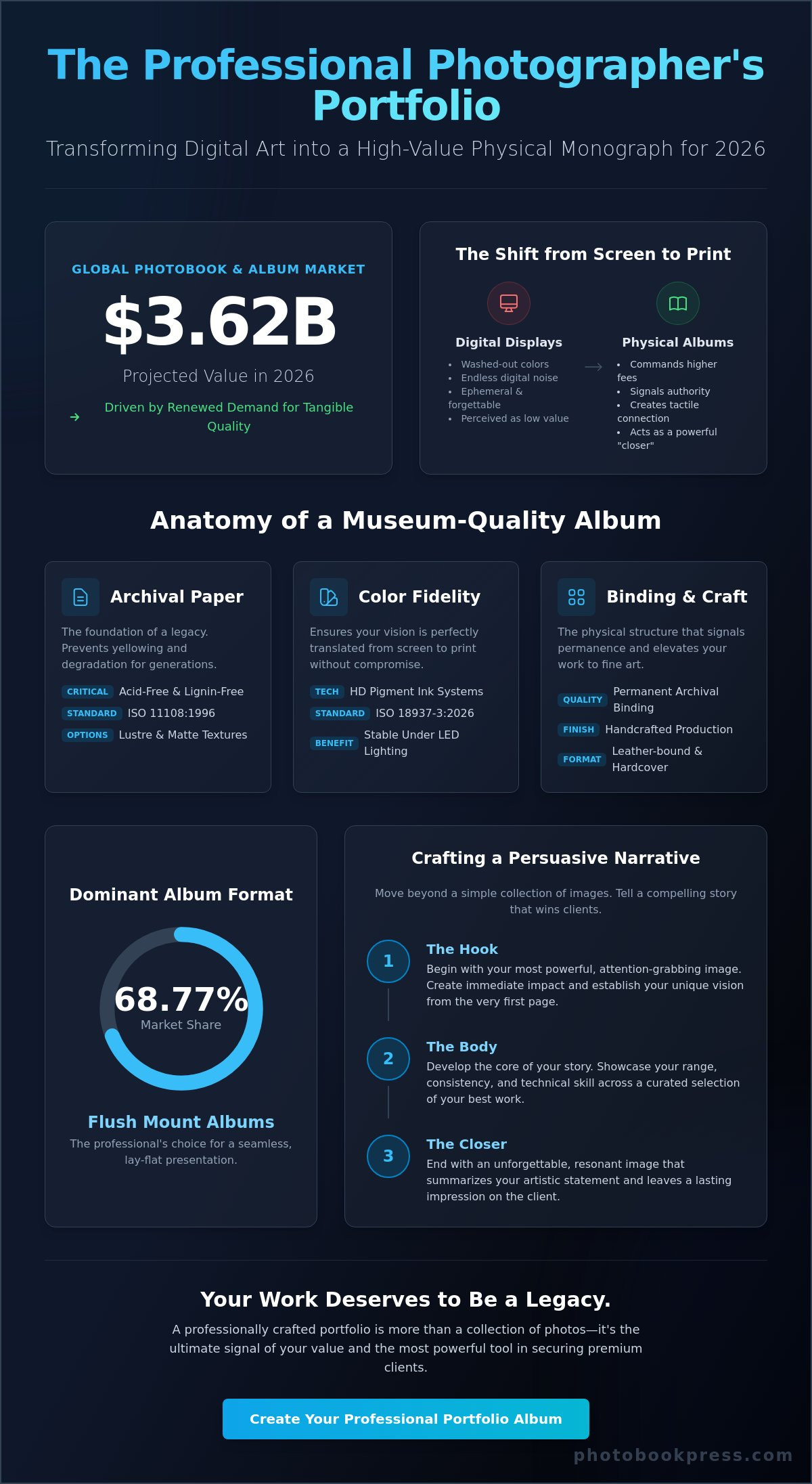
Did you know that the global photobook and album market is projected to reach $3.62 billion in 2026? Even in this digital age, a physical photographer portfolio album remains the ultimate signal of professional authority. You've likely felt the frustration when a client scrolls past a masterpiece on a backlit display that washes out your carefully graded colors. A cheap, flimsy book only diminishes your perceived value, leaving your artistry lost in a sea of digital noise.
In this guide, you'll discover how to transform your digital files into a high-end physical portfolio that commands higher fees and secures premium clients. We will examine the latest industry shifts, including the March 2026 release of ISO 18937-3 standards for print stability and why flush mount albums currently hold a 68.77% market share. You'll learn to navigate complex paper weights and binding styles to create a museum-quality book that acts as a powerful closer in client meetings. At PhotoBook Press, we believe your work deserves to be more than a fleeting image; it deserves to be a legacy, beautifully told.
In the high-stakes environment of 2026, the photographer portfolio album has transitioned from a mere utility into a curated physical monograph. It serves as a definitive statement of an artist's vision, far removed from the ephemeral nature of a social media feed. By anchoring your work in a physical format, you're utilizing a traditional artist's portfolio structure to showcase professional permanence. High-end markets have moved decisively away from the loose-leaf binders of the past, favoring permanent archival binding that suggests your work is a legacy rather than a temporary file. This sense of permanence is essential for artists who wish to be viewed as established authorities in their niche.
This shift is supported by the 2026 projection of the global photobook market reaching $3.62 billion, driven by a renewed demand for tangible quality. The "Closer" effect is a powerful reality; a physical book justifies premium creative fees because it represents a significant investment in professional presentation. When a client feels the weight of a well-crafted book, they aren't merely looking at photos. They're experiencing your brand's tactile signature. This builds a level of trust that a glass screen cannot facilitate, using the sensory feedback of high-quality paper to create an emotional resonance that lasts.
To better understand this concept, watch this helpful video:
Clients in 2026 face an endless barrage of digital noise, making them crave moments of authentic connection. A physical portfolio offers a sanctuary of silence, slowing the pace of a meeting and forcing a deeper level of engagement with the imagery. This creates an uninterrupted viewing experience where the artist controls the rhythm, lighting, and sequence of the story without the interference of a flickering screen. It's a psychological reset that positions your photography as fine art rather than just another digital asset. By removing the distraction of notifications, you ensure your work receives the undivided attention it deserves.
There's a vast psychological gap between swiping on an iPad and turning the heavy, archival-quality pages of a leather-bound volume. The latter signals to luxury clients that you value your own work enough to house it in an exquisite vessel. This acts as a powerful filter, pre-qualifying clients who understand that quality requires a specific level of investment. In agency settings, a professional photographer portfolio album serves as a permanent leave-behind that commands attention on a creative director's desk. It's a tangible reminder of your craftsmanship that won't be lost in a digital folder or deleted by an automated inbox sweep.
A professional photographer portfolio album must endure more than a simple glance; it requires the structural integrity of a museum artifact. Your work is only as permanent as the materials that house it. To ensure longevity, every component must be acid-free and lignin-free, preventing the yellowing and degradation that plague consumer-grade products. The Library of Congress recommends archival quality paper that meets the ISO 11108:1996 standard for printed materials, a benchmark that separates professional monographs from temporary keepsakes. When you present a book built to these specifications, you're offering your clients a promise of durability that spans generations.
Color fidelity is equally vital. High-definition ink systems, particularly those using stable pigment inks, are essential for matching the vibrant range of modern digital monitors. This precision is increasingly important following the March 2026 release of the ISO 18937-3:2026 standard, which outlines methods for testing print stability under the LED lighting common in galleries and high-end offices. Your portfolio must maintain its chromatic integrity under these specific conditions to remain a reliable representation of your skill. For those seeking the pinnacle of artisan construction, our portfolio books offer the perfect fusion of technical precision and aesthetic grace.
Structural longevity also depends on the binding method. While standard commercial glues can become brittle and crack, professional albums utilize PUR (Polyurethane Reactive) binding or Smyth sewn options. These techniques offer superior flexibility and strength, ensuring that the spine remains intact even after years of frequent handling by prospective clients and agency directors.
Technical precision reaches its peak with layflat binding. This construction method eliminates the "gutter" or center fold that typically swallows the middle of an image. For landscape photographers and those who favor expansive panoramic spreads, this is a non-negotiable requirement. It allows a single image to flow seamlessly across two pages without distortion. You can explore the mechanics of this process in our guide to layflat photo books, which details how this engineering feat enhances the viewing experience.
The "hand-feel" of your portfolio is a silent communicator of value. Heavy-weight paper, typically 200gsm or higher, provides a tactile gravitas that thin sheets lack. Matte paper is often the preferred choice for fine art and moody portraiture because it reduces glare and emphasizes texture. Conversely, high-gloss or Lustre finishes are ideal for commercial and high-contrast fashion work where color "pop" and deep blacks are paramount. Choosing the right texture ensures the physical medium complements your artistic intent rather than competing with it.
The physical dimensions and materials of your photographer portfolio album should be a direct extension of your artistic genre. In 2026, the square format has become the industry standard, projected to hold a 44.60% market share due to its versatility across both portrait and landscape imagery. However, specialized niches often require a more tailored approach to stand out. Wedding photographers typically find that oversized leather-bound volumes resonate best with clients looking for heirloom quality. These substantial books provide a sense of gravity that matches the emotional weight of a wedding day, helping to justify the premium creative fees associated with luxury events.
Commercial and fashion photographers often lean toward a sleek, minimalist hardcover monograph. This format mirrors the aesthetic of high-end editorial publications, positioning the photographer as a contributor to the world of couture and brand storytelling. For architectural photographers, the 11x14 landscape format is the definitive choice. The extra width allows wide-angle structural shots to maintain their scale and impact, preventing the lines of a building from feeling compressed. Fine art photographers frequently employ a dual strategy: a high-volume softcover "Lookbook" for wide distribution at galleries, and a single, masterfully bound volume for private consultations. If you're ready to define your professional presence, our portfolio books provide the artisan craftsmanship your niche demands.
The cover is the first tactile interaction a client has with your brand. Genuine leather remains the pinnacle of prestige, offering a scent and texture that suggests timeless authority. It's the most durable choice for portfolios that will be handled frequently by agency directors. Linen offers a modern, boutique feel that is particularly popular in the editorial and lifestyle sectors. It provides a soft, organic touch that complements natural light photography. For those who want immediate visual recognition, custom photo covers allow a signature image to serve as the gateway to the work inside, ensuring your brand identity is unmistakable from the moment the book is picked up.
Resist the urge to include every successful shot you've ever taken. In the professional market, 20 to 40 pages is the recognized sweet spot for maintaining a client's interest while demonstrating a cohesive narrative arc. Over-stuffing an album leads to visual fatigue and dilutes the impact of your strongest pieces. Industry data from May 2026 suggests that a tightly curated 20-page spread is more effective at securing commissions than a 100-page "best of" collection. Consider the pricing of additional spreads carefully; while a standard 8x8 professional album might start at $99, the true cost is in the curation. Each page must earn its place by advancing the story of your unique vision.
Creating a photographer portfolio album requires a shift in mindset from being a creator to becoming a curator. A common mistake is treating the book as a "best of" dump, a cluttered collection of unrelated successes. Instead, your portfolio should be a tightly edited monograph where every image serves the overarching narrative. Research from May 2026 suggests that including between 20 and 100 of your most impactful images is the ideal range to maintain engagement without overwhelming the viewer. This deliberate selection process ensures that your work is viewed as a cohesive body of art rather than a series of disparate captures.
Successful sequencing follows a "Hook, Body, and Closer" strategy. You must open with a "hook"—a signature image that immediately establishes your artistic authority. The "body" of the book builds on this momentum, showcasing your versatility and technical range. Finally, the "closer" should be a powerful, lingering shot that leaves the client wanting to see more. Within this flow, you should integrate candid shots to add emotional depth. Candid shots in a professional photography context are those unposed, cinematic moments that capture genuine, unscripted storytelling. These images provide a human touch that balances more formal, technical compositions.
To ensure your work is presented with the reverence it deserves, you can design your bespoke portfolio using our artisan-grade materials.
The relationship between facing pages is as important as the individual images themselves. You should pair images based on a shared color palette, similar lighting conditions, or a strong thematic resonance. A single-image spread provides a moment of high-impact focus, while a multi-image layout can illustrate a sequence or a specific technique. Visual rhythm in book design is the intentional cadence created by the repetition and variation of layouts, colors, and subjects across a sequence of pages. Utilizing ample white space, or "breathing room," is a hallmark of luxury design, ensuring that your most complex shots don't feel crowded or diminished.
Before your vision goes to the press, meticulous technical preparation is required. Converting your files from RGB to CMYK is a critical step to manage the subtle color shifts that occur when moving from a backlit screen to physical ink. You must also account for bleed lines and safe zones to ensure your crops remain intentional and professional. For a deeper look at these technical requirements, consult our guide on professional photo books. By adhering to these standards, including the March 2026 DNG file format guidelines (ISO 12234-4:2026), you ensure your digital work translates perfectly into a physical legacy.
Choosing the right partner for your photographer portfolio album is as critical as the lens you use to capture your vision. At PhotoBook Press, we maintain a Maryland-based production facility where handcrafted quality isn't a marketing phrase but a daily practice. Unlike automated, mass-market labs, our master printers oversee every stage of the process. This ensures that the human touch guides the creation of your legacy, from the initial color calibration to the final binding. We offer a level of customization that goes far beyond standard templates, including exquisite foil stamping, precise debossing, and bespoke sizes that allow your work to dictate the dimensions of the book.
Efficiency serves as the backbone of any successful creative enterprise. We provide wholesale opportunities for recurring professional fulfillment, allowing you to scale your offerings without increasing your administrative burden. Our direct-to-client shipping service ensures that your finished albums are delivered seamlessly to your customers, maintaining the high-end unboxing experience your brand represents. By integrating these professional services, you transform a one-time shoot into a multi-sensory physical product. It's a strategic move that reinforces your value and builds a sustainable business model centered on excellence.
Since 1985, we've stood as a reliable partner in the press industry, helping artists transition from digital creators to published authors. A proven method for increasing booking rates is the "Sample Album" strategy. By presenting a physical, high-end sample during consultations, you provide a tangible vision of the final result. This makes it easier for clients to invest in larger service packages because they can feel the quality they're purchasing. Bundling these albums into your standard contracts elevates your perceived authority and provides a recurring stream of physical product revenue that digital-only photographers often miss.
Our professional design tools are engineered to give you complete creative control while streamlining the technical layout process. Whether you're building a leather-bound heirloom or a minimalist monograph, our interface ensures your vision is translated with absolute precision. We stand behind our work with a comprehensive quality guarantee, treating our archival materials as a lifetime investment rather than a disposable product. It's time to move your work from the ephemeral screen to the permanent shelf. Design your professional portfolio book today and ensure your story is beautifully told.
The transition from digital files to a physical photographer portfolio album is more than a design choice; it's a commitment to artistic permanence. By adhering to the March 2026 ISO 18937-3 standards for print stability and mastering the "Hook, Body, and Closer" sequencing strategy, you position your work in a category of its own. A curated book doesn't just display images. It commands the attention of high-stakes clients who value substance over scrolling. This tangible authority is what separates a digital creator from a master artisan.
PhotoBook Press has been handcrafted in the USA since 1985, providing artists with the archival-grade materials required for true legacy work. We offer wholesale pricing for professionals, ensuring your business can scale without compromising on the boutique quality your brand demands. Every page turned is an opportunity to justify your creative fees and secure your next premium commission. Elevate your brand with a handcrafted professional portfolio and transform your best work into an heirloom that speaks for itself. Your vision deserves a home that lasts a lifetime.
The 12x12 square format is currently the industry standard, commanding a 44.60% market share in 2026 for its exceptional versatility. For those specializing in landscape or architectural work, the 11x14 landscape format provides the necessary scale to showcase structural detail without visual compromise. Choosing a size that feels substantial in the hand reinforces the value of the artistry inside.
A professional portfolio book should contain between 20 and 40 of your most impactful images to maintain a tight, persuasive narrative arc. Research from May 2026 suggests that including more than 100 images often leads to visual fatigue, which can dilute the power of your signature pieces. It's always better to leave a client wanting more than to overwhelm them with a repetitive collection.
Leather is the definitive choice for those seeking high-ticket prestige and maximum durability for frequent handling during agency meetings. It offers a timeless, heirloom quality that ages beautifully over decades of use. Linen provides a modern, editorial aesthetic that is increasingly popular in lifestyle and boutique niches, offering a soft, organic touch that complements natural light photography.
The primary difference lies in the structural construction and the weight of the paper used. A photographer portfolio album typically utilizes flush-mount, lay-flat binding with heavy-weight archival paper to ensure that expansive images aren't lost in the center gutter. Standard photo books are often lighter and better suited for high-volume distribution or casual mementos rather than high-end professional closers.
Matte paper is the superior choice for fine art and moody portraiture because it eliminates glare and enhances the tactile texture of the page. Commercial and high-contrast fashion photographers often prefer Lustre or glossy finishes to maximize color saturation and achieve deeper black levels. Your choice should align with the emotional tone of your imagery and the typical lighting conditions of your presentation space.
Permanently bound albums don't allow for individual page updates, as they're constructed for archival longevity and structural integrity. This permanence is a deliberate design choice that signals professional authority and artistic finality to your clients. If your body of work changes frequently, consider creating a series of smaller, niche-specific volumes that can be replaced as your style evolves.
To ensure your prints match your monitor, you must calibrate your display and utilize soft proofing with specific ICC profiles. Adhering to the March 2026 ISO 12234-4 guidelines for DNG file formats also ensures your raw data remains consistent throughout the printing process. Converting your work from RGB to CMYK before submission helps you manage the subtle color shifts inherent in physical ink reproduction.
PhotoBook Press offers dedicated wholesale pricing and recurring fulfillment opportunities for professional photographers looking to scale their business. These accounts allow you to bundle high-end albums into your service packages while maintaining a sustainable profit margin. We also provide direct-to-client shipping options to streamline your workflow and ensure a premium unboxing experience for every customer.
