No Products in the Cart


The decision to print a cherished photograph isn't merely a choice of dimensions; it’s a decision about how your legacy will inhabit the light of your home. You've likely spent hours perfecting a digital image, only to find yourself wondering what is the difference between canvas and metal prints when it comes to the final, tactile result. It's natural to feel a sense of hesitation. You want the assurance that the deep hues of a sunset or the soft textures of a portrait won't fade or warp as the years pass, especially since studies show that 51% of Americans prioritize choosing wall art that is deeply meaningful to their homes.
We understand that your memories are precious artifacts that deserve the highest level of care. This guide will help you discover the nuanced differences in texture, light interaction, and durability to choose the perfect archival medium for your most cherished memories. We'll explore how the organic weave of canvas absorbs light for a classic, painterly feel, while the sleek surface of metal reflects luminosity with modern precision. By the end, you'll have the confidence to select a material that preserves your history with the elegance it deserves.
At its core, selecting a medium for your photography is an exercise in choosing how a memory will age. While traditional paper prints often require the protection of glass and a frame, modern substrates offer a more immediate, tactile experience. Canvas prints involve rendering digital imagery onto high-quality fabric, which is then meticulously stretched over a solid wooden frame. Conversely, metal prints are created by infusing images directly into specially coated aluminum sheets using intense heat. While both serve as archival-quality, frameless alternatives to traditional paper, understanding what is the difference between canvas and metal prints requires a closer look at the physical chemistry of the ink and the substrate.
To better understand these physical differences, watch this helpful comparison:
The timeless appeal of canvas lies in its organic texture. Most premium prints utilize a sophisticated polyester-cotton blend, balancing the natural feel of cotton with the durability and color consistency of polyester. The Giclée printing process utilizes archival pigment inks that penetrate the fabric weave, ensuring deep color saturation and a longevity that can exceed 75 years under ideal indoor conditions. Once printed, the fabric is hand-stretched over a wooden stretcher bar. This creates the iconic "gallery wrap" look, where the image or a solid color continues around the edges, providing a three-dimensional presence on your wall without the need for an external frame.
Metal prints represent a leap in imaging technology through a process known as dye-sublimation. Instead of sitting on the surface, the ink is heated until it turns into a gas, at which point it bonds permanently with the specialized polyester coating on the aluminum sheet. This creates an image that is literally part of the metal. These prints are remarkably slim, often just a few millimeters thick, yet they possess an incredible structural integrity. Because the aluminum is non-porous and the dyes are locked beneath a protective layer, metal prints are the most durable option available. They are known to last between 65 and 200 years indoors, resisting moisture, scratches, and the yellowing that can affect lesser materials. Whether finished with a high-gloss coating for maximum shine or a matte coating to reduce reflections, the result is a sleek, industrial artifact that feels both modern and permanent.
The fundamental distinction in what is the difference between canvas and metal prints ultimately comes down to the interaction of light. Canvas absorbs light into its fibers, creating a warm, soft aesthetic. Metal reflects light through the ink, producing a luminous, high-definition clarity that appears almost backlit. Both mediums transform a digital file into a physical legacy, yet they speak very different visual languages.
The tactile weave of a canvas print does more than just hold ink; it invites the viewer into a sensory dialogue. While evaluating what is the difference between canvas and metal prints, many collectors discover that canvas offers a softer, more emotional connection to the subject matter. This medium carries a production heritage that mirrors the great traditions of fine art. The organic texture of the fabric adds a layer of depth that a perfectly smooth surface cannot replicate. It creates a "painterly" effect, transforming a modern digital capture into an heirloom that feels as though it was crafted by hand rather than just printed by a machine.
Canvas is particularly effective at softening the atmosphere of a room. In spaces filled with hard lines and modern materials like glass or steel, the presence of fabric provides a necessary visual balance. It doesn't just display an image; it anchors the space with a sense of warmth and permanence. You might start by browsing our curated Canvas Prints collection to see how these textures can transform your own photography into a centerpiece of your home's interior design.
Unlike the reflective nature of aluminum, canvas possesses a natural ability to absorb light. If you're curating a collection for a sun-drenched living room or a gallery space with heavy overhead lighting, the glare-free surface of a matte canvas ensures your image remains visible from every angle. This light diffusion is one of the key practical answers to what is the difference between canvas and metal prints. Additionally, the subtle grain of the fabric can be forgiving. It elegantly masks minor imperfections or grain in lower-resolution photos, making it a versatile choice for a wide range of image qualities. For a deeper dive into this medium, explore The Artisan’s Guide to Custom Canvas Prints: Elevating Memories to Fine Art.
The gallery wrap is a defining feature that gives canvas its unique three-dimensional presence. By continuing the image around the sides of the stretcher bar, the print becomes a sculptural object. This eliminates the need for a traditional frame, allowing the art to stand alone with quiet confidence. Choice of depth plays a significant role in this visual impact:
Despite this substantial appearance, canvas remains remarkably lightweight. It's an effortless choice for any wall type, requiring only simple hardware to secure your most precious artifacts safely for decades to come.
If canvas is a whisper, metal is a declaration. When homeowners ask what is the difference between canvas and metal prints, the most striking distinction is often the sheer luminosity of the latter. Metal prints don't just display an image; they radiate it. By using a polished aluminum base, light is reflected back through the layers of ink, creating a glowing effect that mimics a backlit display. This makes metal the definitive choice for high-contrast photography, vibrant landscapes, and urban nightscapes where every pinprick of light needs to shine with absolute clarity. It's a modern, industrial medium that favors precision over the soft, organic diffusion of fabric.
The aesthetic appeal extends to the physical presence of the piece itself. Metal prints typically feature a slim, minimalist profile that creates a "floating" effect on the wall. This is achieved through hidden float mounts that set the print away from the surface, allowing the art to stand independently without the visual weight of a traditional frame. It's a sophisticated solution for contemporary spaces that value clean lines and architectural simplicity.
The unrivaled sharpness of a metal print is the result of a specialized imaging technique. Dye-sublimation is a permanent molecular bond between ink and metal. This process ensures that every pixel is preserved with maximum sharpness, preventing the ink bleed that can occur on more porous materials. The result is a high-definition finish that offers a perceived "3D" depth, particularly when paired with a high-gloss coating. This clarity brings a sense of realism to your photography, making the viewer feel as though they could step directly into the scene.
While many focus on the visual impact, the true strength of metal lies in its archival stability and physical resilience. Unlike traditional mediums, metal prints are remarkably durable, offering resistance to scratches, heat, and even direct moisture. This makes them the premier choice for challenging environments where canvas might struggle:
This combination of technical precision and environmental endurance ensures that your most significant life events are not just captured, but protected. While canvas offers a classic warmth, metal provides a durable, high-definition window into your history that remains untouched by the elements of your home.
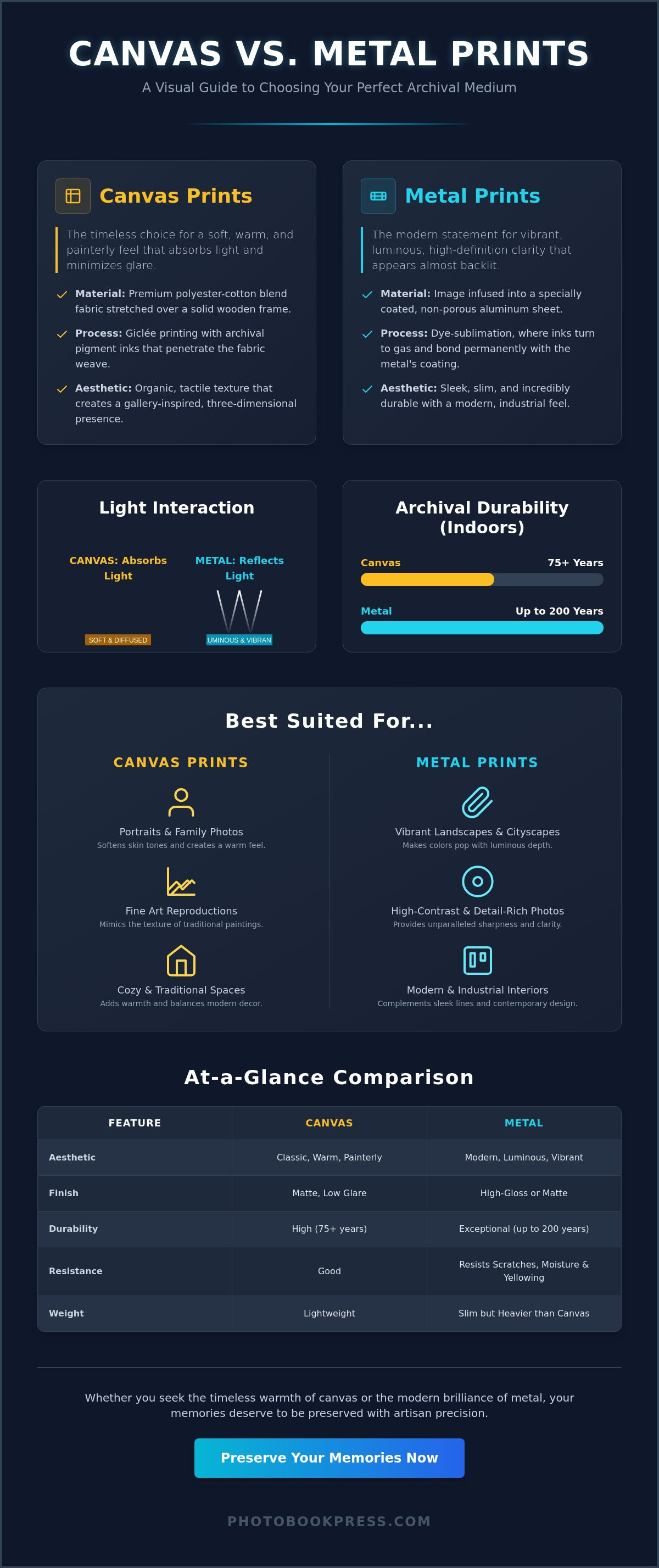
Choosing the right medium requires an understanding of how a piece will interact with its surroundings. When evaluating what is the difference between canvas and metal prints, you're essentially choosing between the absorption of light and the reflection of luminosity. One medium whispers with organic texture, while the other declares its presence with high-definition clarity. This choice defines not just the look of your photograph, but the emotional atmosphere of the room it inhabits.
The visual distinction begins with the surface geometry. Canvas features a matte, textured weave that creates diffused reflection, scattering light in multiple directions to eliminate harsh hot spots. This makes it ideal for portraits and landscapes where you want to emphasize warmth and soft transitions. In contrast, metal prints offer specular reflection. Light passes through the ink and bounces off the aluminum base, causing "cool" tones like blues and teals to pop with a brilliant, almost liquid intensity. While canvas warms up earthy tones and sepia palettes, metal enhances the crisp edges of architectural photography and high-contrast urban scenes.
| Feature | Canvas Prints | Metal Prints |
|---|---|---|
| Detail | Soft, Painterly | High-Definition Sharpness |
| Glare | Minimal / Glare-Free | High (Gloss) / Low (Matte) |
| Weight | Lightweight / Easy to Move | Substantial / Solid Feel |
| Durability | 75+ Years (Archival) | 65 to 200+ Years (Archival) |
Longevity is a hallmark of premium wall art, yet each material responds differently to its environment. Canvas is a living material; it can be sensitive to extreme humidity, which may cause the wooden stretcher bars to warp over several decades. Its textured surface also tends to trap dust more easily than its metal counterpart. Metal prints are the rugged alternative, offering a non-porous surface that is virtually impervious to moisture and environmental pollutants. Both mediums utilize archival-grade pigments and coatings designed to resist UV degradation, ensuring your memories don't fade into the background as the years pass. For a comprehensive look at how these materials compare to other professional options, consult The Ultimate Guide to Photo Printing Services: Quality vs. Convenience in 2026.
Your interior design style should also guide your selection. Canvas aligns beautifully with traditional, rustic, or bohemian spaces where natural materials and textures are celebrated. Metal, however, is the definitive choice for modern, industrial, or minimalist homes that favor clean lines and reflective surfaces. Ready to curate your own gallery? Explore our premium Wall Art collections to find the perfect match for your home’s unique aesthetic.
The final decision in your creative journey shouldn't rest solely on technical specifications. While understanding what is the difference between canvas and metal prints is essential for long-term durability, the choice ultimately depends on the story you wish to tell. A photograph is a captured moment; the medium you select is the frame through which that moment is remembered. By matching the emotional weight of your imagery to the physical properties of the substrate, you ensure that your wall art becomes a seamless extension of your home's narrative.
Before finalizing your selection, assess the lighting in your intended space. If your wall is positioned directly opposite a large window or under heavy ambient light, the glare-free nature of canvas will serve you best. For dimly lit hallways or rooms with focused track lighting, the reflective brilliance of metal can help pull light into the space, making the image appear to glow from within. This interaction between the environment and the material is a vital component of the artisan's perspective.
Certain photographic styles find their natural home on specific surfaces. Canvas prints, with their soft texture and diffused light interaction, are the definitive choice for intimate human moments. Think of the delicate lace of a wedding gown, the soft features of a newborn portrait, or the warm, blurred background of a candid family gathering. These images thrive when the "painterly" quality of the fabric weave adds a layer of timeless artistry to the scene, inviting a sense of nostalgia and warmth.
Metal prints, on the other hand, are designed for the dramatic. If your subject matter involves the sharp, clean lines of modern architecture, the electric vibrance of a city skyline at dusk, or the high-contrast glamour of a fashion editorial, metal is the superior medium. The high-definition clarity ensures that every intricate detail is preserved with a crispness that feels almost tangible. Ultimately, the best choice is one that complements the emotional tone of the photograph.
At Photobook Press, we believe that every memory is a precious artifact that deserves the highest level of care. Our heritage of quality began in 1985, and since then, we've remained dedicated to the noble craft of physical production. We don't simply print images; we manufacture investments in your personal legacy. Every piece that leaves our studio is hand-inspected to meet the meticulous standards of a gallery curator, ensuring that the materials used are of the highest professional grade for long-term display.
When you choose a medium, you're deciding how your history will be viewed by future generations. Whether you prefer the classic, inviting warmth of Canvas Prints or the bold, luminous statement of Metal Prints, our commitment to archival excellence remains the same. We invite you to explore our full range of wall art and discover the perfect format to preserve your most significant life events with the elegance they deserve.
Choosing the right medium is the final act of creation for any meaningful photograph. You now understand that canvas offers a warm, organic texture that excels in sun-drenched rooms, while metal provides a luminous, high-definition window into your most vibrant experiences. Understanding what is the difference between canvas and metal prints allows you to bridge the gap between a digital file and a permanent physical legacy. Whether you seek the soft diffusion of fabric or the modern resilience of aluminum, the choice should always reflect the emotional resonance of the memory itself.
At Photobook Press, we treat every print as a unique artifact. Our Maryland-based production facility has been dedicated to master-level craftsmanship since 1985; we utilize only professional-grade archival materials to ensure your history remains vibrant. We invite you to elevate your memories with our artisan Canvas and Metal Prints and experience the difference that decades of expertise can make. Your stories deserve nothing less than aesthetic perfection. We look forward to helping you preserve your most significant life events with the care and precision they deserve.
Metal prints are the more resilient choice for long-term display. While archival canvas can last 75 years indoors, metal prints are rated for 65 to over 200 years due to their non-porous aluminum construction. They resist scratches and heat much more effectively than fabric. This durability is a primary factor when evaluating what is the difference between canvas and metal prints for high-traffic areas of your home.
Premium metal prints feature advanced UV-resistant coatings designed to prevent fading in well-lit interiors. While they're significantly more stable than traditional paper prints, we don't recommend placing them in constant, direct outdoor sunlight. To preserve the luminous depth of the dyes for centuries, it's best to display your metal art in a space with controlled or indirect natural light.
Metal prints can absolutely be framed, although they're most famous for their modern, frameless "float" mount. While many collectors prefer the minimalist look of a slim aluminum edge, you can use floater frames to add traditional weight to the piece. This provides a bridge between the industrial feel of the metal and the classic aesthetic of traditional galleries or rustic home designs.
Soft, emotional subject matter like wedding portraits, family candids, and painterly landscapes look exceptional on canvas. The natural weave of the fabric adds a tactile depth that complements organic textures and muted color palettes. If your image relies on a classic atmosphere rather than razor-sharp technical detail, canvas is the ideal archival choice for creating a warm, inviting focal point.
Yes, metal prints are moisture-resistant and remarkably suitable for high-humidity environments like bathrooms and kitchens. Because the dyes are encapsulated within the aluminum's protective coating, the image won't warp or peel when exposed to steam. Canvas, being a porous fabric stretched over wood, is much more susceptible to environmental changes and isn't recommended for rooms with frequent moisture or temperature fluctuations.
Cleaning your prints requires a gentle touch and a clean microfiber cloth. For metal prints, a light wipe with a dry or slightly damp cloth easily removes fingerprints and dust without scratching the surface. Canvas prints should only be dusted with a soft, dry brush or cloth. You should avoid using chemical cleaners or excessive water on either medium to protect the archival integrity of the inks.
There is a price difference between canvas and metal wall art, with metal typically requiring a higher investment. This reflects the specialized dye-sublimation process and the premium cost of aluminum substrates. While canvas is a popular choice for its accessibility, metal is often chosen by those seeking a modern, high-definition finish. Both options represent a commitment to quality when considering what is the difference between canvas and metal prints.
Metal prints offer the highest level of color vibrance and perceived accuracy because light reflects directly through the ink. This creates a brilliant effect that makes colors appear more saturated and blacks appear deeper. While canvas provides beautiful, rich tones, the texture of the fabric slightly diffuses the light. This results in a softer color profile compared to the high-definition precision and sharp contrast found in professional metal printing.
