No Products in the Cart


Your child's first year shouldn't live exclusively in the cloud or remain trapped within a cluttered digital camera roll. Most parents find themselves overwhelmed by thousands of snapshots, yet they're paralyzed by the fear of missing a single "crucial" milestone. You want a physical legacy that feels as precious as the memories it holds, not a DIY project that looks cluttered or temporary. Deciding what to include in a baby's first year book is the difference between a clinical checklist and a masterpiece of archival storytelling.
We believe your memories deserve the same level of craftsmanship as a fine-art gallery. This guide provides a clear roadmap for photo selection and a refined design framework to help you move from digital chaos to a professional-grade volume. You'll discover how to curate your favorite images into an archival narrative that honors your child's history with the grace it deserves, resulting in a durable, heirloom-quality book that will be cherished for generations.
A child's first year is more than a sequence of developmental milestones. It represents the opening chapter of their personal biography. While the history of baby books traditionally focused on clinical statistics like birth weight and hair color, a modern approach shifts the perspective toward archival storytelling. We're no longer merely documenting growth; we're crafting a family heirloom. This transition from a casual "scrapbook" mindset to a professionally bound volume ensures that these fleeting moments are preserved with the dignity they deserve.
In our digital-first world, the importance of tactile memory cannot be overstated. Digital files are often lost to forgotten passwords, corrupted drives, or the sheer volume of a cloud-based library. A physical book acts as a bridge between generations. It allows your child to touch the same pages you once turned with quiet wonder. When considering what to include in a baby's first year book, think of it as a curated gallery rather than a storage drive. It's an investment in legacy.
To see how these concepts come together in a finished project, watch this helpful walkthrough:
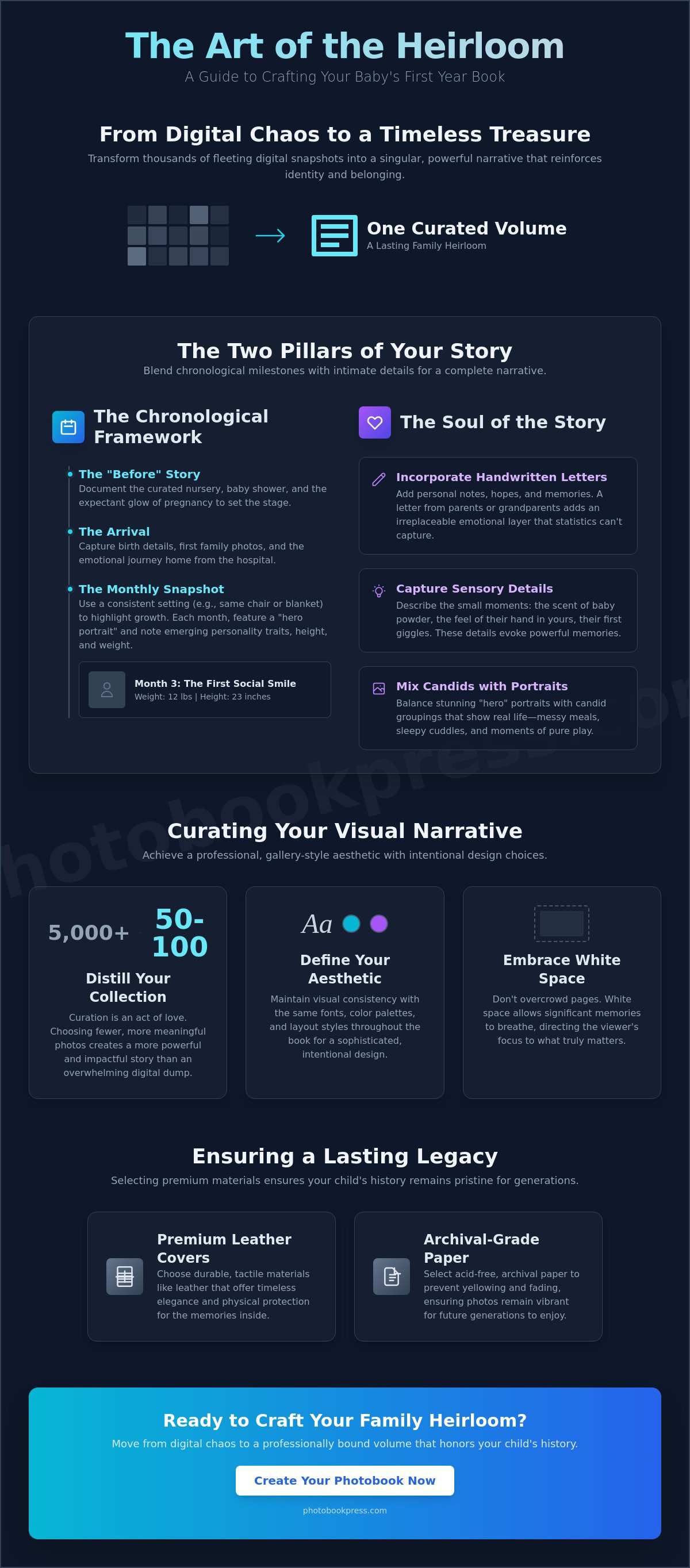
Curation is an act of love. It's the process of distilling thousands of digital snapshots into a singular, powerful narrative. Choosing 50 meaningful photos over 5,000 random files creates a more impactful experience for the reader. There's a psychological weight to this choice. When children see themselves featured in a beautifully printed family history, it reinforces their sense of identity and belonging. Unlike digital formats that may become obsolete, a high-quality physical object remains immune to the shifts in technology. It's a permanent record that lives on a shelf, not a screen.
Establishing a clear aesthetic early on provides the framework for a professional result. You might choose a minimalist style that favors single, stunning portraits, or a classic documentary approach that captures the raw reality of new parenthood. Visual consistency is key to sophisticated design. Using the same fonts, color palettes, and layout styles across the 12-month timeline creates a sense of intentionality. Don't be afraid of white space. It allows the most significant memories to breathe, ensuring the viewer isn't overwhelmed by clutter. When you decide what to include in a baby's first year book, prioritize the images that evoke a sensory response. This focus on quality, paired with the tactile luxury of leather photobooks, transforms a simple collection of photos into a work of art.
The narrative arc of a child's first year is a rapid progression of transformation. When considering what to include in a baby's first year book, start with the quiet anticipation of the "Before" story. Documenting the curated nursery or the expectant glow of pregnancy sets the stage for the life that follows. The Arrival section captures the visceral emotion of birth details and that first, tentative journey home. These records are more than just paper; they are artifacts of a family's origin story. Experts often emphasize the profound importance of preserving family valuables against the passage of time and environmental threats to ensure these narratives survive for future generations.
Consistency creates a visual rhythm that highlights growth with striking clarity. By using a single chair, a favorite heirloom blanket, or a specific toy for scale, you provide a clear reference point for your child’s physical evolution. Each month deserves a dedicated page featuring a hero portrait and a single sentence describing their emerging personality. Perhaps month three brought the first glimmer of a social smile, while month seven was defined by a newfound curiosity for textures. Integrating height and weight statistics in an elegant, typographic layout transforms clinical data into a design element that complements your photography.
Beyond physical changes, your book should capture the "unseen" milestones that define the transition from infant to toddler. When deciding what to include in a baby's first year book, look for moments of connection, such as the first time they clearly recognized your voice or their initial, wide-eyed interaction with a family pet. Social milestones, including the budding relationship with siblings, add depth to the narrative. Look for visual cues of their maturing awareness; a focused gaze or a reaching hand tells a story of cognitive expansion. Capturing the sensory experience of their first solid foods or the determination of their first crawl provides a comprehensive view of their development.
The first year culminates in the celebration of the first birthday. The "smash cake" offers a playful, candid contrast to the more formal portraits seen earlier in the volume. This is also the perfect moment for parental reflection. Summarizing the year’s challenges and triumphs provides a heartfelt conclusion to this initial chapter. To ensure these memories remain as vivid in twenty years as they are today, consider housing them in custom photobooks designed with archival integrity and timeless aesthetic appeal.
While statistics provide the skeletal structure of a child's development, the sensory details provide the breath and life. A truly sophisticated memory book moves past the clinical to capture the ephemeral. When deciding what to include in a baby's first year book, prioritize the elements that evoke a memory's texture. Describe the soft scent of the nursery at dusk, the specific melody of the lullaby that finally brought sleep, or the weight of a favorite swaddle. These are the details that fade first but hold the most emotional resonance. Including a "Letter to the Future" written in your own hand and scanned for the book provides an intimate connection that typed text cannot replicate. It's a direct conversation between the person you are today and the adult your child will become.
Grounding your child's first year in the context of the wider world adds a layer of historical significance. In June 2026, the world looks a specific way. Recording the headlines of the day, the songs topping the charts, or even the mundane cost of a gallon of milk creates a time capsule effect. It transforms the book from a personal diary into a historical document. Don't shy away from the "real" moments either. The exhausted joy of a 3:00 AM feeding, messy "bed head" after a nap, and the quiet, sleepy cuddles are often more precious than a perfectly posed portrait. These images capture the authentic rhythm of your new life together.
Your child's first year is also your first year in a new identity. Documenting your own transformation is essential for a complete narrative. Record the small rituals that sustained you, like the quiet Sunday morning coffee enjoyed while your infant slept in your arms. Honoring your support system is equally vital. Include photographs of grandparents, close friends, and the "village" that surrounded you. This acknowledges that your child's story is inextricably linked to the people who loved them from the start.
The home is the stage where these memories unfold. Wide-angle shots of the living room, the nursery, or even the kitchen capture the "era" of your life with visual precision. Preserving the images of favorite toys and well-loved board books helps recreate the physical world of your child's infancy. To ensure these details remain crisp for decades, follow professional archival preservation guidelines when organizing your physical assets. Capturing seasonal changes, like the first snow seen through a window or the vibrant colors of a first summer garden, rounds out the environmental narrative. When choosing what to include in a baby's first year book, remember that the background is often as telling as the subject itself.
Moving from the selection of memories to the actual composition requires a curator’s eye. A professional-grade volume isn't a collection of disparate snapshots; it's a cohesive visual narrative. When deciding what to include in a baby's first year book, start by selecting a "hero" image for each major chapter. This anchor photo should be the most visually striking or emotionally resonant moment of the month. Once your hero is placed, group smaller, supporting candid shots on the opposite page to tell a micro-story of the everyday.
Consistency in your color palette elevates the entire project. Draw inspiration from the soft tones of the nursery or the recurring colors in your child's wardrobe to create a harmonious flow from cover to cover. Technical precision is equally vital. Always use high-resolution images to ensure that every fine detail, like the curl of a lash or the texture of a knitted blanket, is rendered with archival clarity. For a truly seamless experience, select a professional binding style, such as a layflat photo book. This construction allows your most breathtaking moments to span across a full spread without being lost in a traditional center gutter.
True layflat technology is the hallmark of premium bookmaking. Unlike standard bookstore-quality books or wire-bound journals that interrupt the visual flow, a layflat design presents a perfectly level surface. It's the ideal medium for wide-angle nursery shots, expansive family portraits, or the chaotic joy of a first birthday party. By eliminating the gutter problem, you allow your photography to breathe. It transforms a simple page turn into an immersive gallery experience. This level of craftsmanship ensures the physical book is as impressive as the memories it contains.
The words you choose should complement, not compete with, your imagery. Select timeless fonts, clean serifs or minimalist sans-serifs, that will remain elegant for decades. When you consider what to include in a baby's first year book, remember that white space is a design tool. Let your most powerful photos speak for themselves. Use discreet captions to record names, dates, and locations. This provides essential context for future generations without cluttering the aesthetic. It's about finding the perfect equilibrium between the visual and the verbal.
Ready to transform your digital archives into a tangible masterpiece? You can design your bespoke baby book today using our professional-grade archival materials.
The final step in the curatorial process is the selection of the physical vessel. While the previous chapters focused on what to include in a baby's first year book, the materials you choose will ultimately dictate whether that narrative survives for a decade or a century. Superior materials aren't merely an aesthetic choice; they're a commitment to archival integrity. Inferior glues and acidic papers inevitably lead to yellowing, brittle pages, and fading colors. By contrast, investing in professional-grade construction ensures that the sensory experience of the book remains as vivid for your child's children as it is for you today.
For those seeking the pinnacle of durability and aesthetic excellence, the tactile luxury of leather photobooks offers a timeless appeal that synthetic materials cannot replicate. Leather ages with grace, developing a unique character over time. When choosing between formats, consider the book's intended life. Softcover books are excellent for casual browsing, but a first-year volume deserves the structural protection of a hardcover. This foundation is supported by the use of acid-free, heavyweight archival paper. The weight of the paper prevents "ghosting" from the reverse side, while the acid-free chemistry stops the slow degradation that plagues standard consumer prints.
Our commitment to quality is rooted in a Maryland-based heritage that has prioritized hand-bound excellence since 1985. Unlike mass-produced "drugstore" prints that rely on automated, low-resolution processes, our professional-grade technology ensures color precision and sharp detail. We utilize Smyth-sewn and premium layflat bindings to provide a level of durability that withstands frequent handling. These traditional bookmaking techniques ensure that pages remain securely in place, even as the book is opened and closed thousands of times over the years.
Personalization transforms a premium product into a singular family artifact. Foil stamping and embossing allow you to feature your child’s name and birthdate on the cover in gold, silver, or blind debossing for a subtle, sophisticated finish. The choice between matte and glossy finishes also alters the emotional impact of the imagery; matte offers a soft, fine-art feel, while glossy provides a vibrant, high-contrast look. As you decide what to include in a baby's first year book, consider the future. Planning for a series with consistent sizing and materials allows you to build a cohesive library of "Year Two" and beyond, documenting your child’s growth with a steady, artisanal hand. This intentionality ensures that your family's history is not just recorded, but truly honored.
Your child's first year is a masterpiece in progress. By shifting your focus from a simple checklist to a curated visual narrative, you ensure that every fleeting smile and sensory detail is preserved with intentionality. You now have a definitive roadmap for what to include in a baby's first year book; this journey moves from the quiet anticipation of pregnancy to the vibrant milestones of the first birthday. True archival storytelling requires a balance of chronological history and the intimate, messy moments that define your new life together. It's a gift that grows more precious with every passing decade.
Choosing museum-grade archival materials and artisanal binding techniques ensures this biography remains a tactile bridge between generations. Since 1985, Photobook Press has hand-crafted heirlooms in Maryland with the meticulous care your memories deserve. Our products are trusted by professional photographers worldwide for their durability and aesthetic perfection. Your story is ready to be told. Begin your baby’s legacy with a custom Photobook Press heirloom and transform your digital snapshots into a timeless work of art. Your child will one day hold this history in their hands, feeling the weight of your love in every curated page.
A curated selection of 50 to 100 images is ideal for maintaining a sophisticated narrative flow. While you may have thousands of digital files, excessive imagery often dilutes the emotional impact of each spread. Focus on one hero image per month and group smaller, supporting candid shots to tell micro-stories. This approach ensures your heirloom remains a focused work of art rather than an overwhelming catalog.
When deciding what to include in a baby's first year book, prioritize the transition from pregnancy to the first birthday. Essential milestones include birth details, the first family portrait at home, and monthly growth snapshots that show physical evolution. Beyond physical feats like the first crawl or tooth, capture sensory details like a favorite lullaby or the scent of the nursery to provide a complete emotional record.
The most effective time to begin is during pregnancy or within the first weeks of life. Curating your images in real time prevents the paralyzing backlog that often occurs after twelve months of rapid growth. Establishing your design framework early allows you to focus on the storytelling aspect while the memories are still fresh and vivid. A monthly habit of selection ensures a consistent and polished result.
Including the "Before" story is highly recommended to provide a complete biographical arc for your child. Photos of the nursery, the ultrasound, and expectant parents set the stage for the arrival. These images capture the period of quiet anticipation and the physical environment prepared for the child. It transforms the book from a simple growth log into a comprehensive family history that begins before the first breath.
A layflat binding is the definitive choice for a book that will be handled frequently by family members. This professional construction allows the pages to rest perfectly level without the risk of the spine cracking or images being lost in the center gutter. Unlike standard bookstore bindings, museum-grade layflat technology ensures durability and a premium tactile experience that survives decades of frequent page-turning.
While you shouldn't tape physical mementos into a custom photobook, high-resolution scans of hospital bands or birth announcements are perfect for print. Scanning these artifacts preserves their visual detail without the risk of the physical items deteriorating or damaging the archival paper over time. This method allows you to include sentimental documents while maintaining the sleek, professional aesthetic of a bound volume.
Choosing between materials depends on your desired tactile experience and your goals for longevity. Leather photobooks are the gold standard for heirloom-quality durability; they offer a sophisticated weight and a texture that develops character with age. Linen provides a classic, textile-focused aesthetic that feels warm and modern. Both materials support foil stamping, allowing you to personalize the cover with your child's name for a unique legacy.
Professional-grade printing requires images with a resolution of at least 300 DPI at the final print size. High resolution is essential to ensure that fine details, such as the texture of a swaddle or the clarity of a child's eyes, remain sharp on the page. Using original files rather than social media screenshots will prevent pixelation and ensure your archival storytelling meets the technical standards of a fine-art gallery.
