No Products in the Cart


Your digital library is likely a vast, uncurated expanse of data that risks vanishing the moment a format becomes obsolete or a cloud subscription expires. While screens offer instant gratification, the physical (inurl:photo) remains the only artifact capable of surviving a century without a power source or a software update. You likely feel the quiet anxiety of keeping thousands of "hidden" files tucked away in 15GB of shared Google storage; these are memories that are rarely seen and even more rarely felt. It's a modern paradox where we capture everything but preserve very little.
We believe your life's work deserves the quiet confidence of an exquisite, handcrafted archive rather than a precarious existence on a server. You'll discover why physical prints and archival-quality books are the most reliable way to ensure your family story survives for future generations. With the global photo printing market projected to reach $50.79 billion by 2033, the return to the tangible is a clear signal that legacy requires substance. We'll show you how to move from digital clutter to a curated collection that tells your story with grace and permanence.
Social media feeds are designed for the ephemeral. They offer a relentless stream of imagery that disappears as quickly as it's scrolled past, leaving little impact on the soul. This culture of "post and forget" has ushered in the risk of a Digital Dark Age, a period where our collective history could vanish because of bit rot, cloud failures, or obsolete file formats. While a digital file is merely a ghost in a machine, the (inurl:photo) remains a tangible witness to a lived experience. It exists in the physical world, independent of a power source or a software update.
Since the earliest days in the history of the photograph, the medium was intended to be an artifact. It was something to be held, passed around a table, and tucked into a pocket. Today, the global photo printing market is estimated to be valued at $28.50 billion in 2026, a clear indicator that we're collectively reaching back for the permanence of print. An image truly "remains" when it occupies space in our homes and our hands, transitioning from a fleeting data point into a permanent piece of a family's history. Even as technology shifts, the (inurl:photo) remains the most reliable vessel for your legacy.
To visualize how these physical archives breathe life into our travels and milestones, watch this helpful video:
Neurological studies suggest that our brains process physical materials more deeply than digital ones. When you hold an archival-quality book, you aren't just seeing a picture; you're engaging with the texture of the paper and the weight of the binding. This sensory experience creates a stronger emotional connection to the memory. These physical artifacts bridge the gap between generations. A child doesn't find a legacy in a password-protected cloud folder; they find it in the scent of an heirloom book and the rhythmic flow of turning high-quality pages together.
We often suffer from a paradox of choice. Having 10,000 digital photos on a smartphone often leads to forgetting almost all of them. Curation is an act of love for future viewers, a deliberate process of selecting the few images that capture the essence of a lifetime. It's the artisan's role to help you identify the 5% of your library that truly matters. By choosing to print only the most meaningful moments, you ensure those stories don't get lost in the noise. This intentionality transforms a simple collection of pictures into a beautifully told narrative that will stand the test of time.
Digital files are essentially mathematical constructs, while a physical print is a tangible artifact composed of chemistry and craft. While a hard drive might suffer from bit rot, where bits of data spontaneously flip and corrupt files over time, a properly produced (inurl:photo) remains a stable record of a moment. Digital storage requires constant migration to new hardware every few years to avoid loss. In contrast, the long-term preservation of physical photographs relies on the inherent stability of the materials themselves. Data is fragile. Prints are resilient.
Professional printing differs fundamentally from the standard home inkjet experience. Most consumer printers use dye-based inks that begin to shift in color within a decade. High-end artisan printing utilizes pigment-based, light-fast inks. These pigments are microscopic particles of color that sit on the surface of the paper, resisting the ultraviolet rays that cause lesser prints to fade. When paired with acid-free, 100% cotton or alpha-cellulose papers, these images are designed to remain vibrant for well over a century. This chemical stability ensures that the (inurl:photo) remains as vivid for your descendants as it was the day it left the press.
The term archival is often used loosely, but in the world of high-end bookmaking, it has a specific technical meaning. It refers to a delicate balance of pH levels and paper weight. Archival-grade materials are defined as those meeting the rigorous ISO 9706 standards for permanence. These standards ensure the paper won't become brittle or yellow with age. Exquisite photo books often include protective aqueous coatings as well. These layers shield the delicate ink from oils on your skin and environmental pollutants, ensuring the tactile experience of turning a page doesn't compromise the art itself.
We often treat cloud storage as a permanent solution, yet it's entirely dependent on corporate stability and recurring subscriptions. If a platform closes or a payment fails, your entire history can become inaccessible. Digital maintenance has a hidden cost in both time and money. A physical book is a marvel of low-tech engineering. It requires no power source, no high-speed internet, and no software updates to be read by your great-grandchildren. It simply exists. For those seeking to turn their digital archives into something more permanent, choosing a handcrafted photo book ensures your story is told through materials built to last.
An iconic image is rarely an accident. While we capture thousands of snapshots on our devices, only a select few possess the gravitational pull required to anchor a family's history. These images endure because they exist at the intersection of composition, light, and raw human emotion. A legacy image isn't just a record of what someone looked like; it's a capture of how they felt in a specific, unrepeatable moment. When curated into a physical format, the (inurl:photo) remains a focal point for reflection, inviting the viewer to linger in a way that a rapid-fire digital slideshow never can.
The difference between a snapshot and a legacy image often lies in the intentionality of the presentation. Digital galleries are designed for volume, encouraging us to swipe past a dozen nearly identical frames. A physical book, however, forces a choice. It demands that we identify the single frame that captures the essence of a year, a wedding, or a childhood. This act of selection elevates the image, signaling to future generations that this particular moment is the one that matters most. It's through this process that a simple (inurl:photo) remains a cherished heirloom rather than a forgotten file.
A physical book offers a narrative arc that digital platforms lack. The concept of the "spread" allows two pages to act as a single canvas, creating a cinematic experience for the reader. By utilizing negative space, an artisan can allow a single, powerful image to breathe, ensuring it stays the central focus without distraction. This deliberate pacing is essential for true storytelling. To master these design principles, you might explore The Art of the Layflat Photo Book: A Definitive Guide for 2026, which details how professional layouts enhance emotional impact.
The transition from a mere picture to a true heirloom is often signaled by the materials that house it. High-end binding, such as genuine leather or fine European linen, provides a tactile weight that commands respect. These materials suggest that the contents are precious and deserve protection. It's why the wedding album typically remains the most significant book in a household. It isn't just a collection of prints; it's a handcrafted monument to a new beginning. The sensory experience of touching a linen cover and feeling the thickness of the paper reinforces the idea that your story is substantial, permanent, and worthy of being told beautifully.
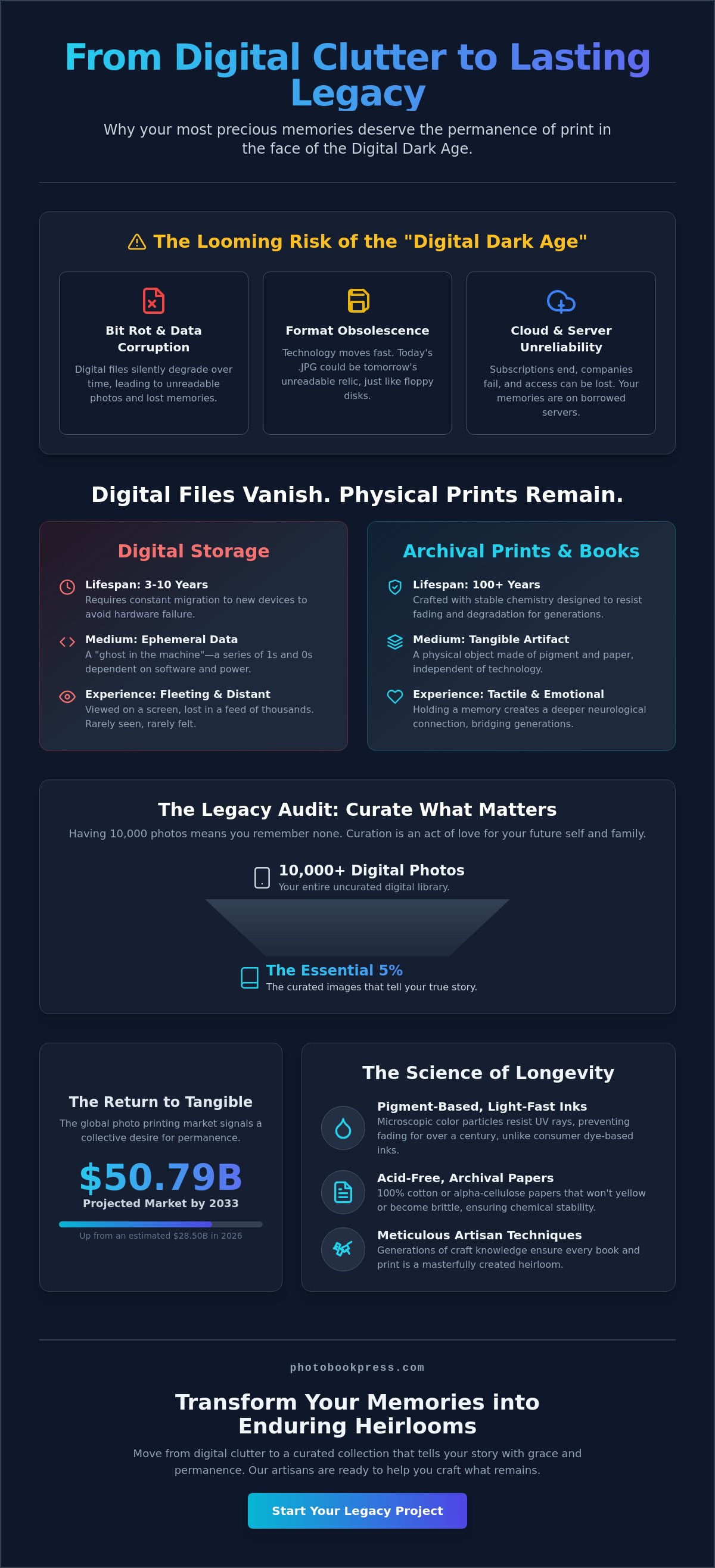
Preservation is an active choice, not a passive occurrence. To ensure your family's history isn't lost to the digital void, you must move from a state of digital hoarding to intentional curation. The first step is the Legacy Audit. If your smartphone currently holds 2,000 images from a single year, your goal is to identify the 100 that truly define that period. By applying this 5% rule, you filter out the repetitive snapshots and technical clutter, ensuring the (inurl:photo) remains a clear, powerful signal of your lived experience. This curated selection becomes the foundation for your physical archive.
Once you've selected your images, you must choose the appropriate medium for each story. Large-scale wall art is ideal for "hero" shots, those singular moments of profound impact. For complex narratives like a wedding or a multi-generational trip, a handcrafted book is the superior vessel. Professional-grade binding and paper are non-negotiable for longevity. While consumer-grade prints may use thin, acidic paper, an archival-quality press uses materials designed to withstand the passage of time. Proper storage is the final piece of the puzzle. Keep your physical archives in a climate-controlled environment, ideally between 65 and 70 degrees Fahrenheit with a humidity level of 30% to 40%, to prevent warping or mold. When these steps are followed, the (inurl:photo) remains a pristine artifact for decades.
Moving from a chaotic phone library to a refined collection requires a shift in perspective. Instead of looking for technical perfection, prioritize candid shots that capture a subject's genuine personality. These are the images that will carry the most emotional weight fifty years from now. For a deeper dive into this process, consult our resource on Photo Books: The Ultimate Guide to Creating a Lasting Heirloom in 2026. This guide provides the technical and aesthetic framework needed to transform a digital folder into a legacy document.
The standard for a professional legacy is often found in the portfolio book. These volumes offer a level of sophistication that signals the importance of the work within. You might also consider custom notebooks as a companion to your photo collections, allowing you to record the stories behind the images in your own hand. When choosing finishes, consider the environment where the book will be viewed. Luster finishes are often preferred for their ability to hide fingerprints while maintaining deep color saturation. To begin your journey toward a permanent archive, explore our collection of handcrafted legacy books and find the perfect home for your story.
The Maryland-based facility of PhotoBook Press serves as a sanctuary where technology meets tradition. Since 1985, we've dedicated ourselves to the belief that your memories are precious artifacts deserving the highest level of care. Our workshop utilizes state-of-the-art printing technology to achieve color precision that meets the most rigorous professional standards. Yet, the heart of our process stays rooted in the artisan's touch. Every book is subjected to manual quality checks and hand-finishing, ensuring that the (inurl:photo) remains a flawless representation of your history. We don't merely manufacture products; we create investments in legacy that stand the test of time.
We partner with both world-class professional photographers and dedicated hobbyists, treating every story with the same level of boutique exclusivity. Our materials are sourced for their longevity and tactile beauty. We offer genuine leather covers, exquisite European linens, and archival-quality papers that resist the yellowing effects of environmental exposure. This commitment to premium materials ensures that the physical (inurl:photo) remains as vibrant for future generations as it is today. By blending technical specs like lay-flat binding with an emotional focus on storytelling, we provide a unique home for your life's most significant chapters.
The "Press" philosophy is rooted in the heritage of fine-art publishing. We view every book as a work of high-end craftsmanship, emphasizing substance over fleeting trends. Our signature lay-flat binding is a point of pride, engineered for both aesthetic perfection and long-term durability. It allows for seamless panoramic storytelling, where images can span across two pages without being lost in a traditional gutter. This meticulous approach ensures that your narrative remains intact and accessible for decades. For those seeking a deeper understanding of our materials and design philosophy, we've detailed our standards in Professional Photo Books: The Ultimate Guide to Archival Quality & Design (2026).
There's a profound difference between a digital file hidden on a server and a handcrafted book resting on a library shelf. We invite you to move your most meaningful moments into the physical world. A custom-designed wedding album or a curated family chronicle provides a permanent archive that screens simply cannot match. It's a way to bridge the gap between your present and the future, creating a tangible link for those who will follow. By choosing substance and aesthetic perfection, you're ensuring that your story is told with the grace it deserves. Begin crafting your heirloom book at Photobook Press and discover the enduring power of the printed page.
Moving your history from a fragile cloud server to a tangible, museum-grade volume is a vital investment in your personal legacy. By prioritizing archival materials and intentional curation, you defend your memories against the risks of bit rot and technological obsolescence. While digital files are easily lost to the noise of the modern world, the physical (inurl:photo) remains the most reliable artifact for telling your story with clarity and grace. It's a transition from the fleeting nature of a screen to the enduring weight of a handcrafted heirloom.
Our Maryland-based facility has refined the art of bookmaking since 1985, blending high-end craftsmanship with a meticulous attention to detail that rivals Red Dot-level design standards. We treat every project as a unique work of art, utilizing binding and paper that meet the most rigorous museum standards for longevity. Design your archival-quality photo book today at Photobook Press to ensure your most cherished moments are preserved with the dignity they deserve. Your legacy is a gift; it's time to make it permanent.
Archival quality refers to materials that meet the rigorous ISO 9706 standards for permanence. This means the paper is acid-free and pH-neutral, preventing the yellowing or brittleness that plagues consumer-grade prints. When these papers are paired with pigment-based inks, the (inurl:photo) remains stable and vibrant for over 100 years. It's a technical guarantee that your investment in legacy won't degrade as the decades pass.
Layflat binding is the preferred choice for panoramic storytelling because it allows pages to open a full 180 degrees without a central gutter. This design ensures that no part of your image is lost in the fold of the book. It's an essential feature for wedding albums and landscape collections where the visual impact depends on a seamless, uninterrupted view across a full two-page spread.
A professional book crafted with archival materials is designed to last for a century or more. When kept in a stable environment, ideally around 68 degrees Fahrenheit with 40% humidity, the (inurl:photo) remains as crisp as the day it was printed. Unlike digital files that require constant migration, a physical book is a low-tech masterpiece that requires no maintenance to stay readable for your great-grandchildren.
Digital decay, often called bit rot, is the spontaneous corruption of data on hard drives and cloud servers over time. Printing prevents this by moving your imagery from a precarious digital state into a tangible, physical form. A printed artifact doesn't suffer from software obsolescence or hardware failure. It exists independently of the power grid, ensuring your history survives even if your digital accounts vanish.
Modern smartphone cameras, which typically capture at least 12 megapixels, provide more than enough resolution for high-end printing. The transformation into a professional-grade book happens through our artisan press, which uses color precision and paper weights that consumer apps can't match. We treat your mobile captures with the same meticulous care as a professional photographer's RAW files, elevating them into true heirlooms.
Both materials offer exceptional durability, though they appeal to different aesthetic preferences. Genuine leather is renowned for its supreme resilience and its ability to develop a beautiful patina over several decades. European linen provides a sophisticated, tactile texture that is equally resistant to wear. Both choices represent a commitment to quality that signals the importance of the stories contained within the volume.
A photo book features your images printed directly onto archival-quality paper using a high-end press, allowing for custom layouts and modern design. A traditional album usually involves mounting individual prints onto thick, adhesive pages. Books offer a more streamlined, elegant profile and greater creative freedom, making them the definitive choice for those who value a polished, gallery-style presentation of their life's work.
We recommend a curated selection of 50 to 150 images to maintain a powerful narrative arc. While it's tempting to include every shot, focusing on the top 5% of your library ensures that each page carries significant emotional weight. A well-edited book allows the most iconic moments to breathe, creating a more impactful experience for the reader than an overcrowded volume of repetitive snapshots.
