No Products in the Cart


Most digital prints are destined to fade within a decade, yet we often entrust our most significant milestones to mass-produced books that treat history like a disposable commodity. You understand that a true heirloom is more than just a collection of images; it's a physical vessel for your legacy. Finding the best quality photo album requires an eye for detail that goes beyond a pretty cover, focusing instead on the intersection of chemistry and craft.
It's a common fear that the vibrant colors of today will become the muted, brittle pages of tomorrow. You want a book that feels substantial in your hands and remains unchanged for generations. This guide clarifies the technical standards and artisan details that define museum-grade construction. We'll examine why ISO 9706 archival paper matters, how layflat binding preserves panoramic compositions, and what it takes to achieve gallery-level color accuracy in every print. Discover how to transition from simple digital storage to a tactile, luxurious experience that honors your most precious memories.
An heirloom photo album is not merely a product. It's a deliberate marriage of archival grade materials and uncompromising structural integrity. While a digital file can be lost to a corrupted drive or an expired cloud subscription, a physical book remains a permanent, tangible record. To find the best quality photo album, you must look past the aesthetic cover and examine the components that ensure a 100-year lifespan. This rigorous standard of preservation ensures that the visual clarity and structural stability of the book remain intact for your descendants.
There is a profound difference between mass-produced press books and artisan-crafted albums. High-volume books are often made with thinner papers and standard glues that eventually fail. Artisan albums, however, treat every page as a work of art. This distinction introduces the concept of tactile luxury. It is found in the substantial weight of the paper, the subtle scent of the binding, and the smooth, effortless transition as you turn each page. These sensory details define a true legacy piece.
To better understand how different production methods impact the final product, watch this detailed comparison of industry standards:
Longevity begins with chemistry. Acid-free materials are non-negotiable because they prevent the self-destructive chemical reactions that cause paper to yellow and become brittle. Similarly, pH-neutral adhesives are essential. They ensure that the binding doesn't discolor or damage the delicate photographic layers of your prints over time. Adhering to professional archival preservation standards is what separates a temporary keepsake from a permanent artifact. Archival quality is the resistance to chemical and physical deterioration over generations.
High-volume factories prioritize speed and cost-efficiency. This often means sacrificing the minute details that ensure long-term durability. In contrast, boutique craftsmanship relies on meticulous human inspection at every stage of the binding process. At our Maryland-based production facility, we maintain a heritage of excellence that dates back to 1985. This small-batch approach allows for a level of precision that automated lines simply cannot replicate. Every stitch, fold, and corner is reviewed by an artisan. This ensures the book survives the rigors of time and the gentle hands of those who will read it decades from now.
The visual soul of the best quality photo album resides within the chemical composition of its pages. While a cover provides the first impression, the true test of an heirloom lies in how the paper and ink interact over decades. This synergy is governed by technical specifications that ensure your images don't just look beautiful today, but retain their depth for a century. High-end production focuses on the intersection of material science and aesthetic grace. It ensures every shadow and highlight is preserved with absolute fidelity. Longevity is not an accident; it is a calculation.
Standard book paper, often found in high-volume press books, typically lacks the rigidity required for frequent handling. In contrast, thick-leaf pages utilize a significantly higher Grams per Square Meter (GSM). This weight provides a substantial, rigid feel that prevents warping and resists the oils from fingertips. For those seeking a sophisticated aesthetic, high-GSM matte paper offers a soft, non-reflective surface that invites touch without leaving prints. Lustre finishes provide a gentle sheen that bridges the gap between the vibrancy of glossy and the elegance of matte. You can explore a deeper analysis of these materials in The Ultimate Guide to Photo Printing Services.
Dye-based inks are common in consumer-grade printers because they are inexpensive and produce bright colors quickly. However, they are prone to rapid fading when exposed to light or air. The best quality photo album utilizes pigment-based inks, which consist of tiny solid particles suspended in a liquid carrier. These particles sit on top of the paper fibers rather than soaking in, creating a more stable and lightfast image. Adhering to archival paper and ink standards, such as the ISO 9706 certification for acid-free paper, is vital to prevent the chemical breakdown that leads to color shifting.
Modern printing technology has evolved to capture the finest gradients and deepest shadows. This is essential for professional wedding photography where detail in white dresses and black tuxedos is paramount. Color calibration ensures that the digital image on your screen matches the physical print with surgical precision. This level of accuracy prevents the fading or muddy tones common in budget books. By investing in these technical standards, you ensure your artisan photo album remains a vivid window into the past. Each page becomes a testament to the artisan's skill and your own history.
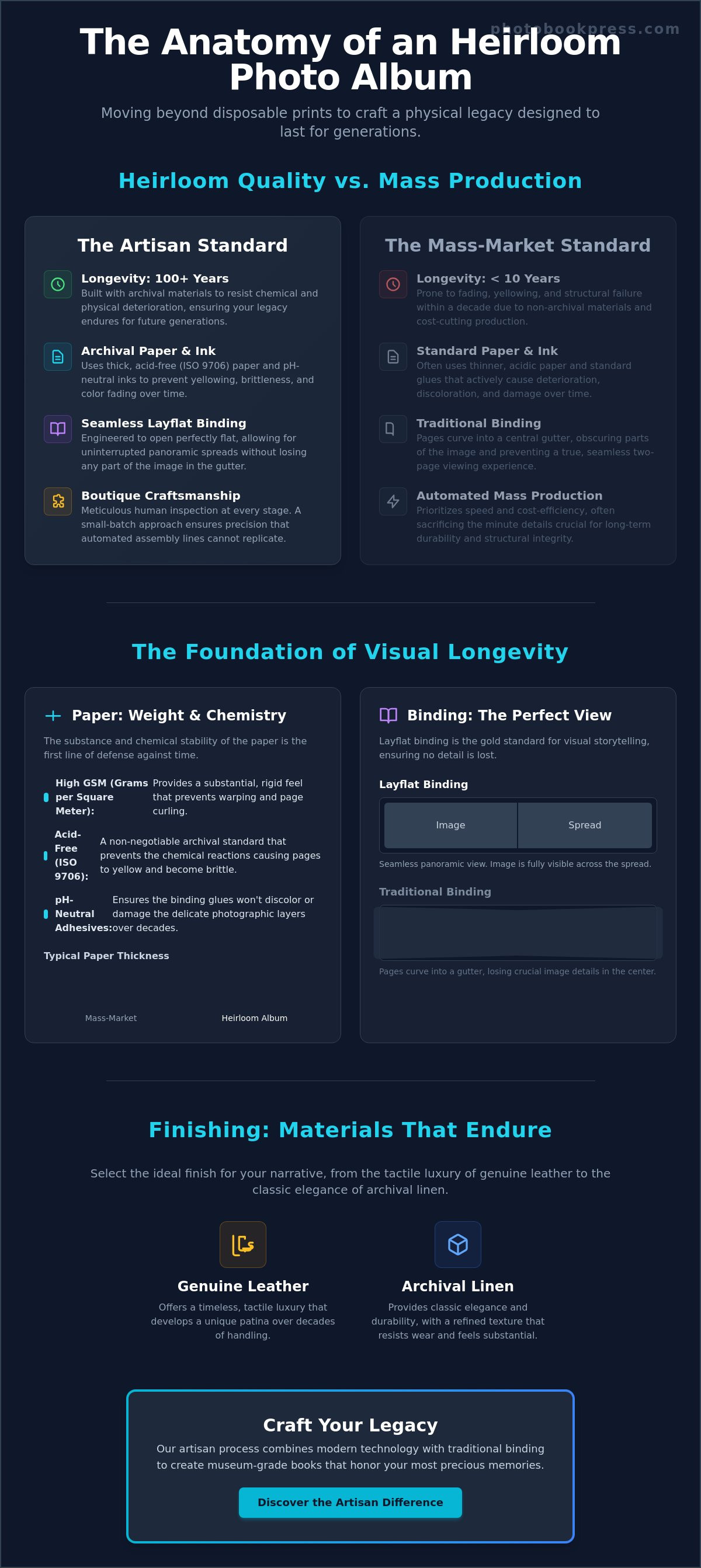
The architecture of a book is as vital as the images it contains. When you open the best quality photo album, the transition from cover to content should feel effortless. Traditional library binding has served the world of literature for centuries, providing a sturdy structure for thinner volumes and softcover books. However, for visual narratives, traditional methods often create a "gutter," which is the deep curve where the pages meet the spine. This curve can swallow significant portions of a photograph, disrupting the flow of a landscape or a group portrait. To truly honor a panoramic composition, the engineering of the book must evolve.
Layflat binding addresses this limitation through specialized artisan engineering. By allowing the book to rest completely flat at a 180-degree angle, it enables seamless spreads that span two pages without interruption. This is the gold standard for panoramic photography and wedding albums. Our Maryland facility has refined these manual binding techniques since 1985, ensuring that the physical act of viewing your memories is as flawless as the memories themselves. This commitment to heritage means every book is built to withstand the test of time and repeated handling.
A layflat book is constructed differently than a standard press book. Instead of individual sheets tucked into a spine, pages are often bonded back-to-back or printed on a single continuous sheet. This creates a rigid, durable leaf that holds its shape without putting stress on the binding. The visual impact is immediate. A continuous panoramic image can breathe across the entire width of the open book, free from the distortion of a central fold. For a technical deep dive into these construction methods, consult The Art of the Layflat Photo Book.
The longevity of a book often depends on what you cannot see. High-volume production lines frequently use cheap, brittle glues that lose their grip as they age, leading to detached pages and cracked spines. In contrast, professional-grade albums utilize flexible, archival-quality adhesives and manual reinforcement. A high-quality spine is characterized by its ability to remain flexible without showing signs of fatigue or cracking over decades of use. This structural integrity is a hallmark of the best quality photo album, transforming a simple collection of prints into a durable vessel for your legacy. Every joint and hinge is inspected by hand to ensure it meets our rigorous standards for heirloom craftsmanship.
The exterior of the best quality photo album serves as both a guardian and a preface. It protects the delicate chemistry of the archival pages while setting the emotional tone for the narrative within. Choosing the right material requires balancing the specific occasion with the intended tactile experience. Whether it is the classic weight of a wedding volume or the sleek profile of a professional portfolio, the finish must be as durable as the memories it holds. A true heirloom is defined by its ability to age gracefully, maintaining its structural beauty through decades of handling.
Genuine leather remains the pinnacle of luxury for high-end books. Unlike synthetic alternatives that often peel or crack after a few years, authentic hides are resilient and develop a unique character over time. For those who prefer a more contemporary or organic aesthetic, high-quality linen covers offer a sophisticated, textile-focused feel. Linen is exceptionally durable and resists the fraying common in lower-grade fabrics. For a comprehensive analysis of how these materials impact the longevity of your project, you can review our insights on Professional Photo Books.
Personalization transforms a premium product into a singular, historical artifact. Debossing is a particularly refined technique that creates a physical, three-dimensional impression in the cover material. This adds a tactile depth that invites the touch. Foil stamping, available in metallic tones like gold, silver, or copper, provides a sharp, elegant contrast for titles and significant dates. These artisan details allow the book to reflect the specific atmosphere of an event, from the grand formality of a wedding to the quiet intimacy of a family heritage project.
Beyond the primary materials, the best quality photo album should incorporate protective finishes. These invisible coatings resist common hazards like fingerprints and ambient moisture, ensuring the cover remains pristine even with frequent viewing. Custom dust jackets can also be utilized to provide an additional layer of defense while offering a canvas for full-bleed photographic imagery. Every choice, from the grain of the leather to the depth of the foil stamp, contributes to a book that is built to endure. You can begin crafting your own legacy by exploring our selection of leather photobooks and bespoke albums today.
Excellence isn't achieved by chance. It is the result of a refined process where modern precision meets a deep respect for traditional methods. Since our founding in 1985, we've dedicated ourselves to the medium of print with the quiet confidence of a master craftsman. We understand that the best quality photo album isn't just a container for images. It's a testament to a specific moment in time. Our Maryland-based facility serves as the heart of this operation. Here, our artisans combine high-resolution digital printing with the slow, deliberate work of manual binding. This ensures every book that leaves our doors is a masterpiece of durability and design, built to withstand the passage of years.
Our journey began over four decades ago. Since then, we've evolved alongside the technology of our industry without losing sight of our artisan roots. This long-standing heritage has earned us a reputation for perfection among professional photographers across the nation. These experts demand a level of color accuracy and structural integrity that high-volume factories simply cannot provide. By maintaining our production within our specialized Maryland facility, we ensure that every project receives a level of human inspection that automated lines lack. We don't just ship products; we deliver a legacy of craftsmanship to every corner of the country, treating each order as a precious artifact.
We believe that every narrative deserves the highest level of care. Whether you're a professional curator creating a gallery-ready portfolio or a hobbyist preserving the quiet joy of a family holiday, our standard remains the same. We treat every book as a unique work of art. In an era defined by digital clutter, there is a profound power in the physical. A physical book invites you to slow down and experience your memories through touch and sight. It's a tactile journey that digital screens cannot replicate.
It's time to move your most precious moments from a glowing screen to a tangible heirloom that will endure for generations. Our commitment to quality ensures that your history is protected by the best quality photo album standards available today. Crafting a legacy requires a partner who values your memories as much as you do. Let us help you transform your digital archives into a museum-grade physical book. You can design your custom heirloom album with Photobook Press and experience the artisan difference for yourself. Every page we bind is a promise of permanence for your most significant life events.
Selecting a vessel for your most significant memories is a profound act of preservation. Throughout this guide, we've identified how a true heirloom emerges from the intersection of material science and manual artistry. Whether it's the chemical stability of pH-neutral inks or the structural resilience of a hand-finished spine, these technical standards ensure your narrative remains vivid for generations. True quality is found in the weight of the paper and the precision of the color, transforming a simple collection of images into a museum-grade artifact that invites the touch.
Since 1985, our Maryland-based artisan facility has been the heart of this dedicated craftsmanship. We provide professional-grade archival materials and a range of premium layflat and leather-bound options to suit every milestone. Your history deserves more than the temporary safety of a digital drive. It's time to honor your journey with a book that reflects the weight of your experiences. We invite you to create your best quality photo album with Photobook Press and begin the journey of crafting a legacy that will be cherished long after the digital files have faded.
Archival quality is defined by the use of acid-free, pH-neutral materials that prevent chemical deterioration over time. To be considered museum-grade, an album must meet ISO 9706 standards for paper permanence. This ensures that the pages don't yellow or become brittle as they age. When these materials are paired with pigment-based inks, the result is a book designed to remain unchanged for over a century, protecting your history from the elements.
A layflat book utilizes a specialized binding technique that allows the pages to rest completely flat at a 180-degree angle. Standard books often have a "gutter" or a curve at the spine that obscures parts of the image. Layflat construction is essential for the best quality photo album because it enables seamless panoramic spreads across two pages without any visual interruption. This format provides a more immersive and professional viewing experience.
We provide specialized support and volume-based pricing structures for professional photographers who require consistent, high-end production for their clients. Our artisan facility understands the rigorous standards needed for wedding and portfolio work. Professionals can access dedicated resources to ensure their artistic vision is translated perfectly into print. You should contact our support team to discuss the specific details of our professional partnership programs and tailored ordering options for your business.
Genuine leather is widely considered the premier choice for wedding albums due to its exceptional durability and timeless aesthetic. It develops a unique character over time and resists the wear that often affects synthetic materials. High-quality linen is an excellent alternative for those seeking a more contemporary, textile-focused feel. Both materials provide a sophisticated exterior that protects the archival pages while reflecting the significance of the occasion with a tactile, luxurious touch.
High-quality albums built to archival standards are designed to last for 100 years or more without significant fading. This longevity is achieved through the use of pigment-based inks and acid-free paper, which are far more stable than consumer-grade dyes. While environmental factors like direct sunlight and extreme humidity play a role, museum-grade construction provides the highest level of protection against the natural aging process. This ensures your images remain as vivid as the day they were printed.
Panoramic photos are perfectly suited for layflat albums because the binding allows for a single, continuous image to span two pages. Since there is no gutter to swallow the center of the photo, you can showcase wide landscapes or group shots in full detail. This format maximizes the visual impact of your photography, creating a cinematic flow. It transforms your book into a gallery-level presentation that highlights the technical precision of our printing process.
Every Photobook Press album is meticulously crafted in our Maryland-based artisan facility. We've maintained our production heritage at this location since 1985, ensuring that every book benefits from decades of expertise in the print industry. This domestic manufacturing allows for strict quality control and manual inspection of every stitch and fold. It ensures that your memories are treated with the highest level of care by local master artisans who are passionate about the craft of binding.
Matte paper provides a soft, non-reflective surface that eliminates glare and resists fingerprints, making it a sophisticated choice for artistic portfolios. Lustre paper offers a gentle sheen and deeper color saturation, bridging the gap between matte and glossy finishes. When creating the best quality photo album, your choice depends on the desired mood of the project. Matte offers an understated elegance, while lustre adds a subtle vibrancy that makes colors appear more punchy and dynamic.
