No Products in the Cart


The most compelling travel books aren't defined by the thousands of moments you captured, but by the few you chose to keep. It's a common struggle to feel buried under a digital mountain of images, fearing that leaving one out might dim the memory of the journey. However, the secret to curating photos for a travel book lies in the power of subtraction. By editing for impact rather than archiving for storage, you elevate your personal history into a cohesive visual narrative.
You probably find yourself hesitating over which shots deserve a place on the page or worrying if your favorite smartphone snap meets the technical rigor of a premium print. We understand that these memories are precious artifacts. This guide provides the expert framework needed to master photo curation, ensuring you can transform a chaotic folder into a gallery-quality heirloom volume. You'll gain the confidence to select images that tell a beautiful story while meeting the meticulous standards of museum-grade production. We'll walk through everything from narrative pacing to the technical specifications of premium 300 GSM paper, giving you the tools to create a physical book that radiates timeless artistry.
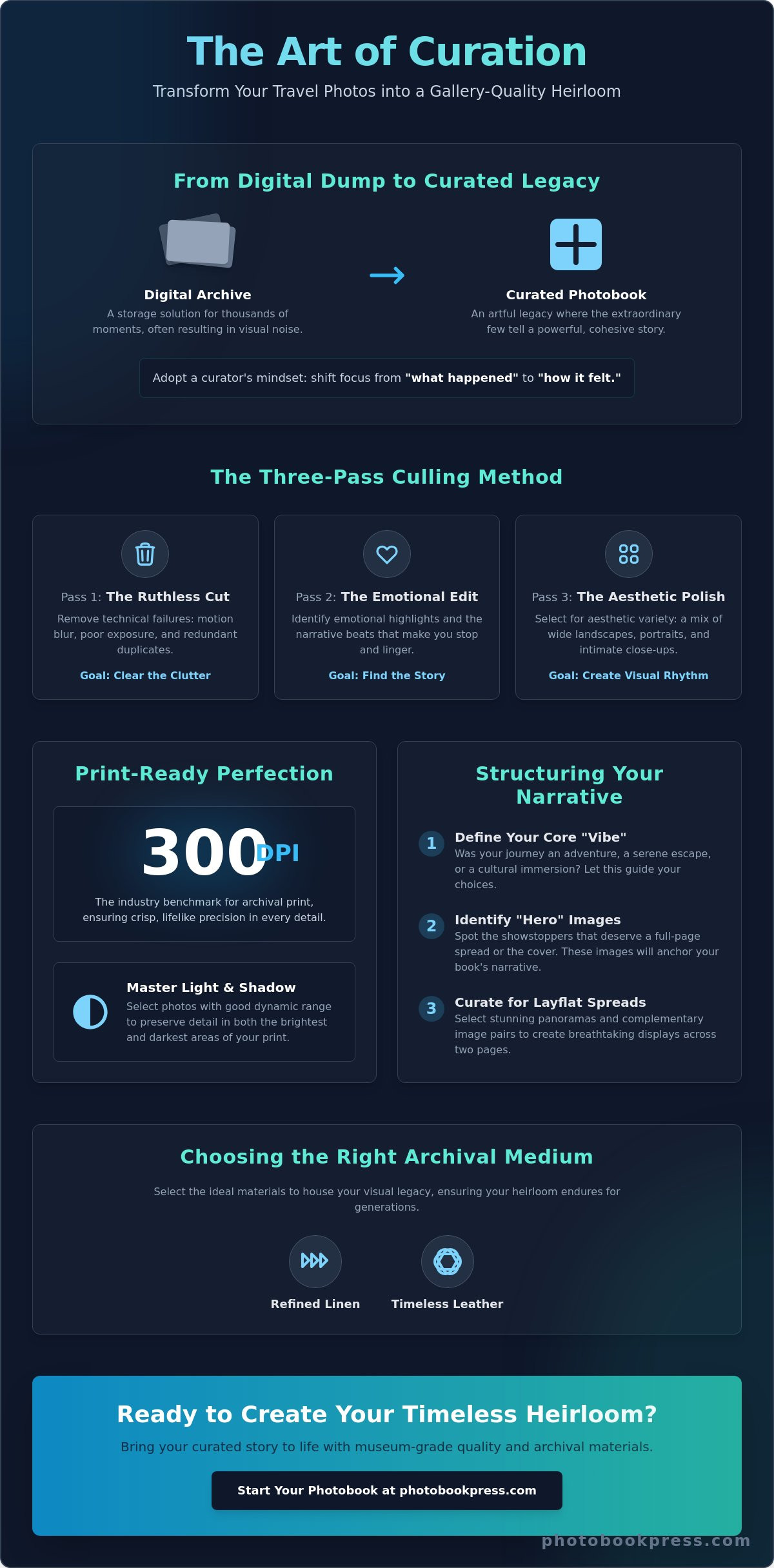
A digital archive is merely a storage solution, but a curated physical book is a legacy. While your smartphone or cloud storage might hold thousands of snapshots from a single trip, the process of curating photos for a travel book requires a fundamental shift in perspective. You aren't simply organizing files; you're distilling an experience into its most potent form. A smaller, tighter selection allows each photograph the breathing room it needs to speak, ensuring the viewer isn't fatigued by visual noise or repetitive sequences. When every image earns its place, the resulting volume becomes a gallery-quality artifact rather than a cluttered diary.
Adopting a curator’s mindset involves shifting your focus from "what happened" to "how it felt." This professional approach involves looking for sensory details that evoke memory, such as the texture of a weathered stone wall or the specific play of light on a morning espresso. It's a method that aligns with community-driven photo curation standards where the emphasis remains on narrative value and visual excellence. By editing for impact, you transform a sequence of events into a cohesive story that resonates on an emotional level.
To better understand how professionals approach this selection process, watch this helpful video:
Overcoming the fear of omission is the greatest hurdle in the initial culling phase. It's natural to feel that leaving a photo out is equivalent to losing the memory itself. However, the opposite is true. By removing the "good" photos, you allow the "extraordinary" ones to shine. Remember that your digital archive still exists as a comprehensive record; your travel book is the curated exhibition of that record. This discipline is what separates a professional-grade heirloom from a standard photo album.
Before you begin selecting files, define the core "vibe" of your journey. Was it a high-octane adventure, a period of quiet serenity, or a deep dive into a specific culture? Identifying this objective helps you spot the "hero" images that will anchor your travel book. These are the showstoppers that deserve full-page spreads or cover placement. To maintain focus, set a target page count early. This creates a healthy constraint that forces you to choose only the images that truly serve the narrative you want to tell.
Curation is a process of refinement that works best when handled in layers. Don't try to make final decisions in a single sitting. Instead, use a structured approach:
Technical excellence serves as the silent foundation of every great heirloom. While a digital image might appear vibrant on a backlit smartphone screen, the transition to physical ink on paper requires a more disciplined set of standards. When you begin curating photos for a travel book, you must look past the emotional pull of the moment and evaluate the raw data of the file itself. This professional scrutiny ensures that your memories are preserved with the clarity they deserve.
The industry benchmark for archival print is 300 DPI (dots per inch). This resolution ensures that the fine details of a Parisian cobblestone street or the delicate mist of a rainforest are rendered with crisp, lifelike precision. Beyond mere resolution, the way a photograph handles light and shadow determines its success in print. Professional-grade papers, often reaching weights of 300 GSM, absorb ink in a way that can deepen shadows. You'll want to select images where the shadow detail is preserved rather than "clipped," ensuring the final print doesn't lose its depth or texture.
Success in high-end production starts with the original file. Always source the highest-resolution version available, preferably the RAW file or an uncompressed JPEG. If you plan on featuring a sweeping landscape across a full spread, the pixel dimensions must be substantial. For example, a 10-inch print area requires at least 3000 pixels to maintain that 300 DPI quality. Over-editing is a common pitfall; pushing contrast too far can introduce digital noise that becomes painfully obvious on a premium photo book page. Aim for a balanced exposure that respects the natural highlights and textures of the original scene.
Designing for a physical volume requires a different spatial awareness than designing for a screen. When curating photos for a travel book, look for "breathable" compositions. Images with negative space allow for minimalist layouts or the addition of thoughtful typography without crowding the visual. Consider the "gutter," which is the center fold of the book. Ensure your primary focal points, such as a subject's face or a central architectural feature, aren't positioned where they'll be lost in the binding. Candid shots that capture movement or genuine emotion often provide the best narrative "glue" between your major landscape highlights. Choosing a premium leather photobook ensures these technical considerations are supported by a medium that lasts for generations.
Structuring a physical volume is an act of architecture. When curating photos for a travel book, you aren't bound by the rigid timeline of a flight itinerary. Instead, you're building a journey for the reader's eye. While most guides suggest a simple start-to-finish layout, a sophisticated artisan considers the emotional arc of the experience. The structure you choose serves as the heartbeat of the book, dictating how a viewer moves through your memories.
The chronological approach remains a classic for a reason. It's particularly effective for road trips or transformative journeys where the sequence of events is vital to the story. You witness the landscape shift from the lush coast to the arid desert, mirroring your own internal transition. However, don't feel restricted by the clock. A thematic approach allows you to group images by culture, color, or subject matter. Imagine a section dedicated entirely to the azure hues of the Mediterranean or the intricate patterns of Moroccan textiles. This method elevates the book from a diary to a curated study of a place.
For those who value pure visual impact, the aesthetic approach prioritizes artistic flow. Here, images are paired based on their formal qualities; a sweeping landscape on the left page might find its visual echo in a macro shot of a leaf on the right. This creates a rhythmic, gallery-like experience that transcends time and geography. By focusing on these visual harmonies, you ensure that curating photos for a travel book becomes an exercise in fine art.
Your first spread is an invitation. It sets the tone, whispering the promise of what's to come. Choose a "hero" image that encapsulates the soul of the trip; perhaps a quiet sunrise over a sleeping city. Conversely, the final spread should offer a sense of closure. It's the "final word" of your visual essay. Using title pages between different regions or chapters provides a necessary pause, signaling a shift in the narrative and giving the reader a moment to reflect before the next discovery.
A book that is entirely composed of high-energy, wide-angle landscapes can quickly become exhausting. Effective pacing requires contrast. Alternate between these grand views and intimate detail shots to create a dynamic rhythm. This variety keeps the reader engaged, moving from the macro to the micro.
Creating visual echoes by repeating certain motifs, such as a specific architectural arch or a recurring color, helps weave the entire volume into a singular, cohesive work of art. This deliberate tempo reflects the careful process of creation itself, suggesting that excellence requires both time and attention to detail.
The true artisan understands that the physical architecture of a book dictates the visual strategy. When curating photos for a travel book, the choice of binding isn't merely a technicality; it's a creative decision that transforms how a story is told. Layflat photo books represent the pinnacle of this craft, offering a seamless, uninterrupted canvas that allows your most expansive memories to breathe across two full pages. Unlike traditional bindings where the center of an image disappears into a gutter, the layflat spread invites the viewer to step into the scene without distraction.
Identifying "panoramic candidates" is a vital step in your curation. These are the images that possess enough scale to command the entire spread; a sweeping view of the Amalfi Coast or a bustling Tokyo intersection at dusk. The impact of these hero shots depends on your use of space. While full-bleed imagery offers a cinematic, immersive experience, bordered layouts provide a refined, gallery-like feel that directs the eye with precision. You must avoid the "clutter trap" by resisting the urge to crowd a premium spread with multiple small snapshots. Instead, let one or two exceptional images define the moment. For those ready to begin their project, you can create your own layflat photobook to experience this level of visual immersion firsthand.
The lack of a gutter allows for bold compositional choices. Position your horizons or primary subjects to take full advantage of the flat surface, ensuring that the most critical elements of the photo are showcased prominently. Use the "rule of thirds" to guide the eye across the center fold, creating a sense of movement that leads the reader from one page to the next. When adding secondary images to a spread, select those that complement the hero shot in tone or subject matter rather than competing for attention.
Curating photos for a travel book also involves a keen eye for color harmony. Grouping photos by a dominant palette; perhaps the ochre and terracotta of a Tuscan village; creates a sophisticated "gallery" feel on every spread. This visual consistency is further enhanced by your choice of paper finish. A matte finish offers a muted, artistic elegance, while a lustre finish provides a subtle sheen that makes colors pop. Don't forget to integrate texture shots. Close-ups of weathered fabric, ancient stone, or fine sand enhance the sensory experience, making the distant journey feel tactile and present. This attention to detail ensures your book is a true investment in legacy.
The curation process reaches its culmination when you transition from the digital screen to the tactile reality of a physical object. Every decision you've made while curating photos for a travel book deserves a medium that honors the weight of those memories. A true heirloom is defined by its longevity, and this is where archival standards become paramount. Selecting the right materials ensures that the visual story you've built doesn't just look beautiful today but remains vibrant for generations. It's the difference between a fleeting glance and a lasting legacy.
True professional photo books are built on the foundation of acid-free, pH-neutral papers that meet the ISO 9706 international standard. These museum-grade materials, often featuring 100% cotton rag, prevent the yellowing and chemical decomposition often seen in consumer-grade products. When your curated selection is paired with traditional press standards and pigment-based inks, the result is a work of art with a lifespan measured in centuries. Before you commit to the final print, conduct a thorough review. Check for narrative gaps or subtle inconsistencies in color flow that might have been missed during the design phase. This final scrutiny ensures the rhythm you've established remains unbroken.
The cover material you select acts as the first sensory touchpoint of your journey. Leather photobooks offer a rugged, timeless quality that suits expeditions through wild landscapes or once-in-a-lifetime transformative trips. The natural grain of the hide reflects a sense of permanence and heritage. Conversely, linen or soft-touch covers provide a modern, minimalist aesthetic perfect for city travelogues or design-focused escapes. Beyond the cover, consider the paper weight. A substantial 300 GSM paper provides a tactile resistance that makes turning each page a deliberate, sensory act. It reinforces the idea that this book isn't a casual browse, but a significant investment in your personal history.
Handcrafted binding is the hallmark of a definitive heirloom. Unlike mass-produced alternatives that use cheap adhesives, professional construction utilizes techniques designed for long-term durability. This ensures your book opens perfectly and maintains its structural integrity over time. There's a profound difference between a consumer-grade album and an archival-grade production; one is a temporary record, while the other is a legacy. You've spent hours curating photos for a travel book with meticulous care. Entrusting that work to a master artisan is the final step in honoring your creative vision. Ready to preserve your journey? Start your custom travel book today.
Transforming travel memories into a physical heirloom is an act of preservation that transcends simple photography. By moving beyond the digital dump and embracing a curator’s mindset, you've learned to select images that resonate with sensory detail and narrative power. Whether you chose a thematic or chronological architecture, your journey now possesses a visual rhythm that invites deep reflection. Mastering the art of curating photos for a travel book ensures that every spread, from expansive layflat panoramas to intimate detail shots, serves a greater aesthetic purpose.
Your memories deserve a home built on decades of traditional craftsmanship. Since 1985, Photobook Press has been handcrafted in Maryland, utilizing state-of-the-art archival printing technology to serve those who value substance and aesthetic perfection. It's the same precision trusted by professional photographers for their high-end portfolios. We invite you to design your custom travel book with Photobook Press and witness your story come to life on museum-grade paper. Your journey was extraordinary; let's ensure the volume that holds it is equally timeless.
Aim for a selection of 50 to 100 images to ensure a powerful narrative flow without overwhelming the viewer. While it's tempting to include every moment, curating photos for a travel book requires a disciplined focus on quality over quantity. This range allows for a mix of grand landscapes and intimate details while maintaining the "breathable" space necessary for a gallery-quality heirloom. A tighter selection always results in a more sophisticated and emotionally resonant volume.
A resolution of 300 DPI (dots per inch) is the definitive standard for professional-grade printing. This ensures that every fine detail, from architectural textures to subtle gradients in a sunset, is rendered with lifelike precision. To achieve this, your digital files should have pixel dimensions that match your intended print size. For a 10-inch spread, you'll need at least 3000 pixels. High-resolution original files are essential to avoid the pixelation or blur common in lower-quality productions.
The choice between a chronological or thematic structure depends entirely on the nature of your journey. A chronological approach is ideal for road trips or transformative expeditions where the sequence of events defines the story. Conversely, a thematic organization allows you to group images by color, culture, or specific subject matter, such as Mediterranean architecture or street markets. This latter method often feels more like a curated art exhibition, providing a deeper study of a destination’s soul.
Select a cover material that mirrors the emotional tone of your travels. Leather photobooks provide a rugged, timeless durability that is perfect for once-in-a-lifetime adventures or heritage-focused journeys. For modern, minimalist travelogues or design-centric escapes, linen or soft-touch covers offer a refined and tactile elegance. Consider the physical environment where the book will be displayed; a leather binding gains character over time, making it an excellent choice for a lasting family legacy.
Smartphone photos are perfectly suitable for high-end volumes provided they are captured in high resolution and good lighting. Modern devices often produce files capable of meeting the 300 DPI requirement, especially for medium-sized prints or detail shots. When selecting these images, prioritize those with sharp focus and minimal digital noise. Avoid using photos that have been heavily compressed by social media or messaging apps, as these lack the data integrity required for premium archival printing.
Layflat books provide a seamless, uninterrupted canvas that is ideal for expansive landscapes and panoramic views. Unlike traditional bindings where the center of the image is lost in the "gutter," a layflat spread allows your photos to span two full pages with perfect visibility. This structural advantage is essential for travel photography, where the scale of a mountain range or a city skyline deserves a grand, cinematic presentation without any visual obstruction.
Meaningful captions should evoke the sensory atmosphere of a moment rather than merely recording facts. Instead of listing dates or coordinates, describe the scent of the local market, the temperature of the morning air, or a specific conversation that defined the day. This approach adds a layer of personal history that complements the visual narrative. Keep your text minimalist and elegant, allowing the photography to remain the primary focus while the words provide emotional context.
The most frequent error when curating photos for a travel book is the "clutter trap," where too many images are forced onto a single spread. This dilutes the impact of your best work and fatigues the reader. Other common mistakes include ignoring resolution requirements and failing to establish a consistent visual rhythm. By avoiding these pitfalls and focusing on a disciplined, aesthetic selection, you ensure your final book feels like a professional work of art rather than a simple album.
