No Products in the Cart


What if the most profound piece of art in your home wasn't purchased from a prestigious gallery, but captured through your own lens? You have likely felt the weight of a moment so significant it deserves more than a digital screen, yet the prospect of scaling that memory can feel daunting. Many enthusiasts hesitate because they are unsure how to display large photo prints without overwhelming a room or choosing a material that lacks longevity. It's natural to feel a sense of uncertainty when balancing the emotional value of a photograph with the technical demands of interior design and wall preservation.
This guide transforms that hesitation into the quiet confidence of a master artisan. You will discover how to select archival materials like metal, acrylic, or canvas to honor your legacy, while learning the professional hanging and lighting techniques used by curators. We will walk through the nuances of choosing the perfect dimensions for your specific space and ensuring every installation feels like a deliberate, sophisticated masterpiece. By the end, you'll have the knowledge to turn your walls into a curated narrative that treats your most cherished experiences with the respect they deserve.
Scale possesses a unique gravity. While a collection of small frames invites a viewer to lean in and inspect details, a single, expansive print demands that the viewer pause and absorb the atmosphere of the entire scene. We define "large" as moving beyond the standard desk-sized 8x10 into the territory of 24x36 inches and above. At this size, the image ceases to be a mere record of an event; it becomes an architectural element. Understanding the photographic printing process is essential here. As size increases, the technical precision of the output must rise to meet the viewer's gaze. This is the threshold where photography truly becomes fine art.
As you contemplate how to display large photo prints, think of them as the emotional anchor of the room. A cluttered gallery wall can often feel energetic or even chaotic, but a solitary, large-scale piece provides a sense of stillness and focus. It tells a singular, powerful story without the distraction of competing narratives. This deliberate choice reflects a curator's eye, favoring quality and impact over volume. It's about the quiet confidence of a single, perfect statement that honors your most significant memories.
To better understand this concept of presence and scale, watch this helpful video:
Assessing space is a delicate balancing act. A print that is too small for a vast wall will "disappear," losing its voice in the void. Conversely, a piece that crowds the edges of a narrow alcove can "suffocate" the room, making it feel smaller than it is. Large prints thrive in minimalist environments where they are allowed to breathe. Entryways and living rooms are ideal for these statement pieces. They greet guests with a sense of legacy and personal history, setting a sophisticated tone for the rest of the home. You aren't just decorating; you're defining the atmosphere of your sanctuary.
Size fundamentally alters our relationship with an image. A panoramic landscape at 40 inches wide doesn't just show a place; it transports you there. Life-sized portraits capture the subtle textures of a smile or the depth of a gaze in a way that feels tangible. This is the moment a "snapshot" matures into an "heirloom." When deciding how to display large photo prints, match the mood of the imagery to the room's function. A serene, expansive coastline belongs in a master suite to encourage rest, while a vibrant, large-scale candid from a celebration can energize a dining space. The scale dictates the volume of the memory's voice.
The choice of substrate is where your vision takes its physical form. Each material speaks a different language. While a canvas print offers a soft, painterly texture that diffuses light, a metal print provides a high-contrast brilliance that feels distinctly contemporary. When considering how to display large photo prints, the technical requirements of the image often dictate the medium. For instance, a high-resolution file with intricate details thrives on the smooth surface of metal or acrylic. A softer, more emotive portrait might find its home on the organic weave of canvas.
Technical precision is paramount at this scale. For a 24x36 print or larger, your file should ideally maintain a resolution of at least 150 to 300 DPI. Lower resolutions can lead to visible pixelation. This detracts from the gallery-quality experience. If you are working with a cherished but lower-resolution image, the textured surface of a canvas print is more forgiving. The fabric's natural grain can mask slight softness in the file. Conversely, the clarity of acrylic demands a pristine, high-megapixel source to achieve that coveted 3D-like depth.
Canvas remains a classic for a reason. It is inherently glare-free. This makes it the superior choice for rooms with abundant natural light or multiple windows. A "Gallery Wrap," where the image extends around the wooden stretcher bars, provides a clean, frameless look that blends into minimalist decor. In contrast, metal prints utilize a dye-sublimation process where the ink is infused directly into the aluminum. This results in unmatched durability and moisture resistance. If you're looking for archival wall art options that withstand the test of time in varied climates, metal is a formidable choice.
Acrylic prints represent the pinnacle of modern display. By mounting a high-quality print behind a thick layer of polished acrylic, light is trapped and reflected internally. This creates a luminous effect that appears to glow from within. For those who prefer a more traditional boundary, framed prints offer a structured elegance. The frame acts as a transition between the art and the architecture of the room. Just as you might curate your most intimate memories in professional photo books, choosing archival-grade frames and acid-free mats ensures your large-scale prints remain vibrant for decades. This investment in quality materials is what separates a temporary decoration from a lasting legacy.
The physical border of an image defines its relationship with the surrounding room. While the medium provides the soul of the piece, the presentation style, whether frameless and modern or framed and traditional, acts as its voice. When mastering how to display large photo prints, you must decide if the art should stand as an independent object or integrate into the home's architectural lines. This choice is not merely about style. It is about the structural integrity and long-term preservation of your most significant memories.
A floater frame serves as the perfect hybrid for those who appreciate the texture of canvas or the sleekness of metal. These frames are designed so the art appears to hover within the border without touching the edges. This creates a sophisticated shadow gap that adds depth while ensuring the entire image remains visible. Unlike traditional frames that overlap the print's perimeter, a floater frame honors the full composition of your photograph. It provides a finished, professional look that anchors the piece to the wall with quiet authority.
For acrylic and metal prints, a frameless "floating" mount is often the pinnacle of minimalist design. This technique uses a hidden cleat or inset frame attached to the back of the print. When hung, the art sits an inch or two away from the wall, creating a natural shadow that makes the image appear to defy gravity. This is particularly effective for edge-to-edge panoramic shots where a frame might feel restrictive. Large-scale mounts require substantial structural support to prevent warping over time. A professional-grade cleat system ensures the weight is distributed evenly, maintaining a perfectly level display that feels both secure and ethereal.
Traditional framing remains the definitive choice for large-format paper prints. To give these pieces the breathing room they require, we often employ the "Museum Mount" technique. This involves using an oversized, acid-free mat that creates a neutral buffer between the art and the frame. The mat isn't just an aesthetic choice; it prevents the print from touching the glazing, which is vital for long-term preservation. When selecting frame finishes, look to your home’s existing details. A thin, black metal frame might echo modern window casements, while a deep-grain walnut frame can complement bespoke cabinetry or a refined home office setup featuring furniture from France Bureau.
Protecting your investment is the final, non-negotiable step in the curation process. Large prints are significant targets for environmental wear. UV-protective glazing is essential to prevent the inevitable fading caused by natural light. While standard glass can be heavy and prone to reflections, high-end acrylic glazing offers a lightweight, shatter-resistant alternative with museum-grade clarity. This ensures that the vibrance you see today remains unchanged for the generations that follow. Much like how you would protect your home's exterior through materaroofing.com, choosing archival-grade materials over temporary DIY hangers treats your personal history as the masterpiece it truly is.
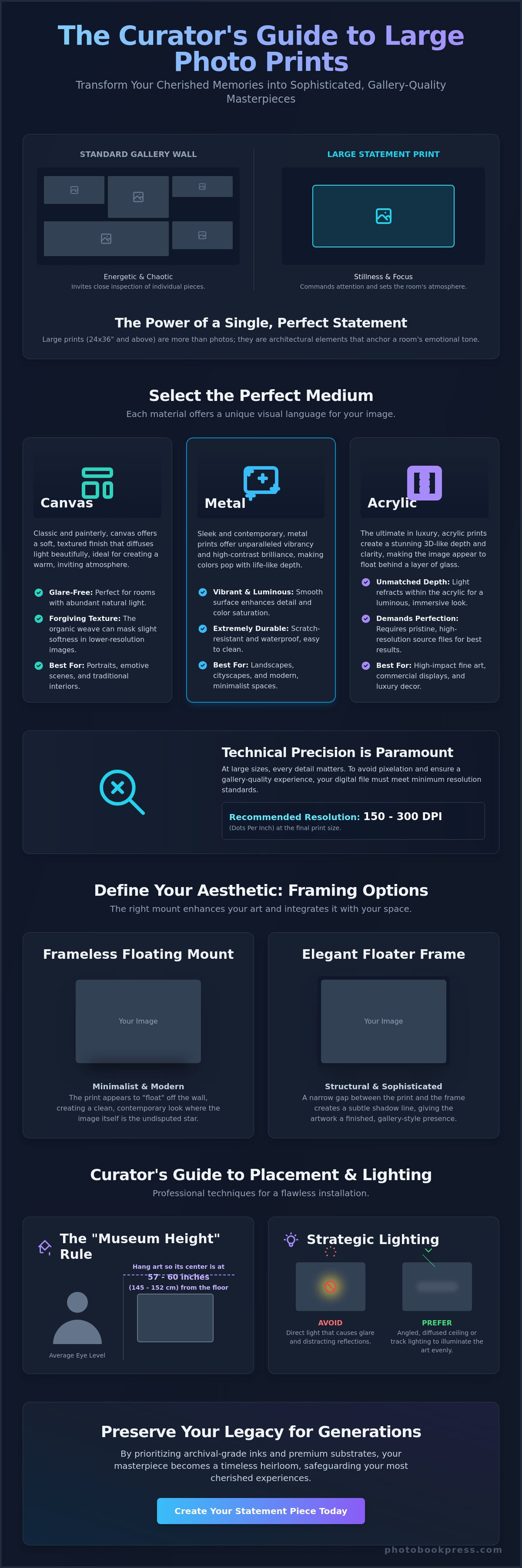
The placement of a large-scale print is the final act of the artisan. Even the most exquisite archival print can lose its impact if it is hung without regard for the room's architecture or the play of light across its surface. To achieve a true gallery feel, you must move beyond the vague concept of "eye level" and embrace professional standards. Center your art 57 to 60 inches from the floor. This "Museum Height" creates a consistent horizon line that allows the eye to travel through your home with ease. It establishes a sense of order and intentionality that defines a curated space.
Before driving the first nail, evaluate your light sources to minimize distracting reflections. Glossy surfaces like acrylic or metal are particularly sensitive to window placement. If you are learning how to display large photo prints in a sun-drenched room, consider the angle of the sun at different times of day. Structural integrity is equally vital. Large prints carry significant weight, and traditional hooks often prove insufficient. Use heavy-duty Z-cleats for these installations. These aluminum brackets distribute weight evenly across the wall, ensuring your art remains perfectly level and securely anchored for years to come.
Lighting is the tool that breathes life into your imagery. While track lighting offers versatility, picture lights mounted directly above the frame provide an intimate, focused glow. To ensure colors remain true to your original vision, select bulbs with a Color Rendering Index (CRI) of 90 or higher. This technical specification ensures that the subtle hues in your shadows and highlights are not distorted by poor light quality. To avoid "hot spots"—those harsh, white reflections that obscure the image—position your light source at a 30-degree angle to the print. This allows the light to wash over the texture of the medium without bouncing directly back into the viewer's eyes.
A statement piece should never exist in isolation. When hanging prints above furniture like a sofa or a console table, follow the "Rule of Two-Thirds." The art should span approximately two-thirds the width of the furniture below it to create a balanced, grounded aesthetic. This creates a visual dialogue between your wall art and the rest of the room. In a living space, you can further enhance this narrative flow by coordinating your wall displays with physical layflat photo books placed on nearby surfaces. This allows guests to transition from the grand scale of the wall to the tactile, intimate experience of a book. Large prints are also the perfect solution for "awkward" spaces like long hallways or stairwells, where they can turn a transitional area into a meaningful gallery walk.
Ready to transform your most significant memories into breathtaking focal points? Explore our collection of custom wall art and professional prints to begin your curation journey today.
The journey from a fleeting digital moment to a permanent architectural feature requires more than just a printer. It demands the steady hand and discerning eye of a master artisan. At our Maryland facility, we combine state-of-the-art technology with a heritage of craftsmanship that has been refined since 1985. Every large-format piece we produce undergoes rigorous hand-inspection to ensure it meets our exacting standards. When you are deciding how to display large photo prints in your home, the physical object must be worthy of the memory it carries. We don't merely manufacture products; we refine artifacts designed to endure for generations.
The foundation of this longevity lies in our selection of archival-grade inks and premium substrates. These materials are chosen specifically for their ability to resist the passage of time and the subtle wear of environmental factors. Whether you select the organic texture of canvas or the luminous depth of metal, our process remains focused on absolute visual precision. This dedication to the craft is why professional photographers consistently trust Photobook Press for their most critical client exhibitions. They understand that a legacy is built at the intersection of technical excellence and emotional truth.
Achieving professional-grade color accuracy is a science we have perfected over decades. When scaling an image to a large format, every hue and shadow must be rendered with absolute fidelity to the original vision. Our commitment to this precision allows the tactile qualities of our premium canvas and metal finishes to shine. You can feel the difference in the weight of the material and see it in the clarity of the detail. This level of craftsmanship ensures that your wall art doesn't just decorate a room, it transforms the space into a gallery-quality experience that reflects your personal history.
A home's narrative often extends beyond a single statement piece on the wall. A truly curated environment creates a sophisticated dialogue between different mediums and scales. You might complement a striking canvas focal point with a matching wedding album resting on a nearby console. This creates a cohesive ecosystem of memories, where the story moves seamlessly from the grand scale of the wall to the intimate, tactile pages of a book. By understanding how to display large photo prints as part of a broader narrative, you create a home that feels both deeply personal and professionally curated.
The preservation of your history is a noble pursuit, and we are honored to be your partner in the creative process. We treat every image with the respect it deserves, ensuring that your most significant life events are captured with substance and aesthetic perfection. Transform your favorite moments into stunning wall art with Photobook Press and begin building your legacy today.
You now possess the curator's perspective required to transform a residence into a living gallery of your most cherished experiences. By selecting the ideal medium and mastering the technical nuances of lighting and museum-standard height, you've unlocked the secret of how to display large photo prints with professional grace. These deliberate choices ensure your memories act as sophisticated anchor points, drawing the eye and grounding each room in your unique personal history. It's a profound shift from mere decoration to the creation of a lasting, tactile legacy.
Exceptional preservation requires a partner who treats your history with the same reverence you do. Since 1985, our Maryland-based artisans have balanced traditional craftsmanship with archival-quality materials to produce wall art that remains vibrant for a lifetime. This meticulous attention to detail is why professional photographers nationwide trust us to represent their finest work. Elevate your home with professional-grade Wall Art from Photobook Press. We invite you to step into the role of the artist and give your stories the breathtaking stage they deserve.
The ideal medium depends on the emotional resonance you wish to achieve within your space. Canvas offers an organic, painterly texture that diffuses light beautifully, while metal prints provide unmatched vibrance and a modern, high-contrast finish. Acrylic prints are often considered the pinnacle of display, offering a 3D-like depth that makes imagery appear to glow from within. Each material serves as a different vessel for your personal narrative.
Adhere to the gallery standard by centering your art 57 to 60 inches from the floor. This "Museum Height" ensures the piece is positioned at a natural sightline for most viewers. It creates a consistent horizon throughout your home, allowing for a sophisticated, cohesive flow between different rooms. If hanging above furniture, ensure the bottom of the piece sits about 6 to 10 inches above the top of the object.
Preservation begins with selecting archival-grade inks and premium substrates designed for longevity. To further protect your investment, avoid placing art in direct sunlight, which can accelerate pigment breakdown. For framed pieces, utilize UV-protective glazing to filter out harmful rays. These steps ensure your most significant memories remain as vibrant and detailed as the day they were first printed, becoming true heirlooms for future generations.
Aim for a resolution of 150 to 300 DPI at the final print size to ensure a crisp, gallery-quality appearance. For a 24x36 inch print, this translates to a file approximately 3600 x 5400 pixels or larger. While lower resolutions can sometimes be masked by the texture of canvas, the clarity of metal and acrylic demands high-resolution files to avoid visible pixelation and maintain the integrity of the image.
Metal prints are the definitive choice for high-humidity environments like bathrooms or kitchens. The dye-sublimation process infuses ink directly into the aluminum, making it resistant to moisture and easy to clean. Acrylic prints also perform well in these spaces. Avoid traditional paper prints or canvas in humid areas, as the organic fibers can absorb moisture over time, leading to warping or potential mold growth.
This decision hinges on your home’s architectural style and the specific medium you've chosen. Frameless displays, such as floating metal or acrylic mounts, offer a minimalist, contemporary aesthetic that allows the image to breathe. Traditional framing provides a structured border that anchors the piece to the wall, adding a layer of classic sophistication. Floater frames offer a hybrid solution, providing the structural elegance of a frame without obscuring the edges of the print.
Follow the "Rule of Two-Thirds" when positioning art above furniture like sofas or sideboards. The print should span roughly two-thirds of the furniture's width to feel balanced and grounded. For an empty wall, aim to fill 60% to 75% of the available space. A piece that is too small will feel lost, while one that is too large may overwhelm the room's proportions. Understanding how to display large photo prints effectively requires this careful attention to scale.
Utilize a Z-cleat or French cleat system for the most secure installation of heavy, large-format pieces. These aluminum brackets distribute the weight evenly across the wall and into the studs, providing far more stability than traditional wire or hooks. This method also ensures the print remains perfectly level and flush against the wall. Mastering how to display large photo prints securely is essential for protecting both the art and your home’s surfaces.
