No Products in the Cart


Will the heirlooms you create today still hold their breath-taking clarity when they are opened by a different generation a century from now? Most of us share a deep-seated fear that our most precious memories will eventually succumb to yellowing, fading, or the brittle decay of time. Selecting the right archival quality photo paper for albums is more than a technical choice; it's a commitment to your future legacy. It is the vital bridge between a fleeting moment and a permanent piece of family history.
You likely share the common anxiety that modern prints won't survive as long as the silver halide photographs of the past. This guide will help you master the technical standards of preservation so your family history remains as vivid as the day it was captured. We'll explore the critical chemistry of ISO 18902:2013 standards, the necessity of keeping lignin content below 1 percent, and how to choose materials that ensure your album survives for 100 years or more.
Creating a legacy requires more than just an eye for composition; it demands an understanding of molecular stewardship. Most consumer-grade papers are born from wood pulp, a material inherently destined for decay. Over time, the organic compounds within these fibers break down, releasing acids that turn once-vibrant memories into brittle, yellowed artifacts. Choosing archival quality photo paper for albums is the only way to arrest this process before it begins. It's the difference between a temporary print and a permanent gallery piece.
The secret lies in the chemistry of acid-free paper, which ensures a neutral or slightly alkaline pH environment. To meet the rigorous ISO 18902:2013 standards for album materials, the paper must maintain a pH level between 7.5 and 10. This alkalinity acts as a buffer against the invisible pollutants that drift through our homes every day. When materials are chemically inert, they don't react with the environment or the photograph's delicate emulsion, preventing the slow blur of degradation.
To better understand this concept, watch this helpful video:
Lignin is the organic polymer that gives trees their strength, but in the world of preservation, it's a silent saboteur. As lignin oxidizes, it creates acidic byproducts that cause "foxing," those unsightly reddish-brown spots that mar vintage photographs. The international standard for permanent paper, ISO 9706:2025, dictates that archival materials must contain less than 1 percent lignin. Lignin-free paper is defined as the meticulous removal of wood-pulp impurities to prevent the structural brittleness that plagues lesser materials. By insisting on these standards, you ensure the paper remains supple and white for centuries.
True archival quality photo paper for albums often includes a 2 percent calcium carbonate reserve. This buffering agent serves as a sacrificial shield, neutralizing acids that might migrate from the environment or human touch. While most color photographs thrive on buffered paper, it's this alkaline reserve that protects the paper's integrity over decades. It ensures the physical substrate remains as resilient as the stories it holds. This chemical fortification allows your album to withstand the test of time, maintaining its tactile elegance and visual precision long after other prints have faded into obscurity.
The tactile sensation of a page is the first whisper of its quality. When choosing archival quality photo paper for albums, the physical weight, or GSM (Grams per Square Meter), tells a story of durability. Heavyweight paper provides a rigid foundation that resists the mechanical stresses of turning pages. Proper storage provides physical support, but the paper itself must be robust enough to hold its form without curling or tearing over decades.
Beware the allure of ultra-white papers. Many consumer products use Optical Brightening Agents (OBAs) to achieve a brilliant finish. These chemicals eventually break down, leading to a premature yellowing that even the best storage can't prevent. For a true heirloom, seek papers that achieve their brightness through high-quality fibers rather than chemical additives. This ensures your images remain true to their original color palette for a lifetime.
Professional-grade album pages should ideally exceed the 200 GSM threshold. This density ensures that ink doesn't bleed through to the reverse side and that the page remains flat despite changes in ambient humidity. Heavier paper also offers superior caliper, or thickness; it creates a more luxurious, gallery-like experience every time a family member opens the volume. This structural integrity is essential for preventing page curl and mechanical tearing during frequent viewing.
While dye-based inks are common in convenience printing, they are susceptible to fading within a few short years. Pigment inks consist of solid particles of color that rest on the surface of the paper fibers. This structural difference makes them exceptionally resistant to UV light and atmospheric gases. Modern pigment-based prints are often rated to maintain their color stability for 100 to 200 years. If you are comparing photo printing services, the presence of pigment ink is a non-negotiable requirement for archival preservation.
Surface finishes like luster or silk aren't merely aesthetic choices. These textures help mask fingerprints and provide a layer of resistance against natural skin oils. When you select a premium finish on archival quality photo paper for albums, you're adding another safeguard to your investment. If you are ready to preserve your own history, you may find inspiration in our guide to choosing wedding albums that stand the test of time.
Even the finest archival quality photo paper for albums cannot protect a memory if the book's architecture fails. While we often focus on chemical stability, the mechanical stress of turning a page is a relentless force. Traditional "tight-back" bindings, though classic in appearance, frequently succumb to spine cracking over time. As the glue becomes brittle, the paper is forced into a sharp curve. This structural failure eventually exposes the delicate edges of your prints to oxygen and light, accelerating the very decay you've worked so hard to prevent.
The choice of cover material serves as the first line of defense for the treasures within. Genuine leather offers a timeless durability that matures gracefully, providing a supple yet resilient shield against environmental shifts. Linen, while lighter, provides a breathable and acid-free alternative that protects the internal block from dust and physical impact. Both materials ensure that the internal chemistry of your prints remains undisturbed by external pressures, acting as a vault for your personal history.
The transition to layflat photo books represents a significant leap in preservation technology. By allowing pages to rest completely flat, these books eliminate the "gutter" where dust, moisture, and debris typically collect. This design utilizes archival adhesives during the mounting process, creating a bond that remains flexible rather than becoming brittle. Most importantly, flat pages suffer significantly less "surface rub." When pages curve, they slide against one another, creating microscopic abrasions that can dull the image over a century of viewing. Using archival quality photo paper for albums in a layflat format ensures the physical surface remains pristine.
A truly archival album requires a robust internal framework to survive the decades. Heavy-duty endpapers are essential; they act as the bridge between the cover and the book block, supporting the weight of the pages and preventing the dreaded "page sag" common in large-format volumes. A well-constructed spine ensures that the weight is distributed evenly, maintaining the book's shape for a hundred years or more. For those seeking comprehensive heirloom design tips, understanding these structural nuances is just as important as selecting the right imagery. Precision in construction is what transforms a simple book into a lasting artifact.
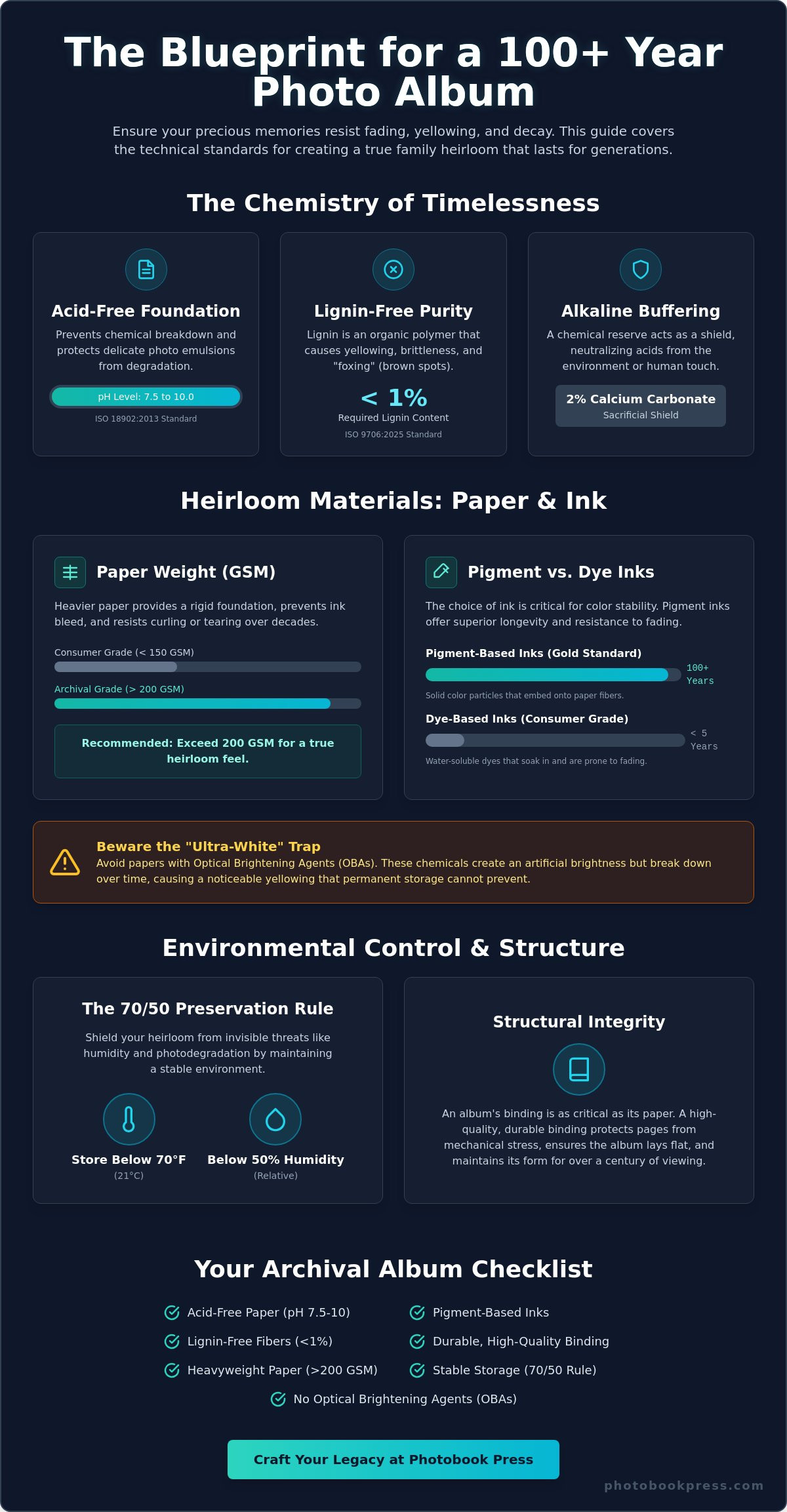
Your choice of archival quality photo paper for albums is the first step in a long-term commitment. Once the prints are bound and the artisan's work is complete, the environment becomes the primary guardian of your legacy. Professional archivists follow the 70/50 Rule, maintaining a temperature below 70 degrees Fahrenheit and a relative humidity around 50 percent. These targets aren't arbitrary. They represent the delicate balance where chemical reactions slow down and physical materials remain stable.
Photodegradation is a silent, invisible threat to even the most premium prints. Ultraviolet light carries enough energy to break the chemical bonds within your ink pigments, causing colors to drift or disappear entirely. Even high-quality pigment prints require protection from direct sunlight. Storing your album in a dedicated library space or a shaded area of your home is essential for maintaining the visual precision of your photographs over the next century.
Where you place your album matters as much as how you store it. Avoid exterior walls, which experience significant temperature swings between day and night. Attics and basements are notorious for creating micro-climates that foster mold or cause paper to become brittle. Always store your albums vertically on a shelf. This orientation supports the spine and prevents the weight of the pages from pulling against the binding, ensuring the book block remains perfectly aligned.
Targeting 50 percent humidity is the ideal middle ground for preservation. It provides enough moisture to keep the fibers supple without encouraging the growth of mold or mildew. Temperature fluctuations are particularly dangerous because they cause different materials, such as paper, leather, and adhesive, to expand and contract at different rates. Paper is hygroscopic, which is the tendency of paper to absorb moisture from the air.
A custom presentation box or slipcase is the final layer of defense for your memories. These containers provide a "dark storage" environment that virtually eliminates light exposure while acting as a barrier against dust and airborne pollutants. Choosing acid-free storage containers prevents chemical off-gassing from affecting the archival quality photo paper for albums you have carefully selected. For those seeking the highest level of protection, explore the bespoke leather photobooks and archival storage solutions crafted to preserve your history.
Our heritage in Maryland spans forty years of precision artisan printing. We've dedicated decades to the quiet, meticulous work of preserving history through the medium of print. At Photobook Press, we don't view an album as a commodity; we see it as a vessel for a family's most significant narratives. This philosophy dictates every choice we make, from the specific chemical composition of our adhesives to the tactile weight of the pages. We select specific archival quality photo paper for albums that meets the highest museum standards, ensuring that our wedding albums remain as luminous for your grandchildren as they were on your wedding day.
The human touch remains at the heart of our production heritage. While technology has advanced, the final judgment of quality still rests with a master artisan. Every volume undergoes a rigorous manual inspection process. We check the visual precision of every spread and the structural integrity of every bespoke binding. This commitment to craftsmanship is why professional photographers and gallery curators trust our standards. They know that an investment in our work is an investment in a legacy that won't fade or yellow with time.
We believe that every story deserves the highest level of care, whether it's a grand matrimonial record or a personal memoir. We apply the same museum-grade standards to our portfolio books as we do to our most exclusive heirloom volumes. The sensory experience of interacting with premium linen and genuine leather creates a bridge between the digital image and the physical world. Our production process intentionally prioritizes durability over mass-market speed. We take the time required to ensure that every adhesive cures correctly and every fold is perfectly aligned, creating a product that feels substantial in the hand.
There is a profound peace of mind that comes with knowing you've used artisan-grade materials. You don't have to worry about the chemistry of your pages or the stability of your inks. We've handled the technical complexities so you can focus on the creative expression of your narrative. Starting your own archival project is a simple but significant act of stewardship. It's a gift to the future, ensuring your memories are protected by the best archival quality photo paper for albums available today. When you're ready to begin, design your archival-quality heirloom with Photobook Press and create a work of art that truly lasts.
Your memories deserve a home that's as resilient as the moments themselves. By mastering the synergy of pH-neutral chemistry, heavyweight fibers, and structural binding integrity, you've taken the first step toward true preservation. Selecting the right archival quality photo paper for albums is the definitive choice for those who value substance over fleeting digital trends. It transforms a simple collection of images into a tangible investment in your family's history.
At Photobook Press, we've dedicated ourselves to the noble craft of artisan binding since 1985. Every volume is hand-inspected in our Maryland facility and crafted from museum-grade acid-free and lignin-free materials. We treat your stories with the reverence they deserve, ensuring they remain vivid and untouched by the passing decades. Preserve your legacy with an archival-quality photo book today. Your personal narrative is a work of art, and we're here to help you ensure it remains flawless for the generations to come.
Archival quality photo paper for albums is engineered to last between 100 and 200 years when used with professional pigment inks. This lifespan is significantly longer than standard consumer prints. The stability comes from the high-quality fibers and the absence of reactive chemicals that cause premature fading. When stored in museum-level conditions, these prints maintain their visual precision for several generations.
Acid-free refers to the paper's pH balance, while lignin-free means the organic wood polymers have been removed. Lignin is the substance that turns paper yellow and brittle as it oxidizes over time. For museum-grade results, paper should have a pH between 7.5 and 10 and a lignin content of less than 1 percent. Ensuring both standards are met is the only way to prevent structural decay.
It's best to store your photo albums upright, similar to books in a library. This vertical orientation prevents the weight of stacked books from damaging the binding or crushing the pages below. It also allows for better air circulation around the covers, which helps maintain a stable micro-climate for the materials. Vertical shelving is a simple but effective way to protect the spine's long-term health.
While clean hands are acceptable for occasional viewing, wearing lint-free gloves is the safest practice for handling precious artifacts. Oils and salts from your skin can transfer to the paper and cause permanent staining or chemical reactions. Nitrile or cotton gloves provide a protective barrier that maintains the pristine condition of the page. It's a small step that preserves the tactile elegance of the finish.
Archivists recommend a consistent temperature of 70 degrees Fahrenheit and a relative humidity of 50 percent. These targets prevent the growth of mold while ensuring the paper doesn't become too dry and brittle. Consistency is key; rapid changes in these levels are more damaging than slightly higher or lower steady states. Avoid storage in attics or basements where these variables fluctuate wildly.
You can use plastic sleeves if they are made of stable polymers like polyester, polypropylene, or polyethylene. Always check that the packaging explicitly states the material is PVC-free. Polyvinyl chloride (PVC) is highly unstable and will release acidic gases that eventually destroy the photographic emulsion and the paper itself. Look for materials that have passed the Photographic Activity Test (PAT) for total peace of mind.
Old magnetic albums utilized high-tack acidic adhesives that eventually migrate into the photograph's fibers. This process, combined with plastic covers that trap moisture and pollutants, leads to the characteristic yellowing and "ghosting" seen in vintage albums. Modern archival quality photo paper for albums avoids these harmful reactive components. Instead, we use stable mounting methods and chemically inert materials to protect the image's integrity.
Higher GSM (Grams per Square Meter) improves the physical resilience of the page but doesn't inherently change its chemical archival rating. A paper weight of 200 GSM or more prevents the pages from sagging or tearing at the binding. This mechanical strength is essential for ensuring the album survives a century of handling and viewing. While the chemistry prevents yellowing, the weight prevents the physical wear of time.
