No Products in the Cart


With over 1.8 trillion photos captured in 2025, the digital image has become a fleeting ghost rather than a lasting legacy. You've likely felt the weight of these thousands of files, sensing that your most significant moments deserve more than the cold glow of a smartphone screen. It's frustrating when a vibrant sunset is reduced to a muddy, inaccurate print or when a generic custom photo book begins to fail after just two years of light handling. You deserve a medium that honors the gravity of your experiences through professional craftsmanship and artistic intent.
We believe your memories are precious artifacts that require the meticulous care of a master printer. You'll discover how to transform your digital imagery into a sophisticated, handcrafted heirloom through professional-grade printing and 100-year archival binding techniques available in 2026. We will walk through the technical precision of color reproduction and the tactile selection of premium paper weights, providing you with a seamless path to an exquisite physical legacy. Your story, beautifully told, starts with a commitment to permanence and the refined touch of the press.
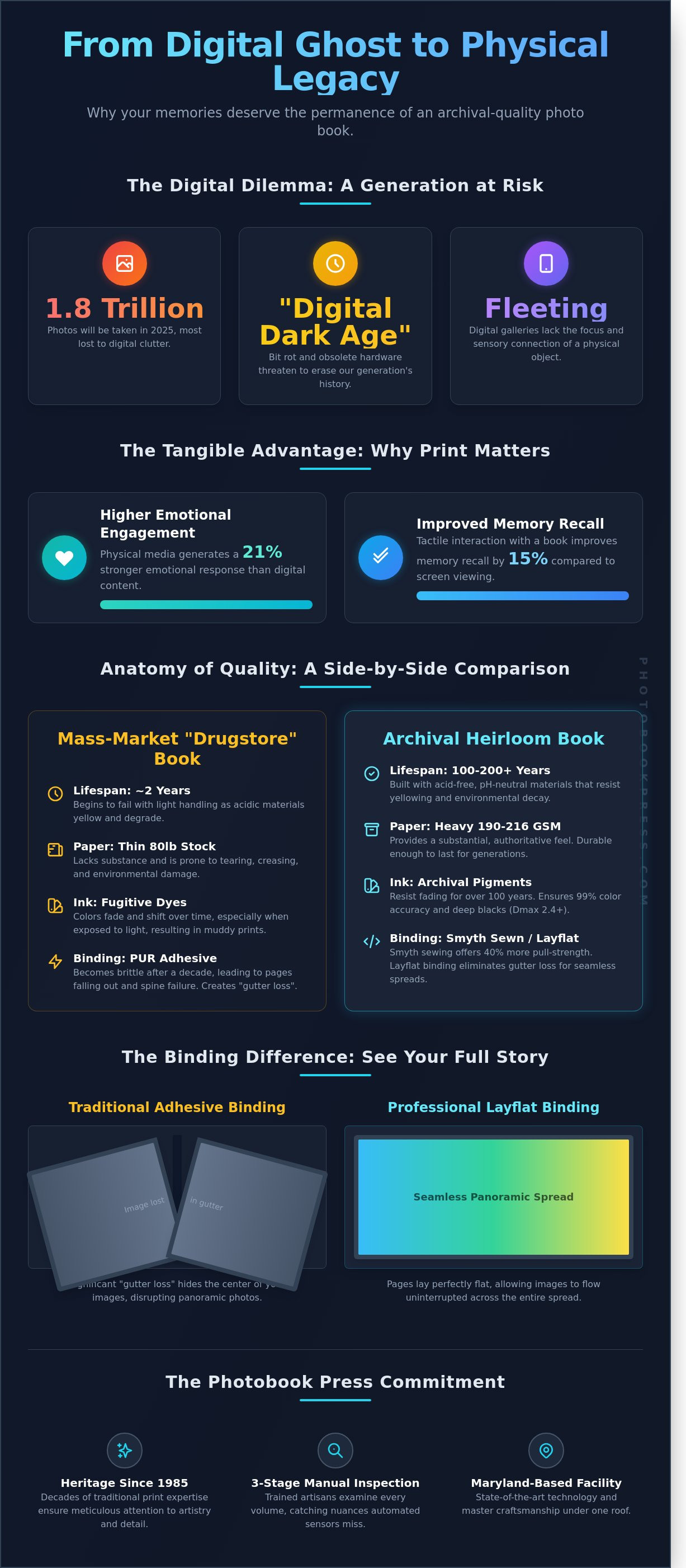
A custom photo book represents the pinnacle of personal publishing. It's a professionally bound, archival-quality volume that transforms fleeting digital files into a permanent physical legacy. While mass-market "drugstore" printing relies on thin, 80lb paper and fugitive inks, artisanal press standards utilize heavy-weight stocks and pigment-based technology. The year 2026 marks a significant return to these high-end physical media as a reaction to digital saturation. This shift reflects a growing desire for tangible artifacts that survive beyond the lifespan of a smartphone or a cloud subscription. Your story, beautifully told, deserves a medium that matches the weight of your memories.
The "digital dark age" is a real threat to modern history. Vint Cerf, a pioneer of the internet, warned as early as 2015 that bit rot and hardware obsolescence could erase an entire generation's memories. A physical book solves this. It commands attention in a way a scrolling gallery cannot. A 2024 study by the tactile research group Neuro-Insight found that physical media generates 21% higher emotional engagement than digital content. When you hold a book, the weight and texture create a sensory anchor for your memories. It's an intentional experience. You aren't just glancing at a screen; you're engaging with a curated artifact.
True archival quality isn't just a marketing term. It's a technical specification. To meet this standard, materials must be acid-free and pH-neutral to prevent the yellowing and brittleness common in cheap paper. Most professional custom photo book options now use papers rated for 100 to 200 years of stability. This craftsmanship ensures that your investment becomes a living legacy. By choosing materials that resist environmental degradation, you're building a bridge between the present and future generations. It's the difference between a temporary print and a permanent heirloom. Your history requires the permanence of a gallery-grade volume, ensuring that the vibrancy of your life doesn't fade with time.
A superior custom photo book begins with a deliberate marriage of advanced engineering and human intuition. At our Maryland-based production facility, we utilize state-of-the-art inkjet technology that achieves a Dmax, or maximum density, of 2.4 or higher. This technical precision ensures the deepest blacks and a wide color gamut that satisfies the rigorous standards of professional gallery exhibitions. Every volume undergoes a three-stage manual inspection process where trained artisans examine the ink distribution and page alignment. This human touch catches subtle nuances that automated sensors often miss, ensuring that every page reflects the artist's original intent.
Color fidelity remains a cornerstone for professional photographers who require their prints to match calibrated monitors with 99% accuracy. We achieve this through rigorous color management profiles and archival inks that resist fading for over 100 years. The result is a physical artifact that feels substantial and authoritative in the hand.
The physical structure of a book dictates its longevity and how the story unfolds. We specialize in layflat photo books, which utilize a specialized hinge mechanism to allow pages to rest perfectly level. This eliminates the "gutter loss" common in mass-market products, making it the ideal choice for expansive panoramic landscapes. While many commercial printers rely on PUR adhesive that can become brittle after a decade, we prioritize Smyth sewn binding for our traditional volumes. Smyth sewing involves stitching gathered signatures together with high-tensile thread. This method provides a 40% increase in pull-strength compared to standard adhesive binding, ensuring the spine remains intact through generations of use.
Paper choice serves as the tactile soul of your project. We select archival stocks ranging from 190 GSM to 216 GSM to ensure a substantial, heirloom feel that lighter papers cannot replicate. Lustre finishes offer the high-contrast punch of glossy paper without the distracting glare, while matte paper provides a sophisticated, non-reflective surface that absorbs ink deeply for a painterly effect. Silk finishes offer a unique micro-texture that resists fingerprints and provides a soft, contemporary aesthetic. These acid-free papers prevent yellowing, ensuring your work remains a permanent artifact. If you're ready to begin your project, you can explore our curated paper collections to find the perfect match for your creative vision.
Selecting the physical architecture of your custom photo book is the first act of curation. The weight of the cover and the texture of the binding set the stage before a single page turns. A book's format should mirror the gravity of the occasion it preserves. For a milestone that occurs once in a generation, a lightweight format lacks the necessary permanence. Conversely, a casual summer retreat doesn't always require the formality of a heavy spine. This alignment of form and function ensures that the tactile experience matches the emotional depth of the imagery.
Leather remains the gold standard for archival preservation. It is the definitive choice for wedding albums because it ages with a grace that synthetic materials cannot replicate. Genuine top-grain leather and archival buckram offer a tactile luxury that signals importance, protecting the interior against humidity and wear for over 100 years. Hardcover casing provides the structural integrity needed for family yearbooks that will be handled by multiple generations. A 12x12 inch square format offers 144 square inches of canvas per page. This scale allows for cinematic spreads that do justice to high-resolution photography, turning a simple collection of images into a commanding heirloom.
For the working creative, portfolio books serve as a high-end physical resume. They bridge the gap between digital screens and tangible art, offering a level of focus that a tablet cannot match. While a leather-bound volume feels like a monument, a softcover custom photo book feels like a conversation. These are ideal for travel journals or seasonal projects where portability and a modern, minimalist aesthetic are paramount.
The choice of aspect ratio is a vital narrative tool. Consider these three standards:
Hobbyists often prefer the 8x10 inch portrait size for its familiarity and ease of shelving. Professionals typically opt for larger 11x14 inch formats to command attention during gallery reviews or high-stakes client pitches. Every dimension and material choice serves the same ultimate goal: ensuring your story is beautifully told through the meticulous craft of the press.
Designing a legacy requires more than just uploading a folder of images; it demands the discerning eye of a curator. A high-end custom photo book serves as a physical exhibition rather than a mere storage device. By embracing a "less is more" philosophy, you allow each image the space it needs to resonate. Visual silence, or white space, isn't empty. It's a structural element that guides the viewer's eye and creates a gallery-like experience, ensuring that your most significant moments aren't lost in a cluttered mosaic.
Mastery begins with the "Anchor, Detail, Emotion" method. Anchor images are typically wide-angle shots that establish the setting. Detail shots capture the tactile nature of the event, such as the lace on a gown or the weathered grain of a wooden table. Emotion frames provide the human heartbeat. When you combine these three elements on a single spread, you create a cinematic rhythm that keeps the reader engaged.
Organize your pages with a sense of deliberate flow. You might group photos by a shared color palette, such as the muted blues of a coastal morning, or follow a strict chronological sequence. Varying image sizes is essential for visual interest. A single, full-page bleed creates a moment of high impact, while a series of smaller, uniform images can suggest the passage of time or a collection of related memories. Each turn of the page should feel like a new movement in a well-composed symphony.
Precision is the hallmark of professional craftsmanship. To ensure your custom photo book looks as stunning in print as it does on a backlit screen, you must optimize your digital files. For large-scale panoramic spreads reaching 24 inches in width, images must maintain a minimum of 300 DPI (dots per inch). Dropping below 240 DPI often results in visible pixelation that detracts from the archival quality of the work.
Color management is equally vital. While most digital cameras capture in sRGB, professional presses often operate in a refined CMYK space. Designing in sRGB is generally recommended for its wider gamut, but you should use a calibrated monitor to ensure the colors you see are the colors we print. Before submitting your project, follow this technical checklist:
Finalize your masterpiece by visiting PhotoBook Press to select the archival materials that will protect your vision for generations. Creating a photo book is an act of preservation, and every technical detail brings you closer to a flawless finish.
Since 1985, Photobook Press has anchored its identity in the meticulous traditions of the print industry. We don't view ourselves as a high-volume manufacturer; we're a boutique press dedicated to the art of the book. Our guiding philosophy, "Your story, beautifully told," reflects a deep-seated respect for the narratives our clients entrust to us. By centralizing our operations in our Maryland-based production facility, we maintain absolute control over the manufacturing environment. This proximity allows our master printers to monitor humidity, ink density, and mechanical precision in ways that offshore or distributed facilities simply cannot replicate. Selecting an artisan press is the final, essential step in transforming a collection of images into a permanent, tactile legacy.
Our commitment to excellence is visible in the manual binding process that defines our workshop. Every custom photo book we produce undergoes a rigorous individual inspection by a specialist who checks for alignment, color consistency, and structural integrity. We source professional-grade materials, including 100-pound archival papers and premium linens, to ensure each volume withstands the test of time. For professional photographers and boutique studios, we offer a level of technical support that honors their creative vision. This includes color-managed workflows and specialized cover options that cater to the exacting needs of high-end clientele who demand perfection in every stitch and fold.
The moment you receive a finished, custom-made volume, the digital pixels are forgotten in favor of a profound sensory experience. The weight of the paper and the texture of the cover create a physical connection to your past that a screen cannot provide. These are archival-quality books designed to be passed through family branches for eighty years or more. While digital formats will change and cloud storage may fail, a physical book remains accessible, beautiful, and resilient. It's the ultimate medium for preserving a legacy. Begin crafting your custom legacy today and ensure your custom photo book serves as a bridge between your most precious memories and the generations to come.
Digital files are fleeting, yet a physical volume offers a permanent testament to a life well-lived. By prioritizing archival-grade materials and thoughtful curation, you elevate your imagery into a genuine heirloom. Every custom photo book we create acts as a bridge between today’s joy and the future generations who'll eventually hold these pages. Our artisans have been handcrafting these volumes in our Maryland workshop since 1985, blending time-honored techniques with the technical precision required by modern creators.
We offer specialized discount programs for professional photographers who demand gallery-standard results for their clients. Because we use materials guaranteed to last for generations, your investment in print becomes a legacy that won't fade or fray. It's time to move your most meaningful captures off the hard drive and into a format that commands respect. Your story is far too important to remain hidden behind a screen. Design Your Custom Legacy at Photobook Press. Your vision is unique, and we're honored to help you preserve it with the elegance and craftsmanship it deserves.
In 2026, a high-quality custom photo book typically ranges from $150 for a signature linen edition to over $550 for a handcrafted Italian leather heirloom. These prices reflect the 12% rise in premium material costs since 2024. Quality matters. Investing in archival materials ensures your legacy remains intact for over 100 years. This provides a tactile experience that mass-market alternatives simply can't replicate.
Lustre finish remains the premier choice for wedding albums because it combines the color vibrancy of gloss with a sophisticated, fingerprint-resistant matte texture. Most professionals select a 250gsm archival paper to provide the necessary weight for frequent viewing. This specific finish reduces glare by 40% under gallery lighting. It ensures every delicate detail is preserved, allowing us to keep your story, beautifully told, for many decades to come.
You should include between 30 and 45 images in a standard 20-page custom photo book to ensure each memory has room to breathe. This average of 1.5 to 2.25 photos per page allows for a mix of impactful full-page spreads and curated clusters. Overcrowding pages with more than 5 images often diminishes the visual narrative. A minimalist approach highlights the artistry of your photography and creates a more gallery-like viewing experience.
The primary difference lies in the binding architecture; layflat books open at a full 180-degree angle while standard hardcovers have a traditional glued gutter that hides the inner edge of your images. This seamless construction is essential for panoramic shots that span two pages. Standard books lose approximately 0.25 inches of the image in the binding. Choosing a layflat design ensures that no part of your visual story is lost in the fold.
You can certainly use smartphone images, provided they are captured at a resolution of at least 12 megapixels to ensure a crisp 300 DPI print. Most 2026 flagship devices produce files large enough for an 8x10 inch page without visible pixelation. However, enlarging a low-resolution 72 DPI social media export will result in a 30% loss of detail. We recommend checking your file sizes first. It maintains the professional integrity of your handcrafted volume.
Expect a total turnaround time of 10 to 14 business days for your bespoke commission. The meticulous process of hand-binding and archival curing takes approximately 5 to 7 days in our studio. Once your volume passes our 20-point quality inspection, we utilize express couriers to ensure delivery within 3 additional days. This deliberate pace guarantees that every stitch and fold meets our exacting standards for heirloom durability.
Every custom photo book we produce adheres to ISO 9706 standards, utilizing 100% acid-free papers and pH-neutral adhesives. This chemical stability prevents the yellowing and brittle edges that typically affect mass-produced albums after 15 years. By using archival-safe materials, we ensure your family’s history remains as vibrant as the day it was printed. These museum-grade components are designed to protect your photographs from environmental decay for several generations.
An 11x14 inch landscape format is the definitive choice for professionals because it offers a sprawling 154 square inches of space for high-impact imagery. This size commands attention during gallery presentations and provides enough scale to showcase technical precision. For those seeking a modern aesthetic, the 12x12 inch square offers a balanced canvas for both portrait and landscape orientations. Selecting these larger dimensions ensures your work is viewed with the gravity it deserves.
