No Products in the Cart


What if the subtle fold at the center of your presentation is actually a silent barrier between your vision and your client? For any creative professional, the frustration of watching a panoramic masterpiece disappear into a dark gutter is a familiar heartache. You've likely felt the disappointment of a binding that cracks under pressure or paper that fails to reflect your true value. Choosing a premium layflat portfolio book is more than a simple upgrade; it's a deliberate act of elevating your work into a physical legacy that demands respect.
You deserve a presentation tool that feels like a curated gallery in the palm of your hand. We believe that every detail, from the choice of sophisticated cover materials to the selection of premium paper weights reaching up to 520gsm, should speak to your dedication to excellence. This guide reveals how archival-quality binding transforms your portfolio into a high-impact, seamless masterpiece. We'll walk through the essential elements of modern portfolio design, ensuring your next client meeting begins with a tactile experience that matches the brilliance of your digital files.
In a landscape saturated with fleeting digital impressions, the physical portfolio has transitioned from a simple tool to a powerful statement of intent. It serves as an anchor for your professional identity. The shift toward the layflat portfolio book represents a return to excellence, where the medium is just as significant as the message. By removing the visual interruption of a traditional fold, you allow your work to breathe across the entire spread. This is not merely a collection of images; it is a curated experience that commands a client’s undivided attention.
The traditional "gutter" found in standard books is the enemy of precision. For architects, designers, or photographers, a lost millimeter in the center fold can ruin the symmetry of a blueprint or the emotional weight of a landscape. Modern bookbinding techniques have evolved to solve this specific pain point, ensuring that your vision remains uncompromised from edge to edge. Transitioning to a layflat format is an investment in your brand legacy, signaling to every viewer that you value quality enough to present it without flaws.
To better understand the visual impact of this construction, watch this helpful video:
The core of this innovation lies in a hinge-less design. Unlike standard perfect binding, where pages are glued into a wrap-around cover, the layflat method allows for a true 180-degree opening. Each page is bonded to the next using a specialized adhesive process that creates a singular, continuous surface. We utilize ultra-thick, rigid paper stocks that prevent the common curling associated with thinner materials. This creates a tactile authority that feels substantial in the hands, ensuring the book stays open on a desk without being held down.
While a standard photo book might suffice for personal memories, a professional layflat portfolio book is built for high-frequency handling. The distinction lies in the material selection. Professionals require archival-quality, acid-free paper to ensure that color accuracy doesn't shift over time. Every element of a high-end [portfolio book](https://photobookpress.com/blogs/news/portfolio-books-the-professional-s-guide-to-physical-presentation-in-2026) is designed to withstand repeated viewings during high-stakes meetings. It creates a sensory connection that a tablet screen simply cannot replicate. The weight of the paper and the texture of the cover materials speak of reliability and prestige before a single word is read.
The true allure of a layflat portfolio book lies in its ability to transcend the physical limitations of traditional binding. When you open a book to find a seamless, uninterrupted image, the experience mimics that of standing before a large-scale print in a quiet gallery. It removes the distraction of mechanics. This format offers an uninterrupted canvas where your creative vision takes center stage. It allows for a visual rhythm that guides the viewer through your narrative without pause. The eye doesn't jump. It glides.
By removing the central fold, you gain the freedom to place subjects exactly where they belong. In a standard book, a face or a critical architectural detail might be swallowed by the binding. Here, the center is as viable as the edges. This physical permanence also aligns with digital preservation principles, as it translates ephemeral digital files into a tangible, long-lasting format that doesn't rely on a screen or power source. It's a bridge between the digital present and a permanent professional legacy.
The technical brilliance of this format stems from printing on a single continuous sheet of paper which is then precisely folded. Because there is no gutter, your eye movement remains fluid. You aren't compensating for a dark shadow in the middle of the spread. This creates a psychological sense of openness that invites the client to lean in. They become part of the scene rather than just observers of a bound object. The flat surface ensures that light hits the page evenly, maintaining color consistency across the entire panoramic view.
Architectural photography relies on the integrity of straight lines and perfect perspective. A traditional binding would warp a horizon line or break the verticality of a skyscraper. In a layflat portfolio book, these lines remain true. Consider the impact of a 24-inch spread; it provides enough real estate to showcase complex blueprints or sweeping landscapes with clinical clarity. To achieve the best results, prioritize images with strong leading lines that draw the viewer across the entire horizontal plane.
Negative space also plays a vital role in high-end presentation. It acts as a breath between movements in a symphony. By balancing a full-spread image on one side with thoughtful whitespace on the other, you create a sense of boutique exclusivity. If you are ready to transform your digital archive into a physical masterpiece, consider the lasting impact of our handcrafted [Portfolio Books](https://photobookpress.com/blogs/news/portfolio-books-the-professional-s-guide-to-physical-presentation-in-2026). This curation of space and imagery ensures your work is not just seen, but felt.
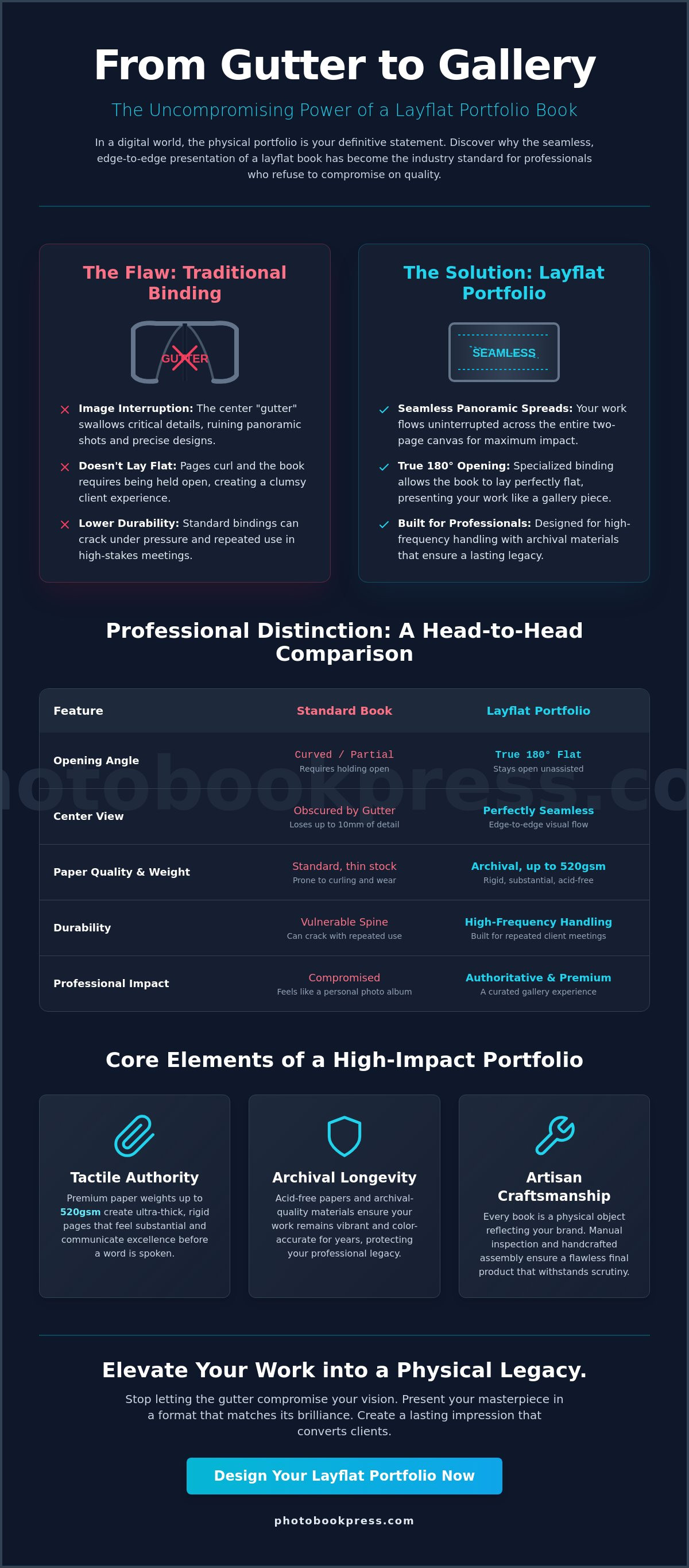
When a client first takes your portfolio in their hands, the physical weight of the book speaks before they see a single image. This initial encounter creates a silent dialogue about your professionalism. Materials are not merely technical choices; they are the foundation of your brand's tactile authority. A layflat portfolio book relies on the synergy between superior paper and expert construction to leave a lasting impression. By choosing premium components, you transform a simple presentation into a museum-quality artifact that invites touch and commands respect.
The perceived value of your creative work is often tied to the thickness of the page. Paper weight, measured in grams per square meter (GSM), serves as a physical indicator of quality. While standard books might use thinner stocks, a professional portfolio demands something more substantial. Options ranging from 220gsm to 520gsm provide a rigid, luxurious feel that prevents page curling and ensures the book remains a stable, physical presence on a boardroom table. This thickness is a functional requirement for the specialized layflat binding techniques that allow your panoramic spreads to exist without a central break.
Durability is equally critical for a tool designed for repeated viewings. Acid-free, archival-quality paper is non-negotiable for long-term color preservation. Without these standards, the vibrant blacks and subtle highlights of your work would degrade, yellowing over time and diminishing your professional standing. Investing in archival materials ensures that your portfolio remains as striking in five years as it is on the day of its first printing.
The finish you select dictates the emotional tone of your presentation. Lustre finishes are favored for their ability to provide deep color saturation and a subtle shimmer that brings photography to life. In contrast, matte finishes offer an understated, velvety elegance that reduces glare, making them ideal for detailed architectural drawings or minimalist design work. Ultra-thick pages are essential here. They provide the structural integrity needed for a layflat portfolio book to open perfectly horizontal every time, ensuring your audience focuses on your artistry rather than the mechanics of the book.
Your choice of cover material sets the stage for the narrative within. For many, leather photobooks represent the pinnacle of prestige and durability. The organic texture of genuine leather suggests a timelessness that synthetic materials cannot replicate. If your brand leans toward a modern, boutique aesthetic, refined linen or silk covers offer a sophisticated alternative. These textures provide a clean, tactile experience that feels contemporary and curated. To finalize the presentation, custom foil stamping allows you to anchor your branding with a metallic precision that catches the light and signals a meticulous attention to detail.
A professional portfolio is far more than a simple archive of past projects. It functions as a strategic conversion tool, designed to guide a potential client from initial interest to a firm commitment. When you assemble a layflat portfolio book, you must embrace the philosophy of curation over collection. Presenting every project you have ever completed dilutes your authority. Instead, select only the pieces that reflect the high-caliber work you wish to attract in the future. This "less is more" approach ensures that every turn of the page reinforces your expertise rather than cluttering the viewer's mind with irrelevant detail.
The layout should breathe. White space is not empty space; it is a vital design element that directs the eye and provides a necessary pause between high-impact images. By balancing a panoramic spread with a page featuring thoughtful typography or minimalist margins, you create a visual rhythm. This pacing allows your client to absorb the significance of each project. Your expertise is communicated through the intentionality of the presentation as much as the work itself.
Structure your book like a compelling story. Begin with a high-impact "hook" image that establishes your creative authority within the first three seconds of the meeting. From there, group your projects into logical sectors or styles to demonstrate both your versatility and your depth. This organization helps the client find themselves within your work. Finally, conclude with a memorable "closer" that leaves a lasting impression of your unique vision. This final image should be the one they remember long after the book is closed.
Precision in the digital phase is the only way to ensure excellence in the physical phase. To achieve crisp, professional-grade results, your files must be set to at least 300 DPI at the final print size. This level of detail is non-negotiable for custom photobook printing. We recommend a workflow that includes soft proofing to ensure your screen's brightness doesn't mislead your expectations of the final paper output. While most digital displays operate in RGB, high-end print production often requires an understanding of how colors translate to a CMYK space. This technical diligence ensures that the vibrant hues in your layflat portfolio book match your original artistic intent perfectly.
If you are ready to move beyond digital files and create a tangible asset for your business, you can start building your professional portfolio today. Taking the time to refine your technical specifications now will pay dividends in the tactile quality of your finished book.
At Photobook Press, we view the creation of a layflat portfolio book as a noble craft, one that requires a perfect balance of tradition and innovation. Since 1985, our heritage has been rooted in the meticulous standards of traditional bookbinding. We don't believe in the shortcuts of mass production. Instead, our artisans blend 1985-era craftsmanship with 2026 printing technology to ensure your work is preserved with absolute fidelity. Every portfolio book that leaves our Maryland facility has undergone a rigorous manual inspection process, ensuring that every hinge, corner, and page spread meets our curator-level standards.
We understand that for professional photographers and designers, these books are more than products; they're essential investments in a personal brand. This is why we've cultivated a culture of dedicated support. We offer bespoke wholesale options and personalized guidance to help you navigate the technical nuances of high-end print production. By positioning ourselves as your trusted partner, we allow you to focus on the creative vision while we handle the complexities of physical manufacturing with quiet confidence and precision.
The act of hand-binding each volume is a slow, deliberate process that ensures structural integrity. Unlike automated systems that can overlook subtle misalignments, our Maryland-based team touches every book. This domestic production model allows for immediate quality control and efficient shipping, removing the uncertainties often found with overseas manufacturing. We define our artisan approach to archival layflat photo books through a commitment to materials that will stand the test of time, treating your professional history with the reverence it deserves.
For the creative professional, the presentation begins long before the first page is turned. It's about the weight of the object and the texture of the materials. We offer bespoke options such as custom endpapers and premium presentation boxes that elevate the unboxing experience into a curated event. These details transform a layflat portfolio book from a simple viewing tool into a precious artifact. Our design team acts as a meticulous partner in your creative process, offering expert guidance to ensure your vision is realized without compromise. We invite you to experience the tactile difference of a Photobook Press volume, where the focus remains steadily on the intersection of art and professional excellence.
A layflat portfolio book is more than a simple presentation tool; it's a physical testament to your commitment to excellence. By choosing seamless panoramic spreads and museum-quality archival materials, you ensure your vision remains uncompromised by the mechanics of traditional binding. You've seen how strategic curation and technical precision transform a collection of images into a high-impact conversion tool that speaks with quiet authority. This transition from digital file to tangible artifact is the final step in establishing a truly distinguished professional brand.
At Photobook Press, we've refined this noble craft through Maryland-based artisan craftsmanship since 1985. Our work is trusted by professional photographers worldwide who demand substance and aesthetic perfection in every detail. We treat every volume as a precious artifact, using only superior materials that reflect the true value of your creative history. Your work has spent enough time behind a glass screen. It's time to give it a permanent, tactile home that reflects the mastery of your craft and the longevity of your vision.
Craft Your Professional Layflat Portfolio with Photobook Press and present your work with the prestige it deserves.
The primary distinction lies in the binding mechanism, which allows a layflat portfolio book to open perfectly horizontal without a central gutter. Traditional books use a wrap-around binding that creates a deep fold, often obscuring critical details in the center. Our artisan approach ensures that every spread remains a continuous, flat surface, providing a seamless visual experience that standard photo books cannot replicate.
These books are specifically engineered to withstand the rigors of frequent professional handling during high-stakes client viewings. We utilize ultra-thick paper stocks and archival-quality adhesives that prevent the pages from curling or the binding from cracking over time. This structural integrity ensures that your presentation remains as pristine and impressive during its hundredth viewing as it was during the first.
A matte finish is often the preferred choice for design portfolios due to its understated elegance and glare-free surface. It allows the viewer to focus on fine lines and subtle textures without the distraction of reflective light. However, if your work relies on high color saturation and deep blacks, a lustre finish provides a sophisticated shimmer that brings vibrant imagery to life with museum-quality precision.
A typical layflat portfolio book can accommodate a range of page counts to suit your specific narrative needs. Most professional volumes start at 10 pages and can expand to 60 or even 100 sides depending on the chosen paper weight and cover style. This flexibility allows you to curate a concise, high-impact collection or a comprehensive retrospective of your most significant career achievements.
You can print a single image across a full spread with complete confidence that no detail will be lost in the center. Because the pages are bonded back-to-back and lack a traditional gutter, the transition between the left and right sides is nearly invisible. This capability is essential for showcasing wide-angle architectural shots or expansive landscape photography where continuity is paramount to the work's impact.
For a large-format portfolio, your images should be exported at a resolution of 300 DPI at the final print dimensions. This ensures that every detail remains sharp and professional without the risk of pixelation on the page. We recommend reviewing your files at 100 percent zoom during the design phase to verify that the clarity meets the exacting standards required for high-end physical production.
We maintain a dedicated program for professional photographers and agencies that require frequent portfolio updates or bulk orders. These partnerships are built on a foundation of mutual respect for the craft, offering tailored support to help you maintain a consistent and prestigious brand presence. You should contact our support team to discuss the specific requirements of your professional workflow and explore our available wholesale options.
The creation of a handcrafted layflat volume is a deliberate process that typically requires several business days for production and manual inspection. Because every book is individually bound and checked for perfection in our Maryland facility, we prioritize precision over speed. This steady tempo ensures that the final product meets our rigorous standards for quality and durability before it is carefully packaged for delivery.
