No Products in the Cart


In an era of digital saturation, your most powerful competitive advantage isn't found on a screen; it's held in your hands. A bespoke portfolio book for artists and designers is no longer just about archiving work. It's about reclaiming the viewer's undivided attention. You've likely felt the frustration of seeing your most intricate designs reduced to a tiny, backlit thumbnail that's easily ignored. A 2024 Adobe study found that over half of designers are consciously seeking more human visual elements to balance digital fatigue. Moving your work into the physical realm honors that need for tangibility and presence.
We understand the hesitation that comes with print. You worry about color reproduction or choosing a binding that won't compromise your panoramic art. This guide is designed to bridge that gap. You'll discover how to transform your creative vision into a museum-grade physical portfolio that commands professional respect and wins high-value commissions. We'll walk through selecting archival materials and sophisticated binding styles to create a gallery-in-hand experience. By the end, you'll know exactly how to build a durable archive that serves as both a career milestone and a definitive tool for high-stakes interviews.
In the digital age, a professional presence often feels fleeting. We scroll past masterpieces in seconds, losing the nuance of a brushstroke or the precision of a grid in the glare of a mobile screen. A portfolio book for artists and designers offers a deliberate pause. It transforms a collection of files into a curated, physical gallery experience where you control the lighting, the pace, and the narrative. This isn't just a container for your work; it's a testament to your standard of excellence.
Understanding what is an artist's portfolio requires looking beyond mere documentation. It's a strategic tool designed to combat digital fatigue, a phenomenon where creative directors become desensitized to the infinite stream of online content. By presenting a physical book, you offer an immersive encounter that demands respect and commands a higher perceived value for your artistry.
To better understand how this physical transformation elevates your work, watch this helpful video:
The psychology of touch plays a silent yet persuasive role in professional evaluations. When a client feels the substantial weight of archival paper or the subtle grain of a premium linen cover, they aren't just feeling materials. They're experiencing your brand's stability and attention to detail. This tactile authority signals that your work is worth preserving. As a leave-behind, a physical book ensures your vision remains on their desk long after the browser tab is closed, securing your place in their long-term plans.
Physical scale allows for a level of detail appreciation that screens simply cannot match. A large-format print reveals textures and color gradients that are often flattened by digital compression. Unlike the infinite scroll of a website, where work is viewed in a vacuum of distraction, a physical book creates a focused environment. The tactile authority of a printed portfolio serves as a definitive professional signal that your craft transcends the ephemeral nature of the web.
Beyond immediate commissions, these volumes serve as an archival record of specific creative eras. They're investments in your own legacy, providing a physical archive for retrospectives or personal reflection. Viewing your growth through a tangible medium offers a sense of completion that a digital folder never could. To understand the deeper value of these artifacts, you can explore the definitive guide to the modern photo book, which details how archival craftsmanship preserves your professional history for decades.
Selecting the structural foundation of your portfolio book for artists and designers is as critical as the work it contains. The binding dictates how a viewer interacts with your art. Traditional perfect binding, common in standard bookstore finds, utilizes a glued spine that creates a "gutter." This curved valley at the center of the book often swallows essential details. For a creative professional, this loss is more than a technicality; it's a disruption of the visual narrative. It forces the viewer to physically pry the book open to see the full image, which detracts from the effortless elegance of your presentation.
Layflat binding eliminates this compromise. By using specialized hinging or continuous paper sheets, the book opens completely flat. This allows your vision to span across two pages without a single break. It's the difference between a fragmented image and a continuous, immersive experience. When you place a layflat volume on a desk, it stays open. This simple physical trait allows for a hands-free discussion during interviews, letting the art speak while you provide context. It signals a level of intentionality that standard binding simply cannot match.
The primary benefit of layflat construction is the preservation of the "gutter" area. In traditional books, roughly half an inch of your design can disappear into the spine. For full-bleed photography or complex technical blueprints, this is unacceptable. Layflat pages ensure that every millimeter of your work is visible, making it the gold standard for panoramic art and typography-heavy spreads. If you're looking for a deeper technical breakdown of this medium, you might explore the art of the layflat photo book to see how it supports high-end presentation.
While layflat is the premium choice for deep immersion, standard hardcover and softcover formats have their own strategic roles. A standard hardcover provides a classic, heirloom feel. It's often the right choice for high-volume leave-behinds where a sturdy, durable presence is required but seamless spreads are less critical. Softcover portfolios, on the other hand, offer a modern "magalog" aesthetic. They're lightweight and sophisticated, making them ideal handouts for gallery openings or large-scale networking events. Choosing between these formats depends on whether you want to evoke the weight of a legacy or the fresh, editorial energy of a contemporary publication. For those ready to begin their journey, exploring the range of portfolio books available can help clarify which structure best fits your current body of work.
The physical substance of your book speaks before the first page is even turned. In the creation of a portfolio book for artists and designers, the materiality of the object serves as a silent ambassador for your brand. It's here that the technical meets the emotional, where the choice of a specific cover fabric or paper weight can fundamentally alter how a creative director perceives your artistic value. High-quality construction isn't a luxury; it's a necessary investment in the longevity of your professional narrative.
Archival-quality, acid-free papers are the non-negotiable standard for any serious artist. These materials ensure that the color fidelity you worked so hard to achieve remains unchanged by time or environmental factors. When we discuss paper science, we look at weight, often measured in GSM (grams per square meter). A heavier paper feels substantial and prevents light from ghosting through the page, ensuring each spread remains crisp and distinct. Texture also plays a role, influencing how light interacts with the ink and how the viewer's hand feels as they navigate your career milestones. Customization details like foil stamping or debossing add a final, artisan touch. These subtle indentations in the cover material create a play of shadow and light that invites the viewer to touch the book, elevating a simple collection of prints into a legacy piece.
Leather offers an undeniable prestige, particularly suited for fine art or high-end architectural photography. It suggests a timeless quality and a deep commitment to preservation. The choice of cover texture sets the stage for the work inside, preparing the viewer for a high-stakes presentation. Utilizing such premium materials doesn't just protect the work; it helps justify a higher project fee by positioning the artist as a top-tier professional who values excellence in every detail of their craft.
Selecting the right finish is essential for accurate reproduction. Matte finishes provide a sophisticated, non-reflective surface that mimics the quiet, intentional atmosphere of an art gallery. Lustre remains the professional standard for most, offering a delicate balance of deep color saturation and essential fingerprint resistance. For those specializing in high-contrast graphic design, a glossy finish can make colors pop with a vivid intensity that demands immediate attention. Each choice should align with the specific visual language of your portfolio.
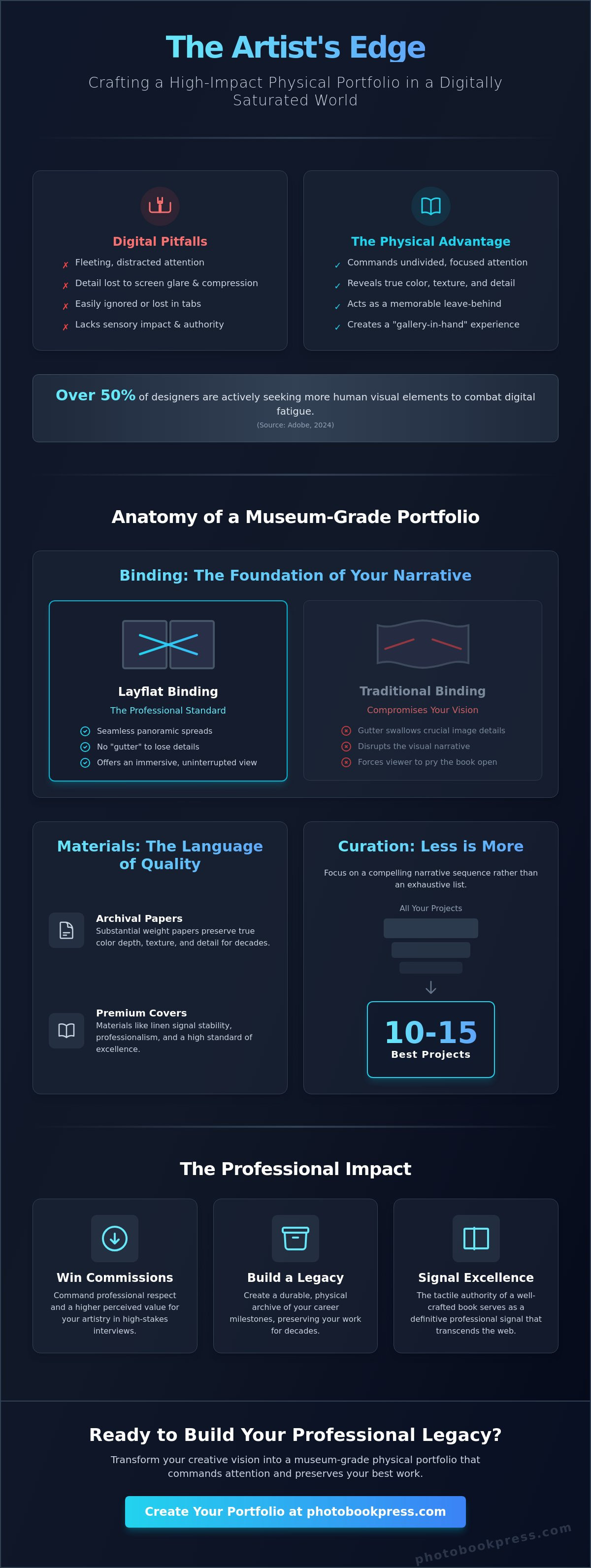
Curation is an act of confidence. When you design a portfolio book for artists and designers, the temptation to include every project you've ever completed is strong. Resist it. A professional portfolio isn't a storage locker; it's a curated exhibition. By selecting your top 10 to 15 projects, you demonstrate a refined eye and respect for your viewer's time. This selectivity ensures that every page turn delivers a high-impact visual that reinforces your expertise rather than diluting it with filler work.
A successful layout requires a narrative arc. Open with a "hero" project, something that immediately establishes your style and technical prowess. This first impression sets the tone for the entire encounter. Close the book with a memorable "coda," a project that leaves a lasting emotional or intellectual impression. Between these anchors, let your art breathe. White space isn't empty; it's a deliberate design element that prevents visual clutter and allows the viewer to focus on the intricate details of your craft. It signals a sophisticated understanding of composition that digital galleries often lack.
Flow is essential for a cohesive experience. Group your works by theme, color palette, or project type to create a logical progression through the book. The importance of the first spread cannot be overstated; it must be a visual magnet that compels the viewer to keep going. Balance your imagery with minimalist typography to provide necessary context. A few lines of text describing the brief or the solution can add depth, but they should never compete with the visual art for dominance. When you're ready to transform your digital files into a physical masterpiece, start designing your custom portfolio today.
Technical precision is the bridge between a digital file and a museum-grade print. Unlike a screen, which emits light, paper reflects it. This fundamental difference means you must prepare your files with care. Ensure your images are at least 300 DPI (dots per inch) to maintain crispness at full scale. Convert your color profiles from RGB to CMYK to ensure the physical ink matches your digital vision. Don't forget to account for bleed margins, extending your art beyond the trim line to prevent unsightly white edges. For a deeper look at these technical standards, consult our resource on portfolio books for the professional’s guide to physical presentation. This checklist of sharpening and soft proofing will ensure your portfolio book for artists and designers meets the highest industry standards.
Every masterpiece requires a presentation that honors the creator's intent. For the serious creative, a portfolio book for artists and designers is the final, essential step in a long journey of creation. It's the physical manifestation of your professional standards. Investing in professional-grade printing isn't just about ink on paper; it's about ensuring your work is viewed through a lens of permanence and prestige. When you present a book that feels substantial and looks flawless, you remove the barriers between your vision and your audience.
Our heritage is built on a foundation of traditional bookbinding that dates back to 1985. We've spent decades refining the intersection of classic craftsmanship and 2026 technology to provide a product that stands the test of time. By maintaining our production within a dedicated US-based facility, we exercise total quality control over every spread, stitch, and cover wrap. This national presence allows us to offer artisanal precision at a scale that serves individual artists and large-scale design firms alike. For those who require consistent excellence for high-stakes commissions, we provide specialized wholesale programs and professional partnerships tailored to the needs of the creative industry.
The difference between a boutique portfolio and a mass-produced book lies in the human touch. While we utilize state-of-the-art printing technology, our binding process remains a manual craft. Each volume undergoes individual quality checks to ensure the alignment is perfect and the materials are pristine. This commitment to boutique exclusivity sets our work apart from automated assembly lines. It ensures that your portfolio isn't just another book on a shelf, but a unique artifact that reflects your personal dedication to your craft.
Bringing your physical archive to life is a streamlined, intuitive process. You can utilize our sophisticated online design tools to build your layout or simply upload a custom PDF of your completed design. We understand that these books are precious artifacts, which is why we prioritize secure, heavy-duty packaging and reliable worldwide shipping. You'll have peace of mind knowing your professional legacy will arrive in perfect condition, ready to make an impact. If you're ready to elevate your presentation, you can design your professional portfolio book today and begin the next chapter of your career.
Your work deserves a presentation that matches the depth of your vision. Transitioning from the ephemeral nature of digital screens to the permanence of print is a definitive statement of professional intent. By selecting a layflat format to preserve your seamless spreads and curating a narrative that focuses on your most impactful projects, you create more than a book. You build a "gallery-in-hand" that commands respect and ensures your vision remains a tangible presence in the minds of high-value clients.
At Photobook Press, we've dedicated ourselves to artisan binding since 1985. We combine archival-quality materials with state-of-the-art print technology to ensure every page meets museum-grade standards. Our national US production facility maintains strict quality control, while our worldwide shipping ensures your professional history reaches its destination securely. Investing in a custom portfolio book for artists and designers is an investment in your long-term success. It's time to transform your digital archive into a masterpiece that speaks for itself. Create Your Professional Portfolio Book today and let your craftsmanship take center stage.
A physical book remains essential as a tactical tool that distinguishes your work from the endless stream of digital content. It offers a sensory experience that signals a higher level of professional commitment. In an age of digital saturation, the tangible weight and texture of a physical volume provide a human connection that screens simply cannot replicate.
The ideal size depends on your medium, but 11x14 inches or 12x12 inches often provides the most dramatic impact for visual work. These larger formats allow for intricate details to be seen clearly without the viewer needing to squint. For those who travel frequently for interviews, a more compact 8.5x11 inch book offers a sophisticated balance of portability and professional presence.
Layflat binding is the gold standard for a portfolio book for artists and designers who utilize full-bleed imagery. It allows your work to flow across the center fold without any image loss in the gutter. Standard binding is a respectable choice for editorial-style layouts or high-volume leave-behinds where seamless panoramic spreads are not the primary focus of the presentation.
A professional portfolio should typically range between 20 and 40 pages. This equates to roughly 10 to 20 spreads, which is the ideal length to showcase your range without overwhelming the viewer. Remember that curation is key. It's better to have 20 pages of breathtaking, museum-grade work than 60 pages that include filler projects.
You shouldn't simply print a digital PDF without making technical adjustments for the medium of print. Digital layouts are often built in RGB at 72 DPI, while a high-end physical book requires CMYK color profiles at 300 DPI. You must also account for bleed margins and trim lines to ensure your art extends perfectly to the edge of the physical page.
Lustre is widely considered the best finish for fine art photography because it combines the deep color saturation of glossy paper with the fingerprint resistance of matte. It provides a subtle texture that enhances the depth of your images. If you prefer a completely non-reflective surface that mimics an art gallery wall, a premium matte finish is an excellent alternative.
Custom production typically requires five to ten business days to ensure every detail meets our artisan standards. This timeframe allows for the manual binding process and rigorous quality checks that define our heritage of craftsmanship. Once production is complete, worldwide shipping times will vary based on your location and the selected delivery method.
We provide specialized programs and wholesale opportunities for professional creatives who require high-volume orders. These programs are designed to support studios and independent artists who use a portfolio book for artists and designers as a consistent part of their client acquisition strategy. You can contact our team to discuss the specific requirements for your professional partnership.
