No Products in the Cart


The most breathtaking photograph in your collection can lose its emotional resonance the moment it is paired with the wrong medium. Choosing between acrylic vs metal prints is not merely a matter of budget; it is a decision about how light will interact with your legacy. You want a finish that honors the precision of your lens while standing firm against the passage of time. It's natural to feel concerned about colors losing their brilliance in a sunlit room or the weight of a large-scale piece compromising your walls.
You deserve a display that offers the same sophistication as a curated gallery. This guide will help you master the technical and aesthetic differences between these two premium materials so you can select the definitive archival finish for your fine art. We will examine how specialized acrylic can minimize reflections by up to 80 percent and why HD metal panels are the standard for high-traffic environments. By the end, you'll know exactly which material will transform your digital file into a luminous heirloom that remains vibrant for decades.
To choose between a work of art and a mere reproduction, one must look beneath the surface. While traditional canvas prints offer a classic, textured warmth, modern mediums like metal and acrylic act as a "visual engine." They don't just hold an image; they amplify its data through material science, turning light and color into a tangible atmosphere. The decision between acrylic vs metal prints often hinges on whether you seek the sleek, industrial resilience of aluminum or the liquid-like depth of optical-grade acrylic.
Each medium represents a different philosophy of craftsmanship. Metal prints rely on chemistry to fuse ink with metal, while acrylic prints utilize physics to bend light. This fundamental difference in construction dictates how the piece will feel in your home, how it will age over decades, and how it will command the attention of anyone who enters the room. Selecting the right finish is an act of preservation; it's the final step in the creative journey that began when you first pressed the shutter.
To better understand the physical differences between these two premium finishes, watch this helpful comparison:
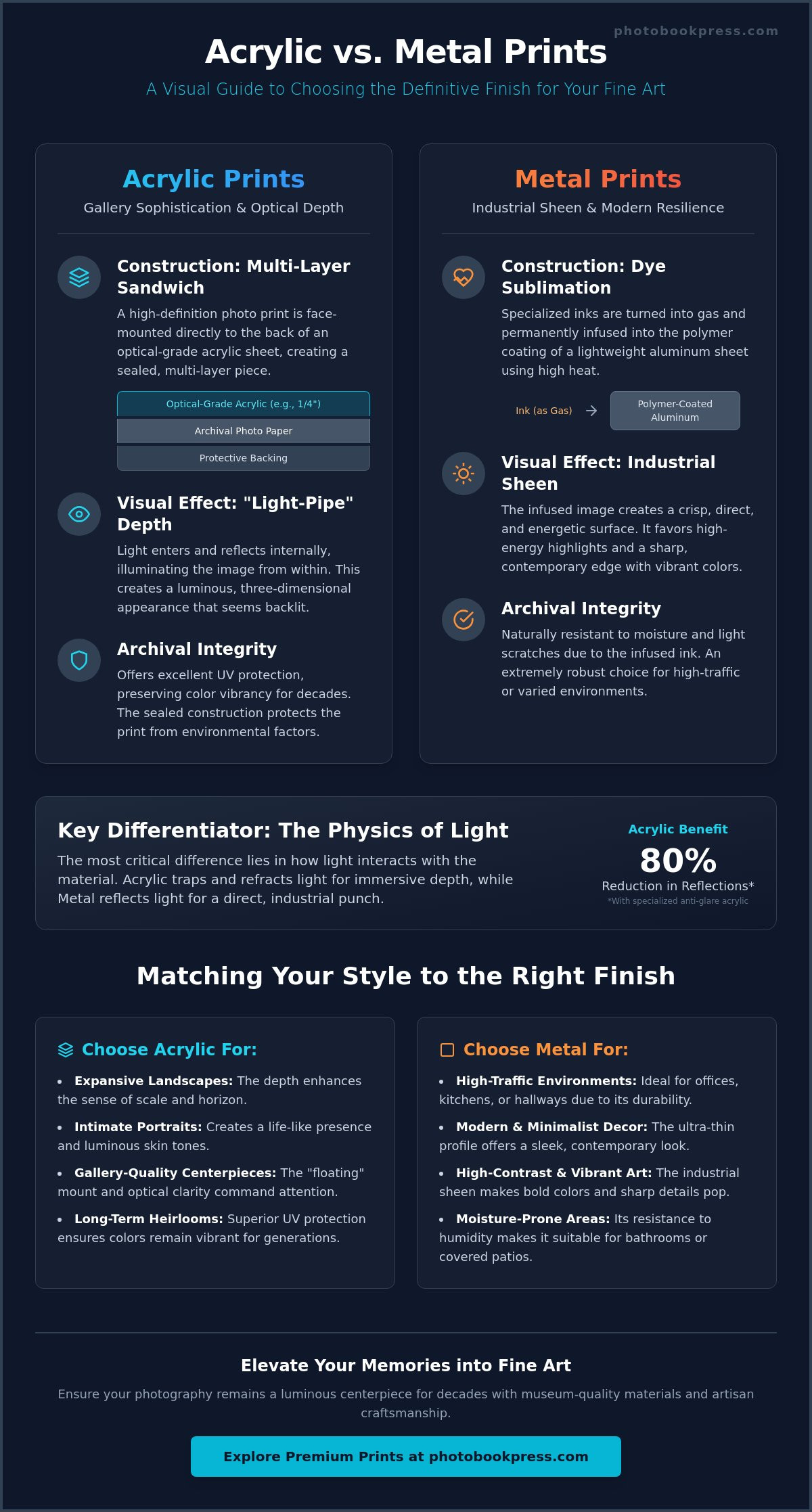
Metal prints are born from a high-heat Dye-sublimation printing process. In this method, specialized inks are converted into a gas that penetrates the polymer coating of an aluminum sheet. As the metal cools, the image becomes a permanent part of the surface. This creates an ultra-thin, lightweight profile that suits minimalist decor perfectly. Because the image is infused into the substrate, the surface is naturally resistant to moisture and light scratches, making it a robust choice for varied environments where traditional frames might feel too cumbersome.
For those seeking a more immersive experience, acrylic prints offer a sophisticated, multi-layer construction that mirrors the standards of professional galleries. The gold standard involves face-mounting a high-definition photographic print directly to the back of a clear, optical-grade acrylic sheet. This creates a sandwich of materials: a protective backing, the archival photo paper, and the acrylic front. When light enters the acrylic, it reflects internally, creating a sense of three-dimensional depth. Modern cleat mounting systems further enhance this aesthetic, allowing the piece to sit away from the wall for a truly frameless, "floating" effect.
The way light interacts with a medium determines the soul of the final display. In the comparison of acrylic vs metal prints, the most striking difference isn't found in the ink, but in the physics of the substrate itself. While metal provides a direct and energetic surface, acrylic utilizes a phenomenon known as the "light-pipe" effect. This optical trickery is what gives face-mounted photography its legendary three-dimensional appearance, turning a flat image into a window of liquid color.
Acrylic face-mounting creates a unique environment where light enters the material, reflects off the photographic paper, and is trapped within the layers. Because the refractive index of optical-grade acrylic is so high, it effectively illuminates the image from within. This internal reflection is why a 1/4-inch acrylic print often appears backlit, even in standard room lighting. Metal prints operate on a different principle, where the ink is infused into the aluminum surface. This creates a crisp, industrial sheen that favors high-energy highlights and a sharp, contemporary edge.
When evaluating print permanence and visual impact, the thickness of the material is a vital consideration. A premium 1/4-inch acrylic panel provides a significantly more dramatic optical shift than a budget 1/8-inch sheet. The thicker the material, the more space light has to bend, which amplifies the saturation of deep blacks and vivid reds. If you want to experience this immersive depth firsthand, our hand-polished acrylic prints offer a level of clarity that transforms a simple photograph into a luminous gallery artifact.
The refractive index is a measure of how much light bends as it passes through a material. Acrylic has a much higher refractive index than air, which means it captures ambient light and focuses it back onto the print surface. This process creates a sense of depth that metal cannot replicate. Metal prints, while flatter, offer a unique "metallic" glow because the natural silver of the aluminum can shimmer through the highlights, providing a crispness that feels both modern and assertive.
Your choice should reflect the intended mood of your work. The optical clarity of acrylic excels at rendering deep, velvety shadows and rich, saturated tones, making it the preferred choice for moody landscapes or night photography. Metal thrives on high-key images and high-contrast architectural shots. The way it handles contrast ratios makes it ideal for portraits where you want a sharp, vibrant finish. Both mediums offer exceptional beauty, but the way they treat light will ultimately define how your memory is felt by the viewer.
A photograph is a capture of a fleeting moment, but a fine art print is a commitment to the future. When you transition your work from a digital screen to a physical medium, you're creating an artifact intended to outlast the devices that captured it. In the debate of acrylic vs metal prints, the conversation must eventually turn toward archival integrity. You aren't just choosing a decoration; you're selecting a vessel for your legacy. Think of these premium displays as professional photo books for your walls, designed with the same meticulous attention to preservation and material excellence.
Both mediums offer impressive longevity, yet they achieve it through different scientific paths. Metal prints are celebrated for their physical toughness, while acrylic is revered for its superior light-filtering capabilities. Understanding these technical nuances ensures that the vibrant colors you see today will remain just as striking when they're viewed by the next generation. Whether your art will hang in a sun-drenched living room or a high-traffic hallway, the structural choices you make now define the life span of the image.
The primary adversary of any print is ultraviolet light, which can break down chemical bonds in ink and cause colors to drift over time. Premium acrylic face-mounting is a formidable defense, as high-grade optical acrylic can block up to 98 percent of harmful UV rays. This protection is paired with archival pigment inks that sit securely behind the acrylic barrier, shielded from environmental pollutants. Metal prints, created through dye-sublimation, are also remarkably durable; however, they can be susceptible to "gassing out" if exposed to extreme, sustained heat. UV protection is the single most important factor in print longevity, and acrylic’s built-in filtration makes it the gold standard for sunlit galleries.
While acrylic offers elite optical protection, metal prints excel in environments where physical resilience is paramount. Aluminum panels are naturally resistant to moisture and chemicals, making them the ideal choice for kitchens, bathrooms, or commercial spaces. They're also significantly lighter than acrylic, which is a vital consideration for massive, multi-panel installations that require a more delicate touch on the wall. Maintenance requirements differ as well:
Choosing the right medium involves balancing these practical needs with your aesthetic goals. If your priority is a lightweight, rugged piece that can withstand the elements, metal is your ally. If you seek the ultimate archival shield for a cherished fine art photograph, the protective embrace of face-mounted acrylic is unsurpassed.
The final stage of the creative process isn't the edit; it's the installation. A masterpiece landscape captured in the golden hour requires a different "visual home" than a gritty, high-contrast urban architectural study. When navigating the choice of acrylic vs metal prints, you must consider how the subject matter lives within the material. The right pairing can transform a photograph into a sensory experience, while a mismatch can distract from the artist's intent.
A gallery wall doesn't have to be uniform. In fact, mixing textures can add a sophisticated layer of visual interest to your home. You might pair the deep, liquid-like saturation of an acrylic landscape with the crisp, matte finish of a metal architectural piece. This interplay of light and texture reflects a curated, thoughtful approach to interior design. It treats each image as a unique artifact rather than part of a mass-produced set.
High-resolution landscapes are the natural partners of the 1/4 inch acrylic engine. The depth of the material pulls the viewer into the horizon, making the colors feel as though they're shifting with the light in the room. Conversely, metal prints are exceptionally effective for high-contrast, black-and-white architectural photography. The natural aluminum highlights give steel and stone a tactile, realistic sheen that acrylic can sometimes soften too much. If you're still weighing your options for various projects, our Ultimate Guide to Photo Printing Services provides deeper insights into balancing quality with the specific needs of your portfolio.
Your environment is the final collaborator in your art display. A common pain point when choosing between acrylic vs metal prints is the fear of distracting reflections. In a sun-drenched room with large windows, the high-gloss surface of standard acrylic can act like a mirror. In these bright spaces, you might favor a metal print with a satin finish to maintain readability. However, in a controlled gallery setting or a moody hallway, acrylic is unmatched. To maximize the internal glow of your acrylic pieces, use focused spotlighting at a 45-degree angle. This minimizes surface glare while allowing light to enter the edges and illuminate the "light-pipe" effect from within.
Before you commit to a large-scale installation, assess the light sources in your room at different times of day. A wall that looks perfect at noon might be plagued by glare from a sunset. If you're ready to see your work in its best possible light, explore our collection of custom metal prints to find the perfect balance of durability and modern elegance for your space.
At our dedicated production facility, we don't view printing as a commodity. We see it as the final, essential act of preservation for a life's narrative. When you weigh the merits of acrylic vs metal prints, you're looking for more than a decorative surface; you're looking for a partner who understands the weight of your history. While mass-market providers focus on volume and automated speed, our heritage is rooted in the meticulous standards of traditional gallery curation and artisan craftsmanship.
Choosing the right medium is a deeply personal decision that balances technical precision with emotional resonance. Whether you're drawn to the industrial resilience of aluminum or the liquid-like depth of face-mounted acrylic, the goal remains the same: to transform a digital file into a physical masterpiece. We treat every order as a unique artifact, ensuring that the final product honors the effort you put into capturing the moment in the first place.
True quality is found in the details that most providers skip. Our face-mounting process for acrylic prints creates a permanent, museum-quality bond that direct-to-substrate printing simply can't match. By securing the photographic print behind optical acrylic rather than printing directly onto the plastic, we preserve the full color gamut and clarity of the original image. Every piece is hand-inspected by our master printers, ensuring that the finish is flawless and the edges are perfectly polished. This isn't just wall art; it's an investment in a legacy that will remain vibrant for decades, backed by decades of production heritage.
There's a distinct tactile joy in unboxing a custom print that has been crafted with intention. You'll feel the substantial weight of the premium materials and see the precision of the mounting system. This physical masterpiece is the definitive destination for your digital legacy, bringing your most cherished images out of the cloud and into your daily environment. Your memories deserve to be felt, not just viewed on a screen.
We invite you to explore our collection of Acrylic and Metal Prints to find the finish that best speaks to your creative vision. For those who wish to tell a more expansive story beyond the wall, consider the complementary elegance of our layflat photo books. Together, these archival mediums create a cohesive narrative of your most significant life events, ensuring they are protected, celebrated, and passed down for generations to come.
Choosing the ideal medium is the final artistic decision in your creative workflow. You've seen how the refractive index of acrylic pulls light into the frame to create immersive depth, while the resilient surface of aluminum provides a crisp, modern edge for high-energy environments. Both materials offer exceptional archival protection, ensuring your memories are preserved with a clarity that digital screens simply cannot replicate. When you master the nuances of acrylic vs metal prints, you ensure that every detail of your photography is presented with the reverence it deserves.
Since 1985, our Maryland-based facility has dedicated itself to the noble craft of manufacturing. We use only professional-grade archival inks and materials, with every piece being hand-inspected to meet gallery-standard perfection. It's time to move your most significant moments from a hard drive to your living space where they can be felt and shared every day. Design your museum-quality wall art today. We look forward to helping you create a luminous centerpiece that tells your story for decades to come.
Acrylic is superior if your goal is achieving maximum visual depth and a three-dimensional effect. While both mediums handle high-definition imagery beautifully, the face-mounting process used in acrylic prints allows light to pass through the material and illuminate the image from within. Metal prints offer a sharper, more industrial sheen that excels in modern, high-contrast settings, but they lack the liquid-like luminosity found in optical-grade acrylic.
Premium acrylic prints typically offer greater archival longevity in sunlit environments compared to metal. High-grade acrylic can block up to 98 percent of harmful UV rays, often carrying an archival rating of over 100 years. While HD metal prints are incredibly durable and rated for approximately 65 years of permanence, they are more susceptible to the long-term effects of direct, sustained UV exposure over many decades.
Acrylic prints are significantly heavier than metal prints, especially when using the professional 1/4-inch thickness standard. This weight requires more substantial wall anchoring and careful installation to ensure the piece remains secure. Metal prints are crafted from lightweight aluminum panels, making them an excellent choice for large-scale displays or walls where a lighter physical footprint is preferred for safety or ease of mounting.
You must use a gentle, non-ammonia cleaner and a clean microfiber cloth to preserve the clarity of the surface. Avoid paper towels or abrasive sponges, as these can create fine scratches that dull the finish over time. For the best results, apply the cleaner to the cloth rather than the print itself, and use light, circular motions to lift dust and fingerprints without compromising the material's polish.
Yes, metal prints are remarkably moisture-resistant and perfectly suited for humid environments like bathrooms or kitchens. Because the ink is infused directly into the aluminum's polymer coating through dye-sublimation, the image won't peel or warp when exposed to steam. This durability makes metal a practical yet sophisticated choice for areas where traditional paper prints or canvas would likely suffer from environmental damage.
The price difference reflects the complex, multi-layered artisan process required to create a gallery-quality piece. When comparing acrylic vs metal prints, the cost of acrylic is driven by the use of premium optical-grade materials and the labor-intensive face-mounting technique. While metal is a single sheet of infused aluminum, a professional acrylic print involves bonding high-definition photo paper between a protective backing and a thick, hand-polished acrylic front.
Direct-to-acrylic printing involves applying ink directly onto the back of the plastic, which often results in lower contrast and a flatter appearance. Face-mounting, which is our preferred standard, involves bonding a genuine high-definition photographic print to the back of the acrylic. This artisan method preserves the full color gamut of your original file and utilizes the material's refractive index to create the signature 3D depth that defines fine art displays.
You can certainly achieve a more muted finish by selecting specific material options tailored for high-glare rooms. For metal, a satin or matte finish eliminates harsh reflections while maintaining vibrant color. If you prefer the depth of acrylic, specialized anti-reflective options can minimize surface reflections by up to 80 percent, allowing your image to remain perfectly readable even in sun-drenched galleries or brightly lit offices.
