No Products in the Cart


A photo book is far more than a collection of paper; it's a structural vessel for the stories that define your life. While digital storage feels infinite, the true test of a memory lies in its physical endurance. You deserve the quiet confidence that your wedding album or portfolio will remain intact for fifty years or more. This requires a deep understanding of durable photo book binding, where the precise intersection of chemistry and mechanics prevents the inevitable decay of time.
It's frustrating to watch a cherished heirloom suffer from yellowing adhesives or a spine that cracks under the simple weight of being shared. We believe your memories deserve the same meticulous care that a gallery curator gives to a priceless artifact. This article reveals the engineering secrets behind premium construction and the technical standards, such as ISO 18902, that separate a temporary print from a permanent legacy. You'll gain a clear framework to help you choose between layflat and PUR binding, ensuring your book remains as vibrant and sturdy as the day it was crafted.
True durability in a photo book isn't an accident of manufacturing. It's a calculated synergy. It requires a balance between the flexibility of the adhesive, the weight of the substrate, and the reinforcement of the spine. When we discuss durable photo book binding, we're looking at the structural engineering of an object intended to be handled, shared, and preserved. While many mass-market albums rely on standard "Perfect Binding," this method often fails in high-use environments because the glue lacks the necessary elasticity to withstand repeated openings without cracking.
The primary metric for this endurance is "page-pull" strength. This measures the force required to pull a single page from the book block. In premium construction, the goal is a bond so resilient that the paper would tear before the adhesive fails. This integrity is constantly tested by environmental shifts. Fluctuations in humidity and temperature cause materials to expand and contract at different rates, leading to warped covers or brittle spines if the materials aren't properly matched.
To better understand the mechanical process of creating these lasting structures, watch this helpful video:
High-quality archival papers are heavy. This weight creates significant leverage on the spine every time a page is turned. To counteract this stress, artisans pay close attention to grain direction. Paper fibers naturally align in one direction; if the grain runs parallel to the spine, the book opens easily and rests flat. If the grain is perpendicular, the paper resists bending, putting immense tension on the binding. A standard spine might only survive a few hundred openings before showing signs of fatigue, whereas a masterfully bound volume is designed for thousands. Traditional bookbinding techniques emphasize this harmony between material and motion to ensure the book doesn't fight against itself.
A truly durable photo book binding relies on more than just high-performance adhesives. Reinforced endpapers act as the critical bridge between the book block and the cover, distributing the mechanical stress of opening. Every component must be acid-free. Acidic materials lead to yellowing and eventual chemical breakdown of the bond. In addition, professional-grade binder's boards are essential. These boards provide the necessary rigidity to prevent warping, ensuring the book remains a flat, elegant object on your shelf for decades. It's this attention to the hidden components that transforms a simple collection of prints into a generational heirloom.
The book block is the heartbeat of a high-end volume. It's the gathered stack of pages that, once bound, becomes a single, cohesive unit. To achieve a durable photo book binding, this block must be prepared with meticulous precision. Before any adhesive is introduced, the spine of the book block undergoes a process called "milling." This involves roughing the edge of the paper to create a jagged surface area. This texture allows the adhesive to penetrate deep into the paper fibers rather than merely sitting on the surface, creating a mechanical bond that resists the stress of daily handling.
Historically, the industry relied on Ethylene Vinyl Acetate (EVA) adhesives. While EVA is efficient for mass production, it's a thermoplastic that dries by cooling. Over time, EVA becomes brittle, leading to the dreaded "cracked spine" where pages begin to detach. Modern archival engineering has shifted toward Polyurethane Reactive (PUR) adhesives. There's a vital distinction between simply gluing a cover to a block and the sophisticated process of "casing-in." Casing-in is the formal marriage of a reinforced book block to a separate, rigid cover, providing a level of structural protection that simple adhesive application cannot match. If you're looking for an album that balances these technical specifications with aesthetic elegance, exploring the construction of bespoke leather photobooks can reveal the true value of artisanal binding.
PUR is the undisputed gold standard for contemporary book production. Unlike traditional glues, PUR cures through a chemical reaction with moisture in the air and the paper itself. This creates a cross-linked bond that is virtually impossible to break once set. It remains permanently flexible, meaning the book can be opened and closed thousands of times without the spine losing its shape. PUR serves as the definitive bridge between the painstaking labor of traditional sewing and the precision of modern speed.
Behind the visible beauty of the book lies the spine lining, often made of a sturdy, gauze-like fabric called "crash" or scrim. This material adds lateral strength to the backbone, preventing the pages from shifting or "stair-stepping" over time. The choice between a "hollow" back, where the spine of the book block curves away from the cover when opened, and a "tight" back affects how the book ages. A hollow back allows for a more graceful opening, reducing stress on the hinge. The hinge is the flexible joint where the cover meets the contents; it's the highest-stress area of any durable photo book binding and requires the most reinforcement to prevent tearing after years of use.
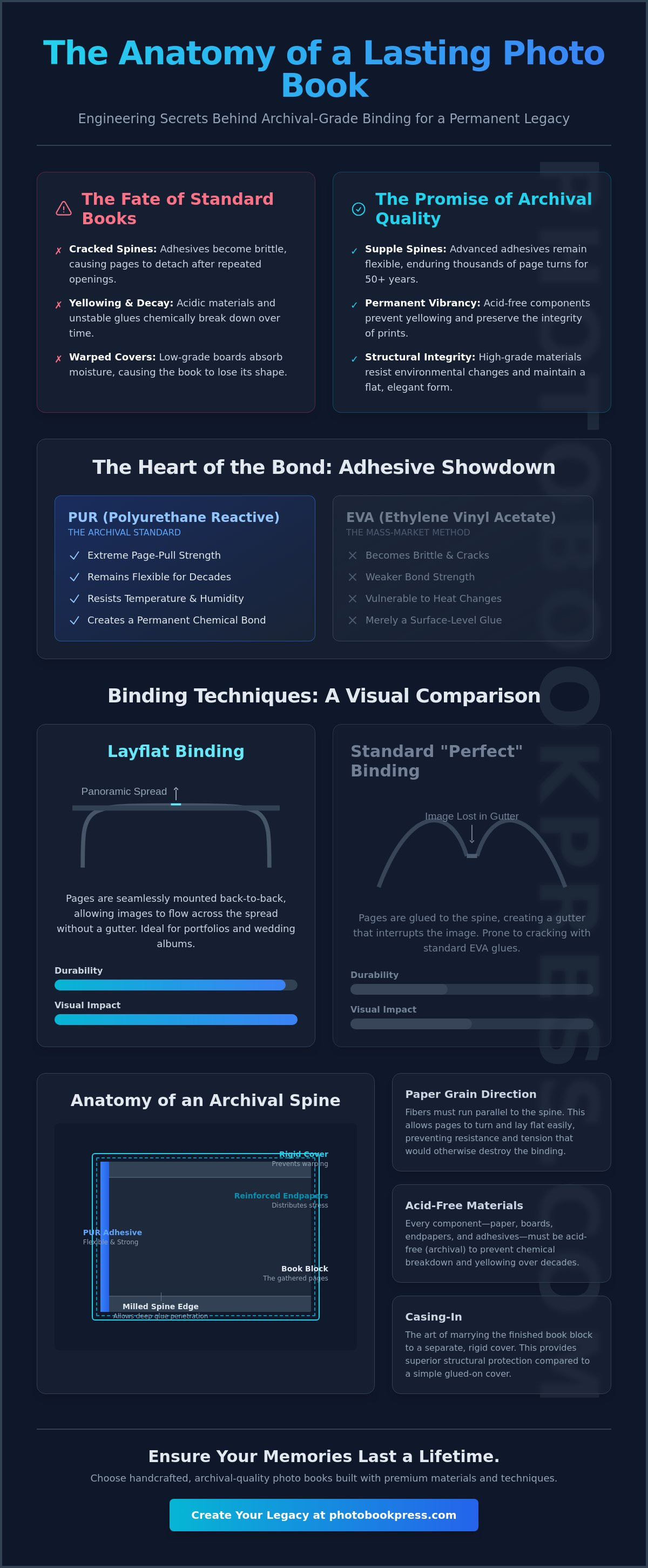
Selecting the right construction for your project is a choice between two distinct philosophies of preservation. For many, layflat photo books represent the absolute peak of visual and structural design. This method allows panoramic images to flow across a spread without being interrupted by a deep gutter. While standard layflat options are excellent, the "flush-mount" technique takes this further by mounting photographic prints directly onto a rigid core. This creates a substantial, board-like page that resists bending and wear. Achieving a durable photo book binding in these formats requires a unique approach to adhesive application, where the entire surface of the page is bonded to a substrate insert rather than just the spine edge.
Traditional section-sewn spines offer a different appeal. These are often chosen for their classic "library" aesthetic, where the visible curve of the spine suggests a timeless literary heritage. While section-sewing is incredibly durable, it inevitably creates a small gutter where the pages meet. The choice often comes down to whether you prioritize the seamless visual of a landscape or the tactile, flexible feel of a traditional book. If you're ready to begin your project, our selection of custom portfolio books offers the perfect starting point for these high-end construction methods.
The secret to a 180-degree opening lies in what's often called "butterfly binding." In this process, each spread is printed on a single sheet, folded in half, and then glued back-to-back with the next spread. This eliminates the need for a traditional spine hinge that can pull or tear over time. By using high-quality substrate inserts, artisans create pages that feel premium and remain perfectly flat. This level of structural integrity is why layflat is the preferred choice for professional photo books intended for gallery display or high-end portfolios where visual continuity is paramount.
Traditional binding remains the standard for those seeking a classic, prestigious look. Leather-wrapped hardcovers provide exceptional protection in archival storage, acting as a resilient shield against the elements. When designing these volumes, it's vital to balance page count with spine thickness. A spine that's too thin for its contents will strain the hinges; one that's too thick may lose its shape. A master binder ensures the proportions are exact, creating a durable photo book binding that feels balanced in the hand and sits proudly on a shelf for generations. This balance ensures the book block remains protected, even when the volume contains hundreds of pages of heavy-weight archival paper.
Choosing a binding style is an exercise in foresight. You must anticipate how the physical object will live in the world and who will hold it. A volume documenting a century of family history requires a different structural approach than a travelogue carried through humid coastal climates. For high-page-count genealogies, a reinforced case binding is essential to support the sheer weight of the heavy archival paper block, preventing the pages from sagging over decades. Conversely, items meant for frequent presentation, such as portfolio books, demand the highest level of mechanical strength to endure the rigors of constant handling by clients and curators.
The environment is a silent actor in the life of a book. If you're documenting a journey across varying climates, the moisture-curing properties of PUR adhesive become your best defense against spine failure. Unlike standard glues that might soften in heat or crack in the cold, a durable photo book binding using advanced polymers remains stable. It's about matching the engineering to the specific experience you are preserving. When you invest in a durable photo book binding, you're not just buying a product; you're securing a narrative against the friction of time. For those ready to begin their own archival journey, you can explore our collection of handcrafted albums to find the perfect fit for your story.
These are generational artifacts. They require a 100-year perspective that few other products demand. Leather is more than an aesthetic choice; it's a protective barrier that gains character with age. When paired with a reinforced spine and acid-free endpapers, it creates a sanctuary for your most precious memories. The binding must also support the grand scale of panoramic wedding photography, ensuring that the centerpiece of the album remains as seamless and breathtaking as the day it was captured.
A portfolio is a tool of the trade. It must survive the "client flip," where pages are turned with purpose and, sometimes, haste. The binding shouldn't just hold; it should facilitate a smooth, rhythmic interaction. This is where the layflat design excels, allowing high-resolution details to be viewed without the distraction of a gutter or the fear of a cracking spine. A modern photo book in a professional context must balance this tactile grace with a toughness that commands respect. It's a statement of quality that reflects the artist within, standing up to the duress of the studio and the boardroom alike.
Since 1985, our heritage has been defined by a single, unwavering pursuit: the elevation of the printed image into a permanent artifact. At Photobook Press, we understand that a book is a physical manifestation of your most significant life events. This perspective informs every decision we make, from the initial selection of premium, acid-free archival materials to the final manual finishing. Our commitment to durable photo book binding is not merely a technical standard. It is a promise that your narrative will remain intact for the next century. This level of dedication requires a rejection of fleeting trends in favor of timeless construction.
By maintaining our production within our Maryland-based facility, we exercise a level of oversight that fully automated assembly lines simply cannot replicate. We believe that the hand of the artisan is essential. While we utilize state-of-the-art adhesive technology to ensure structural integrity, the final assembly requires a human eye to judge the tension of a spine or the alignment of a hinge. This marriage of modern science and traditional craftsmanship defines our boutique approach. We don't just manufacture products; we curate legacies. Every volume that passes through our doors is treated with the same respect as a gallery-grade artifact.
The journey from a digital file to a physical heirloom is one of transformation. At Photobook Press, this process is deliberate and steady. We prioritize manual binding because it allows for a nuanced interaction with the materials. Every book block is inspected individually. We look for the subtle details that machines often miss, such as the exact grain direction of the paper or the precise application of the spine lining. This individual inspection ensures that every spine and hinge meets our rigorous standards before it ever leaves our facility. It’s this dedication to the noble craft of manufacturing that ensures your durable photo book binding stands the test of time.
Choosing a photobook is an investment in your personal history. While convenience is tempting, the true value of a book is found in its longevity. You deserve a volume that won't yellow, crack, or fade as the decades pass. By choosing archival-grade materials and professional construction, you're securing your memories against the inevitable friction of time. It's time to transform your digital library into a tangible legacy. We invite you to Create your durable heirloom with Photobook Press and experience the quiet confidence that comes with true artisanal quality.
The journey from a fleeting digital image to a permanent physical artifact requires more than just paper and ink. It demands a sophisticated understanding of structural engineering. By prioritizing advanced PUR adhesives and seamless layflat designs, you ensure your book remains a functional work of art rather than a fragile relic. These technical choices, rooted in decades of artisanal tradition, are what transform a simple collection of prints into a true generational heirloom.
Investing in durable photo book binding is a commitment to the preservation of your most significant life events. Since 1985, we've refined our craft within our state-of-the-art Maryland production facility to provide the ultimate in archival longevity. Whether you choose the panoramic grace of a layflat album or the classic resilience of a reinforced hardcover, your story deserves the highest level of care. Every detail, from the reinforced hinges to the acid-free substrates, serves as a safeguard against the passage of time.
Ready to begin your project? Design Your Archival Heirloom at Photobook Press.
Your memories are precious artifacts. Treating them with the respect and precision of a master artisan ensures they'll be shared, held, and cherished for another century.
Flush-mount layflat and PUR-bound hardcover books are the most durable options available for long-term preservation. Flush-mount binding utilizes rigid substrate inserts between pages to prevent bending; while PUR binding uses moisture-curing polymers that remain flexible and resilient over decades. These methods ensure the book block remains structurally sound even under the stress of frequent handling.
PUR binding is significantly more resilient than traditional EVA glue binding because it creates a chemical; moisture-cured bond rather than a simple thermal one. Traditional glues often become brittle and yellow as they age, which eventually leads to spine failure. PUR remains permanently flexible. This allows the book to open and close thousands of times without the risk of the spine cracking or pages detaching.
Professional-grade layflat binding is specifically engineered for high-frequency use and often surpasses the lifespan of standard adhesive books. Because layflat books use a butterfly fold, there is no mechanical stress on a traditional hinge or gutter. This design allows for a 180-degree opening that protects the integrity of the durable photo book binding while showcasing your photography in a seamless format.
Pages typically fall out due to inferior "Perfect Binding" techniques or the use of acidic adhesives that degrade over time. When a book lacks proper spine milling, the glue only touches the very edge of the paper, creating a weak bond. Over time, the adhesive dries out and loses its grip. This is especially common if the paper is heavy-weight or the book is opened frequently.
A high-page-count volume can remain exceptionally durable if it utilizes a reinforced cased-in binding and proper spine lining. The key is balancing the weight of the book block with a sturdy backbone made of crash or scrim fabric. This reinforcement distributes the mechanical stress across the entire spine. It prevents the sagging or shifting that often plagues thicker, mass-produced albums.
Fluctuations in humidity and temperature are the primary environmental threats to the structural integrity of a book. High humidity can cause pages to swell and covers to warp, while extreme dryness makes older adhesives brittle. Storing your books in a climate-controlled environment and choosing acid-free, archival materials will mitigate these risks and ensure the long-term health of your durable photo book binding.
Leather is generally the most durable choice for long-term archival preservation because it provides a substantial, moisture-resistant barrier. While linen and other fabrics are elegant, leather gains character without losing its structural integrity over time. However, the true durability of any book depends more on the internal hinge construction and how the cover is cased-in to the reinforced book block.
Look for a spine that feels firm yet flexible, with no visible gaps between the pages and the cover. A professional-grade spine will often feature a "hollow" back that allows the book to open gracefully without straining the joint. You should also confirm the use of reinforced endpapers and PUR adhesives. These features are hallmarks of a volume built to last for generations.
